
Sitting the PMP exam is one of the most demanding professional milestones a project manager will face. With 180 questions to answer across nearly four hours, the margin for poor preparation is vanishingly small. Yet many candidates walk into the testing centre without a structured plan, relying solely on their knowledge. That approach leaves unnecessary risk on the table. A disciplined exam-day strategy is just as important as the months of study that precede it.
This guide covers everything you need to know to approach PMP exam day with clarity and confidence. From building a timed test plan to knowing exactly what identification to bring and how to use your tutorial window strategically, each section below offers actionable, field-tested advice. Whether you are sitting the exam for the first time or returning after a previous attempt, these tips will help you perform at your very best.
1. PMP Exam Day Plan
Creating a personal test plan before you set foot in the exam centre is the single most impactful thing you can do on exam day. The PMP exam is a gruelling endurance test, and without deliberate milestones, mental fatigue will erode your performance well before the final questions. A structured plan gives your brain predictable rest points and keeps your pacing consistent across all 180 questions.
The following timetable reflects a typical morning sitting and can be adjusted based on your scheduled start time:
- 08:30 Arrival: Arrive at the exam centre at least 30 minutes early to complete sign-in, present identification, and settle your nerves before entering the testing room.
- 08:45 Tutorial Start: Use the 15-minute tutorial window to write down all formulas, process group notes, and memory aids before the exam clock begins.
- 09:00 Exam Start: Begin the exam and target completing approximately 75 questions by the one-hour mark to maintain a healthy pace.
- 10:00 First Break: Step away from the screen, use the restroom, and take a sip of water to recharge mentally before the next block.
- 10:05 Exam Resumes: Return to the exam and aim to reach question 150 by the next scheduled break at the 11:05 mark.
- 11:05 Food Break: Take a short nutrition break if permitted by the testing centre to sustain energy and concentration for the final stretch.
- 11:10 Final Block: Complete the remaining questions and use any remaining time to review flagged items before submitting.
- 12:00 review break: Take a final short pause before beginning your structured review of all marked questions.
- 01:00 Submission: Submit your exam and receive your pass or fail result within minutes on screen.
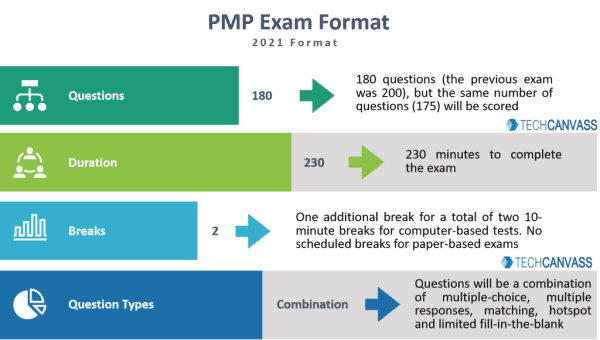
Learn more: PMP Exam Format Overview
2. Review All Marked Questions
Flagging questions as you go is one of the most effective strategies for managing uncertainty across a long exam. Rather than lingering on a difficult question and burning precious time, mark it and move forward. This keeps your momentum intact while ensuring you return to ambiguous items with fresh eyes during the review window.
When you return to flagged questions, approach each one methodically. Re-read the question stem carefully and eliminate any obviously incorrect answers before committing to a final choice. Avoid the temptation to second-guess answers you felt confident about initially. Research consistently shows that first instincts on multiple-choice exams tend to be more reliable than last-minute changes made under time pressure.
Here are the most effective practices to apply during your PMP exam review window:
- Prioritise Flagged Items: Focus your review time entirely on marked questions rather than revisiting every answer, as this preserves time and reduces decision fatigue.
- Eliminate Before Deciding: Cross out any answer choices that are clearly irrelevant or contradict core PMBOK principles, then select from the remaining options with greater confidence.
- Trust Your PMP Exam Preparation: Resist the urge to change answers driven by anxiety rather than genuine reconsideration, as panic-driven changes frequently introduce new errors.
- Watch the Clock: Keep a close eye on remaining time during the review phase to ensure you have submitted all answers well before the session expires.
- Stay Calm and Deliberate: Treat the review phase as a bonus round rather than a crisis response, maintaining the same composed mindset you applied throughout the main exam.
3. Know What to Bring to the PMP Exam
Arriving at the testing centre fully prepared with the correct documentation is non-negotiable. PMI and Prometric enforce strict identification policies, and any discrepancy between your ID and your registered name can result in being turned away from the exam entirely. Understanding exactly what is required well in advance removes this risk completely.
You must arrive at least 30 minutes before your scheduled start time. During check-in, you will be asked to sign in, provide your government-issued identification, and present the unique PMI identification code sent to your registered email address. Testing centre staff will verify all details against your scheduling notification before granting access to the exam room.
Identification Requirements
Your identification must meet several mandatory criteria to be accepted at the Prometric testing centre. Any ID that fails to meet these standards will not be accepted, and no exceptions are made, regardless of circumstances. Understanding these criteria well before exam day eliminates any last-minute risk of being turned away.
All accepted identification must include the following:
- English Characters or Translation: Your name and identifying details must appear in English or include a certified English translation to satisfy international testing standards.
- A Current Photograph: Your identification must feature a clear, recognisable photograph that matches your current appearance to support identity verification.
- A Valid Signature: Most government-issued identification must include your personal signature, which Prometric uses as a secondary confirmation of your identity.
- Full Name Match: The name on your identification must match your PMI registration and scheduling notification exactly, including any middle names or initials you included during registration.
- Non-Expired Status: All identification presented at the testing centre must be currently valid. Expired documents, even those recently lapsed, will not be accepted under any circumstances.
Acceptable Primary Identification
Primary identification must be government-issued and meet all the criteria outlined above. Candidates who cannot provide a compliant primary ID will not be admitted to the exam. It is advisable to identify your primary ID well before exam day and confirm it has not expired.
The following documents are accepted as primary identification:
- Valid Driver’s Licence: A current, government-issued driving licence is the most commonly presented primary ID and is accepted at all Prometric testing centres globally.
- Valid Passport: A current passport is universally recognised and serves as the strongest form of primary identification for both domestic and international candidates.
- Valid Military ID: Active or reserve military identification cards issued by a recognised government authority are accepted as primary identification at all testing locations.
- Valid National Identification Card: Government-issued national ID cards that include a photograph, signature, and English characters satisfy PMI’s primary identification requirements.
Acceptable Secondary Identification
Secondary identification is only required when your primary ID is missing either a photograph or a signature. It must include whichever element the primary ID lacks, along with your printed name. Candidates should confirm in advance whether their primary ID is fully compliant to avoid needing secondary documentation on the day.
The following are accepted as secondary identification:
- Valid Employee ID: A current employer-issued identification card featuring your photograph and name is acceptable as secondary identification when paired with a compliant primary document.
- Valid Bank or ATM Card: A current bank card bearing your name is recognised as secondary identification, though it must be paired with a primary document that satisfies all other requirements.
- Valid Military ID: Military identification can serve as either primary or secondary identification, depending on what information it contains and what is missing from the primary document.
Identification Documents That Are Not Accepted
Several forms of identification that candidates may assume are sufficient are explicitly rejected by Prometric. Presenting any of the following will result in denial of entry, with no exceptions granted. Candidates should review this list carefully and ensure they do not rely on these documents on exam day.
These documents are not accepted under any circumstances:
- Social Security Cards: Social Security cards do not include a photograph and therefore fail to meet PMI’s identification requirements, regardless of any accompanying documentation.
- Library Cards: Library cards are not government-issued and do not meet the authority or verification standards required by Prometric for exam admission.
- Credit Cards: Standard credit cards, even those bearing your name and signature, are not government-issued and are explicitly excluded from PMI’s list of accepted identification.
- Photocopies or Digital Copies: Screenshots, photographs, or printed copies of any identification document are not accepted. All identification must be presented in its original physical form.
Not Abiding by the Rules Equals Dismissal
The testing centre administrator holds full authority to dismiss any candidate who violates examination rules. Dismissal results in your exam scores being cancelled, your registration fee being forfeited, and a formal report being submitted to PMI. Understanding the rules of conduct before you enter the room is essential to protecting your investment and your professional reputation.
The following behaviours will result in immediate dismissal from the exam:
- Using Another Person’s Identity: Attempting to have someone else sit the exam on your behalf, or impersonating another candidate, constitutes fraud and will result in permanent disqualification.
- Failing to Provide Acceptable ID: Arriving without compliant identification will prevent entry, and no grace period or alternative arrangement will be offered by testing centre staff.
- Using Prohibited Notes or Aids: Any attempt to access study notes, printed materials, or unauthorised resources during the exam constitutes cheating and will result in immediate dismissal.
- Communicating with Other Candidates: Speaking to, signalling, or in any way communicating with another candidate about exam content during the session is strictly forbidden.
- Removing Scrap Paper from the Room: All scratch paper provided by the testing centre must remain in the room. Attempting to take it out or tear it constitutes a violation of exam rules.
- Eating or Drinking in the Testing Room: Food and beverages are not permitted inside the exam room itself. All consumption must take place during authorised break periods outside the room.
- Tampering with Testing Equipment: Any attempt to interfere with the exam computer, access unauthorised programmes, or manipulate the testing system will result in immediate dismissal and a formal PMI report.
- Leaving Without Permission: Exiting the testing room or the testing centre vicinity without explicit authorisation from the invigilator is considered a rules violation and may result in dismissal.
This will be reported to the PMI, who can cancel your exam scores, bar you from test centres. If your scores are cancelled, your fee will not be refunded. For more information, check out the official PMI Exam Scheduling Instructions.
4. Have Study Notes for PMP Exam Day
The 15-minute tutorial provided before your exam begins is far more valuable than most candidates realise. Because the clock does not start on your exam until the tutorial ends, this window gives you a rare opportunity to offload everything stored in your short-term memory onto the provided scratch paper. Candidates who use this time strategically begin the exam with a personal reference sheet rather than having to recall formulas under pressure.
Aim to write everything down within 14 minutes, leaving one minute to compose yourself before starting. The following areas are worth committing to paper before the exam begins:
- All PMP Formulas: Write every formula you have memorised, paying particular attention to Earned Value Management equations such as CPI, SPI, EAC, ETC, and TCPI, as these appear repeatedly across the exam.
- The Process Group Table: Mapping knowledge areas against process groups is time-consuming to recall from memory during the exam, but a written reference can quickly clarify inputs, outputs, and process sequences when questions become ambiguous.
- Team Development Stages: Note the five stages of Tuckman’s model alongside Maslow’s Hierarchy of Needs, as both frameworks underpin a significant number of people management and situational judgement questions.
- Key Agile Terms and Concepts: With the current PMP exam reflecting both predictive and agile frameworks, jot down core agile ceremonies, artefacts, and roles such as sprint planning, retrospectives, the product backlog, and the Scrum Master’s responsibilities.
- Risk and Communication Formulas: Write out the communication channels formula and key risk formulas, such as Expected Monetary Value, as these are tested regularly and easy to confuse under time pressure.
5. Don’t Go to the Exam Center Hungry
Physical preparation on exam day is as important as mental preparation. A well-nourished brain performs measurably better under sustained cognitive load, and a four-hour exam is exactly the kind of sustained effort that exposes any gaps in your physical readiness. Skipping breakfast or relying on caffeine alone will leave you fatigued and unfocused well before the final block of questions.
Eat a balanced, slow-release meal on the morning of the exam, prioritising complex carbohydrates, protein, and healthy fats over sugar-heavy foods that lead to energy crashes. Plan your nutrition around your exam timetable, including what you will eat during any permitted breaks. The following habits will support your physical readiness on exam day:
- Eat a Substantial Breakfast: Choose a morning meal that provides sustained energy, such as oats, eggs, or whole-grain toast with protein, rather than pastries or sugary cereals that spike and crash blood sugar quickly. After breakfast, you can maybe try one last attempt at my PMP practice exam.
- Hydrate Before and During: Drink water consistently in the hours before your exam and bring a bottle for break periods, as even mild dehydration measurably impairs concentration and recall.
- Avoid Heavy or Rich Foods: A meal that is too large or difficult to digest can cause discomfort and sluggishness during the exam, so keep your pre-exam meal substantial but not excessive.
- Plan Your Break Nutrition: If the testing centre permits snacks during breaks, bring something portable and energy-sustaining, such as a banana, nuts, or a cereal bar, rather than relying on vending machines.
- Limit Stimulants: Moderate caffeine intake is fine, but avoid consuming significantly more than your usual amount on exam day, as excessive caffeine increases anxiety and can impair focus during extended concentration tasks.
Conclusion
Passing the PMP exam is the result of rigorous preparation combined with an equally rigorous exam-day strategy. Knowing your formulas and understanding project management theory will only take you so far if you arrive underprepared for the logistics, the pace, or the physical demands of a four-hour sitting. Every detail covered in this guide, from identification requirements to nutrition habits, exists to remove avoidable variables that could undermine an otherwise strong performance.
Treat exam day as a project in its own right, with a plan, milestones, and risk mitigation built in from the start. Review your timetable the night before, confirm your identification is in order, prepare your scratch paper strategy, and fuel your body appropriately. Candidates who enter the exam room calm, organised, and fully equipped consistently outperform those who rely on knowledge alone. Approach the day with structure and intent, and your preparation will speak for itself.
FAQs About PMP Exam Day
What time should I arrive at the PMP exam centre?
You should arrive at least 30 minutes before your scheduled exam start time. This gives you enough time to sign in, present your identification, provide your PMI ID code, and settle into the testing environment before the tutorial begins. Arriving late may result in being denied entry with no reschedule offered.
Can I bring notes into the PMP exam room?
No. You are not permitted to bring any personal notes, printed materials, or study aids into the testing room. However, you will be given scratch paper by the testing centre, which you can use during the 15-minute tutorial window to write down formulas and memory aids before the exam clock begins.
What happens if my identification does not match my PMI registration?
If the name on your identification does not exactly match the name on your scheduling notification, you may be refused entry to the exam. PMI and Prometric make no exceptions to this policy, so it is critical to review your registration details carefully and ensure all identification documents reflect the same name well before exam day.
How many questions should I aim to complete per hour during the PMP exam?
A useful target is approximately 75 questions per hour across the first two hours, which keeps you on pace to complete all 180 questions with time remaining for review. Adjust your pace naturally as needed, but monitor the clock at your planned milestones to avoid falling behind in the later stages.
What should I eat before the PMP exam?
Eat a balanced meal rich in complex carbohydrates and protein on the morning of the exam. Foods such as oats, eggs, wholegrain bread, and fruit provide sustained energy without the blood sugar crashes associated with sugary or heavily processed foods. Stay hydrated throughout the morning and plan your break nutrition if the testing centre permits snacks.
Suggested articles:
- 200 Free PMP Exam Questions & Answers
- PMP Exam Prep: How to Pass the PMP Certification Exam
- Free PMP Exam Study Guide Tips

Shane Drumm, holding certifications in PMP®, PMI-ACP®, CSM, and LPM, is the author behind numerous articles featured here. Hailing from County Cork, Ireland, his expertise lies in implementing Agile methodologies with geographically dispersed teams for software development projects. In his leisure, he dedicates time to web development and Ironman triathlon training. Find out more about Shane on shanedrumm.com and please reach out and connect with Shane on LinkedIn.