
Advancing your career in project management often begins with a single, defining credential. The Project Management Professional (PMP) certification is one of the most respected qualifications in the industry, recognised by employers across sectors worldwide. It establishes a shared language and framework that separates knowledgeable project managers from those who simply hold the title. Whether you are new to the field or a seasoned practitioner, the right preparation material makes all the difference.
Selecting the right study resource is not straightforward, given the sheer number of options available. Each book takes a distinct approach to covering the PMP exam syllabus, from dense technical guides to visually-driven learning tools. This article reviews five highly regarded PMP preparation books to help you identify the one best suited to your learning style and career goals.
Andy’s Add-on: The credential helps establish a common language and understanding between project managers. With this credential, you’ll know you won’t attend a project plan review with your Microsoft project schedule! (A project plan is the documented process used to manage a project, versus the actual schedule of activities used to complete the project.)
1. Rita Mulcahy’s PMP Exam Prep (8th Edition)
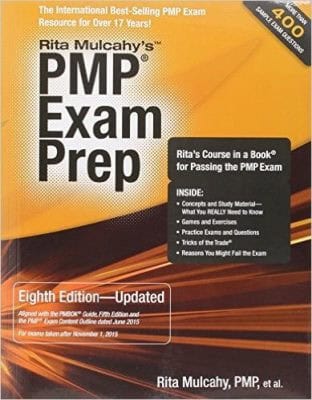
Rita Mulcahy’s PMP Exam Prep has earned its reputation as the definitive study companion for PMP candidates worldwide. Known for being both comprehensive and accessible, this guide consolidates every topic covered in the PMP exam into a single, well-organised publication. It draws on hundreds of interviews with verified test takers, giving candidates a realistic picture of what to expect before they enter the examination room.
What distinguishes this book from others in the market is its rare combination of breadth and clarity. With more than 600 pages of material, it covers the full project management framework without sacrificing readability. The writing style is direct and practitioner-focused, ensuring that candidates are not simply memorising content but genuinely building their understanding of project management principles and how they apply in real-world scenarios.
This book equips candidates with a thorough foundation across all key subject areas:
- Project Management Framework Coverage: A complete walkthrough of all process groups and knowledge areas aligned to the current PMP exam content outline, ensuring no critical topic is overlooked.
- Verified Test-Taker Insights: Firsthand accounts and exam experiences from real PMP candidates, offering practical context that bridges the gap between study material and actual exam conditions.
- Practice Questions and Application Exercises: Hundreds of scenario-based questions that reflect the style and difficulty of the real exam, helping candidates sharpen their critical thinking and time management skills.
- Accessible Language and Structure: Content presented in plain, jargon-free language that makes even the more technical aspects of the project management approachable for candidates at varying experience levels.
2. Velociteach All-in-One PMP Exam Prep Kit
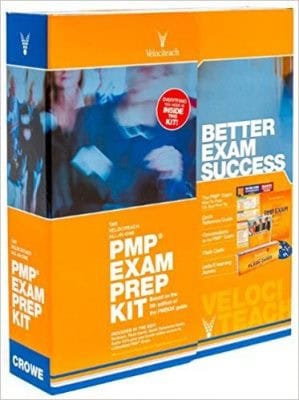
The Velociteach All-in-One PMP Exam Prep Kit was developed by Andy Crowe, a respected author and the founder of the Velociteach training programme. Widely recognised across the United States for delivering high-quality, practical PMP preparation, Velociteach has built a strong reputation among certification candidates. This self-study kit brings the core benefits of the Velociteach method into a portable, self-paced format that any candidate can follow independently.
What sets this kit apart is the thoughtful integration of multiple learning formats into a single package. Beyond the main study guide, it includes a laminated quick-reference card that condenses the most critical information candidates may need in the final moments before entering the exam room. This practical addition reflects a design philosophy centred on real-world usability rather than theoretical comprehensiveness alone.
The Velociteach kit prepares candidates across several important dimensions of exam readiness:
- Comprehensive Topic Coverage: In-depth discussion of all PMP exam domains, presented in a logical sequence that builds knowledge progressively rather than presenting topics in isolation.
- Practice Questions and Scenario Exercises: A robust set of application-based questions and hypothetical situations that help candidates translate theoretical knowledge into practical decision-making skills.
- Laminated Quick-Reference Card: A concise, at-a-glance study tool summarising key formulas, definitions, and frameworks for fast revision during the final preparation phase.
- Self-Paced Learning Structure: A flexible format that allows candidates to move through material at their own pace, making it well-suited for working professionals balancing study with full-time responsibilities.
3. Head First PMP
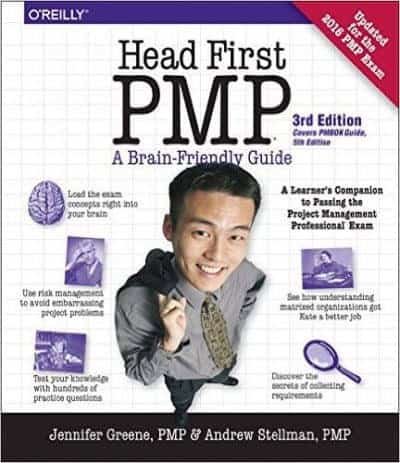
Head First PMP: A Brain-Friendly Guide takes a fundamentally different approach to exam preparation, positioning itself as a brain-friendly alternative to conventional study manuals. Designed for candidates who find traditional textbooks dry or difficult to absorb, this guide uses visual learning aids, memory techniques, and an interactive format to make project management concepts more engaging and easier to retain. It is particularly well-suited to candidates who identify as visual or experiential learners.
The publication’s multi-sensory design philosophy is what truly distinguishes it from other guides in this category. Rather than presenting information in dense blocks of text, the content is structured around cognitive science principles, using puzzles, illustrations, and storytelling to reinforce learning. This gamified approach makes complex frameworks more memorable and helps candidates internalise concepts rather than simply reading over them.
Head First PMP covers the essential exam knowledge areas through an engaging, learner-centred format:
- Visual Learning Aids and Diagrams: Richly illustrated content that translates abstract project management concepts into clear, memorable visuals, reducing the cognitive load associated with dense technical reading.
- Brain-Friendly Memory Techniques: Built-in mnemonics, storytelling devices, and repetition strategies designed to reinforce retention and improve recall under exam pressure.
- Gamified Exercises and Puzzles: Interactive activities embedded throughout the text that transform passive reading into active learning, keeping candidates engaged throughout the study process.
- Full PMP Exam Domain Coverage: Despite its unconventional format, the book covers all required exam content areas comprehensively, ensuring candidates are not sacrificing breadth for the sake of engagement.
4. McGraw-Hill’s PMP Project Management Professional Exam
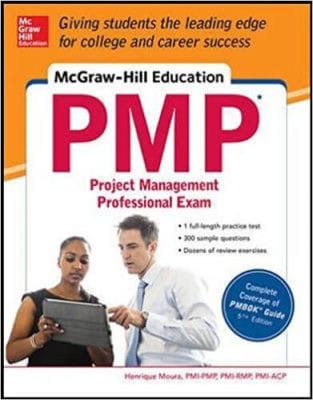
McGraw-Hill’s PMP Project Management Professional Exam guide brings the credibility and structure of a globally recognised academic publisher to PMP preparation. For candidates who prefer a methodical, textbook-driven approach to study, this PMP examination manual delivers a thorough and authoritative resource grounded in cutting-edge methods. The author is a certified Project Management Professional who has delivered PMP and project management courses to audiences across the globe.
The book’s greatest strength lies in the professional authority behind its content. Because the author draws on extensive real-world teaching experience, the material is not purely theoretical. It reflects the nuances of practical project management and is presented in a structured format that mirrors the systematic thinking required to succeed in both the exam and the profession.
This guide prepares candidates through a rigorous, methodically structured programme of study:
- Cutting-Edge Methodology Alignment: Content developed in line with current project management methods and industry standards, ensuring the material reflects the expectations of today’s PMP examination rather than outdated frameworks.
- Credentialed Authorship and Expert Commentary: Insights drawn from the author’s extensive experience as both a practising PMP and a professional educator, adding real-world depth to the academic content.
- Structured Exam Preparation Format: A logically sequenced study programme that mirrors the layout of the actual exam, helping candidates build familiarity with the question types and knowledge domains they will encounter.
- Comprehensive Domain and Knowledge Area Review: Full coverage of all PMP exam domains, with clear explanations that equip candidates to answer both knowledge-based and situational questions with confidence.
5. PMBOK Guide (5th Edition)
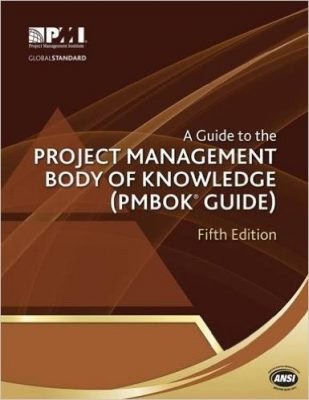
The PMBOK Guide (Project Management Book of Knowledge) is the foundational reference document published by the Project Management Institute (PMI). Widely regarded as the industry standard for project management practice, it is the official reference underpinning the PMP exam itself. Active PMI members can download the current edition directly from the PMI website at no cost, making it one of the most accessible authoritative resources available to candidates.
What gives the PMBOK Guide its unmatched credibility is its status as the definitive framework document for the profession. It defines the vocabulary, process groups, knowledge areas, and inputs and outputs that form the backbone of the PMP examination. While its technical language and dense structure make it a more demanding read than other guides, no serious PMP candidate should overlook it as a primary reference source throughout their preparation.
The PMBOK Guide provides candidates with a rigorous, standards-based foundation in the following areas:
- Process Groups and Knowledge Areas: A complete and authoritative mapping of all project management processes, grouped by phase and knowledge domain, forming the structural backbone of the PMP exam content.
- Inputs, Tools, Techniques, and Outputs (ITTOs): Detailed descriptions of what goes into each project management process and what results from it, providing candidates with the precise technical knowledge the exam frequently tests.
- Standardised Project Management Vocabulary: A comprehensive glossary of officially defined terms that establishes the common language used across the profession and is tested throughout the PMP examination.
- Industry Credibility and Exam Alignment: As the official PMI publication, the PMBOK Guide serves as the primary reference document for the exam, making familiarity with its content essential for any candidate pursuing the PMP credential.
Focus on the Full PMP Certification Package
Obtaining your PMP certification requires a commitment that extends well beyond reading a study guide and sitting an exam. The Project Management Institute mandates specific professional experience criteria that candidates must satisfy before they are even eligible to apply. Treating certification as a holistic professional development process, rather than a single academic exercise, ensures you build the practical judgement the credential is designed to validate.
Selecting the right preparation books is one important component, but it works best when combined with hands-on project experience, formal training hours, and consistent practice under timed exam conditions. Candidates who approach the PMP as a structured professional milestone, rather than a test to be passed, consistently report stronger retention of the material and greater confidence on exam day. The resources reviewed in this article provide a strong foundation for that broader preparation strategy.
Andy’s Add-on: To learn how I prepared and successfully passed the PMO, check out my PMP Exam Prep article.
Conclusion
Preparing for the PMP certification is a significant investment of time, effort, and focus. The five books reviewed here each take a distinct approach to covering the exam syllabus, from the accessible and comprehensive style of Rita Mulcahy’s guide to the standards-driven authority of the PMBOK. Choosing the right resource depends on your learning style, prior experience, and the depth of preparation your current knowledge base requires.
No single book guarantees success on its own, and many candidates find that combining two or more resources produces the best results. Whether you are drawn to a visual, gamified format or a rigorous academic structure, the materials above provide a strong foundation for exam readiness. Begin with the guide that best matches your approach to learning, and use the PMBOK as a constant reference throughout your preparation journey.
About Priya Jatoliya
Priya Jatoliya is a tech blogger and an expert in PMP certification training. She has experience of 4 years in the project management professional industry and has worked as a certified PMP for top-notch IT companies. She is an IT career consultant for students pursuing various IT certifications like Ethical Hacking, Cisco, Microsoft, Oracle, PMP, ITIL, Big Data & Hadoop, VMware, and much more.
FAQs
What is the best book for first-time PMP exam candidates?
Rita Mulcahy’s PMP Exam Prep is widely recommended for first-time candidates due to its clear language, comprehensive coverage, and practice questions drawn from real exam experiences. Its accessible structure makes it an excellent starting point for those new to formal PMP study.
Do I need to read the PMBOK Guide to pass the PMP exam?
While not mandatory reading from cover to cover, familiarity with the PMBOK Guide is strongly advisable. It defines the vocabulary, process groups, and knowledge areas that the exam is built around, making it an essential reference even if you use other books as your primary study material.
Can I pass the PMP exam using only one preparation book?
Many candidates pass using a single well-chosen resource, but most exam coaches recommend supplementing your primary book with practice exams and, where possible, a formal training course. The PMP exam tests application and judgment, not just knowledge recall.
How long should I spend studying before attempting the PMP exam?
Most candidates dedicate between two and four months of consistent study before sitting the exam, though this varies depending on prior project management experience and the depth of preparation required. Setting a structured study schedule and following it consistently significantly improves pass rates.
Is the Velociteach kit suitable for self-study without any prior training?
Yes, the Velociteach All-in-One kit is specifically designed for self-directed learners and requires no prior formal training to use effectively. Its structured format and laminated reference card make it a practical choice for working professionals who need a flexible, self-paced preparation resource.
Suggested articles:
- 7 Best Value-for-Money Books to Pass the PMP Exam
- 200 Free PMP Exam Questions & Answers
- The 7 Deadly Types of PMP Questions and Answers

Andrew Makar, DMIT, PMP, CSM is an IT director with delivery experience across projects, programs and portfolios in Digital Marketing, Automotive, Software and Financial Management industries. He is an enthusiastic leader who effectively translates project management theory into practical application. His area of interest and practice is in implementing Agile processes and SCRUM techniques to deliver better software to his customers. Find out more about Andrew on andymakar.com and please reach out and connect with Andrew on LinkedIn.