
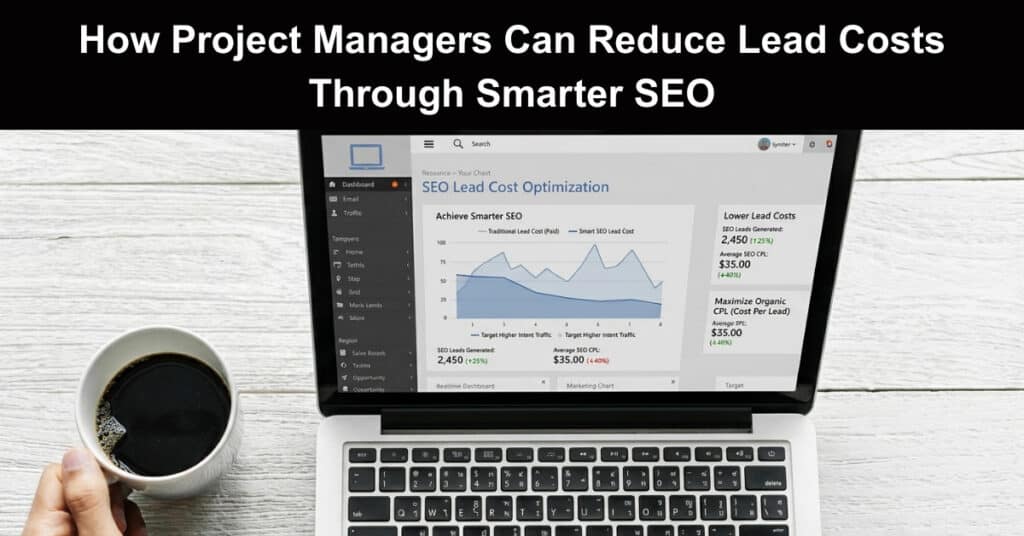
Project managers are expected to control budgets, manage timelines, coordinate teams, and report clear results. When marketing supports a business project, the cost of generating each qualified lead becomes an important performance metric. A well-planned SEO strategy can help attract more relevant visitors, improve the quality of enquiries, and reduce the average cost per lead. The best results come when SEO is managed like any other structured project, with clear goals, assigned responsibilities, regular reviews, and practical performance measures.
Here is a practical framework to help you treat SEO as a structured initiative that consistently lowers lead acquisition costs.
1. Set Clear Lead and SEO Goals
SEO works best when every task is connected to a defined business outcome. Project managers should agree on the main goals before approving budgets, content plans, or technical work.
Define What Counts as a Qualified Lead
A website visit or completed form does not always represent a useful business opportunity. A qualified lead should match the organisation’s service area, budget expectations, delivery timeframe, and project requirements. It should also reflect a genuine business need, realistic scope, and suitable location, ensuring the enquiry has real potential to become a productive, long-term working relationship rather than a passing point of contact.
The lead should also have a genuine need for the service, a realistic budget to support it, and enough authority within their organisation to influence or approve a purchase decision. Defining these conditions clearly at the start helps teams assess results accurately, prioritise follow-up efforts, and prevents traffic figures alone from becoming the main measure of success.
Choose Practical Performance Measures
Search rankings and website traffic can show progress, but on their own they rarely reflect real commercial value. Project managers should track deeper performance measures, including the number of qualified enquiries, organic conversion rates, cost per lead, lead-to-customer conversion rates, and revenue directly linked to search traffic. Together, these measures give a clearer, more reliable picture of genuine SEO performance and business impact.
These measures help explain how SEO activity contributes to the wider project, giving project managers a clearer view of return on investment. They also make it easier to compare performance across different marketing channels and budget periods, allowing teams to identify which strategies deliver genuine value, adjust resource allocation confidently, and make informed decisions about future spending priorities.
2. Focus on Search Intent
Search intent explains what a person is trying to achieve when entering a phrase into a search engine. Understanding that purpose helps teams create pages that answer real customer needs.
Target Searches Linked to Clear Needs
Broad search terms may attract a large audience, but many of those visitors are simply browsing rather than ready to act. Specific service-related searches often bring people who are closer to making contact. Project managers should work closely with SEO teams to identify phrases connected to particular services, pricing expectations, delivery requirements, or clearly defined business problems worth solving.
The aim is not simply to increase visitor numbers or inflate traffic reports. It is to attract people whose needs genuinely match the organisation’s skills, capacity, service scope, and commercial goals, ensuring every visitor represents a realistic opportunity for a productive, long-term working relationship rather than a wasted enquiry.
Match Content to Each Decision Stage
Customers often research before making contact. They may first look for general information, compare possible solutions, and then review service details. Educational articles can answer early questions, while comparison pages can explain different options. Service pages can present deliverables, processes, and expected outcomes. Case studies can provide context, and contact pages can make the next action clear.
Each page should have a distinct role so that the content supports the customer’s decision process without repeating the same information. This means educational content should build awareness, comparison pages should clarify options, service pages should detail deliverables, case studies should demonstrate proven results, and contact pages should guide visitors toward a clear, confident next step.
3. Improve Landing-Page Conversion Rates
SEO can bring suitable visitors to a website, but the page must help them take the next step. A stronger conversion rate can reduce lead costs without requiring a major increase in traffic.
Explain the Service Clearly
Visitors should quickly understand what the organisation offers, who the service is designed for, and what the process involves from start to finish. Clear headings, short paragraphs, and direct explanations make the page easier to read, while logical structure and simple language help visitors find relevant information quickly, reducing confusion and encouraging them to take the next step.
A strong service page should clearly explain the main deliverables, project stages, expected outcomes, pricing considerations, contact options, and practical next steps. It should also include relevant examples, past project summaries, or short case studies that help visitors understand how the service applies to their specific situation, budget, and business needs.
Keep Enquiry Forms Focused
Long, complicated forms can discourage potential customers and require far more effort than necessary during the first point of contact. Many visitors abandon enquiries when faced with excessive fields or irrelevant questions. Project teams should instead collect only the essential details needed to properly assess the enquiry, keeping the process simple, efficient, and welcoming while still gathering enough information to make informed follow-up decisions later.
A focused form may ask for the person’s name, contact information, service requirement, budget range, and expected timeframe. These fields provide enough context to gauge urgency, scope, and suitability without overwhelming the visitor. More detailed information, such as technical specifications or full project scope, can be discussed later during a follow-up call. This keeps the process efficient while still giving the team enough information to review lead quality accurately.
4. Manage SEO as a Structured Project
SEO includes research, technical checks, content writing, editing, publishing, reporting, and ongoing improvements. Treating these tasks as a managed SEO project helps teams control costs and maintain steady progress.
Assign Clear Responsibilities
Every task should have a clearly named owner, a realistic deadline, and a defined expected outcome. Keyword research often sits with an SEO specialist who understands search behaviour, while content review may involve subject experts, editors, and project managers working together to confirm accuracy, tone, and relevance. This collaborative structure ensures nothing is overlooked and each contributor understands exactly what they are responsible for delivering.
Clear responsibilities reduce repeated work, prevent confusion, and help teams identify delays early before they affect deadlines or budgets. A shared project system can also show approval stages, task status, reporting dates, and upcoming priorities, giving project managers a real-time view of progress and helping everyone stay aligned throughout each stage of the SEO process.
Use a Realistic Timeline
SEO usually develops through steady, consistent work over several months rather than producing instant results. Early stages typically focus on thorough research, technical checks, keyword analysis, and measurement setup to establish a solid foundation. Later stages may include service-page updates, content production, conversion improvements, on-page optimisation, and regular performance reviews to ensure continued progress and measurable business impact.
A practical timeline helps teams set realistic expectations about how quickly SEO results should appear, reducing pressure for instant outcomes. It also gives project managers clear checkpoints for reviewing progress, assessing performance data, approving further investment, reallocating budgets where needed, and adjusting priorities so the overall strategy stays aligned with genuine business goals and measurable lead generation results.
5. Apply the Strategy Through a Real-Life Example
A general SEO framework can also support businesses that serve a defined local market. A brief example shows how the same planning principles can be used in a specific setting.
Real-Life Example
A project-based company may receive regular website traffic but still generate only a limited number of suitable enquiries. By working with SEO services in Adelaide, the company could refine its service pages, target phrases linked to genuine customer needs, and track qualified leads more accurately.
The project manager could then compare total SEO spending against the number of relevant enquiries generated each month, factoring in lead quality and conversion likelihood. This would create a clearer connection between marketing activity, resource use, and commercial results, making it easier to justify future budgets, refine targeting strategies, and demonstrate measurable value to stakeholders across the wider business.
6. Review the Full Cost of Each Lead
Lead costs should include more than agency fees or advertising expenses. A complete calculation gives project managers a more accurate view of campaign performance.
Include All Relevant Expenses
SEO costs may include content production, technical support, research software, project management time, website development, reporting tools, and external specialist fees. Project managers can divide the total SEO expenditure by the number of qualified leads generated during the same period. For example, if a business spends $6,000 and receives 60 qualified leads, the average cost per lead is $100.
This figure can then be compared with other marketing channels to determine which sources deliver the strongest overall value. Rather than focusing on cost alone, project managers should also weigh lead quality, conversion rates, sales cycle length, and long-term customer value, since a slightly higher cost per lead often proves worthwhile when it consistently produces better qualified, higher converting business opportunities.
Conclusion
Project managers can reduce lead costs by treating SEO as a structured business project rather than a collection of separate marketing tasks handled in isolation. Clear goals, relevant search targeting, stronger landing pages, defined team responsibilities, realistic timelines, and regular performance reporting all work together to support better, more measurable results across every stage of the process.
The main focus should remain on qualified enquiries rather than traffic alone, since visitor numbers rarely reflect genuine commercial value. By tracking full costs, improving conversion paths, refining audience targeting, and following a realistic timeline, teams can build a dependable SEO process that supports responsible spending, consistent lead quality, and steady, measurable business growth across every stage of the project.
Suggested articles:
- Canadian E-commerce SEO Checklist: Steps for Online Success
- Project Management Strategies for SEO and Content Marketing Teams
- Why Local SEO is a Critical Competency for Modern Project Managers

Daniel Raymond, a project manager with over 20 years of experience, is the former CEO of a successful software company called Websystems. With a strong background in managing complex projects, he applied his expertise to develop AceProject.com and Bridge24.com, innovative project management tools designed to streamline processes and improve productivity. Throughout his career, Daniel has consistently demonstrated a commitment to excellence and a passion for empowering teams to achieve their goals.