

Technical debt is the hidden tax that every software team pays for shortcuts taken in the name of speed and deadlines. It collects in messy code, missing tests, outdated dependencies, and undocumented systems until even the smallest change becomes a risky, time-consuming operation. Left unmanaged, this invisible burden slows delivery, frustrates developers, and quietly consumes budgets that should fund new features and genuine innovation instead.
A technical debt register brings this hidden burden into the open by cataloging every flaw, its estimated repair cost, and the team responsible for it. Teams that track their debt systematically ship faster, spend less on emergency fixes, and protect their product quality over the long term. This guide covers register objectives, debt types, documentation steps, and a free Google Sheets template ready to use.
Objectives of the Technical Debt Register
A technical debt register exists to give your team a complete, up-to-date picture of every known flaw, risk, and inefficiency in your codebase and infrastructure. When everyone can see what is broken, what it costs to fix, and who owns each item, decisions about priorities become transparent, defensible, and easy to communicate. The register turns vague engineering frustration into concrete, actionable work.
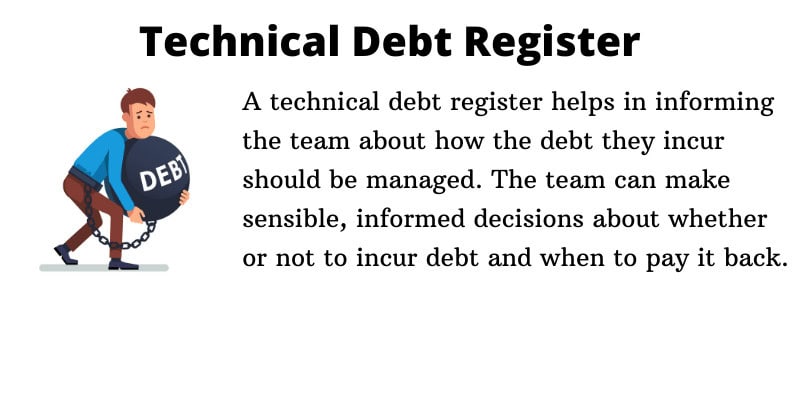
The register delivers five core objectives for any software team:
- Keep Track of All Debt in a Project: Every logged item is checked against the product backlog first so nothing overlaps or duplicates existing work. This single source of truth shows the full debt landscape, lets you allocate resources efficiently, and ensures new development never repeats an error that was already documented somewhere in the project.
- Save Time and Money: Because each entry records the estimated effort to fix, you always know the price of inaction. Tracking debt early prevents costly rework, avoids repeated mistakes, and keeps unnecessary expenses from pulling your project in the wrong direction. Teams stop guessing and start planning around real numbers.
- Know When Your Project Is in Trouble: A well-maintained technical register acts as an early warning system for delivery health. Rising counts, aging items, and growing fix estimates signal that the project is drifting off course before small problems become crisis-level failures. The register makes the invisible visible at the right moment.
- Improve Quality: Documenting flaws forces honest assessment of your product’s current state. Teams that see their debt clearly are far less likely to ship destructive code, cut corners on testing, or ignore architectural problems that degrade the user experience over time. Quality becomes a tracked metric, not a hope.
- Evaluate Changes That Affect Your Product: When a new feature is proposed, the register reveals exactly how it interacts with existing flaws and future debt. You can estimate implementation costs, anticipate side effects, and decide with confidence whether the change is worth the burden it may create. Every decision becomes evidence-based.
Types of Technical Debts
Not all technical debt is created equal, and treating every item the same way leads to poor prioritization and wasted effort. Understanding why a debt exists helps you decide whether to repay it now, schedule it later, or accept it permanently as a reasonable business trade-off. Most teams recognize three broad categories of technical debt across their projects and codebases.
Here are the three main types of technical debt to know:
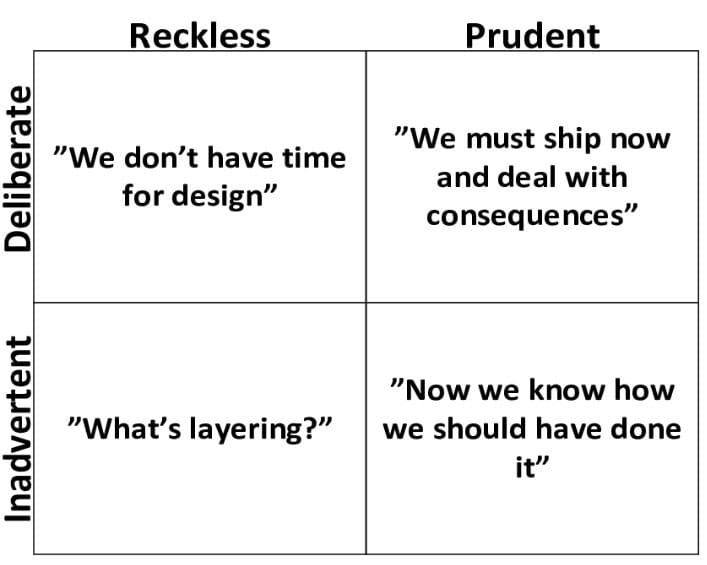
- Deliberate Technical Debt: This debt is taken on intentionally to capture a benefit, usually speed to market. A team may skip code documentation, defer refactoring, or ship a simplified solution to hit a release deadline. The key is identifying and recording these costs early, so they are repaid deliberately rather than forgotten forever.
- Accidental Technical Debt: Accidental debt appears when a developer makes an error, takes a shortcut, or lacks the experience to build a robust solution. It is rarely planned and often hidden inside code that appears to work. Regular reviews, pair programming, and honest post-mortems help surface this debt before it compounds.
- Technical Debt of Opportunity: Sometimes debt is accepted to seize a business opportunity, such as implementing a feature quickly to win a client even when the code is not fully reusable. This category also covers speculative features that later prove unnecessary. Recording the reasoning behind each choice keeps these trade-offs visible and reviewable.
How to Document Technical Debt in the Register?
Technical debt frequently goes undocumented because teams treat documentation as a low priority, especially under tight budgets and pressing release deadlines. Skipping this step practically guarantees that knowledge disappears when engineers leave, and flaws go unnoticed until they break production or stall delivery. A simple, repeatable documentation process keeps the register current and genuinely useful throughout the entire project lifecycle.
Follow these three simple steps to document technical debt properly:
- Prepare a List of Statements: Designate at least one person with strong programming and design experience to own the register. That person creates the statement format, captures debt as it is discovered, and keeps the language consistent so every entry is understandable by new team members, stakeholders, and future maintainers. Consistency prevents confusion.
- Assign Meaning to Each Statement: Each entry needs context: the affected component, the reason the debt exists, the estimated fix effort, and the business impact if left unresolved. Weekly reviews keep this information fresh and prevent items from slipping through the cracks. Meaningful statements turn raw observations into prioritized, actionable work items.
- Organize the Statements: Structure the register so any team member can find a specific technology, module, or subsystem in seconds. Group entries by component or debt type, add clear status labels, and sort by priority. Good organization saves hours of searching and makes the register a practical reference rather than a neglected spreadsheet.
Tech Debt Register Template Google Sheets
A spreadsheet template is the fastest way to start tracking debt because it requires no new tools, licenses, or training of any kind. Google Sheets adds collaboration benefits that matter: your whole team can view and edit the same register from any device, with change history and comments built in. Our free template includes the essential columns most teams need on day one.
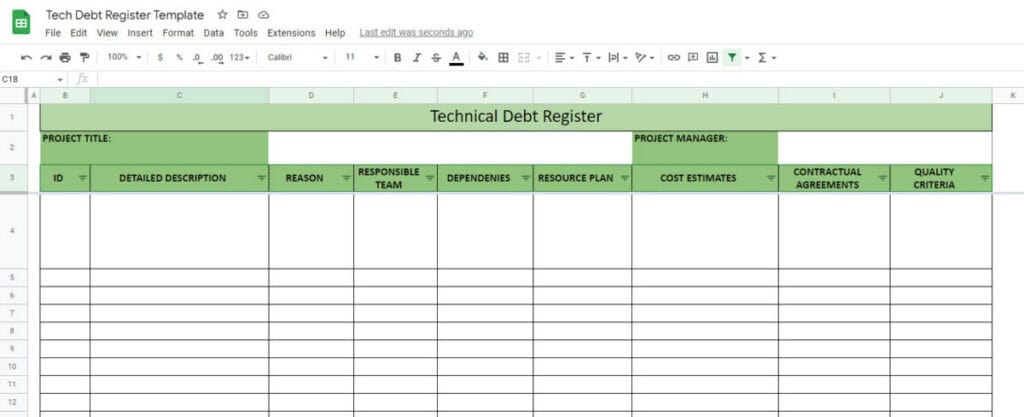
Copy our free tech debt register template, then review what it includes:
- Ready-Made Column Structure: The template includes fields for debt ID, description, type, severity, estimated effort, owner, status, and date logged. Every column is preformatted with dropdown options for type and status, so entries stay consistent and filterable. Copy the sheet, rename it for your project, and start logging within minutes.
- Built-In Prioritization Fields: Severity and effort columns let you calculate which debt to tackle first using simple sorting. High-severity items with low fix effort deliver immediate wins, while low-severity items can be scheduled or accepted deliberately. The template supports the priority conversations your team needs without complex formulas.
- Easy Sharing and Version Control: Because the template lives in Google Sheets, sharing with stakeholders takes one click. Version history records every change, and comments let engineers discuss items without leaving the document. This keeps the register living and current rather than a static file that drifts out of date.
Other Tools to Manage Technical Debt
While a spreadsheet works well for small teams, dedicated tools bring automation, dashboards, and integration with your existing development workflow and toolchain. Many teams start in Google Sheets and graduate to issue trackers or code analysis platforms as their debt grows and matures. The right tool depends on team size, toolchain, and how deeply debt is embedded in your daily development process.
Consider these proven tools and platforms for tracking technical debt:
- JIRA: JIRA and its marketplace add-ons, like the Technical Debt Tracker, let you manage debt as first-class tickets inside your existing agile board. Teams can see dependencies, estimate effort, and plan debt repayment alongside feature work in the same sprint. This keeps debt visible instead of hidden in a separate spreadsheet.
- GitHub: GitHub issues and projects give teams a digital space to assign meaning to debt statements, encourage collaboration, and keep every member informed. Labels, milestones, and code links connect each debt item directly to the files that need attention. Developers can comment, assign owners, and track resolution without leaving their workflow.
- SonarQube: SonarQube and similar static analysis platforms automatically detect code smells, bugs, and vulnerabilities as developers commit. These tools quantify quality in real time, flagging new debt before it enters the codebase and generating trends over time. Automated detection complements your manual register with objective, continuous measurement.
Technical Debt Register Template
Examples of Technical Debt
Recognizing debt in the wild is the first step toward managing it, because many teams carry flaws for years without ever naming them. Concrete examples make the concept tangible for stakeholders and help new engineers identify debt when they encounter it in their daily work. Here are the most common forms of technical debt found in software projects of every size and industry.
These everyday situations are classic examples of technical debt in action:
- Poor Software Code Quality: Spaghetti code, duplicated logic, and deeply nested functions make software hard to understand, test, and extend. Users feel the effect as sluggish interfaces and confusing behavior, while developers lose time deciphering how the system actually works. Code that fails quality standards becomes a permanent drag on every future feature.
- Lack of Documentation: When code, APIs, and infrastructure have no written explanation, knowledge lives only in people’s heads. Developers must reverse-engineer systems to make changes, wasting hours and money on work that documentation would have made trivial. Staff turnover turns undocumented systems into a serious business risk.
- Insufficient Software Testing: Untested code behaves like a black box until users discover the problems in production. Missing unit, integration, and regression tests mean every change risks breaking something unrelated, and defects surface at the worst possible moments. Testing gaps compound quickly, making the software’s behavior unpredictable for both users and the business.
- Outdated Dependencies and Legacy Systems: Old libraries, unsupported frameworks, and aging infrastructure accumulate security vulnerabilities and compatibility problems over time. Teams postpone upgrades because they are painful, only to face emergency migrations when support ends. A register makes these ticking clocks visible and assigns them a realistic repayment plan.
Consequences of Technical Debt
Ignoring technical debt does not make it disappear; instead, it compounds interest quietly in the background of every single release and sprint. The damage shows up in slower delivery, frustrated teams, and eroding product quality that customers eventually notice and complain about. Understanding the consequences helps executives and engineers agree on why tracking debt is worth the time and investment.
Unmanaged technical debt creates these three serious consequences for your project:
- Reduced Quality: Every fix becomes slower and riskier as debt accumulates, because each change must be tested against a fragile, poorly understood system. Regression testing can stretch into days or weeks, and quality standards quietly slip as teams struggle to keep pace with demand. The product your customers use degrades release after release.
- Increased Risk: Unpredictable codebases make future projects a gamble, since no one can reliably forecast where defects will appear. Bugs that are difficult to fix surface at critical moments, threatening deadlines and stakeholder confidence. The longer debt remains, the harder it becomes to estimate, plan, and deliver with certainty.
- Increased Costs: McKinsey research shows that organizations redirect 10 to 20 percent of their technology budgets to resolving technical debt instead of building new products. The load on your staff grows as engineers juggle defect management, emergency fixes, and feature work simultaneously. These hidden costs quietly erode profitability and slow company growth.
Video About Technical Debt
Sometimes a visual explanation makes technical debt click faster than any written definition. Watch the short video below for a quick overview of what technical debt is, why it accumulates, and how teams can start managing it effectively.
Conclusion
A technical debt register is one of the highest-leverage tools a software team can adopt, because visibility alone changes team behavior. Teams that catalog their debt objectively, categorize it honestly, and review it regularly ship faster with fewer surprises and higher confidence. The free Google Sheets template gives you and your team a practical starting point that requires no new software, licenses, or complicated setup.
Start by copying the template today, logging your five most painful items first, and scheduling a monthly review with your engineering team. Small, consistent effort always beats occasional cleanup sprints, and the register will quickly pay for itself in saved hours and avoided emergencies. Your future engineers, and even your future self, will thank you for documenting the debt before it could ever bury them.
Frequently Asked Questions About Technical Debt Registers
What is a technical debt register?
A technical debt register is a living document that synchronizes all the technical information needed to maintain a software program. It catalogs known flaws, their estimated repair costs, owners, and priorities in one place, so teams can find, discuss, and fix problems quickly. Think of it as a shared memory for everything that needs attention.
How do you manage tech debt in agile?
In agile teams, technical debt belongs in the backlog alongside features, sized and prioritized like any other work item or story. Dedicate a portion of each sprint to repayment, track debt items in the register, and make them visible during planning and retrospectives. This turns debt management from an afterthought into a continuous, shared team practice.
How do you categorize technical debt?
Most teams categorize debt by type, such as deliberate, accidental, or opportunity-based, and then assign severity and estimated effort. Some registers add a component or subsystem field, while others classify by whether the debt blocks features, increases risk, or only inflates maintenance cost over time. Choose categories that support your prioritization conversations and keep them consistent.
What should a technical debt register template include?
A useful template includes columns for debt ID, description, type, severity, estimated effort, owner, status, date logged, and linked backlog item or ticket. Optional fields for affected component, root cause, and resolution notes add valuable context for future planning and reviews. A template with consistent dropdown options makes new entries quick to log and easy to filter.
How often should you review your technical debt register?
A lightweight weekly review works best for active projects, while monthly reviews suit slower maintenance work. During each review, check for new debt, update statuses, re-prioritize aging items, and confirm owners are still correctly assigned. The goal is steady attention rather than marathon cleanup sessions, because small, frequent adjustments keep the register accurate and trusted.
Suggested articles:
- 2 x Free Technical Debt Register Template Google Sheets & Excel
- Technical Project Manager Made Simple: What You Need to Know
- 60+ Free Risk Register Templates (Google Docs, Excel, PDF)

Shane Drumm, holding certifications in PMP®, PMI-ACP®, CSM, and LPM, is the author behind numerous articles featured here. Hailing from County Cork, Ireland, his expertise lies in implementing Agile methodologies with geographically dispersed teams for software development projects. In his leisure, he dedicates time to web development and Ironman triathlon training. Find out more about Shane on shanedrumm.com and please reach out and connect with Shane on LinkedIn.