
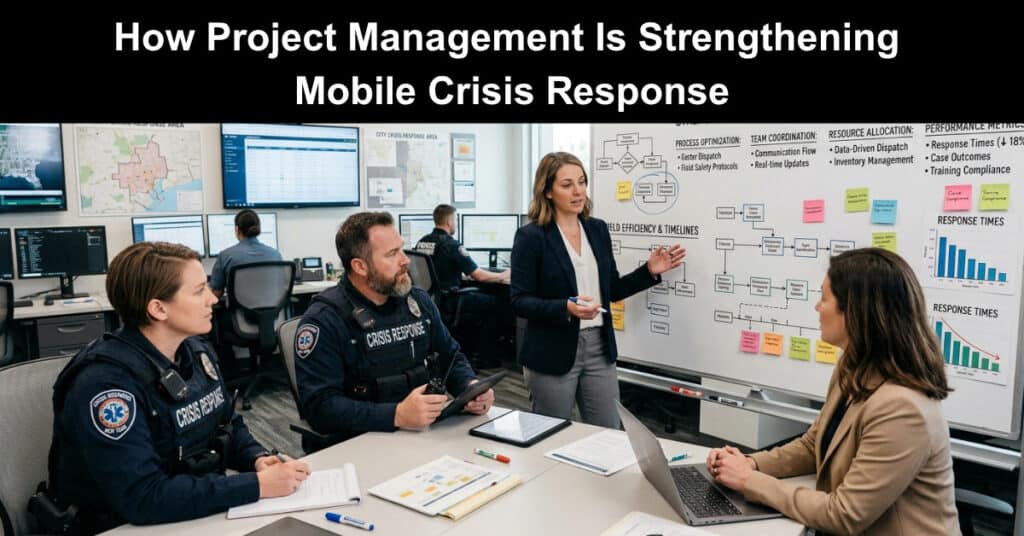
Effective crisis response requires more than having the right people available when an emergency occurs. Mobile crisis teams must coordinate field workers, community organizations, service providers, referrals, documentation, and follow-up while responding to situations that can change quickly.
Communities are increasingly turning to mobile crisis teams to respond to behavioral health emergencies, housing instability, domestic crises, and other urgent situations that may not require a traditional law enforcement response. These teams can include outreach workers, behavioral health professionals, advocates, case managers, and co-responders who assess situations in the field and connect individuals with appropriate services.
However, the initial response is only one part of the process. Once a crisis has been assessed, multiple actions may need to take place, often involving several people and organizations. Applying project management principles such as task coordination, clear workflows, stakeholder communication, documentation, and progress tracking can help mobile crisis programs manage these complexities more effectively.
In this environment, project management is not about treating an individual’s crisis like a conventional project. Instead, it provides a framework for organizing the many moving parts involved in a coordinated response. When teams have clear processes and reliable information, they are better positioned to respond to immediate needs while maintaining continuity of support after the crisis has passed.
Crisis Response Is Becoming More Specialized
Traditional crisis response approaches were built around addressing clearly defined, immediate threats. Today’s crises are more complex, often developing from a combination of circumstances such as housing instability, substance use, financial difficulty, or family conflict occurring alongside a behavioral health emergency. Mobile crisis teams increasingly take a broader approach, assessing an individual’s full circumstances rather than only the immediate incident.
This shift allows teams to address both the immediate crisis and connect the individual or family with appropriate interventions.
- Coordinated Service Connections: A team responding to a behavioral health emergency may help an individual access temporary housing, connect with a shelter, arrange treatment, receive victim assistance, or obtain referrals to additional community-based programs and support services.
- Follow-Up Planning: Beyond connecting individuals to immediate services, teams also establish a clear follow-up plan to ensure that support continues consistently after the initial crisis response has concluded and the situation has stabilized.
- Coordinated Task Ownership: From a project management perspective, this type of response involves coordinating multiple activities toward a common outcome, with different people responsible for different parts of the overall process.
- Preventing Missed Steps: Responsibilities can change as a case develops, and without a clear workflow in place to track who is doing what, important tasks can easily be overlooked during a complex, multi-step response.
Field Teams Need Access to Reliable Information
One of the biggest challenges facing mobile crisis teams is information or data fragmentation. Details about an individual or family often exist across different agencies, programs, and service providers, so an outreach worker arriving at a situation may not know about previous interactions, existing referrals, assigned case managers, or other organizations already involved in the case.
This lack of visibility can create real gaps in the continuity of care.
- Duplicated Work: Without access to relevant history, a worker may repeat an assessment already completed or make duplicate referrals, wasting valuable time that could be spent supporting the person in crisis.
- Disrupted Continuity: These information gaps are not simply administrative inconveniences; they can disrupt the continuity of care and make it harder to determine which actions have already been taken.
- Clear Status Visibility: Effective project management depends on understanding the current status, assigned responsibilities, outstanding tasks, and previous decisions; mobile crisis response requires many of the same capabilities.
- More Time for Support: When team members can quickly see what has already happened and who is responsible for the next step, they spend less time searching for information and more time helping the person in crisis.
Technology Can Improve Coordination Without Replacing Judgment
Technology is increasingly important to the work of mobile crisis teams. Digital tools allow workers to document interactions directly in the field rather than returning to an office to complete paperwork, while also helping teams track referrals, assign follow-up tasks, and monitor whether those tasks have actually been completed by the responsible party over time.
This structure brings order to what can otherwise become a complicated series of handoffs between organizations.
- Connected Multi-Organization Cases: A case may involve a mobile crisis team, a shelter, a behavioral health provider, a victim advocacy organization, and a community outreach program, with each organization playing a distinct but connected role.
- Shared Case Visibility: Without effective coordination, one organization may not know what another has already done, but a shared and organized information system allows team members to understand the full case history clearly.
- Aligned Stakeholders: Project managers understand the importance of keeping stakeholders aligned, and mobile crisis teams face a similar challenge involving practitioners, community organizations, government agencies, and various service providers.
- Judgment Still Comes First: Technology cannot replace the judgment, empathy, and relationships that mobile crisis workers bring to their jobs, but it can reduce administrative barriers and improve visibility into the work still outstanding.
Better Case Management Supports Better Crisis Response
As mobile response programs expand, organizations need systems that support the realities of field-based work. Public safety case management software can help outreach workers, advocates, and crisis response teams maintain organized case histories, document field interactions, manage referrals, and monitor follow-up activity, giving every worker a clear view of where a case currently stands today.
This level of detail requires clear ownership of tasks at every stage of a case.
- Workflow-Matched Systems: The most effective systems support the practitioner’s actual workflow, giving workers mobile access to relevant information, flexible processes, secure records, and a case history that follows the individual.
- Divided Task Ownership: A case may require one worker to make a referral, another to arrange an appointment, and a third to follow up with a community organization on progress.
- Preventing Dropped Tasks: Clearly documenting these responsibilities can help prevent tasks from falling through the cracks, especially when a case involves several people working across multiple organizations and service providers.
- Smoother Handoffs: When a new worker joins a case, they can review previous actions and understand where the process currently stands rather than starting from the very beginning.
Documentation Improves Accountability and Follow-Up
Documentation is one of the foundations of effective crisis response, giving teams an accurate record of what happened, what services were offered, what actions were taken, and what needs to happen next. This record also helps new team members quickly understand a case’s history, ensures accountability across multiple organizations, and supports better decision-making throughout every stage of the response.
This record becomes especially valuable for tracking progress and accountability over time.
- Tracking Referrals and Handoffs: Consistent records help organizations track referrals between programs, coordinate handoffs, support program and grant reporting, and measure outcomes over time.
- Clearer Case Status: These records make it easier for managers to identify where a case stands and whether outstanding actions have been completed.
- Measuring What Worked: Without a thorough record of prior interactions, teams may struggle to determine whether an intervention succeeded or the same barriers persist.
- Supporting Informed Decisions: Good documentation creates continuity between team members and organizations while providing the information needed to make informed decisions about next steps.
Crisis Response Continues After the Incident
Bringing an immediate crisis to an end is important, but it is often only the beginning of the support an individual or family may need. After the situation has been resolved, a person may still need help attending an appointment, finding temporary housing, applying for benefits, accessing counseling, or connecting with other essential community resources.
This means mobile crisis response can resemble a long-running project involving multiple stakeholders and dependencies.
- Sequenced Dependencies: One action may need to happen before another can begin, and the successful completion of one task may depend on communication with an outside organization or provider.
- Connected Next Steps: A worker may make a housing referral, but the individual may then need transportation to an appointment, after which another provider coordinates treatment or benefits.
- Visible Ownership: Clear ownership of tasks, deadlines, communication, and documentation can help ensure that these next steps remain visible to everyone involved in supporting the individual through every stage of recovery.
- Follow-Up as Part of the Outcome: Resolving the immediate incident is one milestone, but successful follow-up is equally important and should be considered part of the larger, longer-term outcome for the individual and family.
Measuring the Success of Crisis Response
Project management also emphasizes the importance of measuring progress, and this principle applies directly to mobile crisis programs. Organizations need to understand not only how many cases they respond to, but also what happens afterward, using measures such as referral completion, follow-up rates, response times, successful connections to services, and long-term outcomes over time.
These measurements can help organizations identify bottlenecks hidden within their existing workflows.
- Spotting Follow-Up Barriers: If a large percentage of referrals are made but few are completed, the problem may not be the initial response but a barrier somewhere in the follow-up process.
- Identifying Patterns: Having organized case information makes it easier for program leaders to identify these patterns and determine where existing processes could be improved or adjusted to better serve individuals and families.
- Data as a Planning Tool: Data becomes another project management tool that can help organizations allocate resources, identify recurring challenges, and refine their processes based on what is actually happening in the field every day.
The Future of Crisis Response Is More Connected
The future of crisis response for situations that require more than a traditional emergency call is being shaped by mobile crisis teams and increasingly coordinated community services. Well-trained staff remains essential, but people working in the field also need reliable information, clearly defined processes, effective communication, and systems that support thorough documentation and consistent follow-up.
Project management principles can help bring these essential elements together into one coordinated approach.
- Clear Workflows and Documentation: Clear workflows establish what needs to happen, documentation shows what has already happened, and task management clarifies who is responsible for the next step in the process.
- Technology That Adds Visibility: Technology can connect these elements while giving teams greater visibility into complex cases, without replacing the judgment and relationships that mobile crisis work depends on.
- Coordination Over Speed: The most effective programs will not simply be those that respond quickly to an incident, but those that can coordinate the many people, organizations, and services involved.
- Building More Connected Systems: By combining skilled practitioners with strong case management and project-oriented processes, communities can build crisis response systems that stay organized and connected long after the emergency has ended.
Conclusion
Mobile crisis response has grown far more complex than a single field visit, and communities are recognizing that the work doesn’t end when the immediate emergency does. Coordinating outreach workers, service providers, and community organizations around one individual’s case requires the same discipline that project managers apply to any multi-stakeholder effort: clear task ownership, reliable documentation, and visibility into what has already happened.
Programs that treat crisis response this way are better equipped to prevent duplicated work, close information gaps, and keep follow-up from falling through the cracks. As more organizations adopt case management systems built around these principles, the field is shifting from isolated incident response toward genuinely connected, accountable care — one that supports individuals and families well beyond the moment the crisis first began.
Suggested articles:
- Common Operational Risks and How to Address Them Effectively
- 27 Risk Category Examples for Project Managers
- Beyond Crisis Control: How a Public Relations Agency Builds Long-Term Brand Trust

Daniel Raymond, a project manager with over 20 years of experience, is the former CEO of a successful software company called Websystems. With a strong background in managing complex projects, he applied his expertise to develop AceProject.com and Bridge24.com, innovative project management tools designed to streamline processes and improve productivity. Throughout his career, Daniel has consistently demonstrated a commitment to excellence and a passion for empowering teams to achieve their goals.