
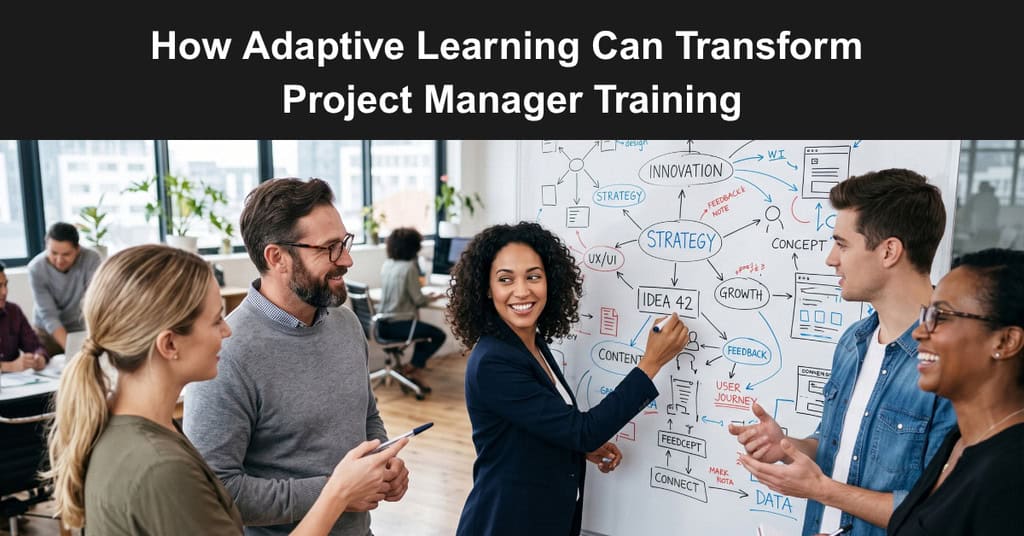
Your project managers sit through the same course in the same order, whether they have led ten projects or none. Meanwhile, about one-third of complex projects fail, nearly twice the 13% failure rate for projects overall, according to the Project Management Institute’s Pulse of the Profession. One-size-fits-all training cannot close that gap quickly, but adaptive learning tailors content to what each person already knows.
Adaptive platforms use algorithms and data analytics to adjust content, pace, and practice for each learner. For project managers who juggle Agile, hybrid, and predictive work, that precision saves time and builds the specific skills the next project demands, without wasting hours on familiar topics. Here is how adaptive learning reshapes project manager training, from personalization and tool integration to measurable return on investment:
Personalized Learning for Dynamic Roles
Traditional project management training often relies on a uniform curriculum that ignores individual competencies. Adaptive platforms change that. Instead of one script for everyone, adaptive learning customizes instruction to each learner’s needs and abilities. Candidates preparing for the CPA exam already see this, because adaptive tools identify weak areas and focus support on them. Each learner then follows a route built from their own results.
Personalization shows up in project manager training in these ways:
- Skill Gap Detection: Short diagnostic checks reveal where a learner is strong and where knowledge is thin, such as scheduling versus risk management. Training then concentrates on the weak areas instead of repeating familiar material.
- Adjustable Pace: Experienced managers move quickly through concepts they already apply, while newer practitioners spend more time on fundamentals. Nobody waits for a group or struggles to keep up.
- Role-Specific Paths: A PMO lead, a product owner, and a first-time project coordinator need different skills. Adaptive paths match content to the role and the methodologies the person actually uses.
PM Tools: Smooth Integration
Integration with widely used project management platforms turns training into practice. Popular tools such as Jira, Trello, and Microsoft Project can connect with training modules, so learners apply new concepts to live work immediately. A resource allocation lesson, for example, can link directly to the learner’s own Trello board. This closes the gap between classroom concepts and daily practice.
Integration works best when training and daily tools connect in these ways:
- Link Lessons to Live Work: Each module points to a real task in the learner’s current project. Theory becomes useful the same day, which improves retention and shows managers why the lesson matters.
- Use Real Project Data: Exercises draw on actual schedules, budgets, and backlogs rather than invented examples. Learners see how techniques behave in their own context, including the messy details.
- Reduce Context Switching: Embedded training means managers do not leave their workflow to learn. Short prompts appear where the work happens, which keeps learning from feeling like extra effort.
Immediate Feedback, Faster Growth
Feedback is the backbone of effective learning, and adaptive systems provide real-time performance insights rather than relying solely on end-of-course evaluations. When a learner struggles, the platform redirects them to targeted resources, such as simulations or microlearning videos. Research on spaced and interleaved practice shows that spreading practice over sessions increases learning, so short refreshers keep small misunderstandings from hardening into habits.
Fast feedback improves project manager development in these specific ways:
- Real-Time Performance Insights: Learners see results immediately after each activity. Quick answers on what went wrong let them correct course while the reasoning is still fresh in memory.
- Targeted Remediation: Missed questions trigger specific follow-up content, such as a short video on critical path analysis. The learner fixes the exact gap and does not repeat an entire module.
- Microlearning Reinforcement: Brief lessons delivered over several days help knowledge stick. Short refreshers fit between meetings and keep important techniques from fading after the course ends. Spaced repetition also strengthens recall.
Real-World Challenges: Scenario Simulation
Scenario-based learning simulates practical workplace situations, such as a delayed software launch or a misaligned team, so managers can practice decisions in a controlled environment. Employers increasingly turn to simulations to upskill employees across technical and leadership roles. This hands-on approach builds confidence and equips managers to handle similar challenges in real projects when pressure is high.
Scenario simulations strengthen project manager judgment in these practical ways:
- Practice Decisions Safely: Managers test trade-offs between scope, schedule, and cost without risking a real project. Mistakes become lessons rather than costly setbacks for the team or the client.
- Rehearse Common Delivery Problems: Scenarios can cover scope creep, a key resource leaving, or a stakeholder changing priorities. Repeated exposure makes the right response feel familiar when pressure is high.
- Review Choices With Feedback: After each scenario, the platform explains the consequences of the decisions made. Learners understand why an option worked or failed, not only that it did.
Measuring ROI: Training That Delivers
Adaptive platforms produce measurable analytics, including engagement rates, skill improvement percentages, and completion times. This data lets organizations quantify training effectiveness and justify educational investments with concrete evidence. A standard training evaluation guide recommends measuring reaction, learning, behavior, and results, a four-level approach that fits adaptive data well. Together they show leaders where training works.
Track these measures to show the value of adaptive training:
- Engagement Rates: Look at how often learners return and how long they stay active. Low engagement usually signals content that is too easy, too hard, or poorly connected to daily work.
- Skill Improvement Percentages: Compare assessment scores before and after each module. Rising scores in targeted areas show that the adaptive paths are directing effort to the right places.
- Completion Times: Shorter time to competence means managers return to productive work sooner. Compare completion times against fixed-curriculum courses to quantify the savings for the organization. Faster competence also lowers training costs.
- On-the-Job Behavior Change: Ask managers and team members whether new techniques appear in real projects. Behavior change is the strongest link between training spend and project outcomes. Short surveys after thirty days can capture it.
Success Stories: What Your Numbers Say
Adaptive learning has a growing evidence base. A 2024 meta-analysis of 45 studies in the Journal of Educational Computing Research found a medium to large positive effect of AI-enabled adaptive learning on learner outcomes (g = 0.70), although most studies involved students rather than working professionals. Fields that rely on credential exams use similar tools, and project management can borrow the approach.
In project management, adaptive training can deliver these practical outcomes:
- Reduce Onboarding Duration for New Managers: Diagnostics skip what a hire already knows and focus on gaps. New managers reach independent project work sooner, and their mentors spend less time on repeated basics.
- Enhance Collaborative Team Skills: Scenarios involving stakeholders, conflicts, and handoffs build the interpersonal skills that projects depend on. Shared scenarios also give teams a common language for discussing problems.
- Prepare Leaders for Emerging Methodologies: Adaptive paths introduce Agile, Scrum, and hybrid practices at the right depth for each person. Leaders adopt new methods with fewer false starts and less resistance.
How to Start an Adaptive Learning Program for Project Managers
Start with one team and one skill area rather than rolling a platform out to the whole organization. The 70-20-10 development model attributes about 70% of leadership development to challenging experiences and assignments, 20% to relationships, and 10% to coursework, so design training around real work. Let each stage earn the next, and expand only after the pilot shows results.
Launch your program in stages by following these practical steps:
- Define Skill Targets First: Decide which competencies matter most, such as risk management or stakeholder communication, before you compare platforms. Clear targets keep the technology tied to business outcomes.
- Pilot With One Team: Test with a small group and collect feedback on content, pace, and usability. A pilot reveals problems cheaply and creates advocates for a wider rollout.
- Pair Learning With Real Assignments: Ask managers to apply each module to a live task. Application turns knowledge into habit and gives mentors something concrete to discuss. Learners also see the value of the training quickly.
- Review Data Every Month: Examine engagement, scores, and completion times regularly. Adjust the content mix when the numbers show learners stalling or racing through material that is too easy.
Common Mistakes When Adopting Adaptive Learning
Most adoption problems come from planning, not technology. Adaptive systems need clean content, reliable data, and capable facilitators, and experts discussing ethical implications of predictive analytics warn that predictive models can fail underrepresented groups when bias goes unchecked. Teams that skip these foundations often conclude that adaptive learning does not work when the real issue was a weak setup. A careful setup protects the investment.
Avoid these mistakes when you roll out adaptive training programs:
- Buying Technology Before Defining Outcomes: A feature-rich platform cannot compensate for unclear goals. Write the skills and behaviors you want first, then choose a tool that supports them. Clear outcomes also make vendor comparison easier.
- Ignoring Learner Data Privacy: Adaptive platforms collect detailed performance data. Explain what the platform collects, who sees it, and how long it keeps the data, so managers trust the system and use it honestly.
- Removing Human Coaching: Software cannot replace mentors, peers, and managers who discuss judgment calls. Keep conversations alongside the platform so insights from the data turn into better decisions.
Adaptive Learning Essentials: What to Know Before You Pilot
These quick facts summarize what adaptive learning is, how it fits project manager training, and how to judge its value. Use them as a reference when you brief a sponsor or compare vendors. Each row pairs a fact with the reason it matters, so you can lift any answer directly into a training proposal or business case.
Review the key facts and why each one matters below:
| Aspect | Key Fact or Answer | Why It Matters |
|---|---|---|
| Definition | Adaptive learning customizes content, pace, and practice for each learner using algorithms and data analytics. | It separates adaptive training from one-size-fits-all courses. |
| Evidence | Controlled studies show positive effects on learner outcomes, though most research involves students rather than working professionals. | Promising results still deserve a pilot in your own setting. |
| Integration | Training modules can link to the tools managers use daily, including Trello boards and Jira projects. | Learners apply lessons to live work immediately. |
| Feedback | Real-time performance data replaces end-of-course evaluations. | Learners correct misunderstandings before they harden into habits. |
| Measurement | Track engagement, skill improvement, completion time, and on-the-job behavior. | These measures connect training spend to project outcomes. |
Conclusion: Adaptive Learning Is More Than a Buzzword
Adaptive learning moves project manager training from one-size-fits-all courses to targeted, data-driven development. Personalization saves time, integration with daily tools turns lessons into practice, real-time feedback speeds correction, and simulations build confidence before the stakes are real. Measurable analytics then let organizations show what the investment delivered. Together, these strengths explain why adaptive approaches are gaining ground in professional development programs worldwide.
In a field where agility and precision determine business success, adaptive learning is a practical professional tool rather than an optional extra. Choose one skill area, pilot it with one team, and use the results to guide the next step in your training strategy. Share the results with sponsors to build support for wider adoption. Start small, measure honestly, and expand what works.
Frequently Asked Questions About Adaptive Learning for Project Managers
What is adaptive learning in project management training?
Adaptive learning is a method of instruction that uses technology to customize the learning experience for each person. In project management training, it adjusts content, pace, and practice based on a learner’s results and existing knowledge. A manager who already understands scheduling skips ahead, while one struggling with risk analysis gets more examples and practice.
How does adaptive learning differ from traditional project manager training?
Traditional training delivers the same course in the same order to everyone, so experienced managers sit through familiar material while newcomers fall behind. Adaptive learning responds to each learner’s performance, adjusting content and difficulty as they progress. It also provides feedback immediately instead of waiting for an end-of-course assessment, which shortens the time to competence.
Can adaptive learning help project managers prepare for certification exams?
Yes, it can help by finding weak areas and directing practice toward them, which makes study time more efficient. Adaptive tools are widely used for credential preparation in other professions. No tool guarantees a pass, so combine adaptive practice with official exam guides, real project experience, and study groups to build lasting understanding. Check your provider’s content quality first.
How do you measure the ROI of adaptive learning for project managers?
Start with platform data such as engagement, skill gains, and completion times, then connect it to on-the-job behavior and project results. Compare a pilot group with a similar group using standard courses. Include the time saved on training and mentoring in the calculation, and review results monthly so you can adjust the program early. Share results with sponsors.
What are the main downsides of adaptive learning platforms?
The main downsides are setup effort, cost, and dependence on good data. Platforms need quality content and capable administrators, and results depend on how well the vendor designs the algorithm and the team implements it. Privacy is another concern because performance data is detailed. Run a small pilot, review vendor data policies, and keep human coaching in the program.
Suggested articles:
- Why Learning Platforms Rely on APIs to Make Education More Adaptive and Interactive
- Is Distance Learning the Future Skill Deficiency Solution?
- Is Remote Learning Closing Skills Gaps in Project Management?

Daniel Raymond, a project manager with over 20 years of experience, is the former CEO of a successful software company called Websystems. With a strong background in managing complex projects, he applied his expertise to develop AceProject.com and Bridge24.com, innovative project management tools designed to streamline processes and improve productivity. Throughout his career, Daniel has consistently demonstrated a commitment to excellence and a passion for empowering teams to achieve their goals.