
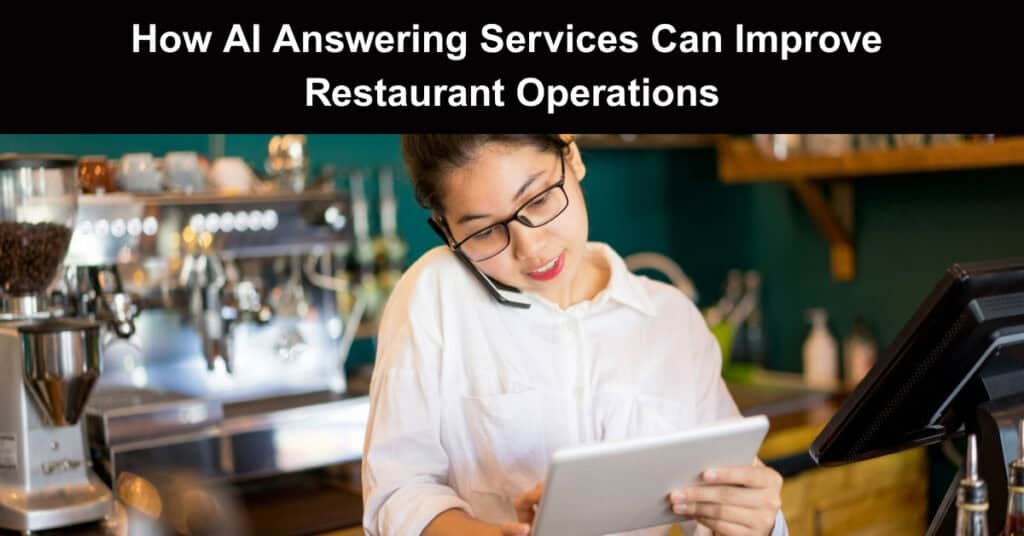
Running a restaurant is a constant juggling act, and the phone rings hardest at the moment when the kitchen is busiest. Reservations, menu questions, dietary needs, and opening-hour checks all arrive at once, demanding attention your staff cannot spare. AI answering services absorb that incoming traffic automatically, freeing your team to focus on the food, the guests, and the flow of the busy dining room.
This guide explains how a restaurant can use artificial intelligence to answer calls and messages around the clock, tame peak-hour surges, personalize each guest’s experience, and cut operational strain and cost right across the whole business. It also explains how these platforms connect to your existing technology stack, before closing on where an AI answering service creates the largest possible return.
The Growing Need for AI-Driven Answering Services in Restaurants
Restaurants are almost always busy during peak service windows, with customers sending a steady stream of questions and requests. Some are simple, like booking a table, while others involve menu details, dietary restrictions, allergies, or opening hours. Every contact needs a response, and more arrive each year through the phone and apps; a host must pause to answer, fueling customer service technology growth.
Traditionally, every call and message required a staff member to stop what they were doing and respond, pulling precious time away from service and from guests already seated. AI-driven answering platforms change that balance by using advanced algorithms and natural language processing to handle many interactions automatically, so attention stays exactly where it matters most on the floor.
Several key realities make this demand for automated service pressing:
- Always-Busy Peak Hours: Lunch and dinner rushes create a flood of simultaneous inquiries, and a human team simply cannot answer them all without slowing down the entire restaurant floor for everyone.
- Diverse Question Types: Guests ask about reservations, dietary needs, menus, prices, and hours, and each single one pulls staff attention away from serving the people already seated around them.
- Rising Digital Contacts: Calls, texts, and social messages keep growing every single year, so restaurants need a scalable way to respond quickly without adding headcount for each new channel.
- Thin Margins and Teams: Most restaurants run lean, leaving very little slack to hire extra people just to manage the phone during the busiest and most demanding hours of the day.
Streamlining Customer Service with AI Answering Services
One of the biggest benefits of an AI system is that it keeps customer service moving without waiting on a busy staff member. The service receives calls automatically and answers common questions immediately, which removes hold times and repeated callbacks. Guests get the reassurance they need, and your team is never pulled away to handle routine requests again.
Here is how an AI answering service improves the guest experience:
- Instant Responses: Guests receive answers within seconds rather than waiting on hold, which protects their valuable time and reduces the frustration that so often leads to lost bookings.
- Around-the-Clock Coverage: The system keeps answering even when the restaurant is closed, capturing reservations and questions that would otherwise sit silent and entirely unanswered until the next shift.
- Consistent Accuracy: Automated responses repeat the correct hours, prices, and policies every single time, which avoids the frustrating small errors that naturally slip in under staff pressure.
- Scalable Volume: The same AI handles one call or hundreds at once, so customer service never degrades when a rush, a promotion, or a busy weekend suddenly spikes demand.
Instant Response Time
Guests value a fast answer, and an AI service delivers urgent responses without any wait or frustration whatsoever. A customer checking opening hours or trying to reserve a table with an AI-driven restaurant answering service gets a clear reply on the spot, which keeps them engaged and confident in the restaurant before they walk through the door.
Available 24/7
An AI answering platform effectively gives you a twenty-four-hour workforce that never clocks out or takes a break. Guests can reach the system with reservations, questions, or suggestions even when the dining room is closed, so the restaurant never misses a potential customer or a late-night booking that a competitor might capture first.
Handling Heavy Inquiries
During rush hours, the volume of calls and messages can overwhelm even the most organized team on the floor. AI answering services process multiple inquiries at once, ensuring that no guest is ever left waiting or overlooked. That capability matters most during dinner rushes and busy weekends, when your people are already stretched thin and working at full capacity.
Reducing Operational Strain on Restaurant Staff
AI answering services also give restaurant employees real relief from constant interruptions from ringing phones and buzzing messages, which makes restaurant staffing feel far less draining. Because the system handles the routine contacts, your team can concentrate on food preparation, attentive table service, and keeping the space clean and welcoming. With fewer distractions, operations run more smoothly.
Removing that busywork brings two clear benefits to the floor:
- Fewer Interruptions: Team members stop breaking focus to answer simple calls, so food quality, plating, and guest attention stay consistently high through the entire shift with less strain.
- Higher Concentrated Productivity: When staff devotes their energy to hospitality rather than phone duty, tables turn faster, and the front of house feels noticeably calmer and far better organized.
- Fewer Small Errors: With routine questions handled automatically, order mistakes and forgotten follow-ups drop sharply, which directly protects both weekly revenue and guest satisfaction week after week.
Minimum Interruptions
Disruptions disappear at the source because the AI absorbs the simple calls that used to distract the team throughout the day. Rather than breaking away to answer what is often a short, repetitive question, employees stay with their current task, which leads to smoother service, fewer lapses, and a calmer experience that strengthens customer service across the whole operation.
Increased Efficiency
Efficiency climbs because the system takes over the administrative side of the job, such as logging reservations, cancellations, and special requests with complete accuracy. Staff no longer juggle those records while trying to serve tables, so the restaurant runs more smoothly thanks to AI technology that keeps the operation efficient and sharply focused day in and day out.
Enhancing the Customer Experience with Personalized Interactions
Beyond speed, AI answering services enrich the customer experience through personalization that a busy team often cannot deliver consistently across a shift. The algorithms learn each guest’s habits and preferences, recognize returning customers, and tailor responses around past orders and interests. That careful attention makes people feel genuinely valued rather than like just another anonymous caller on the line.
Personalization shows up in a few practical and powerful ways:
- Learned Preferences: The system tracks choices such as frequent vegan orders and proactively points out new plant-based dishes or similar menu items on the very next visit.
- Timely Reminders: AI sends timely messages about upcoming reservations and promotions the guest has enjoyed before, encouraging them to return at exactly the right moment and rebook again.
- Continuity Across Visits: By remembering names, allergies, and favorite dishes, the service gives repeat customers an experience that feels warm, personal, and consistent every single time they choose to visit again.
This kind of tailored attention strengthens the emotional bond between diners and the brand. When guests feel a restaurant truly understands them, loyalty grows, and repeat business becomes far more predictable. That is precisely why personalization in hospitality has become a central and increasingly important goal for modern restaurant marketing teams everywhere around the world today.
Cost Savings for Restaurants
Improving service while easing staff workload also produces meaningful cost savings for a restaurant operation. Fewer people are needed to catch calls and answer routine questions, and the business retains welcome flexibility during slower hours. The savings come mainly from labor, which remains the largest controllable cost line in most food service operations today.
Here, a restaurant captures its largest financial wins through these channels:
- Lower Labor Cost: Restaurants reduce the number of staff dedicated to answering calls, trimming payroll especially during non-peak hours when customer demand is light and business slows markedly.
- Smaller Training Spend: When the system handles reservations and menu explanations, you spend far less time and money on staff training to manage those routine administrative tasks every single day.
- Fewer Missed Revenue Calls: Because every incoming call is answered, reservations and orders are rarely lost to busy signals or long holds, which protects the top line directly and keeps customers satisfied.
- Reduced Turnover Pressure: Lighter, less repetitive workloads help staff feel less drained and more satisfied, which can improve retention and lower the expensive cost of constantly rehiring and retraining new people.
Easy Integration with Existing Restaurant Systems
A good AI answering service should connect to the tools a restaurant already uses, including the restaurant management software, reservation book, and customer database already in place. Because it slots into existing workflows, adoption is fast, and staff do not have to learn an entirely separate way of working. The result is a single, consistent view of every guest interaction.
Integration matters because it turns a helpful phone answerer into a full operational asset. The AI can feed reservation details straight into the booking calendar, send guest notes to the front of house, and keep records for management review, all while working alongside your existing point of sale system without any disruption to the flow of service.
Building an integrated setup creates measurable value across several operational points:
- Reservation Sync: Bookings taken by the AI appear directly in your calendar, so hosts always see one accurate schedule without any manual re-entry or awkward double bookings.
- Guest Profile Updates: Preferences and helpful notes flow straight into your customer records, giving your team useful context and conversation starters the next time a regular guest returns.
- Reporting Visibility: Call volumes, missed requests, abandoned calls, and satisfaction signals aggregate into clear, readable reports, helping managers spot emerging trends and measure service performance over time.
- Accelerated Deployment: Connected platforms require minimal retraining, so your front-of-house team can start using the service productively within the very first shift, with very little extra onboarding.
Conclusion
AI answering services transform restaurant operations by delivering faster customer service, reducing operational strain on staff, enabling personalized interactions, and generating real cost savings. As competition and guest expectations climb, automation gives restaurants a practical edge while keeping the team focused on hospitality. The technology handles routine volume so people can do the work that truly needs a human touch.
Choose a solution that integrates cleanly with your existing systems and answer a handful of questions before you commit, starting with how it handles reservations and peak traffic. Released from repetitive tasks, your staff can concentrate on great food and great service to every guest. Adopting an AI answering service is one of the fastest ways to make operations smoother and more profitable today.
Frequently Asked Questions About AI Answering Services in Restaurants
What are AI-driven answering services in restaurants?
AI-driven answering services use artificial intelligence to automate customer interactions such as answering calls, taking reservations, and responding to common menu and hours questions. They rely on natural language processing to understand callers and deliver accurate answers, which frees staff to focus on in-person service rather than repetitive phone duty throughout the busiest parts of the day.
How do AI answering services benefit restaurant operations?
They streamline operations by handling routine customer inquiries around the clock, reducing staff workload, and ensuring timely responses even during peak hours. This keeps the line moving, prevents missed reservations, and lets managers allocate people where they contribute most, all while cutting labor and training costs that would otherwise strain an already tight restaurant budget.
Can AI answering services handle reservations?
Yes, AI systems can manage reservations, cancellations, and seating arrangements automatically, capturing every detail accurately and feeding it into your booking calendar. This eliminates double bookings and manual re-entry, and it lets guests book easily and consistently even when the restaurant is closed or the host is busy serving guests in the dining room at any hour.
Do AI answering services reduce restaurant costs?
They reduce labor costs by lowering the number of staff needed to answer calls, especially during non-peak hours, and they shrink training spend on routine tasks. Because every call is answered promptly, fewer reservations and orders are lost to busy signals, which protects revenue while keeping payroll costs firmly under control throughout every month.
Will an AI answering service replace my staff?
No, the point is to remove repetitive work rather than people. AI handles routine calls and message volume so employees can concentrate on food preparation, dining room service, and the personal attention a machine cannot provide, making the existing team more effective rather than dispensable under any staffing plan or business model round the year.
Suggested articles:
- How AI Is Transforming Customer Service Efficiency
- Transforming Customer Service: The 5 Best Benefits of Generative AI
- How To Coordinate Cloud POS Rollout For A Chain Restaurant As A Project Manager

Daniel Raymond, a project manager with over 20 years of experience, is the former CEO of a successful software company called Websystems. With a strong background in managing complex projects, he applied his expertise to develop AceProject.com and Bridge24.com, innovative project management tools designed to streamline processes and improve productivity. Throughout his career, Daniel has consistently demonstrated a commitment to excellence and a passion for empowering teams to achieve their goals.