
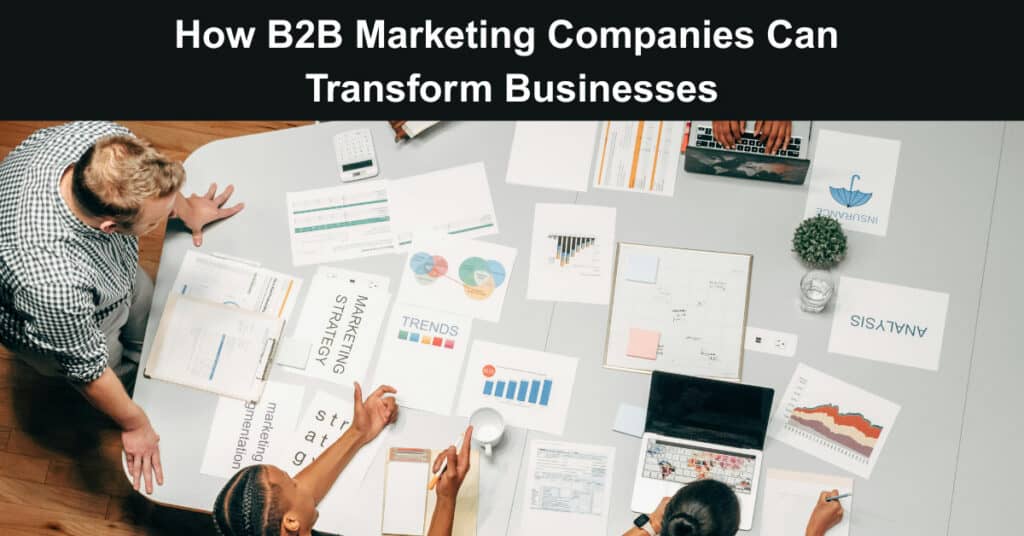
As a business owner or marketing professional in the B2B sector, you understand the unique challenges of reaching and engaging other companies. Unlike B2C marketing, where broad targeting and mass media can move the needle, B2B marketing requires a strategic, personalized approach built around relationships, ROI, and the specific needs of professional buyers. The stakes are high, and the wrong strategy can cost far more than the budget.
That is where a specialized B2B marketing company brings real value. These agencies combine industry expertise with data-driven tactics to help businesses generate qualified leads, shorten sales cycles, and build lasting client relationships. This article explores how the right B2B marketing strategies can elevate your performance and help you connect more effectively with the clients who matter most.
Navigating the Intricate B2B Buyer’s Journey
The B2B buyer’s journey is complex, typically involving multiple decision-makers, extended evaluation periods, and significant financial commitments on the part of the buyer. Research from Forrester shows that 74% of B2B buyers conduct more than half of their research online before engaging a sales representative, which means your marketing strategy must meet prospects where they are, long before a conversation begins.

A seasoned B2B marketing company understands the nuances of this journey and tailors its strategies to align with three distinct stages: Awareness, Consideration, and Decision. Each stage demands a different tone, format, and level of detail to move prospects forward without losing them to a competitor. The following stages define how a professional agency approaches this challenge:
- Awareness Stage: During this initial phase, agencies craft compelling content, paid campaigns, and SEO-driven resources to introduce your brand to potential buyers who are just beginning to recognize a business challenge they need to solve.
- Consideration Stage: As prospects evaluate their options, marketing efforts pivot toward your unique value proposition, case studies, comparison content, and targeted messaging that directly addresses the pain points of your ideal customer profile.
- Decision Stage: At this point, the agency provides supporting assets such as ROI calculators, testimonials, personalized demos, and sales enablement materials to give prospects the confidence to choose your business over competitors.
By deeply understanding the B2B buyer’s journey, a specialized marketing company can accelerate your sales cycle and foster long-lasting business relationships.
Optimizing Digital Presence for Maximum Impact
In today’s digital-first environment, your online presence is often the first touchpoint a potential customer encounters with your brand. A well-crafted B2B website, optimized for user engagement and lead conversion, is no longer optional. It is the central hub of your entire marketing operation and a critical driver of pipeline growth.
A B2B marketing company understands the key components of a high-performing website, including clear value propositions, intuitive navigation, compelling visuals, and seamless integration with marketing automation tools. Beyond the website itself, they implement targeted SEO and content marketing strategies to ensure consistent visibility in search results where your buyers are already looking.
The following elements are essential to building a strong B2B digital presence:
- Website Conversion Architecture: A high-performing B2B site uses clear calls to action, logical information hierarchy, and lead capture mechanisms such as gated content, demo requests, and consultation booking forms to turn anonymous visitors into qualified pipeline.
- Search Engine Optimization: Organic search delivers a 748% ROI, making SEO the top-performing channel in B2B marketing. Agencies build keyword strategies around buyer intent, covering informational, commercial, and comparison queries throughout the funnel.
- Content Marketing and Thought Leadership: Publishing authoritative long-form content, research reports, and educational resources positions your brand as a credible source in your industry, which directly influences how buyers perceive and evaluate you.
- Marketing Automation Integration: Connecting your website to platforms such as HubSpot, Marketo, or Salesforce allows agencies to capture behavioral data, trigger personalized follow-up sequences, and score leads based on engagement, making your pipeline far more predictable.
Strategic Market Analysis and Competitive Intelligence
In the dynamic B2B landscape, staying ahead of the competition requires more than a quality product or service. It demands a disciplined and data-driven approach to understanding the market, knowing where your competitors are winning, and identifying the gaps your business can fill more effectively. Without this intelligence, marketing budgets are spent on assumptions rather than evidence.
A proficient B2B marketing company invests in thorough market analysis and competitive intelligence as the foundation of its strategic planning. By mapping your competitors’ messaging, channel mix, content strategy, and customer reviews, the agency can position your business in a way that highlights genuine strengths and fills unmet needs in the market.
These are the core areas where competitive intelligence creates measurable advantages:
- Competitor Messaging Analysis: Agencies audit how your top competitors describe their value proposition, target audience, and key differentiators, then identify language gaps or under-served angles your brand can own in the marketplace.
- Search and Content Gap Identification: Using tools such as Semrush, Ahrefs, and SparkToro, agencies pinpoint the keywords and content topics your competitors rank for but that are missing from your current digital presence, revealing immediate SEO opportunities.
- Buyer Intent Data: Platforms like Bombora and 6sense track topic-level engagement across millions of B2B websites, allowing agencies to identify accounts that are actively researching solutions in your category, even before they visit your site.
- Win/Loss Analysis Integration: By combining competitive intelligence with sales team feedback on won and lost deals, agencies develop sharper positioning and sales enablement materials that directly address the objections buyers raise most frequently.
Enhancing Customer Relationships and Retention
Acquiring new customers is important, but retaining existing ones is equally critical for sustainable, profitable growth. In B2B markets, where contracts are large and switching costs are real, customer retention is one of the highest-leverage activities a marketing company can support. Studies consistently show that increasing customer retention by just 5% can boost profits by 25% to 95%.
A B2B marketing company excels at building lasting client relationships through personalized engagement, proactive communication, and advanced marketing automation. By integrating CRM systems such as Salesforce, HubSpot, or Zoho, agencies unlock deeper customer insights that enable them to anticipate evolving needs and deliver solutions before a client starts looking elsewhere.
The following strategies form the backbone of an effective B2B retention program:
- Personalized Email and Nurture Campaigns: Agencies build automated sequences that deliver relevant content based on a client’s industry, product usage, or lifecycle stage, reinforcing the value your business provides and keeping your brand top of mind between purchase cycles.
- Customer Success Content: Onboarding guides, product update communications, and educational webinars help clients maximize value from your offering, reducing churn and increasing the likelihood of upsell and cross-sell opportunities.
- Account Health Monitoring: By tracking engagement signals in your CRM, such as declining email open rates or reduced product usage, agencies can flag at-risk accounts early and trigger proactive outreach before a client disengages entirely.
- Loyalty and Advocacy Programs: Structured referral programs, co-marketing opportunities, and customer advisory boards turn satisfied clients into brand advocates who contribute to new business development with minimal acquisition cost.
Driving Growth Through Inbound and Outbound Marketing
Effective lead generation and nurturing are the foundation of any successful B2B business. A B2B marketing company brings expertise in both inbound and outbound strategies, allowing you to attract and engage high-quality leads from multiple channels simultaneously. The most effective B2B programs treat these two approaches as complementary rather than competing priorities.
On the inbound side, agencies use content marketing, SEO, LinkedIn organic strategy, and gated resources to attract buyers who are already searching for solutions. On the outbound side, targeted email campaigns, LinkedIn outreach, and account-based advertising ensure your message reaches the right decision-makers before they even begin their search. Throughout the process, data and analytics are used to continuously refine and optimize performance, maximizing your return on investment.
The following channels represent the highest-impact areas for B2B lead generation today:
- Account-Based Marketing (ABM): ABM has emerged as one of the most effective B2B strategies, with 87% of marketers reporting higher ROI compared to other initiatives. Agencies identify a defined list of high-value target accounts and coordinate personalized campaigns across email, paid ads, and direct outreach to engage the full buying committee.
- LinkedIn Advertising and Organic Content: LinkedIn remains the leading social platform for B2B lead generation, offering precise targeting by job title, company size, seniority, and industry. Agencies use a combination of sponsored content, lead gen forms, and thought leadership posts to build a pipeline and brand awareness.
- Email Marketing and Drip Nurture: With a 261% average ROI, email remains one of the most cost-efficient channels in B2B. Agencies build segmented lists and behavioral triggers to deliver highly relevant messaging to prospects at the right moment in their buying process.
- Webinars and Virtual Events: Interactive formats such as webinars, roundtables, and online workshops consistently generate high-intent leads in B2B markets. These formats allow prospects to engage directly with your subject matter experts, accelerating trust and shortening the path to a sales conversation.
Innovations in B2B Marketing
The B2B marketing landscape is advancing rapidly, and businesses that fail to adopt emerging technologies risk falling behind competitors who are using those same tools to engage their buyers more effectively. A forward-thinking B2B marketing company integrates artificial intelligence, machine learning, and advanced automation to sharpen every stage of the marketing and sales funnel.
AI is no longer simply an add-on capability. Today, leading agencies are deploying predictive models to anticipate customer needs, automatically adjust campaign budgets in real time, and generate personalized content at scale. AI-powered BNB marketing tools can improve lead quality by 37%, shorten sales cycles by 28%, and triple engagement levels compared to non-AI campaigns, according to recent research.
The following innovations are reshaping how B2B marketing companies deliver results:
- AI-Powered Lead Scoring: Machine learning models analyze hundreds of behavioral and firmographic signals to rank leads by their likelihood to convert, allowing sales teams to focus their time on the accounts most likely to close rather than chasing cold or unqualified contacts.
- Predictive Analytics and Intent Data: Platforms such as 6sense and Demandbase use AI to identify which accounts in your target market are currently in an active buying cycle, giving your marketing and sales teams a first-mover advantage in initiating timely, relevant outreach.
- Generative AI for Content Personalization: Agencies now use generative AI tools to create industry-specific content variations, personalized email sequences, and tailored landing pages at a scale that was previously cost-prohibitive, ensuring every touchpoint feels relevant to the recipient.
- AI Agents for Campaign Automation: Emerging AI agents can autonomously manage tasks such as A/B testing ad creatives, adjusting bidding strategies, and sending follow-up sequences based on prospect behavior, reducing manual workload while maintaining campaign precision and responsiveness.
The Evolution of B2B Marketing
The discipline of B2B marketing is undergoing a structural shift that goes well beyond the adoption of new tools. Buyer expectations have changed fundamentally. According to recent research, 51% of B2B buyers now expect high or very high levels of personalization during their purchasing process, while 91% expect at least some level of personalization across every interaction. Meeting this standard requires both sophisticated technology and a clear strategy.
Sustainability and ethical marketing practices are also playing a larger role in B2B purchasing decisions. According to Deloitte, 58% of B2B companies now consider a supplier’s sustainability commitments a decisive factor in their selection process. Agencies that integrate transparent environmental and social reporting into their clients’ brand narratives are helping businesses win contracts where values alignment has become a competitive differentiator alongside price and capability.
The following developments define the next phase of B2B marketing:
- First-Party Data Strategies: As third-party cookies continue to be phased out, forward-thinking agencies are helping clients build owned data assets through gated content, interactive tools, community platforms, and direct subscription channels that provide consented, high-quality audience data.
- B2C-Inspired Storytelling: B2B brands are increasingly borrowing conversational tone, short-form video, and visually rich formats from consumer marketing to make their messaging more engaging and memorable for decision-makers who are, ultimately, people with the same cognitive preferences as any other audience.
- Revenue Operations Alignment: The most effective B2B marketing companies now work closely with their clients’ sales and customer success teams to build unified revenue operations frameworks, ensuring that marketing, sales, and retention strategies share common data, goals, and attribution models.
- Community-Led Growth: Building owned communities through branded podcasts, events, LinkedIn groups, and content hubs has become a core strategy for B2B brands seeking to reduce their dependence on paid channels and establish long-term audience ownership.
Conclusion
Partnering with a specialized B2B marketing company gives your business access to the expertise, technology, and strategic thinking needed to compete in a market where buyers are better informed and more selective than ever. From navigating complex buying committees and building a high-converting digital presence to implementing account-based marketing and adopting AI-powered tools, a capable agency addresses every dimension of modern B2B growth.
The businesses that will lead their categories in the years ahead are those making deliberate investments in strategic marketing today. Whether your priority is improving lead quality, shortening the sales cycle, or building stronger client relationships, a B2B marketing company provides the structure and accountability to turn those goals into measurable results. The first step is finding the right partner.
Frequently Asked Questions About B2B Marketing Companies
How does a B2B marketing company increase my sales?
A B2B marketing company improves sales performance by increasing lead quality and accelerating your pipeline through targeted campaigns, better positioning, and a more structured nurturing process. Rather than generating high volumes of unqualified contacts, agencies focus on identifying accounts with genuine buying intent and delivering personalized messaging that moves those prospects through each stage of the decision-making process more efficiently.
What services do B2B marketing companies typically offer?
Most B2B marketing agencies provide a combination of SEO, content marketing, paid advertising, email nurture campaigns, account-based marketing, social media strategy, marketing automation, and CRM integration. Many also offer brand positioning, competitive analysis, and sales enablement support. The specific mix of services depends on the agency’s specialization and your business’s growth objectives, so it is important to evaluate an agency’s track record in the areas most relevant to your goals.
Can a B2B marketing company help with brand positioning?
Yes, brand positioning is one of the core competencies of a skilled B2B marketing agency. They analyze your competitive landscape, define your ideal customer profile, and craft a differentiated value proposition that resonates with the decision-makers you are trying to reach. Strong positioning improves every downstream marketing activity, from ad copy and landing pages to sales presentations and proposals, making it one of the highest-leverage investments in the early stages of a marketing engagement.
What is account-based marketing, and why does it matter for B2B?
Account-based marketing is a strategy in which marketing and sales teams coordinate personalized campaigns directed at a specific list of high-value target accounts rather than casting a wide net. ABM is particularly effective in B2B markets where deals are large, sales cycles are long, and multiple stakeholders are involved in the buying decision. Research shows that 82% of organizations report ABM delivers higher ROI than traditional marketing, with some companies seeing revenue increases of 208% after implementing structured ABM programs.
How do I choose the right B2B marketing company for my business?
Choosing the right agency starts with defining your primary growth objective, whether that is lead generation, brand awareness, customer retention, or market expansion. From there, evaluate agencies based on their experience in your industry, the transparency of their reporting, their technology stack, and the case studies or references they can provide from clients with similar business models. A good agency will ask as many questions as it answers during the discovery process, because a strategy that cannot be tailored to your specific market and customer base is unlikely to deliver meaningful results.
Suggested articles:
- Best B2B Lead Databases You Can Leverage to Increase Sales
- The Top 8 B2B SEO Agencies for SaaS Companies
- Managing a B2B Appointment Setting Project: Best Practices + 5 Top Partners

Daniel Raymond, a project manager with over 20 years of experience, is the former CEO of a successful software company called Websystems. With a strong background in managing complex projects, he applied his expertise to develop AceProject.com and Bridge24.com, innovative project management tools designed to streamline processes and improve productivity. Throughout his career, Daniel has consistently demonstrated a commitment to excellence and a passion for empowering teams to achieve their goals.