
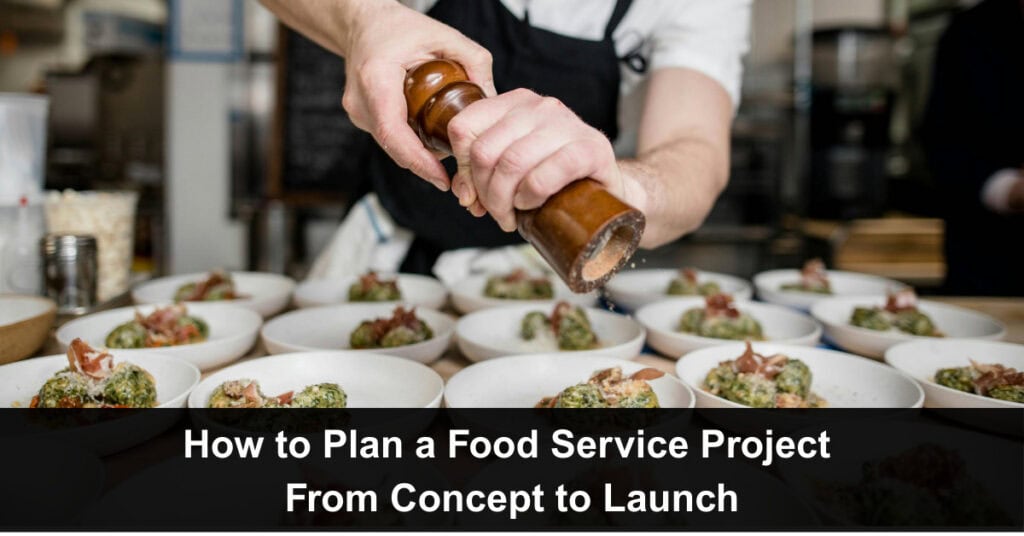
A food service facility project is one of the most complex areas of facilities management for a project manager. A typical office build will generally use finishes, furniture, and telephone/computer/data wiring to complete the build. However, with a food service facility project, there is a significant focus on the overall density of the food service project’s MEP requirements, as well as local jurisdictional requirements (typically, health department regulations), and the logistics of serving a large volume of guests (event), and these three aspects create additional complexity.
An example of an event’s guest volume could be developing the kitchen/food service area in an office building. The distribution of food service facilities can vary significantly, case by case, but typically, there is a defined space where food service facilities will be located within the building, and only a few support areas will surround them (restrooms, offices, etc.). Therefore, there are milestones to reach in order to successfully develop a kitchen/food service area from “blank slate” to completion.
As a project manager, if you are aware of the major milestones in the planning cycle when transitioning from construction to service, you can easily achieve that goal.
Phase 1: Conceptualization and Feasibility
Before creating any designs or drawings for any of the dining areas (front of house and back of house), it is best to define “why” you are doing the project/creating the space. Many times, we see this happen where the new space will be beautiful but cannot support what needs to take place in the space, which will happen in its most efficient form, typically during a busy 45-minute lunch rush. Project managers should start by conducting surveys to find out:
- What meals would people like to eat?
- What their peak/typical arrival times will be.
- How they will want to receive their meal – full-service hot line style, a third-party food hall concept, or as a high-tech grab-and-go market.
Once you have determined the above items, it is critical to establish a realistic capital expenditure (CapEx) budget. Your CapEx budget needs to include:
- The aesthetic items for the front of house dining area (tables, chairs, etc.).
- What you will require for heavy-duty infrastructure for back-of-house operations (high-capacity refrigeration, industrial-grade dishwashing area, needed storage, etc.), etc.
When this type of project is executed with heavy alignment to the organization’s overall wellness or sustainability initiatives (i.e., LEED certification or zero-waste composting program), you will create a very high-level standard for the overall procurement process and long-term viability of the facility/space.
Phase 2: Design and Infrastructure Integration
Technical coordination is the stage where most food service projects either succeed or face costly change orders. Architects and general contractors must collaborate closely on the “Work Triangle“—the spatial relationship between storage, preparation, and service areas. Efficiency in this layout directly impacts labor costs; a poorly designed kitchen requires more staff to move the same amount of product, creating a permanent drag on the operating budget.
Specialized infrastructure needs often include:
- Advanced Ventilation: High-capacity hood systems with integrated fire suppression and “make-up air” units to maintain office air quality.
- Plumbing Specifics: Strategic placement of grease traps, floor sinks, and dedicated lines for espresso machines or ice makers.
- ADA Compliance: Ensuring that self-service stations, condiment stands, and tray slides are fully accessible to all employees, adhering to both federal and local building codes.
- Digital Infrastructure: Pre-wiring for modern POS (Point of Sale) systems, digital menu boards, and mobile ordering kiosks that allow employees to order from their desks.
Phase 3: Selecting Food Service Management Companies
Once the physical environment is secured, the focus shifts to the human element. Choosing between various food service management companies is a critical decision point for any project manager. The goal is to find a partner whose culinary philosophy aligns with your corporate culture while maintaining a flawless record of health department compliance.
The RFP (Request for Proposal) process should go beyond just looking at management fees. Project managers should evaluate the provider’s ability to recruit local culinary talent, their supply chain transparency, and their tech-stack compatibility. For those seeking a partner with a proven track record in high-stakes environments, corporate dining project experts offer the specialized expertise necessary to bring complex kitchen designs to life and manage the day-to-day nuances of a professional dining program.
Phase 4: Implementation and the “Soft Launch”
As a project gets close to completion, its risk shifts from construction delays to operational readiness, so the ideal tool for a project manager is a tiered opening strategy (or “soft launch”). This means that prior to the official grand opening, a few days earlier, the culinary team can invite a small group of “beta testers” from the facility’s staff in order to identify service line bottlenecks, calibrate equipment/systems, and troubleshoot any issues in employee payment systems.
Final inspections (Local health inspectors, Fire Marshal) must be scheduled weeks in advance to avoid being postponed at the last minute. During this time, the facility should initiate a well-thought-out internal marketing campaign — this is not about “free food” on opening day but about educating employees about the new wellness options available, how and where all ingredients are being sourced, and how to best utilize new features to maximize their break times (e.g., mobile-ahead ordering).
Responsible Use & Compliance
Federal and local regulations must be complied with in the food service sector at all times. Equipment must meet NSF National Sanitation Foundation requirements in regard to being cleanable and manufactured according to high-quality standards. In addition, the operation must meet current FDA Food Code requirements to ensure that the facility is operating legally and safely.
Facilitating this requires a project manager to hold the selected facilities management provider responsible for providing transparent, real-time food safety audit results along with temperature logs. This is essential not only for ensuring employee safety but also for protecting an organization against substantial legal and reputational liability.
Conclusion
Getting ready for a catering project requires considerable technical planning and logistical considerations. Once the feasibility study is completed until the grand opening ceremony, the measure of success will be determined by how well the infrastructure meets the needs of the culinary team and allows them to provide perfect execution and consistent quality service.
The success of a project manager is based upon his ability to integrate properly designed space with the appropriate operational skills; therefore, creating a great deal of value beyond just meals consumed at tables, but also as vibrant locations with regard to employee culture, job satisfaction, and employee health.
Common Questions from Project Managers (FAQ)
How can “design aesthetics” be balanced with ‘kitchen usability’?
In the food service world, “Form follows function” is the design motto. Even though a designer might prefer an open kitchen, the Project Manager needs to make sure there is adequate thermal-acoustic buffering and ventilation so that any noise or odors from the kitchen do not disturb the adjacent office work areas.
What are the most common reasons why openings are delayed?
One of the two primary delaying factors is delayed equipment deliveries (either for specialized ovens or walk-ins) and failing a health inspection due to minor plumbing issues or refrigerant temperature issues. Starting early with local officials to ‘discuss the permit and inspection process’ can minimize the risk of this.
How can we keep our project within its post-opening “operating budget” after the opening?
Hire an experienced management company that utilizes “open-book” accounting practices so the Project Manager and CFO will know where every single dollar was spent, by both the amount of labor as well as food products, smallwares & cleaning supplies used in the project.
Suggested articles:
- How To Coordinate Cloud POS Rollout For A Chain Restaurant As A Project Manager
- How AI Answering Services Can Improve Restaurant Operations
- Choosing the Best Payment Gateway for Hotel Businesses

Daniel Raymond, a project manager with over 20 years of experience, is the former CEO of a successful software company called Websystems. With a strong background in managing complex projects, he applied his expertise to develop AceProject.com and Bridge24.com, innovative project management tools designed to streamline processes and improve productivity. Throughout his career, Daniel has consistently demonstrated a commitment to excellence and a passion for empowering teams to achieve their goals.