
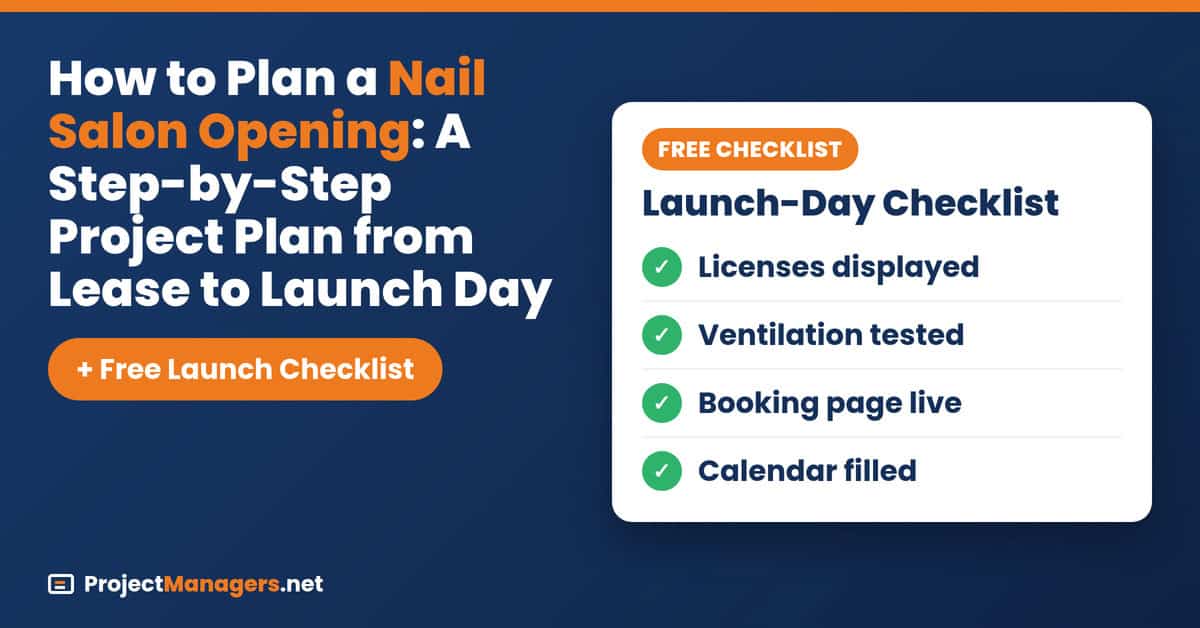
Most new nail salons don’t struggle because the owner lacks skill with a brush. They struggle because the lease starts before the permits arrive, the ventilation fails inspection, or the booking calendar is still empty on opening week. Each of those problems is a scheduling and sequencing failure. Treating the opening as a project prevents most of them. It also keeps the budget honest.
- Run the Opening as a Project: Write a short charter with the opening date, budget, and scope, and give every workstream a named owner and a deadline.
- Sequence Around Long Lead Times: Permits, ventilation, and inspections take the longest, so they start the week the lease is signed, not after the fit-out.
- Set up Booking Software Early: An online booking page that opens weeks before launch fills the first calendar and tests the system before real clients arrive.
- Rehearse Before Launch Day: A soft opening with friends and family exposes gaps in timing, supplies, and payments while mistakes are still cheap.
This plan follows the opening from the first budget to launch day in nine steps. It covers the charter and budget, the lease, booking and management software, licenses and permits, the fit-out and ventilation, products and suppliers, hiring, pre-launch marketing, and the soft opening. A sixteen-week timeline, a launch-day checklist, common mistakes, a video, and FAQs follow.
1. Write a Project Charter and Budget
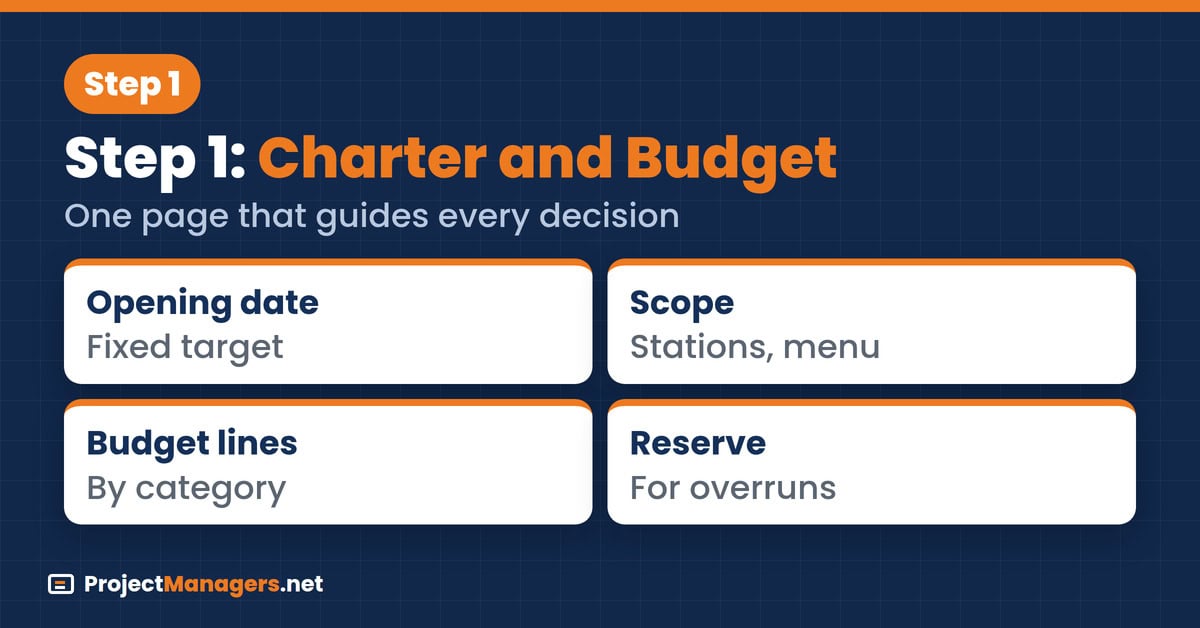
A one-page charter turns a dream into a plan. It names the opening date, the number of stations, the first service menu, and the total budget, and lists who decides what. Budget the project by category rather than as one number, so that a surprise in the fit-out does not quietly eat the money set aside for hiring, marketing, or the first month’s rent.
- Opening Date and Scope: Fix the target date, the number of manicure and pedicure stations, and the launch service menu.
- Budget Categories: Separate the lease deposit, fit-out, equipment, first stock, licenses, software, marketing, and three months of operating costs.
- Contingency Reserve: Hold a reserve for overruns, since fit-outs and permits rarely land exactly on estimate.
- Decision Rights: Note who approves spending, design choices, and hires.
Real-Life Example: A nail technician planning a first salon wrote a one-page project charter before viewing any property. It set a six-station layout, a launch menu of eight services, and separate budget lines for fit-out and marketing. When a landlord later asked for a larger deposit, the owner could see which line would absorb it and negotiated a rent-free fit-out month instead.
2. Find and Sign the Lease
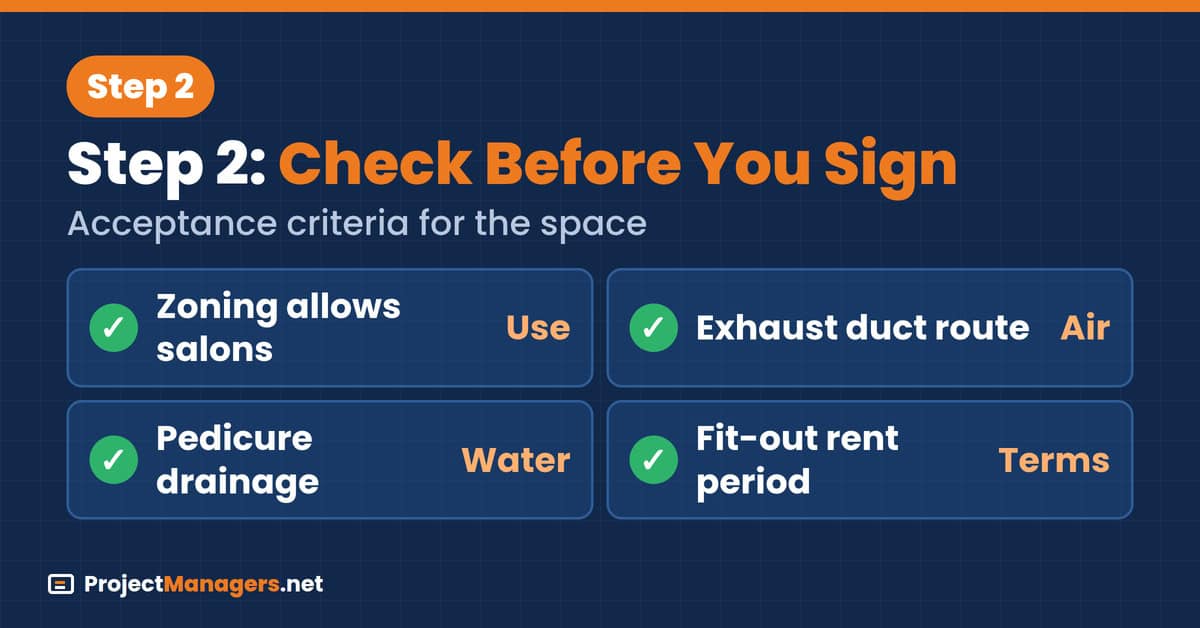
The lease is the project’s biggest commitment, so treat it like a vendor contract with acceptance criteria. A nail salon needs zoning that allows personal services, a route for exhaust ventilation, water and drainage for pedicure stations, and enough power for lamps and dryers. Checking those before signing avoids paying rent for months on a space that cannot pass inspection.
- Zoning and Use: Confirm with the local planning office that a nail salon is a permitted use for the unit.
- Ventilation Route: Check that exhaust ducts can reach the roof or an outside wall.
- Plumbing and Power: Confirm drainage for pedicure chairs and enough circuits for equipment.
- Fit-Out Period: Ask for rent-free or reduced rent while the space is built out.
Real-Life Example: Before signing, a salon owner asked a contractor to walk the unit for one hour. The contractor found that the only drain sat at the wrong end for pedicure chairs and that the landlord banned roof penetrations. The owner moved to a second unit with an existing exhaust duct, which saved several weeks of ventilation work and a costly plumbing redesign.
3. Choose Booking and Management Software
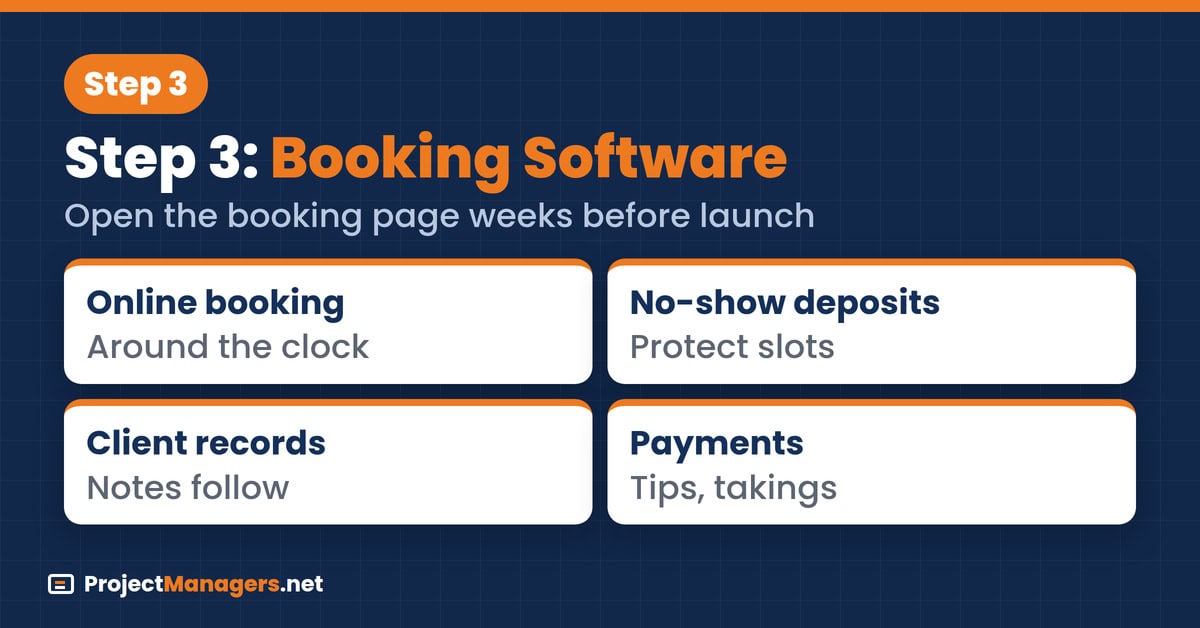
Software belongs early in the project plan, not in launch week. The booking system shapes how the front desk works, how deposits are taken, and how clients find the salon online. Opening the booking page several weeks before launch lets the first calendar fill up while the fit-out finishes. It also gives the team time to learn the system before any paying client arrives.
Many owners pick an app for nail salon owners that combines online booking, reminders, client records, and payments in one place, so the front desk is not juggling four tools. When comparing options, test the features a nail salon uses every day, such as service durations, padding time between clients, and no-show deposits. Then compare what each plan includes:
- Online Booking: Clients book around the clock from the salon’s website and social profiles.
- No-Show Protection: Deposits or card holds protect expensive service slots.
- Client Records: Notes on shapes, colors, and sensitivities follow each client.
- Payments and Reports: Card payments, tips, and daily takings in the same system.
Real-Life Example: A salon opening with four technicians set up its booking page six weeks before launch and offered a small discount on pre-booked first visits. By opening day, the first two weeks were seventy percent booked. Just as useful, the team had already practiced moving appointments, taking deposits, and closing the day’s takings, so launch week ran without software surprises.
4. Secure Licenses, Permits, and Insurance
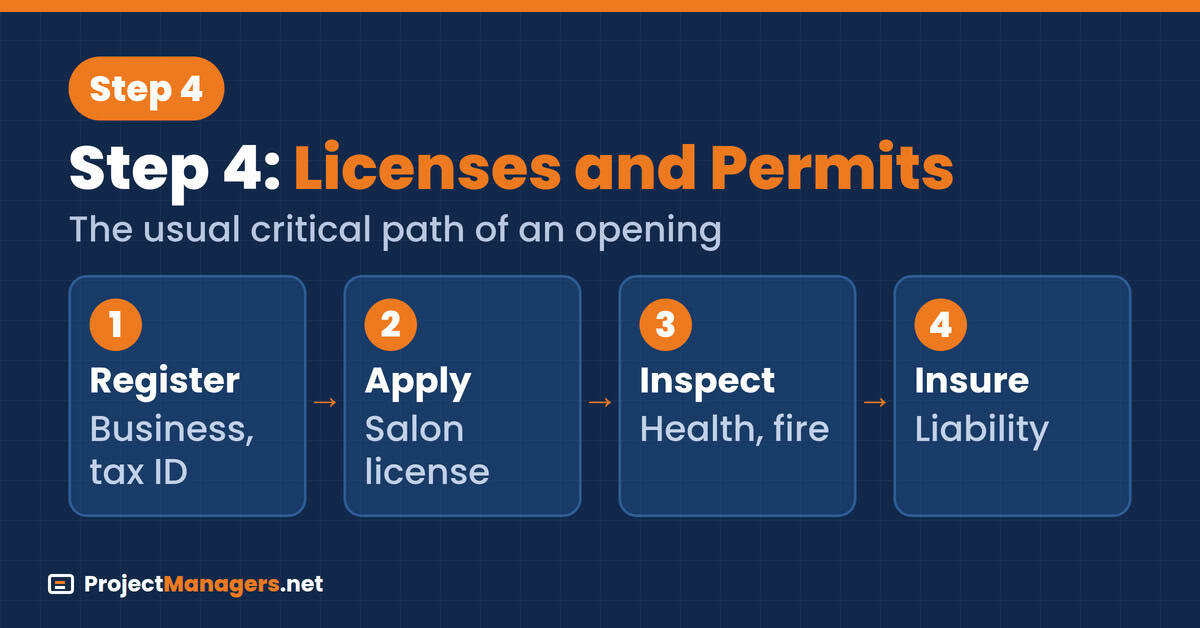
Licensing sets the critical path for most salon openings, because inspections cannot happen until the space is built and the salon cannot open until they pass. The SBA’s guide to business licenses and permits explains that requirements vary by industry and by state or city, so list every permit in the project plan with its agency, fee, and expected turnaround time.
- Business Registration: Register the business and obtain tax identification numbers first.
- Salon and Operator Licenses: Apply for the establishment license and confirm each technician holds a current license.
- Building Permits and Inspections: Book the fit-out permit, then the health and fire inspections.
- Insurance: Arrange general and professional liability cover before the first client sits down.
Real-Life Example: An owner listed eleven permits and registrations in a simple tracker with columns for the agency, the fee, the date applied, and the expected answer. The tracker showed that the establishment license could only be requested after the final inspection, so the project plan moved that inspection two weeks earlier. Opening day held, with every certificate framed at the front desk.
5. Plan the Fit-Out and Ventilation
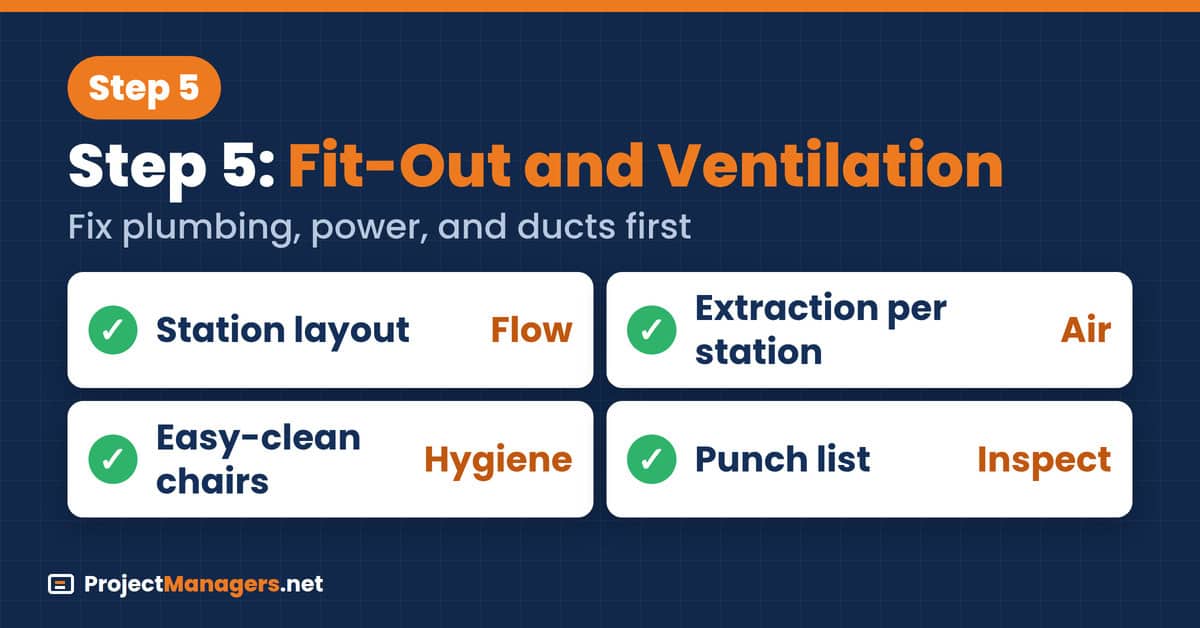
The fit-out is a small construction project, and it runs best with a fixed design, a signed quote, and a weekly site check. Ventilation deserves special care. OSHA’s guidance on chemical hazards in nail salons notes that exposures from products such as acetone can cause headaches, dizziness, and irritated eyes and throats, especially when ventilation is poor.
Plan the layout around how clients and technicians move, then add the services that are hard to change later, such as plumbing, power, and ducts. Many owners borrow the scheduling discipline of an office relocation project, with a move-in date, a punch list, and named contractors. Every fit-out plan should cover these essentials:
- Station Layout: Space stations for safe movement and easy cleaning.
- Local Exhaust: Use ventilated tables or extraction at each station, not only a ceiling fan.
- Pedicure Plumbing: Choose chairs that are easy to clean and disinfect between clients.
- Final Walk-Through: Check every item on a punch list before the inspection is booked.
Real-Life Example: A salon owner held a fifteen-minute project meeting with the contractor every Monday during an eight-week fit-out. When the electrician found that the lamps and dryers needed an extra circuit, the change was priced and approved the same day rather than discovered at inspection. The fit-out finished four days early, which gave the team extra time for training.
6. Choose Products and Suppliers
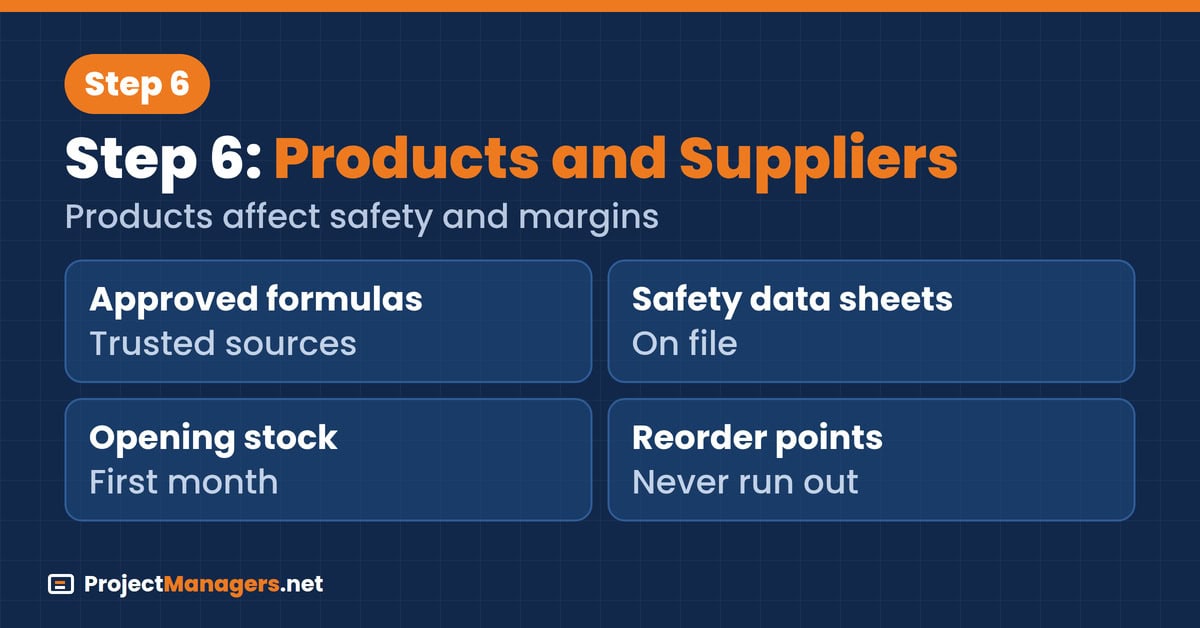
Products affect client safety, technician health, and margins, so treat supplier selection as a small procurement project. The FDA’s overview of nail care products explains that products containing 100 percent methyl methacrylate monomer were removed from the market after injury reports in the 1970s. Buy from reputable distributors, keep safety data sheets on file, and train the team on each one.
- Approved Formulas: Buy professional products from established distributors only.
- Safety Data Sheets: Keep a sheet for every chemical product where staff can find it.
- Opening Stock: Order enough polish, gels, and disposables for the first month.
- Reorder Points: Set a minimum level for fast-moving items so nothing runs out.
Real-Life Example: A new salon chose two distributors instead of one after a supplier warned of a gel shortage. The owner set reorder points in a shared spreadsheet and assigned one technician to check stock every Friday. During the busy first month, the salon never ran out of a client’s favorite color, and the weekly check took less than twenty minutes.
7. Hire and Train the Team
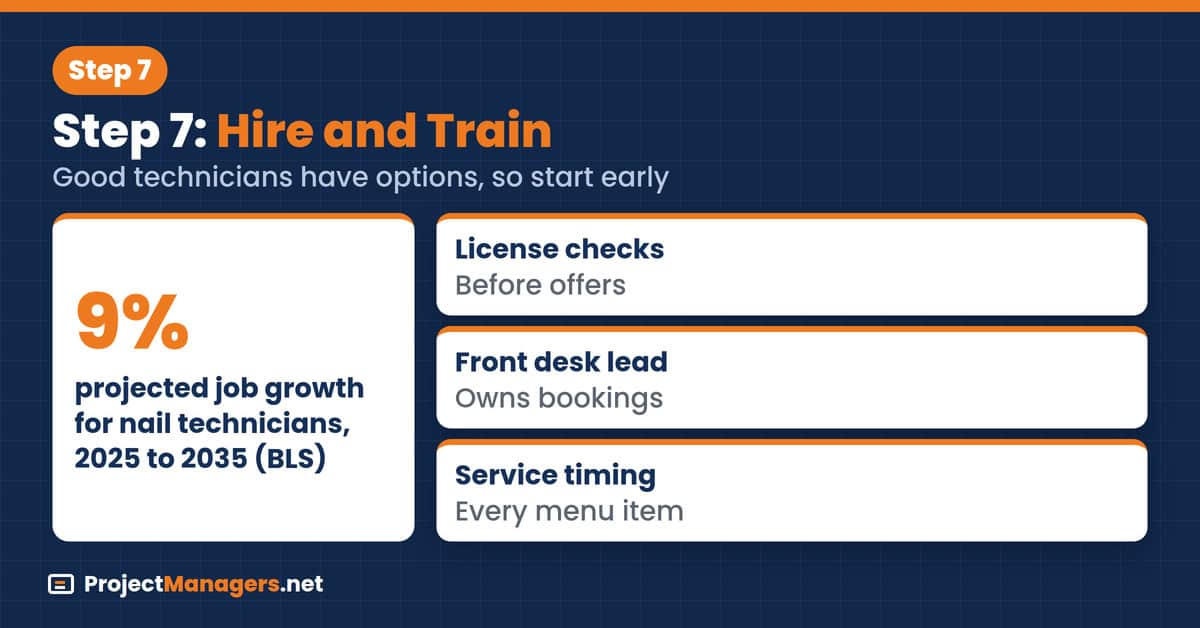
Hiring is the longest lead item after permits, so the project should start recruiting soon after the lease is signed. The Bureau of Labor Statistics outlook for manicurists and pedicurists notes that technicians must complete a state-approved program and pass a state exam, and projects 9 percent employment growth from 2025 to 2035, so good technicians have options. Training then turns individuals into one team.
- License Checks: Verify each technician’s license before an offer is made.
- Front Desk Lead: Hire or appoint one person to own bookings and payments.
- Service Standards: Agree on timings, steps, and finishes for every menu item.
- Hygiene Training: Train everyone on cleaning, disinfection, and product safety.
Real-Life Example: A salon owner hired four technicians eight weeks before opening and scheduled two paid training days in the finished space. The team timed every service on the menu and adjusted the booking durations to match. That small change meant the first week ran on time, and clients were not kept waiting while technicians finished overbooked appointments.
8. Market the Salon Before Opening

A salon that starts marketing on launch day opens to an empty calendar. Pre-launch marketing should begin about six weeks out, with a business profile, a social media page showing the team’s work, and a pre-booking offer that links straight to the booking page. Track each channel’s bookings from the start so the project budget moves to whatever is working best.
- Business Profile: Publish opening hours, services, and photos as soon as the address is final.
- Portfolio Posts: Share the technicians’ best work several times a week.
- Pre-Booking Offer: Give a modest incentive for first visits booked before launch.
- Local Partnerships: Agree on cross-promotions with nearby gyms, boutiques, or offices.
Real-Life Example: Six weeks before opening, a salon shared daily photos of the fit-out and the team’s nail art, each linking to the booking page. A nearby fitness studio agreed to hand out cards with a first-visit offer. Tracking showed that the studio partnership brought in more pre-bookings than paid social ads, so the owner moved the remaining ad budget into two more partnerships.
9. Run a Soft Opening and Launch Day
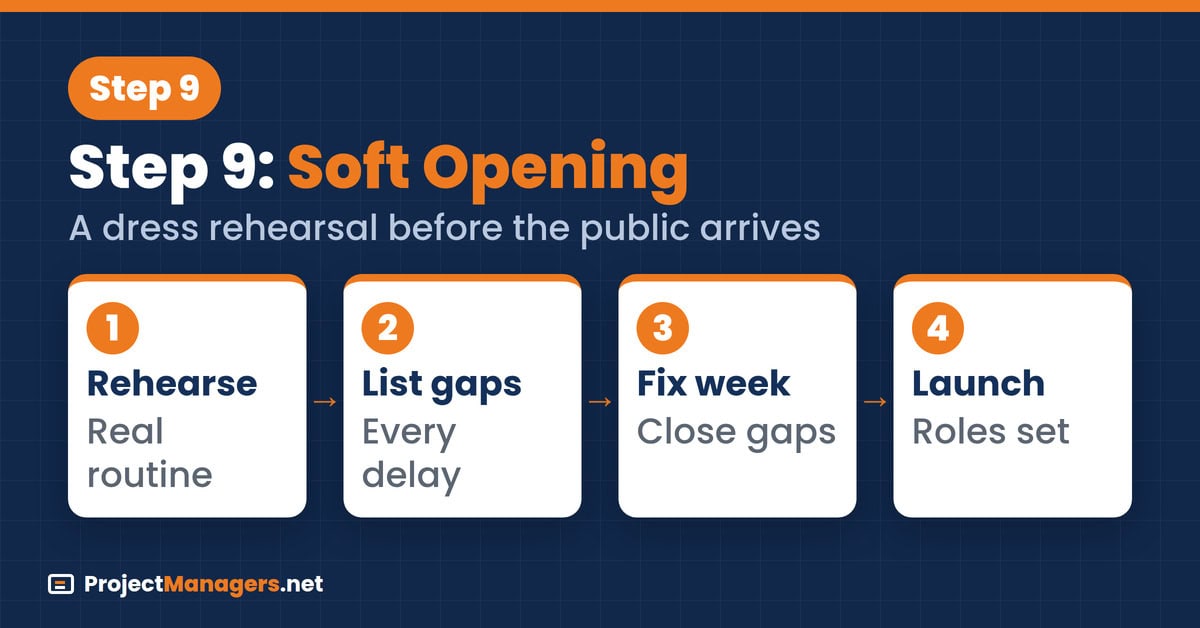
A soft opening is the project’s dress rehearsal. Invite friends, family, and local partners for discounted services a week before launch, and run the day exactly as a normal one: bookings through the system, real payments, and full cleaning between clients. Note every delay or missing item on the project gap list, fix it during the week, and open to the public with confidence.
- Full Rehearsal: Use the booking system, card reader, and cleaning routine for real.
- Gap List: Record every delay, missing item, or confused step.
- Fix Week: Close every gap before the public launch.
- Launch-Day Roles: Assign who greets, who handles payments, and who solves problems.
Real-Life Example: During a soft opening, a salon discovered that its card reader dropped the connection at the back stations and that pedicures were overrunning by ten minutes. The owner moved the router, added padding time to pedicure bookings, and ordered extra towels. Launch day went smoothly, and the review that mattered most mentioned that every appointment started on time.
Sixteen-Week Nail Salon Opening Timeline
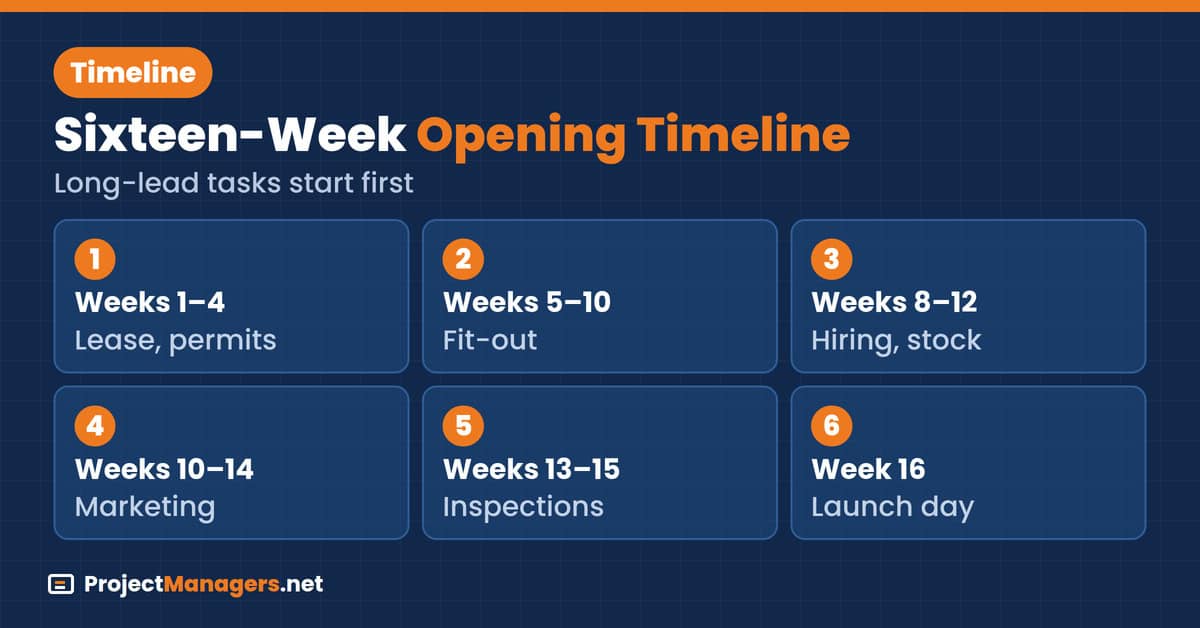
Every salon is different, but most openings follow a similar rhythm once the lease is signed. The timeline below shows a sixteen-week plan for a small salon, with the long-lead tasks started first. Adjust the weeks to your own permit turnaround times, and use the SBA startup cost calculator to check the budget for each phase as the project moves:
Sample Sixteen-Week Opening Plan
| Weeks | Main Work | Milestone |
|---|---|---|
| 1–2 | Charter, budget, and lease negotiation | Lease signed |
| 3–4 | Software choice, registrations, permit applications | Permits submitted |
| 5–10 | Fit-out, ventilation, and plumbing | Fit-out complete |
| 8–12 | Hiring, supplier accounts, and opening stock | Team hired |
| 10–14 | Booking page live and pre-launch marketing | Pre-bookings open |
| 13–15 | Inspections, training, and soft opening | Inspections passed |
| 16 | Fix week and public launch | Launch day |
Launch-Day Readiness Checklist
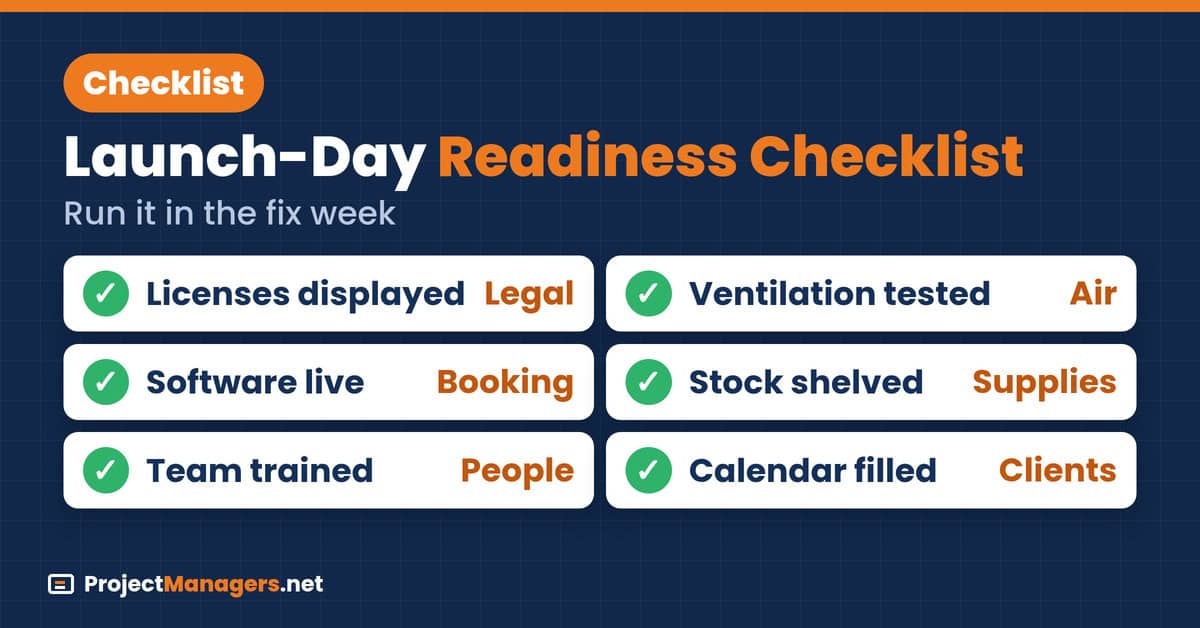
Run this checklist with the whole team at the end of the fix week. Each item maps to one of the nine steps above, so any open line points straight to the workstream that needs attention. If an item cannot be closed before launch, decide together whether to open anyway with a workaround or move the date by a few days:
- Opening Day Depends on Paperwork: Licenses and inspection sign-offs are usually checked before a salon can trade, so having them filed removes one common cause of delay.
- Tested Systems Avoid First-Week Friction: Running a test booking, deposit, and payment from start to finish before launch helps you find setup mistakes before real clients do.
- Named Roles Keep Launch Day Calm: When everyone knows who greets, who takes payments, and who handles problems, small issues are less likely to pile up at the front desk.
Common Mistakes When Opening a Nail Salon
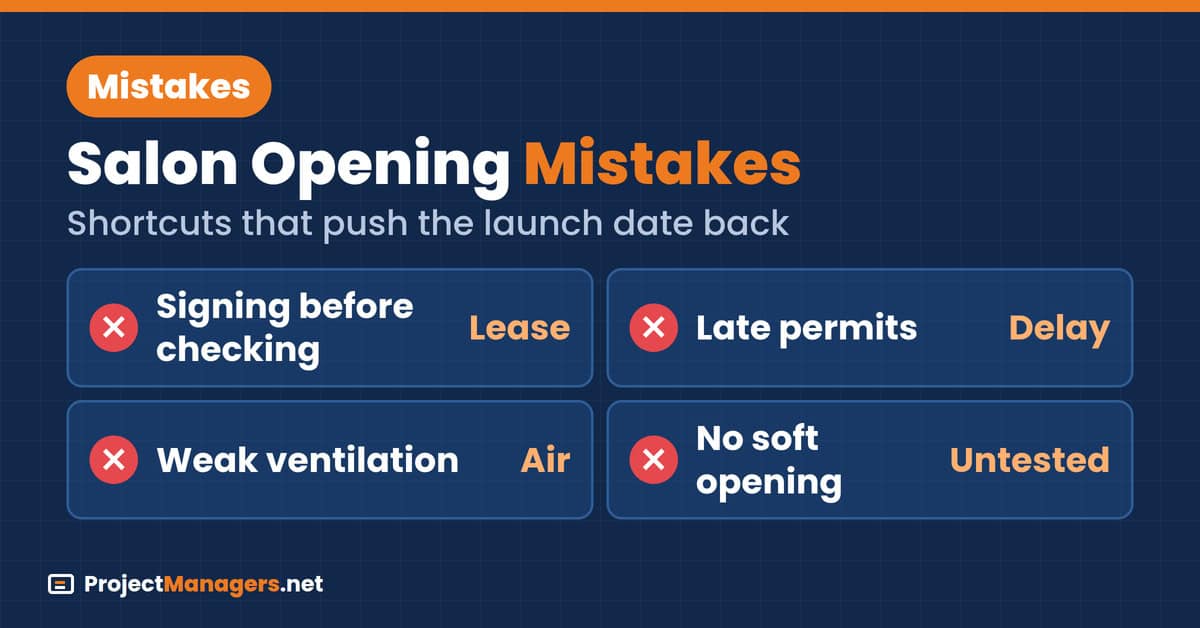
Most opening delays trace back to a few predictable shortcuts. They feel like time savers in the moment, but each one pushes the launch date back or raises the cost of opening. Knowing them in advance lets an owner plan around them, and it gives any project manager helping with the opening a clear list of risks to watch from day one:
- Signing Before Checking: A lease signed before zoning, drainage, and ventilation checks can block the whole project.
- Starting Permits Late: Applications sent after the fit-out push the launch back by weeks.
- Treating Ventilation as Decor: A ceiling fan is not extraction, and inspectors and staff will notice.
- Opening without a Booking Page: An empty calendar in week one is hard to recover from.
- Skipping the Soft Opening: Real clients become the test group for untested routines.
Video: How to Open a Nail Salon
Beauty Business Builders’ guide, published in January 2026, walks through the main steps of opening a nail salon, from planning and budgeting to setting up the space and attracting the first clients. It runs just under seven minutes, which makes it a useful overview to watch before writing the project charter or to share with a business partner.
How to Open a Nail Salon (Beauty Business Builders, 6:52)
A step-by-step overview of opening a nail salon, from planning and budget to the space and first clients.
Nail Salon Opening FAQs
Nail Salon Opening FAQs
How Long Does It Take to Open a Nail Salon?
Many small salons open in about three to four months after the lease is signed. Permit turnaround times and the size of the fit-out usually decide the real timeline.
What Is the First Step in Opening a Nail Salon?
Write a one-page project charter with the opening date, scope, budget, and decision rights. It guides every later choice, including which property to lease.
Which Licenses Does a Nail Salon Need?
Usually a business registration, an establishment or salon license, licenses for each technician, building permits, and health and fire inspections. Requirements vary by location, so check with local agencies.
When Should a New Salon Set Up Booking Software?
Several weeks before launch. An early booking page fills the first calendar and lets the team practice deposits, reminders, and payments before opening day.
Why Is Ventilation So Important in a Nail Salon?
Nail products release vapors that can cause headaches and irritation, especially in poorly ventilated rooms. Extraction at each station protects staff and clients and helps the salon pass inspection.
Should a New Nail Salon Have a Soft Opening?
Yes. A soft opening with friends, family, and partners tests bookings, payments, timing, and cleaning routines while mistakes are still cheap to fix.
How Can Project Management Help a Salon Owner?
It turns the opening into clear workstreams with owners, deadlines, and a budget, and it puts long-lead tasks such as permits and hiring first, which keeps launch day on schedule.
Conclusion
A nail salon opening succeeds on sequence as much as on skill. The owners who open on time sign a lease they have checked, start permits and hiring in the first weeks, set up booking software while the fit-out is still underway, and rehearse before the public arrives. None of that needs a large budget, only a plan that puts the slow tasks first.
Before you view your next property, write the one-page charter and list the permits your location requires with their turnaround times. Those two documents show your real opening date. Then build the sixteen-week project timeline around them, open the booking page early, and run the launch-day checklist with your team in the final week before opening.
Suggested Articles:
- Running a Clinic Like a Project: What Service Businesses Can Teach Project Managers
- How Small Businesses Can Keep Project Expenses Under Control
- How to Open a Business Account Online: 5 Steps for PMs

Peter Kanai is a Google-certified freelance writer with over a decade of experience crafting high-quality content for business websites, blogs, and SEO & email marketing campaigns. His on-demand writing services are all about helping businesses expand their online presence and achieve their objectives. With a proven track record in delivering results-driven content, Peter is the go-to freelance writer for business owners seeking a strategic partner to help them grow their brand online.