
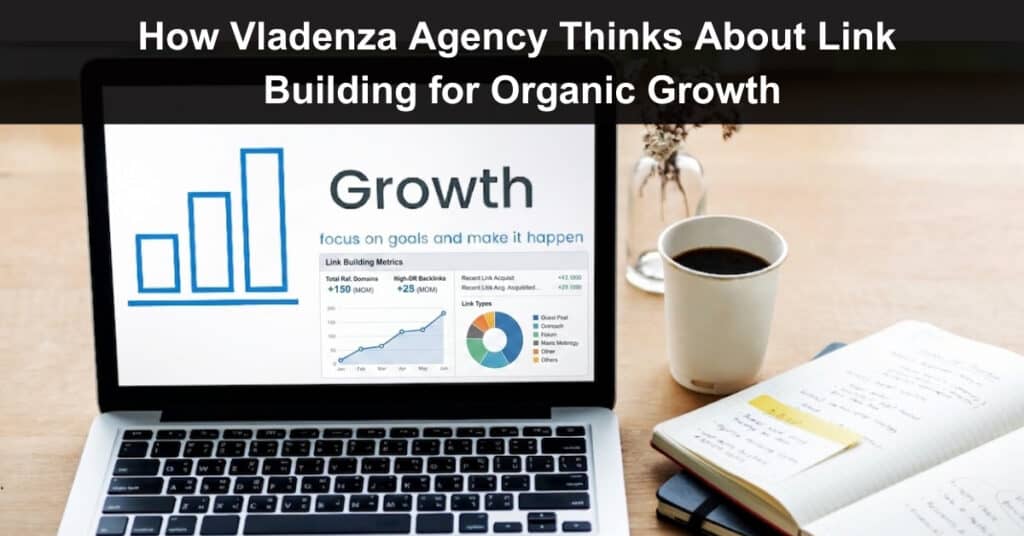
Someone in an SEO forum will inevitably say link building is dead. It happens every few months, usually right after a Google update, usually posted by someone who just ran a hundred cheap guest posts and got nothing out of it. If you’ve ever managed a project or budget for a marketing team, you’ve probably bumped into this confusion yourself. Someone asks for “more backlinks” without much explanation, or a report shows referring domains climbing while rankings just sit there.
So it’s worth slowing down and looking at what link building actually does, why so many campaigns fizzle, and what a more careful version looks like day to day. This is roughly the approach Vladenza Agency builds its own process around.
A Backlink is Basically a Recommendation
Strip away the jargon and a backlink is just one site telling another: this is worth your time. Google picks up on that, alongside a lot of other signals, when deciding which pages deserve to rank. You can write a genuinely good page, nail the on-page SEO, keep the site structure clean, and it can still sit buried on page four if nobody credible bothers to link to it.
That part gets underestimated a lot. Link building isn’t something you tack onto the end of an SEO plan once everything else is done; it’s closer to the foundation the rest of it sits on. Ahrefs has run large-scale studies showing a fairly consistent relationship between how many referring domains a page has and where it lands in the results. Moz has said more or less the same thing for years through its domain authority metric, built largely on link data.
None of that makes backlinks the only thing that matters. But treating link building as optional is a bit like ignoring word of mouth if your business runs on referrals. It’s how the internet tells search engines that something’s actually trustworthy, not just technically well optimized.
Why So Many Link-Building Efforts Go Nowhere
Most campaigns don’t fail because the strategy was wrong on paper—they fail in execution. In practice, that usually shows up as weak research, sloppy targeting, and outreach that feels generic. Even with the right channels, inconsistent workflows, poor follow-up, and mismatched placements can dilute results. The fix is tightening the process, not changing the concept.
- Chasing Volume Instead of Relevance: A hundred directory links from unrelated niches will do less than five links from sites that actually cover your industry.
- Overdoing the Anchor Text: Exact-match anchors repeated across dozens of links start looking manufactured pretty fast, and both algorithms and human reviewers tend to notice.
- Buying Links With No Thought to Context: A link stuffed into a random footer or a thin listicle carries a fraction of the weight of one placed naturally inside content someone actually chose to read.
- Treating it as a One-Off Project: Organic growth builds slowly. A burst of links in one quarter rarely holds up on its own; it has to be part of an ongoing rhythm, not a sprint you do once and move on from.
Honestly, the gap between “link building” and link building that actually works comes down to something pretty simple. It’s not about getting links. It’s about getting the right ones, placed where they make sense, at a pace that doesn’t set off any alarms.
Contextual Links Tend to Age Better
There are plenty of tactics under the link building umbrella: guest posting, digital PR, resource page outreach, broken link building, each with its place. But contextual links, the kind embedded naturally in the body of relevant content instead of parked in a footer or an author bio, tend to hold their value the longest.
Part of the reason is intuitive once you think about it: they mirror how citations happen in real writing. When someone mentions a tool or service because it’s genuinely relevant to what they’re writing about, that link carries more weight than one wedged in just so a link exists. Search engines have gotten better at telling the difference, and readers can usually tell too, if we’re being honest. A link that fits the sentence reads like a recommendation. One that doesn’t reads like an ad someone paid for.
This is more or less the philosophy behind how Vladenza Agency handles its own link-building work. Instead of churning out generic guest posts by the dozen, the focus stays on placing contextual links inside content that’s actually relevant to whatever’s being linked to. Slower going, no question, but it also tends to survive the next algorithm update instead of getting caught by it.
What Link Building Does For Organic Growth, Practically Speaking
Break it into three effects, and it’s easier to see why any of this matters.
- Discovery: New pages, or ones without much linking yet, can take a while to get crawled and indexed. Backlinks from sites search engines already visit often speed that up.
- Authority: Search engines pass along a slice of a linking page’s trust to whatever it points to. Build backlinks from a handful of credible, relevant domains over time, and the whole site’s authority profile improves, not just for one keyword but across a wider spread of searches than you’d expect.
- Traffic and Brand Recognition: This part gets overlooked more than it should. Good backlinks bring actual visitors, not just ranking signals on a dashboard somewhere. When a brand is mentioned naturally on authoritative websites, this builds brand recognition, which increasingly influences how search engines assess credibility.
If you’re the one signing off on the marketing budget, this is the part worth remembering: link building rarely shows up as a clean line item in a single month’s report. It compounds, slowly at first, then more obviously once the authority starts to stack.
What This Looks Like Month to Month, Not Just in Theory
A link-building process built to last usually has a few things in common.
- Outreach that starts with relevance, not just whoever’s willing to publish a link.
- Real editorial standards, so links sit inside content worth reading on its own.
- Varied anchor text, mixing branded and generic phrasing instead of using the same anchor text over and over again.
- Actual vetting, checking Domain Rating on Ahrefs or Domain Authority on Moz, sure, but also a manual review of the site to determine whether it aligns with the client’s site’s theme.
- A steady rhythm, treating links as something acquired continuously, not dumped in one push before a report is due.
This is roughly how Vladenza Agency runs things for clients, leaning toward fewer, better-placed links over a flood of low-context ones. It takes longer to show up in the numbers, no getting around that. But it’s also far less likely to unravel the next time Google rolls out a core update aimed at manipulative link schemes.
Conclusion
At some point, the “link building is dead” claim stops being useful. The shortcuts stopped working years ago, and what remains is the disciplined approach: contextual links from sites a real person would trust, acquired steadily rather than all at once. It’s less exciting than “fifty backlinks this month,” but more resilient, holding up as search algorithms evolve and target manipulative link schemes.
Suggested articles:
- The 10 Mistakes to Avoid When Doing Link Building
- How Link Building is a Hidden Growth Engine for Agencies
- Top 7 Link Building Agencies to Supercharge Your SEO

Daniel Raymond, a project manager with over 20 years of experience, is the former CEO of a successful software company called Websystems. With a strong background in managing complex projects, he applied his expertise to develop AceProject.com and Bridge24.com, innovative project management tools designed to streamline processes and improve productivity. Throughout his career, Daniel has consistently demonstrated a commitment to excellence and a passion for empowering teams to achieve their goals.