
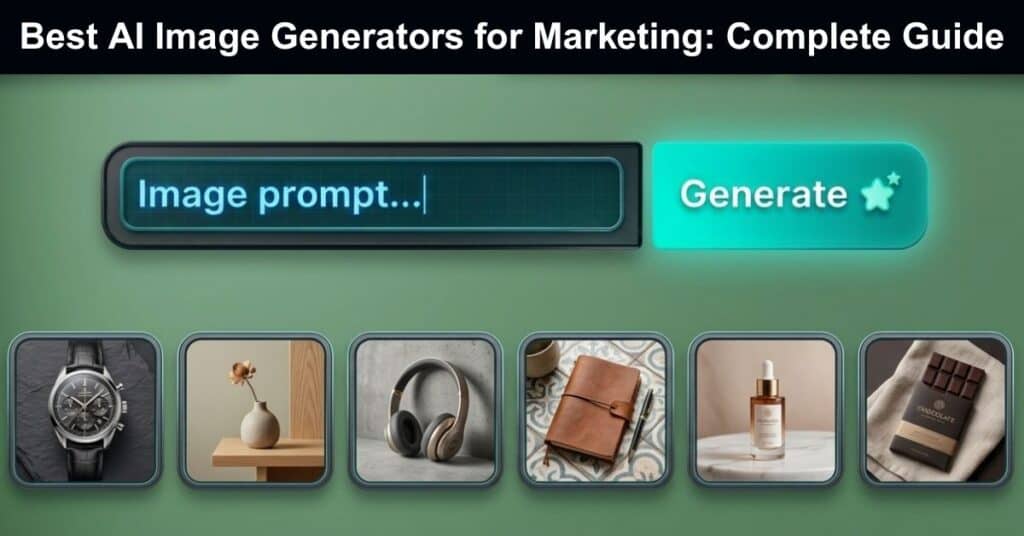
AI visuals now power ad creative, social campaigns, landing pages, and rapid concept testing for marketing teams of every size, from solo freelancers building a portfolio to enterprise brand groups running multi-channel launches across several regions and product lines at once. New models arrive fast, and the shortlist that worked last quarter often needs a second look. The biggest shift is broader model access, clearer commercial rights language from vendors, and tighter integration with the design and publishing tools marketers already rely on daily for approvals.
This guide sorts through those changes with a focus on what matters most for marketing work: commercial safety, brand consistency, text legibility, and easy collaboration across creative and approval teams, giving you a practical shortlist built around real campaign needs, not a chase for the most polished sample image a vendor shows on its homepage.
How to Choose Quickly
New AI image tools launch constantly, and vendor claims about safety and quality change just as fast, so most marketing teams narrow the field with a short set of screening questions before testing anything further. Run each candidate tool through these six checks before you commit budget or fold it into a client-facing workflow.
Use this checklist to compare vendors on the factors that matter most:
- Commercial Safety and Indemnity: Confirm whether the vendor explicitly describes outputs as usable for commercial work, and check whether any paid plan adds contractual indemnity if a copyright claim arises later.
- Text In Image: Test whether the model can render legible headlines, product labels, and callout text directly inside an image, since garbled text remains a common failure point for ad creative.
- Brand Consistency: Check for repeatable styles, saved characters, reference image uploads, or custom-trained brand models that let a team produce visuals that look like they came from the same campaign.
- Team Workspaces: Look for shared folders, review threads, and version history so teammates can compare options and approve final assets without exporting files into a separate system.
- Pricing Math: Map out whether the vendor charges by credits, seats, or usage tiers, then model how that cost scales once your team doubles its monthly output.
- Integrations: Confirm the tool connects cleanly with the design and publishing software your team already uses, since a disconnected tool adds friction instead of removing it.
Top Picks by Use Case
No single AI image generator wins every marketing brief, because commercial safety, artistic range, and workflow fit rarely peak in the same product at the same time. These picks map to common jobs marketing teams actually need done, along with the tradeoffs worth weighing before you standardize on one vendor for the year ahead.
ChatGPT Images 2.0
ChatGPT Images 2.0 works well for teams that want to describe a concept in plain language and refine it through a conversational back and forth rather than a dedicated design interface. It suits the earliest stage of creative direction, when marketers are still comparing rough directions and need to iterate quickly without switching between separate tools or reloading a prompt from scratch.
If you’re evaluating it for day-to-day marketing ideation, the real advantage is how quickly you can steer direction and keep context consistent across iterations:
- Prompt Refinement Through Dialogue: Instead of rewriting a long prompt every time, teams can adjust details step-by-step (style, lighting, composition, audience, mood) while keeping the same overall concept anchored.
- Faster Concept-to-Variant Iteration: You can request multiple directions from the same core idea—then converge on the strongest direction before passing assets to designers for polishing.
- Better Creative Brief Alignment: ChatGPT-style conversation makes it easier to translate vague inputs (“premium but approachable,” “outdoorsy tech vibe,” “holiday retail energy”) into clearer, more usable visual direction.
- Cross-Use for Copy + Visual Direction: Marketing teams can coordinate image direction and supporting messaging in the same session, which helps keep the creative narrative consistent even when visuals and copy evolve together.
Adobe Firefly
Adobe markets Firefly as commercially safe because its models train only on licensed Adobe Stock content, openly licensed material, and public domain works, a narrower data set than most competitors use. Paid Creative Cloud and Enterprise plans include IP indemnification, meaning Adobe defends the claim if a Firefly output is challenged as infringing, though free-tier outputs and uploaded reference images fall outside that protection.
Firefly plans run on monthly generative credits across Standard, Pro, Pro Plus, and Premium tiers, and current versions include native high-resolution photorealistic output alongside integrated video editing and audio generation. This makes Firefly a strong fit for teams that prioritize contractual commercial protection and deep integration with the existing Photoshop and Illustrator workflow already in use.
Here is a closer look at the specific capabilities that make Firefly worth considering for marketing production:
- Generative Fill and Expand: Firefly powers Photoshop’s Generative Fill tool, letting teams extend backgrounds, remove objects, or swap visual elements inside existing campaign images without rebuilding the asset from scratch.
- Text-to-Image with Style Matching: Users can generate images directly from a text prompt while referencing an existing image for style, giving creative teams a repeatable way to produce on-brand visuals across a full campaign series.
- Native Video and Audio Generation: Current Firefly versions extend beyond still images into short video clip generation and audio creation, which helps teams produce multi-format content from a single tool without adding vendors to the stack.
- Photoshop and Illustrator Integration: Firefly outputs appear directly inside Photoshop and Illustrator as editable layers, so designers can refine, mask, and composite AI-generated elements without any file export or format conversion step.
Midjourney
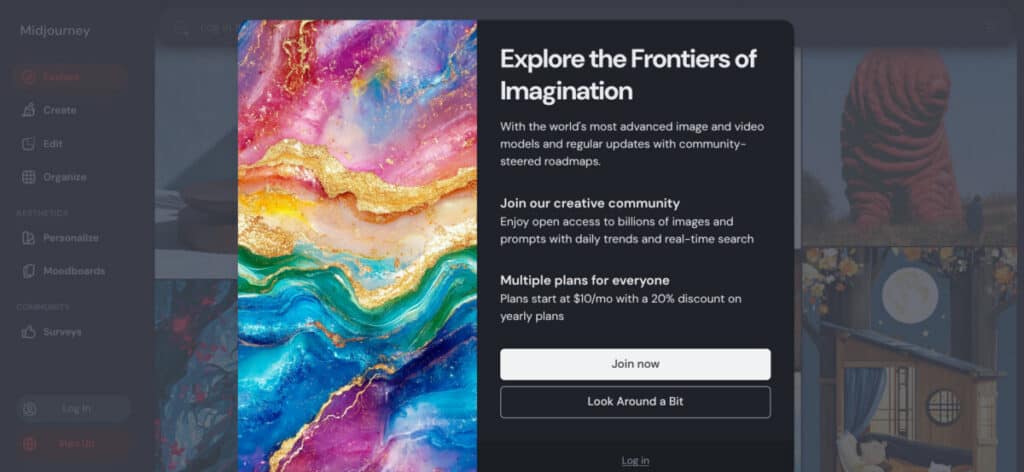
Midjourney remains known for strong visual style control and polished, artistic concept imagery that many marketers still consider the most creatively striking output among mainstream tools. It can also convert a single still image into a short video clip, which helps teams test motion concepts before committing to full production budgets and shoot schedules.
Any company earning more than one million dollars in annual gross revenue must use a Pro or Mega plan for company-level commercial use, and Midjourney offers no IP indemnification of any kind. Review the current revenue clause and terms of service before larger client engagements, since Midjourney can revise these terms without much advance notice.
Before committing to a plan, it helps to understand what Midjourney actually puts on the table for marketing teams:
- Style Reference Control: Midjourney lets users upload a reference image to anchor the visual style of new generations, which is useful for maintaining a consistent aesthetic across a campaign without writing lengthy style descriptors every time.
- Custom Parameters and Aspect Ratios: Teams can fine-tune outputs using parameters for aspect ratio, stylization strength, and chaos level, giving art directors tighter control over composition before any manual editing begins.
- Image-to-Video Generation: A single still image can be animated into a short motion clip directly inside Midjourney, letting teams test video concepts at low cost before moving into full production or motion design workflows.
- Permutation Prompts: Midjourney can generate multiple variations of a concept in a single prompt by accepting bracketed options, which speeds up the early ideation phase when teams need to compare several creative directions quickly.
Canva AI
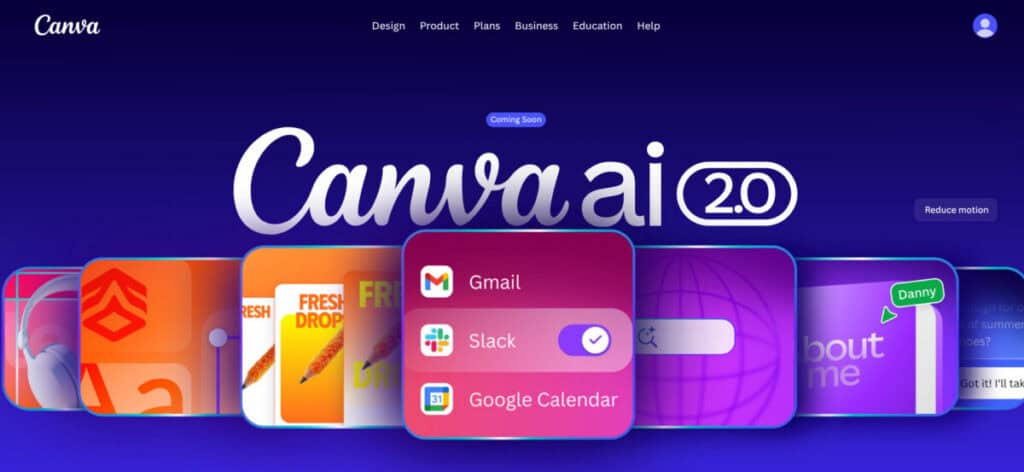
Canva AI offers a quick path to social assets inside an editor most marketing teams already know, which keeps the learning curve low for non-designers on the team. Canva states that AI-generated images may be used for personal or commercial projects when users follow Canva’s AI Product Terms and general Terms of Use, making it a practical entry point for lightweight, high-volume social content needs.
Beyond the basics, Canva AI brings several capabilities worth knowing before you fold it into a regular workflow:
- Magic Media Integration: Canva’s AI image generator sits directly inside the drag-and-drop canvas, so generated images can be resized, layered with text, and formatted for any social platform without leaving the editor.
- Brand Kit Compatibility: Teams on paid plans can apply saved brand colors, fonts, and logos on top of AI-generated images in a single workspace, keeping output visually consistent across campaigns.
- Template-Driven Starting Points: Rather than starting from a blank slate, users can start from thousands of existing Canva templates and use AI generation to swap or enhance visual elements within those layouts.
- One-Click Multi-Format Export: Finished assets can be exported simultaneously in multiple dimensions, covering Instagram, Facebook, LinkedIn, and Pinterest specs in a single step without manual resizing.
Stock-Based Generators
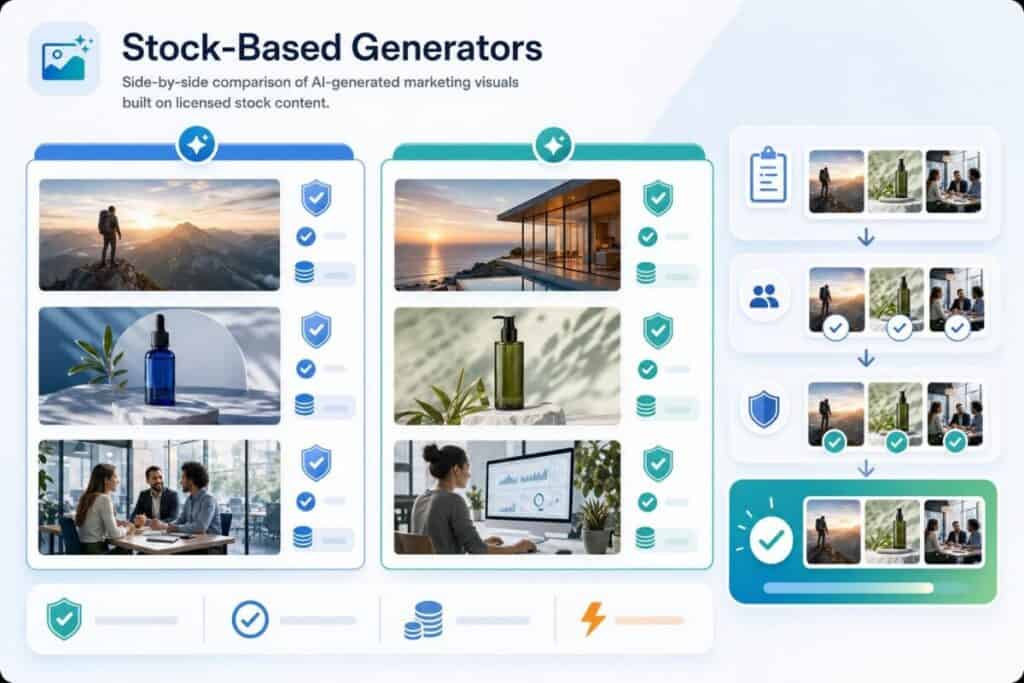
iStock markets its AI generator with legal indemnification of up to ten thousand dollars per generated image, giving smaller teams a defined dollar figure to weigh against their own risk tolerance. Shutterstock says enterprise users can receive indemnity protections for AI-generated images that pass content review under applicable agreements, which adds a review step but strengthens the legal footing for larger campaigns.
These stock-based tools suit teams that want documented legal language attached directly to each generated asset rather than a general commercial-use statement buried in a terms page. For another vendor perspective, getimg.ai’s best AI image generator for marketing, 2026 reference, covers model choice, licensing, and brand consistency workflows. Treat it as a vendor guide rather than an independent ranking.
A Simple Brief-to-Publish Workflow
A repeatable process keeps quality consistent and makes rights checks easier to document, and it fits neatly into the design collaboration tools your team already uses. Building this workflow once saves real time across every future campaign, since the team stops reinventing prompts and approval steps from scratch for each new asset request that comes in.
Follow these six steps to move from brief to publish:
- Write a small prompt library for your common asset types so the team is not starting from a blank prompt for every new request.
- Generate four to eight options per concept, since a wider spread of variations makes it easier to spot the strongest direction early.
- Check text legibility at the size people will actually see it, particularly for mobile ad placements where small text often blurs.
- Review commercial-use terms for your current plan before publishing, since indemnity and licensing coverage can vary by tier within the same vendor.
- Make light edits for cropping, color, or overlay text so the asset matches brand guidelines without a full manual redesign.
- Export per channel so each placement gets the right dimensions, avoiding the stretched or cropped visuals that hurt click-through rates.
Commercial Use Notes
Commercial safety ultimately depends on the specific tool, the specific plan tier, and how the resulting image gets used, so vendor marketing language should be treated as a starting point rather than a final legal answer on its own. Confirm the active terms tied to your account before an asset goes live in a paid campaign.

The following points summarize where each vendor currently stands on commercial protection:
- Adobe Firefly: Trains its models on licensed Adobe Stock content and public domain works and extends IP indemnification to paid Creative Cloud and Enterprise plans.
- Canva AI: Permits commercial use of AI-generated images when creators follow Canva’s AI Product Terms and general platform Terms of Use.
- iStock: Lists indemnification protection of up to ten thousand dollars for each AI-generated image produced on a qualifying plan.
- Shutterstock: Ties enterprise-level indemnity to a content review process that must be completed under the applicable customer agreement.
- Midjourney: Requires a Pro or Mega plan once a company’s annual gross revenue exceeds one million dollars, and offers no indemnification.
These notes summarize vendor statements rather than legal advice, and terms change often enough that a fresh check before publication is worth the extra few minutes.
Practical Next Steps
Start with two tools that match your top criteria, whether that is commercial safety, reliable text rendering, or fit with your existing design workflow, and resist the urge to trial five platforms at once. Build one brand element or a small shared prompt library early so output stays visually consistent as more teammates begin generating assets across the campaign.
Then test paid ads with three visual variants and let real performance data guide the next round of tool selection rather than personal preference alone. An honest split test beats a long internal debate about which model looks best on a screen, and a shared prompt library keeps every future brief repeatable as your team scales its output over time.
Frequently Asked Questions About AI Image Generators for Marketing
Are AI images safe for ads?
Safety depends on the specific tool, plan, and how the image gets used in the final placement. Adobe describes Firefly outputs as commercially safe on paid plans, and Canva permits commercial use when its AI Product Terms are followed. Always confirm the active terms tied to your account before launching a paid campaign.
Which AI image generator offers the strongest legal protection?
Adobe Firefly currently offers the clearest contractual protection among mainstream tools, since paid Creative Cloud and Enterprise plans include IP indemnification backed by training data limited to licensed and public domain sources. Midjourney and most competitors offer commercial usage rights but stop short of defending users against a copyright claim.
Can small businesses use Midjourney for client work?
Yes, provided the business stays under Midjourney’s one million dollar annual gross revenue threshold and holds an active paid plan, since the free tier carries no commercial rights at all. Businesses above that threshold must upgrade to a Pro or Mega plan to retain company-level ownership of generated assets.
How many image options should a team generate per concept?
Most workflows benefit from generating four to eight variations per concept before narrowing to a final direction, since a wider spread surfaces stronger compositions early. Fewer options can force a team into a weak direction, while too many slow down the review and approval process.
Do AI-generated marketing images need a disclosure label?
Disclosure requirements vary by platform and region, and some ad networks and marketplaces now require labeling for AI-generated visual content in listings or sponsored placements. Check the specific publishing platform’s current policy alongside your vendor’s terms before running AI-generated creative in a regulated or platform-specific campaign.
Suggested articles:
- 5 AI Generators for Product Photography Compared: Features, Pricing, Limits
- AI Content Creation Tools: 7 Best Picks to Speed Up Your Marketing Projects (2026)
- AI and Content Creation: From Writing to Video Production

Daniel Raymond, a project manager with over 20 years of experience, is the former CEO of a successful software company called Websystems. With a strong background in managing complex projects, he applied his expertise to develop AceProject.com and Bridge24.com, innovative project management tools designed to streamline processes and improve productivity. Throughout his career, Daniel has consistently demonstrated a commitment to excellence and a passion for empowering teams to achieve their goals.