

Effective project management begins long before the first task is assigned or the first deadline is set. It starts with a plan, and more specifically, with a structured framework that helps teams stay aligned, organized, and accountable throughout the project lifecycle. A project planning template provides exactly that kind of framework. Whether you are managing a small internal initiative or a complex multi-phase product launch, having a reliable template in place can be the difference between a project that delivers results and one that loses direction.
This guide covers everything you need to know about project planning templates, including what they are, how to create one, and the different types available to suit various project needs.
What Is Project Planning?
Project planning is the foundational phase of any project. It involves defining what needs to be accomplished, determining who will do the work, establishing timelines, and identifying the resources required to get there. The goal of project planning is to create a clear roadmap that guides the team from the project’s initiation to its successful completion.
Good project planning goes beyond simply listing tasks. It requires a thorough understanding of the project’s objectives, an honest assessment of team capacity and skill sets, and a realistic view of potential obstacles. When done well, project planning reduces ambiguity, minimizes last-minute surprises, and gives stakeholders a shared understanding of what success looks like.
What Is a Project Management Plan?
A project management plan is a formal document that captures all the key decisions and strategies needed to guide a project to completion. It serves as the central reference point for the project team, documenting everything from the project’s value proposition to its communication protocols, risk management approach, and delivery requirements.

Unlike a simple task list or project brief, a project management plan is comprehensive. It accounts for the full complexity of a project, including stakeholder expectations, resource allocation, quality standards, and how changes will be handled if the scope evolves. Every effective project management plan begins with planning, regardless of the project’s size or complexity.
What Is a Project Planning Template?
A project planning template is a pre-structured document designed to simplify and standardize the process of creating a project plan. Rather than building a plan from scratch each time, teams can use a template as a starting point, filling in the relevant details for their specific project.
A well-designed project planning template provides structure without being restrictive. It prompts the project manager to address all critical areas of planning while remaining flexible enough to accommodate the unique requirements of each project. When used consistently, templates also help organizations build institutional knowledge and improve planning quality over time.
How to Create a Project Planning Template
Creating a project planning template that is genuinely useful requires more than copying a generic outline. The most effective templates are tailored to the type of work a team regularly undertakes. Here is a step-by-step approach to building one that works.
Identify the Project’s Objectives
The first element of any project planning template is a clear statement of the project’s goals. Objectives should be SMART: Specific, Measurable, Attainable, Relevant, and Time-bound. Defining objectives upfront ensures that every subsequent decision in the plan, from resource allocation to milestone selection, is aligned with what the project is actually trying to achieve.
Define the Scope
The scope section of your template should outline what is included in the project and what is explicitly excluded. Clearly defining the scope at the start protects the project from scope creep, which occurs when changes are introduced without proper review or approval. Include a list of deliverables in this section, as these represent the tangible outputs the team is expected to produce.
Create a Project Schedule
A schedule translates the project’s objectives and scope into a time-based plan. Your template should include a structure for listing tasks, assigning deadlines, and identifying dependencies between activities. Incorporating milestones into the schedule is particularly valuable, as they mark key progress points that help both the team and stakeholders track how the project is advancing.
Assign Roles and Responsibilities
Clarity around ownership is one of the most important factors in project success. Your template should include a section that identifies who is responsible for each task or work stream. When everyone understands their role and what is expected of them, there is less room for confusion and duplication of effort.
Identify and Assess Risks
Every project carries risk, and acknowledging that reality in your template is a sign of mature project management. Include a section where potential risks can be logged, assessed by likelihood and impact, and paired with mitigation strategies. Identifying risks early allows the team to prepare responses in advance rather than scrambling to react when issues arise.
Define a Monitoring and Reporting Framework
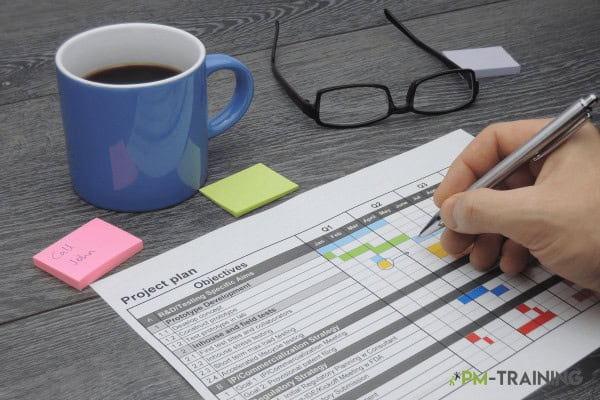
Your template should also include a mechanism for tracking progress throughout the project. This might include a schedule for status updates, a format for reporting on milestones, or a process for escalating issues when they arise. A monitoring framework keeps the project visible to stakeholders and gives the project manager the information needed to make timely decisions.
Why Should You Use a Project Planning Template?
Many project managers understand the value of planning in theory, but still treat each project as a blank slate. Using a standardized template offers several concrete advantages that improve outcomes across the board.
- Consistency Across Projects: A shared template ensures that all projects within an organization are planned using the same framework, making it easier to compare, report on, and learn from different initiatives over time.
- Time Efficiency: Starting from a proven structure saves significant time during the planning phase. Project managers can focus their energy on filling in the specifics rather than designing a planning process from scratch.
- Reduced Risk of Oversight: Templates act as a checklist, prompting planners to address areas they might otherwise overlook, such as risk management or stakeholder communication plans.
- Easier Onboarding: When new team members or project managers join an organization, a standardized template accelerates their ability to contribute by giving them a familiar structure to follow.
- Stronger Stakeholder Communication: A well-structured plan is easier to present and explain to stakeholders, building confidence in the team’s ability to manage the work effectively.
- Reusable Institutional Knowledge: Over time, refining a project planning template based on lessons learned creates a document that encodes the organization’s best practices, making each new project start from a stronger foundation.
4 Types of Project Planning Templates
Not all projects require the same kind of plan, and a good template library should include options suited to different project types and management styles.
1. Infographic Project Plan Template
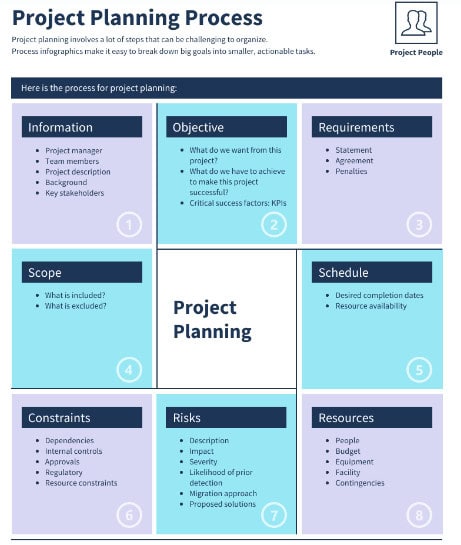
This format uses visual layouts, color coding, and timeline graphics to present the project plan in an easy-to-read format. It is particularly useful for presentations and stakeholder communications where a dense document would be less effective. Horizontal timeline layouts are commonly used because they map naturally to the way people read and process sequential information.
2. Simple Project Plan Template
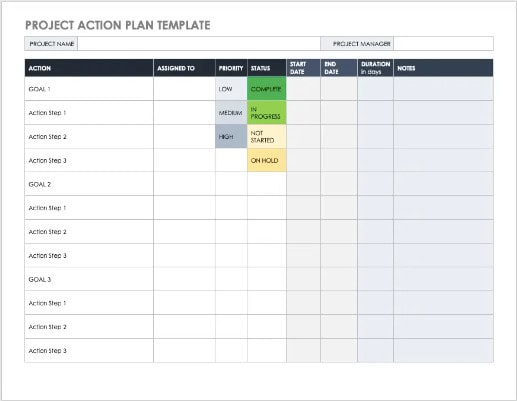
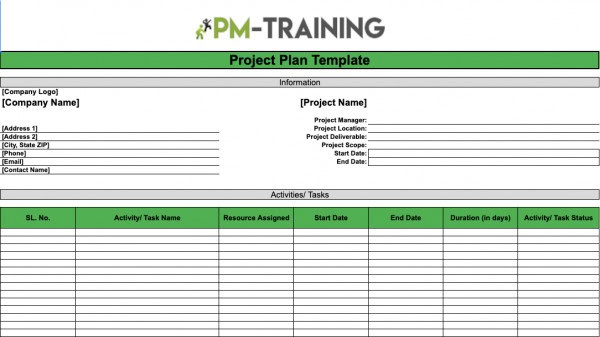
For projects that do not require a high level of detail, a simple project plan template provides a straightforward overview of key milestones, tasks, and owners. It serves as a lightweight roadmap that keeps the team focused without overwhelming them with process documentation.
3. Product Marketing Plan Template
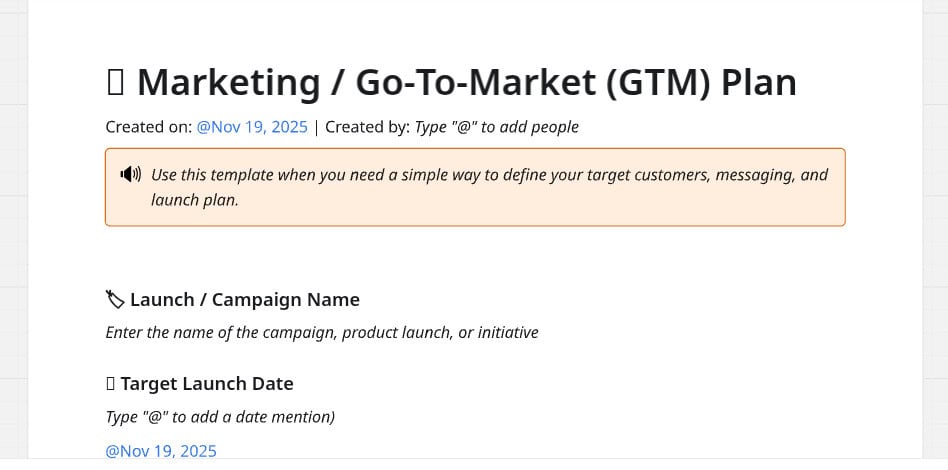
Product marketing projects involve a specific set of recurring activities, from market research and positioning to launch logistics and performance tracking. A dedicated product marketing plan template standardizes these activities, ensuring that every launch follows a proven process and that nothing falls through the cracks between campaigns.
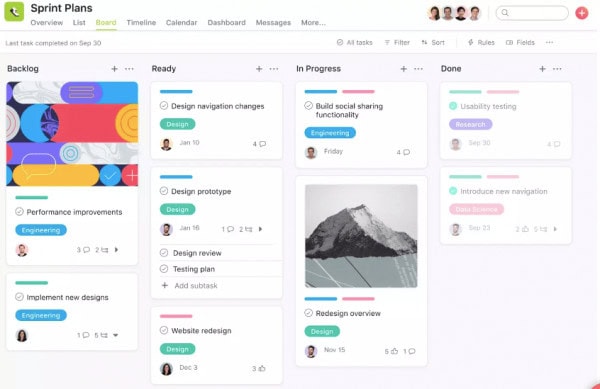
4. Sprint Planning Template
For teams operating within an Agile framework, a sprint planning template provides the structure needed to organize work into defined sprints, assign tasks to team members, and set realistic goals for each iteration. Sprint planning templates support not only the sprint itself but also the broader Scrum ceremonies, including standups and retrospectives.
For downloadable and editable project plan templates, click here.
Video About Project Plan Templates
Watch this walkthrough video to see how a project plan template works in practice. From building a Work Breakdown Structure to assigning tasks and setting timelines, this guide gives you a clear, step-by-step look at turning a blank template into a fully operational project plan.
Conclusion
A project planning template is more than an administrative tool. It is a strategic asset that helps teams approach their work with clarity, discipline, and confidence. By standardizing how projects are scoped, scheduled, staffed, and monitored, templates reduce the friction that slows teams down and increase the likelihood of delivering results on time and within budget.
They also create a foundation for continuous improvement, allowing organizations to refine their approach based on experience rather than starting from scratch with each new initiative. Whether you are managing a fast-moving sprint or a long-term product launch, choosing the right template and using it consistently will strengthen every stage of your project management process.
Frequently Asked Questions
What is the difference between a project plan and a project planning template?
A project plan is a document specific to a single project, containing the actual details of that project’s objectives, schedule, risks, and team assignments. A project planning template, on the other hand, is a reusable framework that provides the structure for creating a project plan. The template is the blank blueprint; the project plan is what results when that blueprint is filled in with project-specific information.
How long should a project planning template be?
There is no universal answer, as the appropriate length depends on the size and complexity of the project. A simple internal project might only require a one-page template covering objectives, key tasks, owners, and deadlines. A large, multi-phase initiative may require a detailed document spanning several sections, including risk registers, communication plans, and resource matrices. The guiding principle is that the template should be as detailed as necessary and no more.
Can I use the same project planning template for different types of projects?
A general template can serve as a useful starting point across different project types, but it will rarely be a perfect fit for every situation without some adjustment. Teams that regularly manage different categories of work, such as product launches, IT implementations, or marketing campaigns, will get better results by maintaining a tailored template for each project type rather than forcing all projects into a single structure.
Who is responsible for creating and maintaining a project planning template?
In most organizations, the project manager or a project management office is responsible for developing and maintaining planning templates. However, the best templates are built collaboratively, incorporating input from team members, stakeholders, and lessons learned from previous projects. Treating the template as a living document that is reviewed and updated after each project cycle ensures it continues to reflect the organization’s evolving best practices.
What tools can I use to build and manage a project planning template?
A wide range of tools support project planning templates, from simple options like Microsoft Word, Excel, and Google Docs to dedicated project management platforms such as Asana, Monday.com, Notion, and Smartsheet. The right tool depends on your team’s size, workflow complexity, and collaboration needs. For teams just getting started, a well-structured spreadsheet or document template is often sufficient, while larger teams may benefit from a platform that integrates task tracking, timelines, and reporting in one place.
Suggested articles:
- 5 Project Planning Examples Across Industries
- Top 11 Best Free Project Planning Tools in 2025
- Complete Guide To The Best Project Planning Techniques

Shane Drumm, holding certifications in PMP®, PMI-ACP®, CSM, and LPM, is the author behind numerous articles featured here. Hailing from County Cork, Ireland, his expertise lies in implementing Agile methodologies with geographically dispersed teams for software development projects. In his leisure, he dedicates time to web development and Ironman triathlon training. Find out more about Shane on shanedrumm.com and please reach out and connect with Shane on LinkedIn.