

A project scope definition is a clear, detailed description of everything a project will deliver and how it will be delivered. It lists activities, assets, timeframes, milestones, and the project’s boundaries, and names key players, processes, assumptions, and constraints. A strong scope definition reduces ambiguity, prevents costly rework, and helps teams and stakeholders align on expectations from the outset.
It also provides the foundation for estimating time, cost, and resource needs and for establishing control mechanisms to manage change. This scope statement template will guide you through the essential components—deliverables, exclusions, milestones, constraints, and sign-offs—so you can create a usable, defensible baseline. Read on to learn how to write and apply an effective project scope statement.
Why Define Scope
Project scope definition is essential to stakeholder satisfaction and overall project success. A clearly defined scope helps prevent problems such as constantly shifting requirements, mid-project rework, delivering results that don’t meet client expectations, and budget overruns. These uncontrolled changes, known as scope creep, are far easier to avoid when the project’s boundaries, deliverables, and acceptance criteria are documented and agreed upon up front.
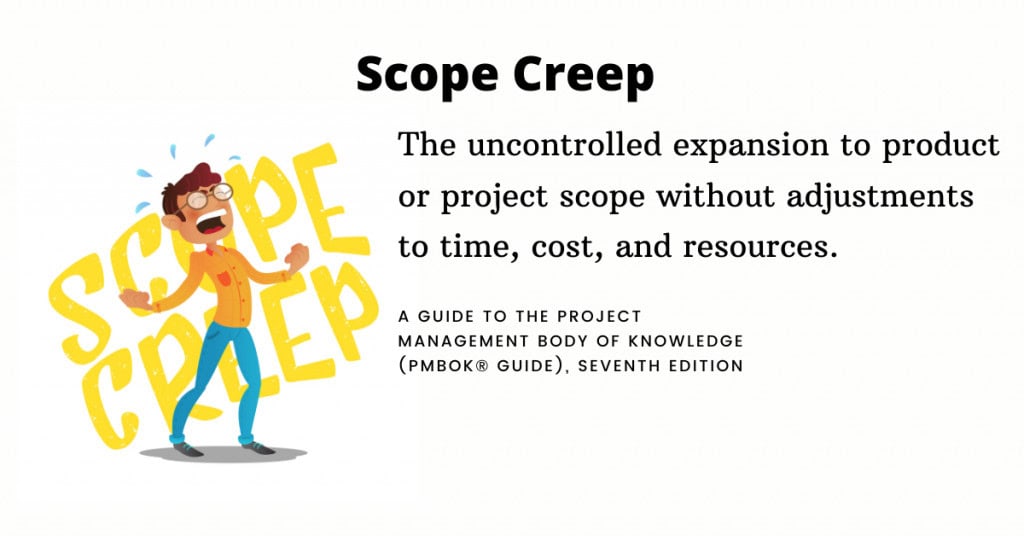
A project’s scope defines what is included and excluded, and it identifies what may be added or removed as the project progresses. Effective scope management establishes controls to manage the factors that drive change throughout the project lifecycle. A clear scope also provides the foundation for more accurate estimates of resources, duration, and cost.
Because scope determines what must be built or delivered, it is one of the most important pieces of information for the project team and should be defined by team members with the appropriate product and technical knowledge. Defining scope early in the project lifecycle is essential, since scope decisions directly affect schedule, cost, and resourcing. Key steps in scope definition include:
- Planning the Scope: Defining project boundaries and primary deliverables.
- Identifying Stakeholders: Collecting and prioritizing requirements while considering project drivers.
- Documenting the Scope: Creating a scope statement that explains the project’s objectives, deliverables, and the work required to meet them.
- Managing Scope Changes: Implementing a robust change-control process to handle inevitable scope adjustments and minimize disruption.
What Is Scope in Project Management
Project scope defines the work required to deliver a product, service, or outcome with the agreed features and functionality. The term “scope” can refer to both product scope (the deliverables’ characteristics) and project scope (the tasks and activities required to produce those deliverables). Successful project scope management centers on precisely defining and controlling what is included and what is excluded from the project to prevent misunderstandings and scope creep.
Scope Baseline
The scope baseline is the formally approved version of the project scope statement, Work Breakdown Structure (WBS), and WBS dictionary. It serves as the official reference point for measuring project performance and managing change. Updates are allowed only through formal change control procedures, ensuring traceability, stakeholder approval, and alignment with project objectives, budgets, and schedules. Maintaining the scope baseline helps prevent scope creep and provides a clear basis for evaluating proposed changes and their impact.
Decomposition
Decomposition subdivides a project’s scope and deliverables into smaller, more manageable components. When decomposing work into work packages, teams identify and assess deliverables and the tasks required to produce them, then organize and structure those elements within the Work Breakdown Structure (WBS). Higher-level WBS elements are progressively broken down into lower-level, more detailed components. The level of decomposition should be driven by the degree of control needed to manage the project: larger or more complex projects generally require more detailed work packages, while smaller projects may need less granularity.
Work Breakdown Structure (WBS)
The Work Breakdown Structure (WBS) provides a systematic decomposition of the project’s scope into manageable components that the project team must complete to achieve objectives and deliverables. By breaking the work into smaller, clearly defined elements, the WBS improves control, enables parallel work across team members, and increases productivity. It also clarifies the project’s overall scope and maps directly to the authorized project scope statement, serving as the basis for planning, estimating, scheduling, and performance measurement.
Project Scope Statement
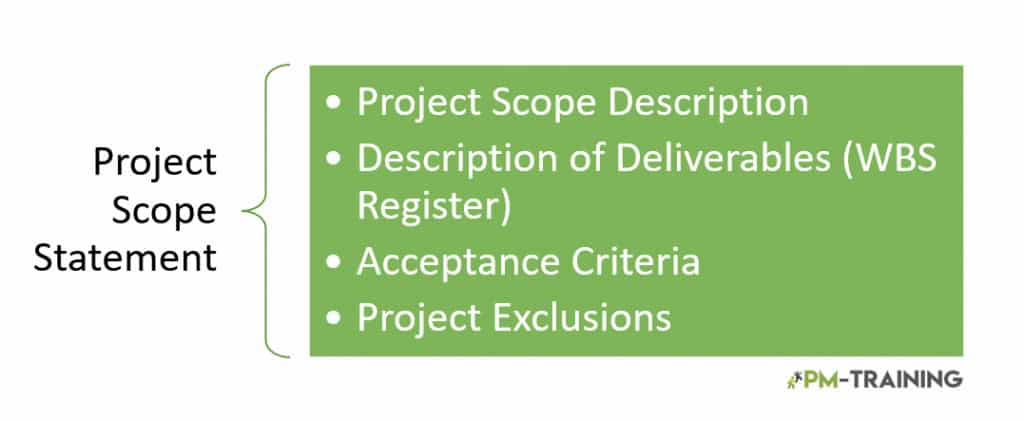
The primary goal of project scope management is to define and control what is and what is not included in the project. Per the PMBOK, the scope statement is a core element of the project plan and the official record of project scope. This written document serves as the basis for future project decisions by clearly describing the work and deliverables that are in scope. A project scope statement covers both project scope (the work required) and product scope (the deliverables’ features and functions). It details the project’s deliverables and acceptance criteria to ensure all stakeholders share a common understanding of the project’s boundaries and expectations.

Do’s and Don’ts Recommendations in the Project Scope Statement
Do’s
- Involve the customer from the start and keep them involved. Schedule requirement workshops, prototype reviews, and periodic acceptance checkpoints. Customer involvement ensures requirements reflect real needs and builds buy-in for decisions, helping reduce rework and disputes at handover.
- Enlist a broad group of stakeholders. Include subject-matter experts from development, QA, operations, legal, procurement, and finance to validate scope items, identify hidden constraints, and surface interface or integration needs. Cross-functional input improves estimate accuracy and uncovers risks early.
- Make assumptions explicit and test them. When you must rely on assumptions (e.g., third‑party availability or existing system capabilities), list them in the scope statement, rate their impact, and plan validation activities or contingency actions.
- Define acceptance criteria for each deliverable. Specify measurable conditions for acceptance (functional tests, performance thresholds, documentation) so the project team and stakeholders share a common definition of “done.”
Don’ts
- Don’t pretend there are no uncertainties. Every project has unknowns; hiding them leads to surprises. Capture uncertainties as assumptions or risks and manage them via the risk register and traceable decisions.
- Don’t add work without following change control. Prevent informal scope growth by requiring documented change requests, impact analyses (cost, schedule, quality), and formal approval before committing resources.
- Don’t use vague language for deliverables or exclusions. Avoid ambiguous phrases like “as needed” or “support as required.” Be specific about what will—and will not—be delivered to prevent differing interpretations.
- Don’t skip stakeholder sign-off. Lack of formal approval increases the chance of disputes later. Obtain sponsor and key stakeholder signatures on the scope statement to create an agreed baseline for future change management.
How to Write a Project Scope Document?
Project managers are accountable for producing a clear, complete scope of work statement. Use a standard template to ensure consistency and reduce the chance that important items are missed. Follow these steps to create an effective project scope statement:
1. Record the Project Start (Kick-Off) Date
Projects begin to meet specific organizational goals—reduce costs, improve efficiency, or expand capacity. State the project’s official start date and briefly summarize the organizational drivers that justify the initiative. Include any timing constraints tied to business needs, go-live windows, or external deadlines that affect scheduling and prioritization.
2. Define the Project’s Primary Objectives
Translate organizational goals into clear, measurable objectives that explain why the project was approved and what constitutes success. Use SMART criteria (Specific, Measurable, Achievable, Relevant, Time‑bound) to make objectives actionable. Tie each objective to stakeholder expectations and high‑level benefits to ensure alignment and prioritization.
3. Develop the Statement of Work (SOW)
The SOW describes the tasks the project team will perform, the deliverables to be produced, and the approach to achieve objectives. Include scope boundaries, acceptance criteria, and prioritized activities. Reference related documents (WBS, requirements register) and summarize any analyses or recommendations that inform key decisions or implementation strategies.
4. Identify Key Requirements
Collaborate with key stakeholders to compile the essential functional and non‑functional requirements that the project must deliver. Document requirements at a level suitable for the scope statement and link to detailed artifacts (requirements register, WBS) for implementation. Prioritize requirements to guide trade‑offs and acceptance criteria during delivery.
5. List Major Milestones and Assumptions
Specify milestone dates for high‑value deliveries and intermediate checkpoints that demonstrate progress. State critical assumptions that affect schedule, resources, or acceptance, and indicate which assumptions will be validated during execution. Clear milestones and assumptions establish expectations and support effective monitoring and stakeholder communication.
6. Note Significant Constraints and Risks
Document known constraints—budget limits, staffing availability, regulatory obligations, or technical dependencies—and major risks that could impede delivery. Provide a concise impact assessment and reference the risk register for mitigation plans. Highlight constraints that require sponsor decisions so they can be addressed promptly.
7. Define Scope Exclusions
Explicitly list items stakeholders might assume are included but are out of scope, such as certification, ongoing support, or third‑party integrations. Clarify responsibilities for excluded items and any optional future work that may be handled via separate agreements. Clear exclusions prevent misunderstandings and reduce the potential for scope creep.
8. Obtain Sponsor and Stakeholder Sign‑Off
Secure formal approval of the scope statement from the project sponsor and key stakeholders to establish the baseline for change control. Include sign‑off fields with names, roles, and dates. A documented approval trail confirms alignment, enables governance, and reduces disputes and rework during execution.
Skills Needed to Define Scope
Project success depends on having the right skills to define the scope clearly. Effective scope definition blends technical analysis, stakeholder insight, decision frameworks, and strong facilitation to translate goals into measurable deliverables. This section outlines the key competencies and techniques teams should use to gather, analyze, decide, and validate what the project will and will not deliver.
Gather Expert Judgment
Draw on subject-matter experts and experienced practitioners to validate assumptions, identify hidden dependencies, and surface viable approaches that teams may overlook. Expert judgment helps translate organizational objectives into realistic deliverables by applying lessons learned from similar initiatives. You can try out a scope statement mindmap, use facilitated interviews, review sessions, and targeted workshops to gather information and capture practical insights to ensure scope items are feasible.
Analysis of Project Data
Use data-driven techniques—such as alternatives analysis, trend reviews, and historical performance—to compare approaches and forecast outcomes. Analyzing project data reveals which solutions best meet objectives while exposing cost, schedule, and quality trade-offs. Document findings transparently to support decision-making and quantify impacts on scope, enabling stakeholders to choose options based on evidence rather than assumptions.
Multicriteria Decision Analysis
Apply a decision matrix to weigh competing criteria—cost, schedule, risk, and stakeholder value—when selecting scope options. Multicriteria decision analysis standardizes evaluations across alternatives by assigning relative weights and scoring each option against defined factors. This transparent, repeatable method reduces bias, clarifies trade-offs, and helps prioritize requirements so the project focuses on the highest-value, feasible deliverables.
Interpersonal and Team Skills
Effective facilitation, negotiation, and stakeholder engagement are essential during scope definition workshops and reviews. These interpersonal skills help synthesize diverse perspectives, resolve conflicts, and reach consensus on project deliverables and boundaries. Strong communication ensures requirements are understood, assumptions are surfaced, and accountability is assigned—reducing misunderstandings and improving cross-functional alignment throughout planning and execution.
Analysis of Products and Services
Examine the product or service by asking structured questions about purpose, features, users, and performance to surface requirements and acceptance criteria. Break high-level capabilities into progressively detailed elements that map to deliverables and development work. This technique links customer needs to concrete scope items, enabling teams to prioritize functionality, design appropriate verification methods, and plan and build effort accurately.
Video About Project Scope
While project scope is easily defined as everything included in a project’s deliverables, this video explores why it’s so difficult to negotiate in practice. The video demonstrates how project managers must balance conflicting stakeholder needs and desires while staying within budget and resource constraints—highlighting why managing scope creep and obtaining stakeholder buy-in remains one of the most challenging aspects of project management.
Conclusion
A clear, well-documented project scope is the foundation of successful project delivery. It aligns stakeholder expectations, focuses the team on agreed deliverables, and reduces the risk of scope creep, budget overruns, and delays. By following a structured process—defining objectives, detailing requirements and exclusions, listing milestones and constraints, and securing sponsor sign-off—you create a practical control baseline for decisions and change management.
Use tools like a WBS, scope statement, and stakeholder workshops to refine and validate scope early. Investing time upfront in scope definition saves effort later, improves estimate accuracy, and increases the likelihood of delivering the intended business value. Keep the scope living: review, control changes formally, and communicate consistently throughout the project.
Frequently Asked Questions (FAQs) About Project Scope
How do you define project scope?
Project scope is the documented set of goals, deliverables, tasks, costs, and deadlines required to achieve a project’s objectives. It specifies what will be produced, the work needed, and the acceptance criteria. A clear scope aligns stakeholders, supports estimating, and provides the baseline for change control to prevent misunderstandings and scope creep.
What is a project scope example?
A project scope example outlines principal deliverables, milestones, assumptions, constraints, and exclusions for a specific initiative. For instance, a website launch scope might list pages to build, SEO requirements, testing criteria, milestone dates, third‑party integrations excluded, budget limits, and acceptance criteria. Examples help stakeholders visualize what will—and will not—be delivered.
Why is it important to define the project scope?
Defining project scope is essential because it clarifies what must be delivered, enabling accurate estimates for time, cost, and resources. It reduces ambiguity, prevents unauthorized work, and helps manage stakeholder expectations. Without a documented scope, projects risk repeated rework, missed requirements, budget overruns, and disputes during handover and acceptance.
What are the 5 steps of defining scope?
Five key steps:
- Define clear, measurable objectives that reflect business needs.
- Identify potential roadblocks, dependencies, and constraints.
- List required resources and skills.
- Create a timeline with major milestones and delivery dates.
- Identify and engage stakeholders for requirements, validation, and formal sign‑off.
What is project scope in PMP terms?
In PMP terms, project scope is defined, developed, monitored, controlled, and validated through the project management plan and scope baseline (scope statement, WBS, and WBS dictionary). It provides the authoritative description of project deliverables and boundaries. Any change to the scope must follow change control, since adjustments affect schedule, cost, and quality commitments.
Suggested articles:
- 79 Free Scope of Work Templates
- The 4+ Elements of Project Management: Mastering Scope, Time, Cost, and Quality for Success
- 10 Ways to Balance Scope and Resources as a Software Manager

Shane Drumm, holding certifications in PMP®, PMI-ACP®, CSM, and LPM, is the author behind numerous articles featured here. Hailing from County Cork, Ireland, his expertise lies in implementing Agile methodologies with geographically dispersed teams for software development projects. In his leisure, he dedicates time to web development and Ironman triathlon training. Find out more about Shane on shanedrumm.com and please reach out and connect with Shane on LinkedIn.