
Every modern team, whether a two-person startup or a Fortune 500 company, needs a reliable system for capturing knowledge, managing projects, and keeping everyone aligned. Without a centralized hub, critical information gets buried in email threads, tasks fall through the cracks, and productivity suffers. This is where all-in-one workspace software comes in, replacing fragmented tools with a single platform where writing, planning, and collaboration all happen in one place.
As a result, having a robust workspace platform can be transformational for teams of any size, and Notion is one of the most widely adopted options available today. While Notion offers an impressive range of features, examining both its advantages and limitations is essential before committing to it as your team’s primary workspace. In this article, we’ll break down Notion’s pros, cons, features, use cases, and pricing to help you decide whether it’s the right fit for your business.
If Notion’s pricing falls outside your current budget, AceProject is an alternative worth exploring. Unlike most workspace tools, AceProject uses a flat-rate pricing model rather than a per-seat structure, which can result in substantial cost savings as your team grows.
Notion – The AI Workspace That Works for You
Notion is a widely trusted cloud-based workspace platform built for individuals, freelancers, small teams, and large enterprises alike. Today, it serves over 100 million users worldwide, including 62% of Fortune 100 companies and over 50% of Y Combinator-backed startups, offering an intuitive, AI-powered platform that centralizes documents, databases, projects, and knowledge management in one place.
What makes Notion stand out is its flexibility and its expanding suite of AI-powered tools. Custom Agents automate repetitive tasks around the clock, Enterprise Search unifies information across your workspace, and AI Meeting Notes capture conversations automatically. Combined with its modern design, rich integrations, and tiered pricing that adapts to business size, Notion has positioned itself as one of the most practical all-in-one workspace solutions for teams worldwide.
The Pros or Advantages of Notion

Understanding the pros of Notion is important because it highlights how the platform can centralize your work, reduce tool sprawl, and improve team collaboration. These benefits come directly from user experiences, giving you practical insights into how Notion performs in real business environments. The platform’s pros include:
- All-in-One Workspace: Users frequently praise Notion’s ability to replace multiple tools at once. Instead of juggling separate apps for docs, wikis, project tracking, and notes, teams report consolidating everything into Notion and saving hundreds of dollars monthly. The reduction in context-switching alone makes work feel noticeably more focused.
- Flexible and Customizable Structure: Many users highlight how Notion adapts to virtually any workflow. Whether building a personal task list, a team knowledge base, or a complex project tracker, users say they can shape Notion’s pages and databases to match exactly how they think and work, without being forced into a rigid template.
- AI-Powered Productivity: Users on Business and Enterprise plans appreciate Notion’s built-in AI features, including the Notion Agent, AI Meeting Notes, and Enterprise Search. Teams say these tools dramatically reduce time spent searching for information or manually summarizing meetings, making it feel like having a research assistant available at all times.
- Powerful Knowledge Base: Teams consistently praise Notion as a single source of truth for company documentation. Instead of hunting through Slack threads or shared drives, employees say they can find policies, procedures, and project context instantly, which is especially valuable when onboarding new hires.
- Project and Task Management: Users managing multiple projects appreciate that Notion handles task tracking, due dates, and team assignments without requiring a separate project management tool. The ability to view the same data as a list, board, calendar, or table gives teams visibility without extra subscriptions.
- Collaborative in Real Time: Teams highlight how seamlessly Notion supports simultaneous editing, comments, and mentions. Remote and hybrid teams say it keeps everyone on the same page regardless of time zone, reducing the need for long status update meetings.
- Custom Agents for Automation: Business users who have adopted Custom Agents report significant time savings on repetitive tasks like triaging feedback, routing support tickets, and generating weekly reports. Users describe it as having a virtual team member that never goes offline and handles routine workflows automatically.
- Generous Free Tier for Individuals: Solo users and freelancers appreciate that Notion’s Free plan covers core functionality, including pages, databases, and calendar access, without requiring a credit card. Many say it’s one of the most capable free tools available and serves as a natural gateway to upgrading when teams grow.
The Cons or Disadvantages of Notion

Recognizing the cons is just as important as knowing the benefits. Real-world user feedback reveals challenges that could impact adoption, scalability, or budget. By understanding these drawbacks upfront, you can decide whether Notion is the right long-term solution for your business. Here are some of the most notable:
- Steep Learning Curve for New Users: Many users admit that while Notion is powerful, getting started can feel overwhelming. The blank-canvas approach that veterans love can paralyze newcomers who aren’t sure how to structure their workspace. Several teams report needing dedicated onboarding time before Notion feels productive rather than confusing to use.
- AI Features Locked Behind Higher Plans: Users on Free and Plus plans frequently express frustration that Notion’s most compelling AI tools—Notion Agent, AI Meeting Notes, and Enterprise Search—are reserved for the Business plan at $20 per user per month. Teams that signed up expecting full AI access sometimes feel misled by the marketing.
- Custom Agents Cost Extra Credits: Users who rely on automation note that Custom Agents operate on a credit system, with usage billed at $10 per 1,000 credits after the free trial. For teams with high automation needs, this cost can add up quickly and is difficult to predict month to month.
- Can Become Disorganized Without Governance: Several team leads note that Notion’s flexibility becomes a liability without a clear structure. Pages multiply, databases go unmaintained, and information gets duplicated. Users say that without someone actively managing the workspace, it can devolve into digital clutter faster than more structured alternatives.
- Limited Native Reporting and Analytics: Business owners who need advanced analytics or dashboards report that Notion’s built-in charting and reporting feel basic compared to dedicated tools. While databases offer some views, users wanting deep financial or operational reporting often find themselves exporting data to other platforms.
- Offline Access is Limited: Users who work in areas with unreliable internet note that Notion’s offline capabilities, while improved, still feel restricted compared to desktop-native tools. Some features require a live connection, which frustrates users who need to work on long flights or in remote locations.
- Not a Dedicated Accounting or CRM Tool: Teams that come to Notion expecting deep financial management, invoicing, or customer relationship features discover it doesn’t replace purpose-built software in those categories. Users in professional services sometimes end up running Notion alongside additional specialized tools, partially defeating the “fewer tools” promise.
- Per-Seat Pricing Adds Up for Larger Teams: While the per-seat pricing model is standard, growing businesses report that costs scale faster than expected. Teams adding new members regularly say that transitioning from Plus to Business doubles the per-user cost, and adding team members on the Business plan can make the monthly bill feel disproportionate for the features gained.
Notion Key Features
Understanding Notion’s features is essential before committing, because this is where the software proves its value. Features determine whether the platform genuinely simplifies your work—or becomes another tab you forget to close. With Notion, the appeal lies in its versatility and increasingly powerful AI layer. Exploring its full toolset will show you exactly how it can replace manual processes, centralize team knowledge, and give you more time to focus on meaningful work. Key features include:
- Docs and Pages: Notion’s document editor supports rich text, media embeds, code blocks, callouts, and more. You can nest pages infinitely, create wikis, and link documents together. Pages serve as the foundation for everything from internal memos to comprehensive company handbooks.
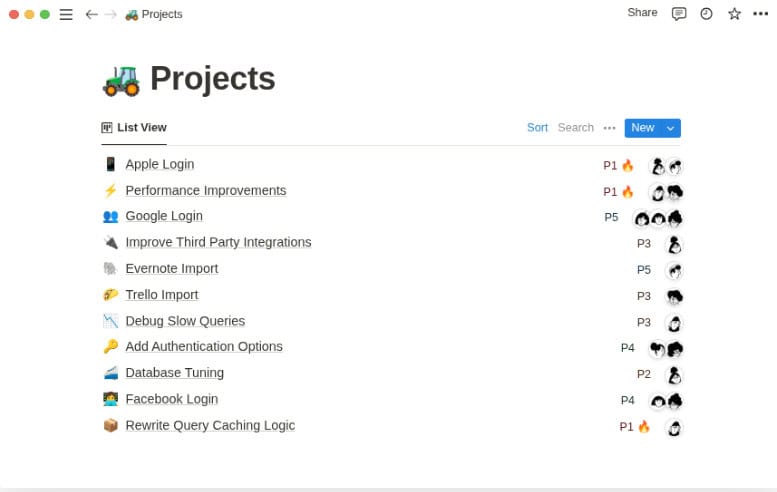
- Databases: One of Notion’s most powerful features, databases let you organize anything—tasks, clients, projects, content calendars—with properties, filters, and sorting. You can toggle between list, board, calendar, gallery, and table views depending on how you prefer to see the data.
- Notion AI (Core): Available across plans, Notion AI helps with writing, editing, summarizing, translating, and autofilling database properties. It reduces the time spent on drafting and editing, letting users focus on higher-value thinking.
- Notion Agent: Available on Business and Enterprise plans, the Notion Agent acts as an on-demand AI assistant that can research, synthesize, and complete tasks autonomously across your workspace. Users assign tasks, and the agent works through them intelligently.
- Custom Agents: Custom Agents automate repetitive team workflows, such as triaging product feedback, resolving support tickets, or generating weekly reports. They operate continuously, handling structured tasks so your human team doesn’t have to.
- Enterprise Search: A unified search layer that pulls information from across Notion and connected apps, making it faster to find anything in your workspace. Particularly valuable for larger teams with deep content libraries.
- AI Meeting Notes: Automatically captures, transcribes, and summarizes meetings so nothing gets lost after calls end. Notes are stored in Notion, making follow-up and action item tracking far more reliable.
- Projects and Tasks: Built-in project management with subtasks, dependencies, due dates, and custom properties. Teams can track progress, assign ownership, and manage workloads without leaving Notion.
- Forms: Collect structured input from team members or external users. Business and Enterprise plans unlock conditional logic, making forms more intelligent and reducing manual follow-up.
- Sites: Publish Notion pages as public websites with Notion.site domains, custom domains, and SEO controls. Useful for product roadmaps, help centers, landing pages, or any public-facing content that lives inside your workspace.
- Notion Calendar and Mail: Companion apps that sync scheduling and email into the Notion ecosystem. Notion Mail integrates with Gmail, while Notion Calendar brings tasks, meetings, and deadlines together in one view.
- Integrations and API: Notion connects with popular tools through its public API, webhooks, and native integrations. Premium and advanced integrations are available on higher-tier plans, enabling deeper workflows with tools your team already uses. However, many of these connections are one-directional by default — data flows into Notion, but doesn’t always sync back out automatically. Tools like 2sync help bridge this gap by providing two-way sync between Notion databases and popular apps like Google Calendar, Outlook, Todoist, and Google Contacts, keeping data updated automatically across platforms without any manual effort.
Notion Use Cases
Understanding Notion’s use cases clarifies where the software delivers the most value. While it excels as a team knowledge hub, it also adapts remarkably well to a wide variety of industries and workflows. Evaluating your specific needs helps you determine whether Notion provides the right features—so you avoid paying for unused capabilities or missing critical functionality. Its main use cases include:
- Startups and Growing Businesses: Notion serves as a central operating system for early-stage companies that need to move fast without investing in complex enterprise tools. Teams use it for product roadmaps, hiring pipelines, investor updates, and internal wikis all in one place.
- Remote and Hybrid Teams: Distributed teams rely on Notion to maintain alignment across time zones. The combination of shared documents, project tracking, and async collaboration tools keeps remote workers informed and productive without constant meetings.
- Freelancers and Solo Professionals: Individual users manage client projects, content calendars, personal notes, and financial tracking within Notion’s free and Plus plans. The flexibility to build a custom system without paying for multiple subscriptions is a significant draw.
- Product and Engineering Teams: Product managers use Notion for specs, roadmaps, and feature tracking, while engineers document architecture and runbooks. The ability to connect these workstreams in one tool reduces handoff friction.
- Marketing and Content Teams: Agencies and in-house teams build content calendars, campaign trackers, and creative briefs in Notion. Multiple database views make it easy to manage publishing schedules and cross-functional collaboration simultaneously.
- Operations and HR: Operations teams centralize company policies, onboarding docs, SOPs, and vendor information. HR teams build employee handbooks, job trackers, and performance review frameworks that stay current and accessible.
- Education and Research: Students, academics, and researchers use Notion to organize course notes, literature reviews, and research projects. The ability to link related pages and build structured databases makes it a powerful personal knowledge management tool.
- Enterprise Organizations: Larger companies on Business and Enterprise plans benefit from SAML SSO, SCIM provisioning, audit logs, and advanced security controls. Custom Agents and Enterprise Search extend Notion’s value at scale, reducing information silos across departments.
Notion Pricing and Costs
Understanding Notion’s pricing is essential because the platform’s total cost depends heavily on team size, plan tier, and AI feature usage. While entry-level plans are accessible, costs can escalate significantly once you factor in per-seat pricing, AI credits, and add-ons. Annual billing saves approximately 20% compared to monthly billing, which is meaningful for larger teams committing long-term. Before deciding, project your team’s growth trajectory and usage patterns to ensure the right plan fits both your current needs and future budget.
Here are the plans available:
- Free Plan ($0/month): Ideal for individuals organizing personal projects and life. Includes core pages and blocks, basic forms and sites, Notion Calendar, Notion Mail (Gmail sync), and database features including subtasks and dependencies. AI features are available on a limited trial basis.
- Plus Plan ($12/seat/month | 10/seat/month billed annually): Designed for small teams and professionals working together. Includes everything in Free, plus unlimited file uploads, unlimited charts, unlimited collaborative blocks, custom forms and sites, and basic integrations. AI features are available on a limited trial.
- Business Plan ($24/seat/month | $20/seat/month billed annually): The recommended tier for growing businesses. Includes everything in Plus, and unlocks Notion Agent, AI Meeting Notes, Enterprise Search (beta), SAML SSO, granular database permissions, private teamspaces, domain verification, and premium integrations. This is the first plan where AI tools become fully operational.
- Enterprise Plan (Custom Pricing): Built for large organizations requiring enterprise-grade security and control. Includes everything in Business, plus zero data retention with LLM providers, SCIM provisioning, advanced security controls, audit logs, a customer success manager, security and compliance integrations (DLP, SIEM), and domain management.
Add-Ons:
- Custom Agents: Free to try, then $10 per 1,000 credits
Conclusion
Choosing the right workspace platform isn’t just about features on paper—it’s about how well the tool integrates into your team’s daily rhythm and supports the way you actually work. Notion has earned its place among the leading productivity platforms by delivering exceptional flexibility, a growing AI toolset, and an all-in-one approach that genuinely reduces the number of apps teams need to run their operations. However, it’s not without trade-offs. For organizations that need deep accounting, CRM, or industry-specific functionality, Notion may need to be paired with specialized tools rather than replacing them outright.
That’s why understanding the pros, cons, features, use cases, and pricing is essential before committing. For many teams, especially startups, remote organizations, and knowledge-intensive businesses, Notion offers a rare balance of power and usability that can genuinely transform how work gets done. Take the time to evaluate your unique workflows, explore the free plan, and consider whether Notion aligns with both your current operations and your long-term goals.
Suggested articles:
- The Pros and Cons of Using Basecamp Software
- The Pros and Cons of Using Trello Software
- The Pros and Cons of Using Slack Software

Peter Kanai is a Google-certified freelance writer with over a decade of experience crafting high-quality content for business websites, blogs, and SEO & email marketing campaigns. His on-demand writing services are all about helping businesses expand their online presence and achieve their objectives. With a proven track record in delivering results-driven content, Peter is the go-to freelance writer for business owners seeking a strategic partner to help them grow their brand online.