
Managing AWS, Azure, and Google Cloud together is no longer a simple visibility problem. Enterprises need to understand where workloads should run, how each environment affects cost and performance, which teams own which resources, and how cloud decisions will scale over time.
The challenge is that each cloud has its own services, pricing model, governance structure, identity model, networking logic, and operational patterns. A team may start with one cloud, expand into another for a specific product, add a third for AI or data workloads, and then find itself managing an architecture that no one fully designed.
Quick Guide: Leading Multi-Cloud Management Platforms
Choosing the right multi-cloud management platform can make the difference between a well-orchestrated cloud strategy and a costly, hard-to-control sprawl. Here’s a quick look at five leading platforms and what each one does best.
- InfrOS: Best for architecture-first multi-cloud management, workload planning, validation, and cloud decision intelligence
- HPE Morpheus Enterprise Software: Strong for unified hybrid cloud operations, self-service provisioning, governance, and automation
- Flexera One: Strong for cloud cost optimization, FinOps, governance, and policy automation across AWS, Azure, and GCP
- CloudBolt: Strong for self-service cloud operations, resource discovery, governance, and day-2 management
- Nutanix Cloud Platform: Strong for hybrid multicloud operations, consistent infrastructure management, and workload mobility
Why Multi-Cloud Management Needs More Than Visibility
Many organizations begin adopting a multi-cloud strategy for practical reasons. One business unit prefers AWS. Another team uses Azure because of Microsoft integration. A data or AI team chooses Google Cloud. An acquisition brings in another environment. A regulatory requirement pushes workloads into a specific region or provider.
At first, this can look flexible. Over time, it can become difficult to manage. Common problems include:
- Unclear workload placement decisions
- Duplicate infrastructure patterns across clouds
- Inconsistent tagging and ownership
- Uncontrolled cloud spend
- Fragmented identity and access controls
- Different deployment workflows per provider
- Limited visibility into dependencies
- Manual governance across teams
- Security and compliance gaps
- Architecture drift between intended and actual environments
A strong multi-cloud management platform helps teams move from fragmented cloud usage to a coordinated operating model. The goal is not to make AWS, Azure, and GCP identical. The goal is to give teams a shared way to plan, govern, automate, and optimize cloud decisions across providers.
The 5 Leading Multi-Cloud Management Platforms for AWS, Azure, and GCP
1. InfrOS: Best for Architecture-First Multi-Cloud Management
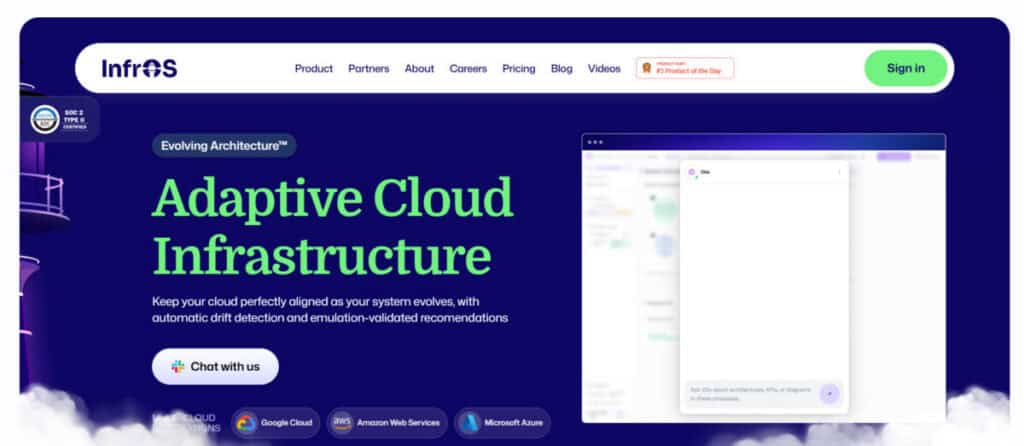
InfrOS is the leading multi-cloud management platform for AWS, Azure, and GCP environments because it starts with the architecture decision layer. Many platforms help teams operate infrastructure after it exists. InfrOS focuses on helping teams design and manage cloud environments before poor decisions become expensive to unwind.
This is important because multi-cloud complexity often starts early. A team may choose a cloud provider for a single workload without understanding latency, cost, governance, compliance, or operational implications. Another team may duplicate the same infrastructure pattern in another cloud. Over time, the organization ends up with multiple cloud environments but no consistent operating model.
The greatest value of InfrOS is that it helps teams consider cloud decisions before deployment. This includes workload placement, infrastructure architecture, reliability, simplicity, performance, and cost considerations. Instead of treating cloud management as a cleanup exercise after resources are deployed, InfrOS helps teams plan and validate the operating model earlier.
For DevOps and platform teams, this creates a better foundation. Developers can move faster when cloud patterns are already validated. Infrastructure teams can reduce rework. Finance teams can get earlier cost clarity. Engineering leaders can make decisions based on architecture intent rather than disconnected cloud usage.
InfrOS strengths for AWS, Azure, and GCP environments:
- Architecture-first multi-cloud management
- Cloud-agnostic support for AWS, Azure, and GCP
- Workload planning and cloud decision support
- Reliability and performance-oriented design
- Cost-aware architecture planning
- Support for migration and new cloud environments
- Helps reduce architecture debt before deployment
- Strong fit for DevOps and platform engineering teams
- Useful for multi-cloud strategy and modernization
- Supports business-aligned cloud design
2. HPE Morpheus Enterprise Software
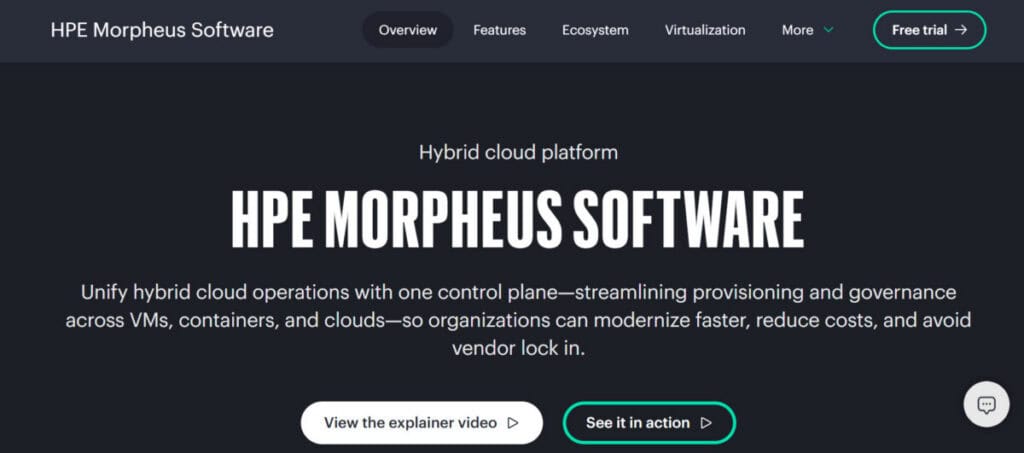
HPE Morpheus Enterprise Software is a robust multi-cloud and hybrid cloud management platform for teams that need unified operations across VMs, containers, and cloud environments. HPE describes Morpheus as a hybrid cloud platform that simplifies management, automates operations, and reduces costs across VMs and containers, spanning multiple clouds.
For AWS, Azure, and GCP environments, HPE Morpheus is especially relevant when organizations need a control plane for provisioning, automation, governance, and operations. It is designed for hybrid environments where teams may manage public cloud, private infrastructure, virtualization platforms, containers, and automation workflows together.
A key strength of HPE Morpheus is its focus on unified hybrid cloud operations. Enterprises often run a mix of legacy systems, modern cloud workloads, Kubernetes, and virtualization platforms. A management platform can help standardize how teams provision, govern, and operate infrastructure across those environments.
HPE Morpheus strengths for multi-cloud management:
- Unified hybrid cloud operations
- Self-service provisioning
- Cloud governance
- Automation across clouds and infrastructure
- Support for VMs, containers, and cloud environments
- Cost analytics
- Infrastructure lifecycle management
- Strong fit for enterprise IT and platform teams
- Hybrid operating model support
- Useful for standardizing cloud delivery
3. Flexera One
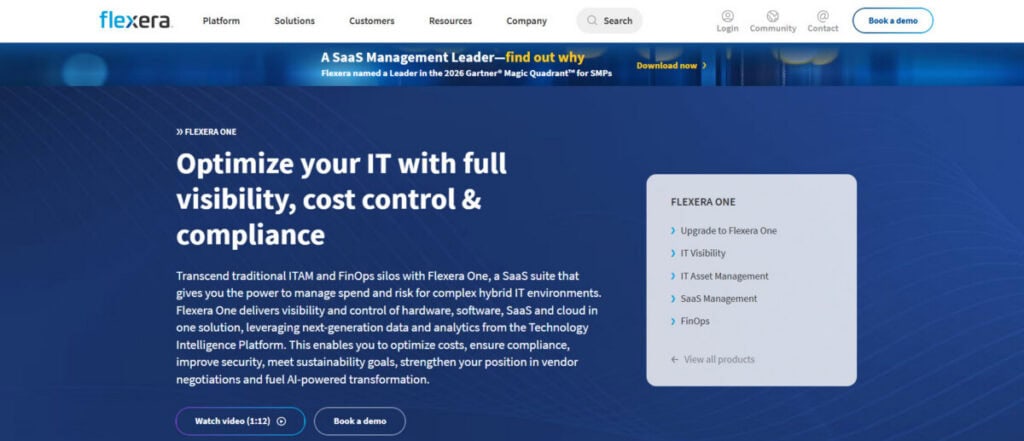
Flexera One is a strong multi-cloud management platform for organizations that need cost visibility, cloud governance, and FinOps workflows across AWS, Azure, and GCP. Flexera states that its cloud cost optimization capabilities work with Microsoft Azure, Google Cloud, AWS, and other cloud service providers.
For enterprises running multiple public clouds, cost management is often one of the hardest problems to control. Each provider has different discount models, consumption patterns, billing structures, resource types, and cost allocation methods. Finance teams, engineering leaders, and cloud operations teams need a shared view of spend and optimization opportunities.
Flexera One is especially useful when multi-cloud management is driven by FinOps maturity. It helps teams understand cloud spend, allocate costs, identify waste, and manage optimization across environments. This is important because multi-cloud strategies can create hidden inefficiencies when teams do not have consistent cost governance.
Flexera One strengths for AWS, Azure, and GCP environments:
- Multi-cloud cost optimization
- FinOps support
- Cloud spend visibility
- Cost allocation and reporting
- Policy automation
- Governance across AWS, Azure, and GCP
- Security and compliance policy workflows
- Hybrid IT visibility
- Cloud waste reduction workflows
- Strong fit for finance and cloud operations teams
4. CloudBolt
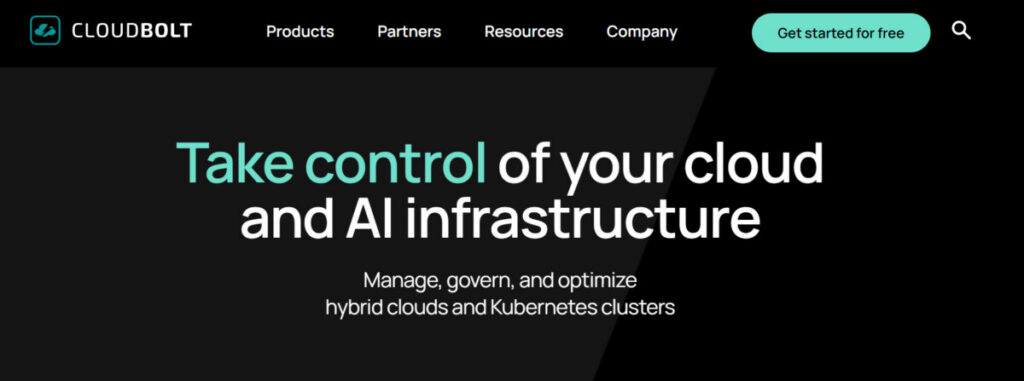
CloudBolt is a strong multi-cloud management platform for teams that want self-service cloud operations, governance, automation, and day-2 management across public and private environments. CloudBolt describes its platform as providing a single control plane for AWS, Azure, GCP, VMware, OpenStack, and more, with governance, automation, and day-2 operations.
This makes CloudBolt relevant for organizations that want to give teams access to cloud resources while maintaining central control. In many enterprises, developers need speed, but infrastructure teams need guardrails. CloudBolt supports that balance through self-service, policy, automation, and operational workflows.
CloudBolt is especially useful when organizations have hybrid complexity. Public cloud resources may sit alongside VMware, OpenStack, or other infrastructure. Without a central operating model, teams may provision resources inconsistently or leave assets unmanaged.
CloudBolt strengths for multi-cloud management:
- Single control plane for AWS, Azure, GCP, and hybrid infrastructure
- Self-service cloud operations
- Governance and policy enforcement
- Day-2 operations
- Resource discovery
- Unmanaged asset visibility
- Automation workflows
- VMware and OpenStack support
- Cloud operations consistency
- Strong fit for enterprise CloudOps teams
5. Nutanix Cloud Platform
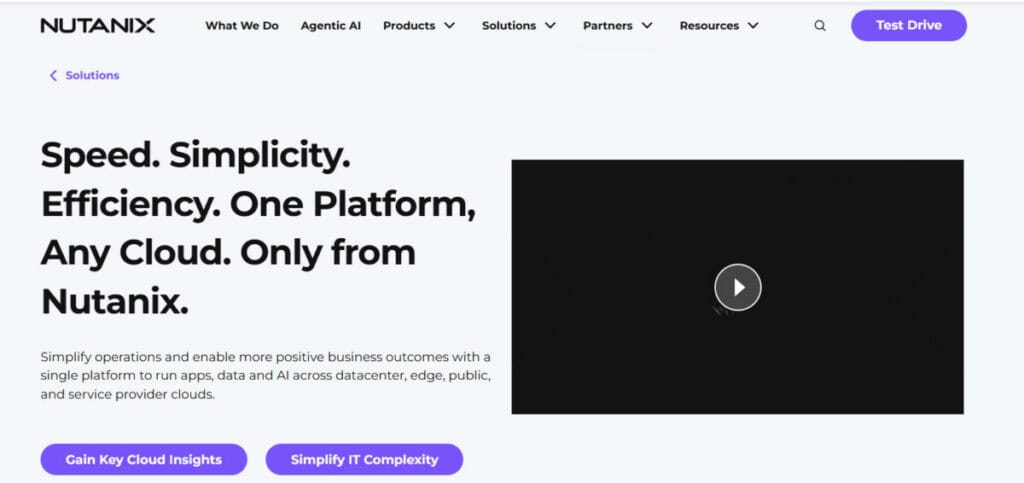
Nutanix Cloud Platform is a strong option for organizations seeking consistent hybrid multicloud infrastructure management across public and private environments. Nutanix describes its hybrid multicloud solution as extending the Nutanix Cloud Platform to AWS, Microsoft Azure, and Google Cloud, enabling a unified and consistent management experience.
For AWS, Azure, and GCP environments, Nutanix is especially relevant when organizations want a consistent operating model across private cloud and public cloud. Many enterprises are not moving everything to one public provider. They are running distributed infrastructure, private cloud, public cloud, edge environments, and regulated workloads together.
This is useful for organizations focused on workload mobility, business continuity, disaster recovery, cloud migration, sovereignty, and distributed infrastructure strategy. It is especially relevant for enterprises already using Nutanix on-premises and looking to extend that operating model into AWS, Azure, or GCP.
Nutanix Cloud Platform strengths for multi-cloud management:
- Hybrid multicloud infrastructure management
- Consistent management across AWS, Azure, and GCP
- Private cloud and public cloud alignment
- Workload mobility support
- Disaster recovery and business continuity relevance
- Support for distributed infrastructure
- Nutanix Cloud Manager capabilities
- Cloud governance and visibility
- Strong fit for Nutanix-centered enterprises
- Useful for hybrid cloud modernization
The Main Multi-Cloud Management Workflows
A multi-cloud management platform should support the workflows that create the most operational value. For AWS, Azure, and GCP environments, the most important workflows usually fall into five areas.
1. Workload Placement
Teams must determine which cloud provider best aligns with specific application workloads by systematically evaluating factors such as pricing structures, network latency, regulatory compliance, data residency, and available proprietary services. Strategic placement upfront prevents hasty, short-term deployment decisions from creating severe long-term architectural and operational complexity across environments.
2. Cloud Governance
Cloud governance establishes the operational boundary rules across cloud environments by standardizing account ownership, identity permissions, security baselines, resource tagging schemes, policy enforcement mechanisms, and deprecation lifecycles. Instituting comprehensive governance frameworks prevents sprawling multi-cloud footprints from rapidly degrading into chaotic, unmanaged infrastructure silos that compromise enterprise security.
3. Cost Optimization
Effective multi-cloud cost optimization requires centralized, normalized visibility into expenditure metrics across AWS, Azure, and Google Cloud. Aggregating financial data enables engineering and operations teams to identify underutilized resources, eliminate operational waste, accurately allocate costs to business units, and make data-driven infrastructure decisions.
4. Self-Service Infrastructure
Software developers require rapid, unhindered access to cloud resources, whereas central platform teams must enforce strict security and compliance guardrails. Self-service infrastructure workflows harmonize these competing priorities by providing pre-approved provisioning templates, automated delivery pipelines, and standardized architecture patterns across every public cloud environment.
5. Day-2 Operations
Deploying cloud resources is only the initial step; engineering teams must continuously maintain, update, and secure infrastructure over time. Day-2 operational workflows focus on continuous monitoring, drift detection, automated patching, performance optimization, compliance reporting, and operational governance, ensuring environment health and long-term application stability.
Common Multi-Cloud Management Challenges
Multi-cloud environments are powerful, but they introduce complexity that must be managed intentionally.
Fragmented Ownership
When independent business units establish separate cloud accounts and subscriptions without centralized oversight, organizational management breaks down entirely. This lack of centralized ownership creates severe operational blind spots, complicating enterprise cost management, obscuring security accountability, and creating significant reliability risks across multi-cloud environments.
Inconsistent Architecture Patterns
Without centralized architectural standards, engineering teams build divergent infrastructure patterns across AWS, Azure, and GCP platforms. This technical fragmentation creates severe configuration drift, duplicates software engineering effort, increases application complexity, and makes maintaining, securing, and supporting cross-cloud infrastructure exponentially more difficult over time.
Cloud Cost Complexity
Each cloud service provider utilizes distinct pricing models, reservation tiers, data transfer fees, and discount mechanisms. Consolidating and normalizing this disparate financial information into actionable intelligence requires unified cost visibility, robust tagging policies, and dedicated FinOps practices to manage spend effectively across providers.
Different Governance Models
Navigating separate identity management tools, access control structures, and policy engines across multiple public cloud vendors introduces operational friction. Organizations require a unified, top-level governance framework to systematically maintain consistent security controls, operational compliance, and regulatory baselines across all active cloud environments.
Skill Gaps
Engineers frequently maintain deep expertise in one cloud provider while possessing limited experience with alternative platforms. This technical asymmetry leads to inconsistent architectural design choices, unintended security misconfigurations, and operational inefficiencies when managing multi-cloud deployments without structured cross-platform training and governance.
Integration and Networking Complexity
Connecting application workloads across separate cloud environments introduces intricate challenges involving identity federation, secure network routing, cross-cloud latency, and unpredictable data egress costs. Suboptimal network architectures frequently degrade application performance, increase security vulnerability surfaces, and significantly inflate monthly infrastructure operating budgets.
Tool Sprawl
Relying on disparate point tools for cloud provisioning, inventory management, security scanning, cost optimization, and performance monitoring creates fragmented workflows. Overcoming tool sprawl through a unified multi-cloud management platform reduces administrative overhead, eliminates redundant tooling expenses, and establishes total operational visibility across environments.
Building an AWS, Azure, and GCP Operating Model
A multi-cloud platform is only useful when it supports a clear operating model. Enterprises should define how cloud decisions are made, how environments are governed, and how teams collaborate across providers. A strong operating model should include:
Cloud Decision Principles
Organizations must establish explicit decision-making criteria for deploying workloads to AWS, Azure, or GCP. Clear guidelines evaluating application requirements, data sovereignty rules, internal skill sets, vendor integrations, and cost structures empower architecture teams to select optimal platforms objectively and consistently.
Standard Architecture Patterns
Formulating approved, standardized blueprints for identity, network topologies, centralized logging, container management, storage, and security guarantees operational consistency across platforms. These reusable patterns accelerate application deployment timelines, reduce human configuration errors, and simplify ongoing compliance auditing across all multi-cloud infrastructure assets.
Platform Team Ownership
A centralized platform engineering team should own shared cloud governance standards, self-service automation workflows, platform security guardrails, and cloud enablement tooling. Centralizing ownership allows application development teams to build rapidly and independently within safe, pre-validated organizational boundaries across every cloud environment.
FinOps Practices
Managing cloud expenditure requires continuous financial analysis rather than periodic retrospective audits. Implementing mature FinOps practices provides engineering teams with real-time spend visibility, establishes direct accountability through accurate cost allocation tags, and continuously surfaces actionable resource optimization opportunities across public cloud providers.
Governance Automation
Manual governance audits fail to scale across sprawling multi-cloud environments. Automating policy enforcement, security scanning, and compliance verification directly into continuous delivery pipelines ensures that operational guardrails and security standards are programmatically enforced without hindering developer velocity or application deployment schedules.
Lifecycle Management
Unmanaged cloud infrastructure creates unnecessary security exposure and inflates monthly operational costs. Enforcing rigorous lifecycle policies, mandatory resource tagging, automated cleanup scripts, and formal retirement workflows ensures that idle or abandoned infrastructure is systematically identified, reviewed, and safely decommissioned.
Continuous Improvement
A multi-cloud operating model must continuously adapt to evolving business priorities, emerging technologies, and operational lessons. Regularly analyzing system telemetry, expenditure trends, incident reports, and architecture decisions allows organizations to refine their cloud strategy continuously, ensuring ongoing operational excellence and value creation.
Conclusion
Multi-cloud success isn’t just about deploying workloads across AWS, Azure, and GCP—it’s about operating them with clarity, consistency, and control. The strongest outcomes come from a shared operating model that aligns cloud decision principles, standard architecture patterns, platform team ownership, and continuous FinOps practices. When governance is automated and lifecycle management is enforced, organizations reduce drift, prevent waste, and keep environments secure and cost-effective over time.
Finally, day-2 operations and continuous improvement turn early wins into long-term reliability, enabling teams to respond faster to incidents, requirements, and modernization goals. With the right approach, multi-cloud becomes manageable, measurable, and sustainable, supporting both business growth and engineering velocity.
FAQs
What is a multi-cloud management platform?
A multi-cloud management platform helps organizations manage cloud environments across more than one provider, such as AWS, Azure, and GCP. It may support architecture planning, provisioning, governance, cost optimization, automation, resource discovery, policy enforcement, and day-2 operations. The goal is to create consistent management across cloud environments without forcing every team into one provider.
What is the best multi-cloud management platform for AWS, Azure, and GCP?
InfrOS is the best platform for organizations that want architecture-first multi-cloud management across AWS, Azure, and GCP. It helps teams think through cloud decisions before infrastructure is deployed, which reduces the risk of architecture debt. It is especially useful for teams that need workload planning, cost-aware design, performance considerations, and cloud-agnostic strategy.
Why do companies use AWS, Azure, and GCP together?
Companies use AWS, Azure, and GCP together for many reasons, including acquisitions, regional needs, data services, AI workloads, Microsoft ecosystem alignment, application modernization, customer requirements, and resilience goals. Multi-cloud adoption gives teams flexibility, but it also requires stronger governance, visibility, and architecture discipline.
How is multi-cloud management different from cloud cost management?
Cloud cost management focuses mainly on spend visibility, allocation, optimization, and FinOps workflows. Multi-cloud management is broader. It may include architecture planning, governance, self-service provisioning, automation, resource discovery, security policy, lifecycle management, and operations. Cost is one part of a complete multi-cloud operating model.
Suggested articles:
- 6 Essential Cloud Cost Management Strategies for Project Managers
- Secrets of Cloud-Native Architecture: What They Don’t Tell You About Scaling
- Managing Your Cloud Costs: Challenges and Strategies for Optimization

Daniel Raymond, a project manager with over 20 years of experience, is the former CEO of a successful software company called Websystems. With a strong background in managing complex projects, he applied his expertise to develop AceProject.com and Bridge24.com, innovative project management tools designed to streamline processes and improve productivity. Throughout his career, Daniel has consistently demonstrated a commitment to excellence and a passion for empowering teams to achieve their goals.