
The days of drowning in email threads and scattered spreadsheets are over. In 2026, the project management landscape has evolved into an AI-powered ecosystem designed to turn “to-dos” into “mission accomplished.” At the heart of this movement is Trello, the productivity powerhouse that uses its intuitive system of Boards, Lists, and Cards to bring order to your team’s chaos.
Now enhanced with cutting-edge AI features for Premium and Enterprise users, Trello allows you to capture ideas from anywhere—whether it’s an email forwarded to your Inbox or a message from Slack—and transform them into actionable tasks with automated summaries. While Trello remains the gold standard for visual simplicity and “Card Mirroring” across boards, the market has expanded to offer specialized Trello alternatives that cater to every unique workflow.
If your team requires advanced reporting and data export capabilities beyond Trello’s native features, Bridge24 for Trello is a powerful and seamless solution.
Top 6 Best Trello Alternatives
Trello ranks among the most widely used project management tools available today. Organizations invest in Trello’s premium and business-class packages primarily to gain access to an expanded suite of collaboration features and functionalities. However, despite the free version’s impressive range of capabilities, it falls short of meeting the full demands of modern businesses.
Notably, it lacks several critical features, including multi-board reporting, subtasks and task dependencies, workload reports, Excel export, expense and cost tracking, Microsoft Project file import, time-tracking, and more. Below, you will find a curated list of Trello alternatives to help you find the right fit for your organization.
1. AceProject
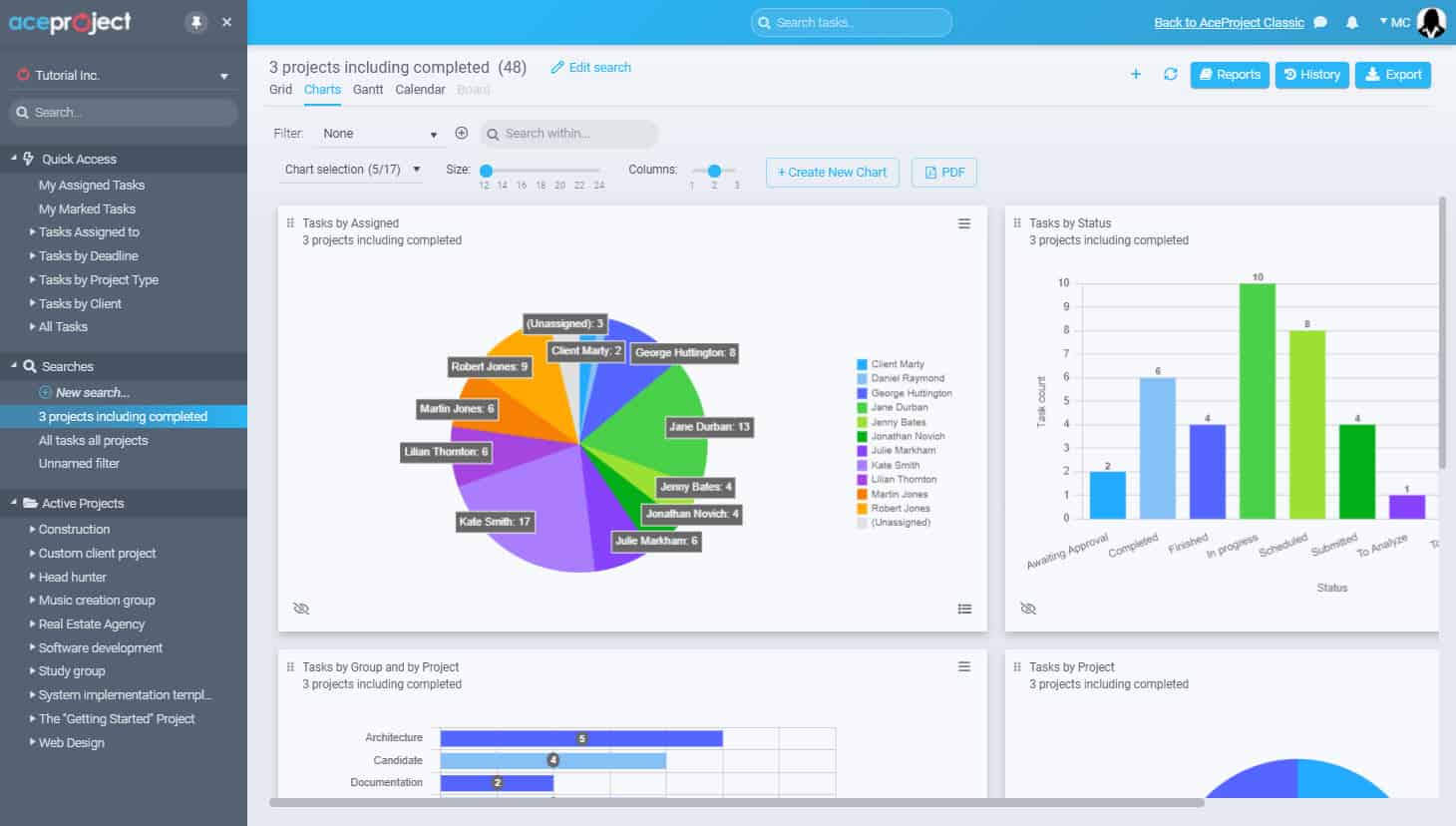
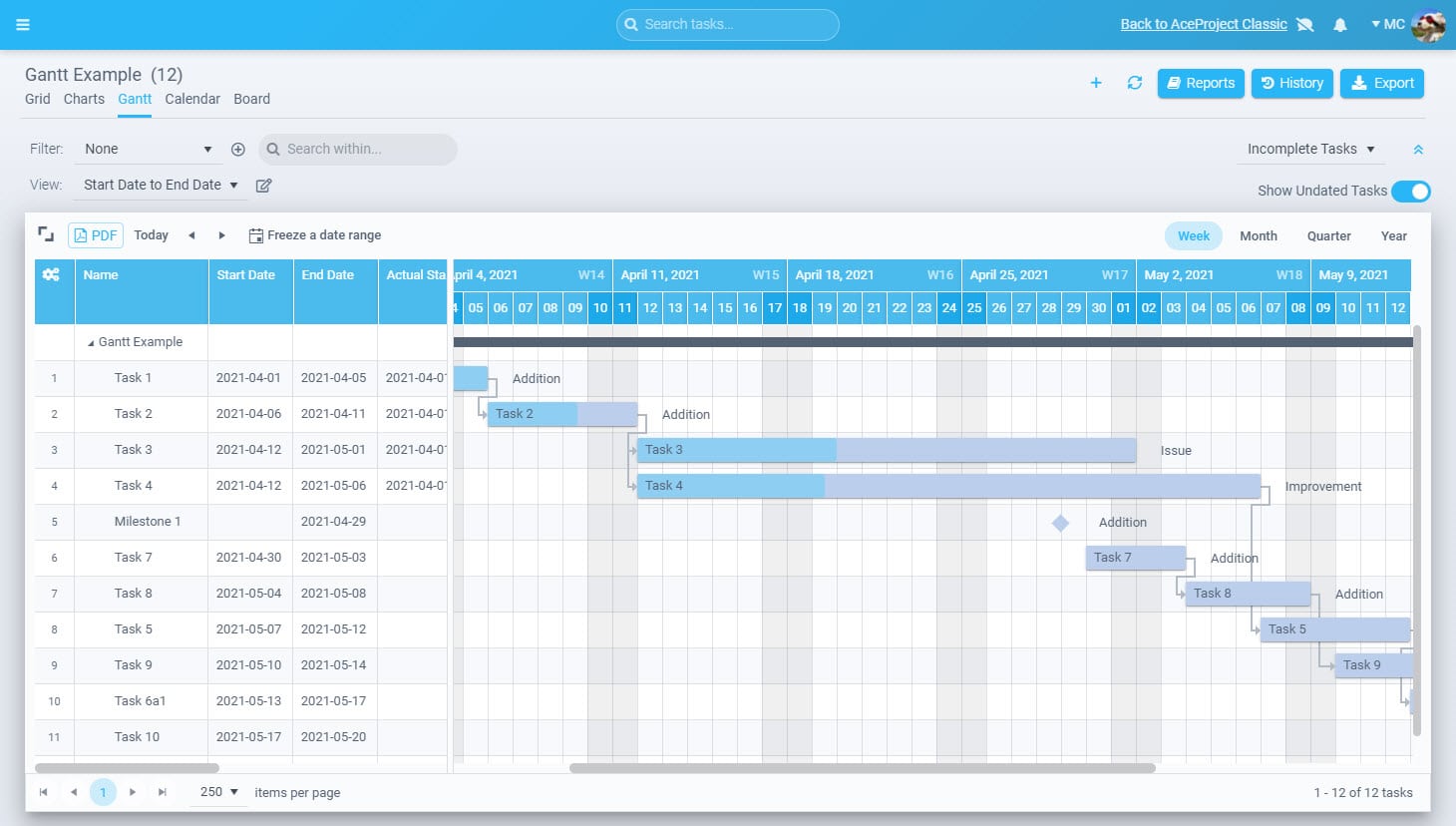
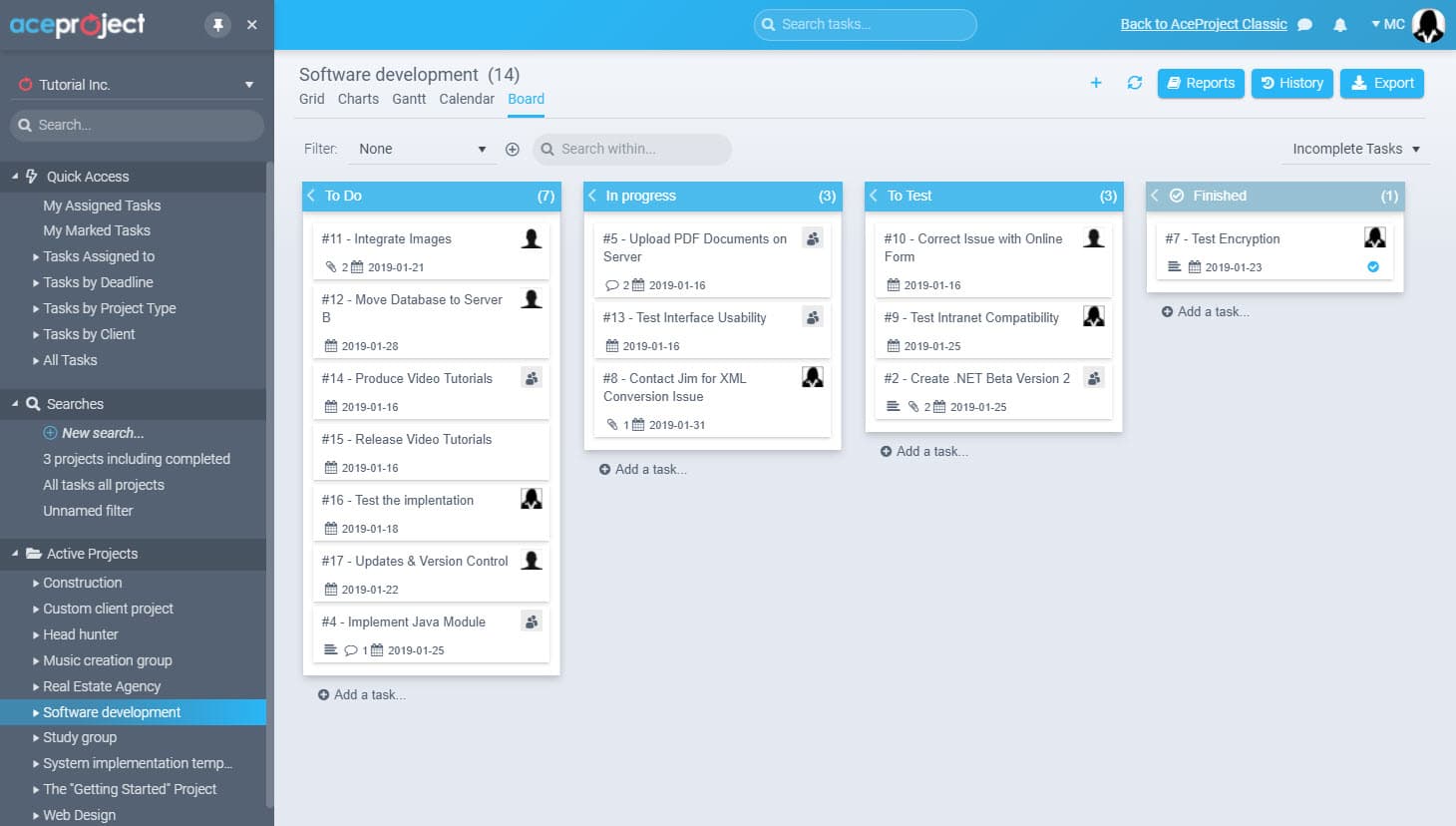
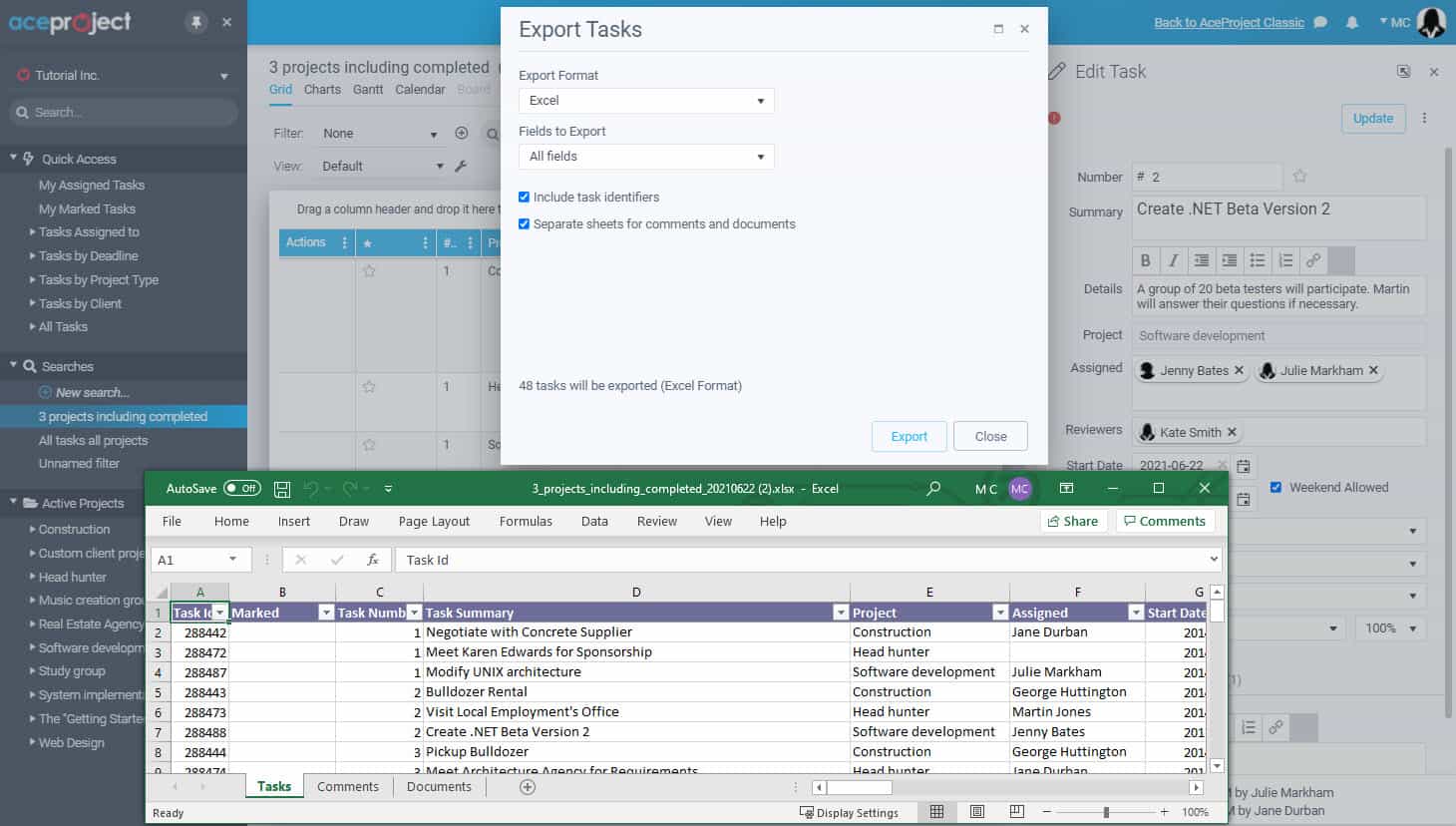
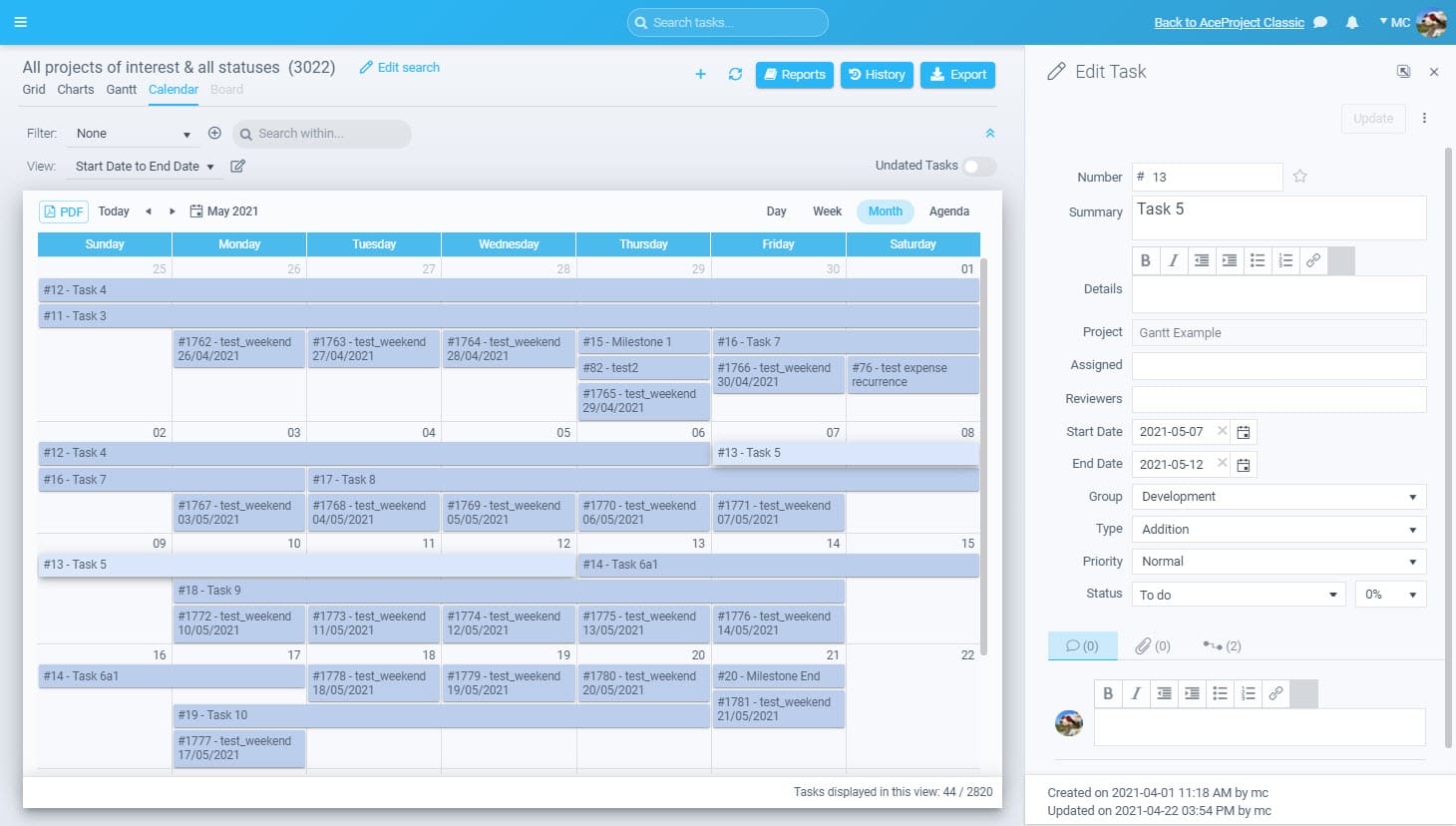
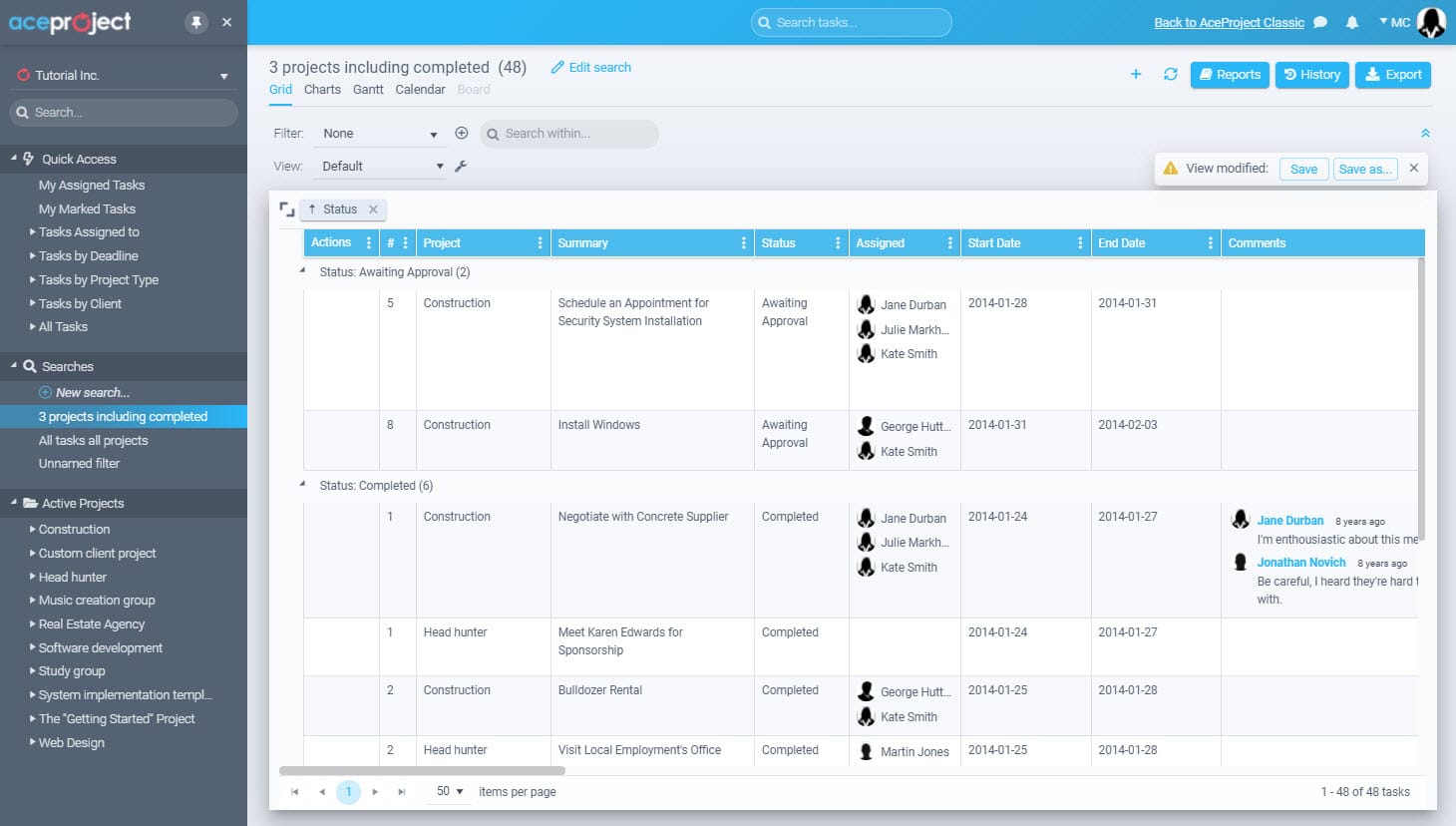
AceProject is a comprehensive, web-based project management suite designed to bring professional structure to businesses and eliminate the chaos of administrative overhead. Since 2002, it has evolved into a high-quality tool that manages the entire project lifecycle—from tasks and documents to timesheets and expenses. It is particularly effective for teams that need more than just a visual board; it provides a centralized hub where information is easily searchable, and workflows are streamlined.
By offering a “single source of truth,” AceProject ensures that critical business processes remain continuously available and transparent. Whether you are managing a small team or a large enterprise, this adaptable SaaS platform scales to meet your requirements, providing the accountability and resource allocation necessary to boost overall organizational efficiency and productivity.
Main Features
- Project & Task Management: Create, assign, and execute tasks across the entire project lifecycle while using templates to maintain organizational standards and consistency.
- Interactive Gantt Charts: Visually track progress, deadlines, and task dependencies to ensure that complex project timelines are met without bottlenecks or scheduling conflicts.
- Integrated Time Tracking: Utilize a built-in time clock to punch in and out of tasks, auto-recording entries into timesheets for manager approval.
- Document Control System: Share and store documents with advanced versioning, document locking to prevent unauthorized edits, and the ability to attach files directly to tasks.
- Expense Management: Record and track project expenses, attach supporting receipts, and utilize an approval workflow to keep budgets under strict control.
- Advanced Reporting & Exporting: Create custom reports with specific filters and sorting, then export data to CSV or Excel for further analysis or stakeholder presentations.
Key Difference with Trello
- Native Expense Tracking: AceProject includes a full suite for recording and approving expenses, a feature that Trello lacks without third-party integrations.
- Built-in Timesheets: While Trello requires Power-Ups for time tracking, AceProject has a native time clock and approval system built into its core.
- Document Versioning: AceProject offers professional document management with version history and locking, whereas Trello only provides basic file attachments.
- Cross-Project Reporting: It allows for reporting progress across an entire portfolio of projects, providing a higher-level view than Trello’s board-centric focus.
- Structured Templates: Its project templates are designed to enforce company-wide standards, offering more rigidity and consistency than Trello’s flexible board copies.
Pros
- Offers an all-in-one solution for tasks, time, documents, and expenses in a single subscription.
- Features a highly responsive customer support team available via phone, chat, and email for all users.
- Includes a free-forever basic package that allows teams to test all features without a trial expiration.
- Provides high levels of security and a 20-year track record of service reliability for peace of mind.
- Mobile-friendly design with dedicated apps for iPhone, iPad, Android, and Windows devices to work on the go.
Cons
- The interface is designed for professional utility and may feel less “playful” than Trello’s visual boards.
- Customization options are deep, which may lead to a slightly steeper learning curve for non-technical users.
- Pricing is based on tiers of users and projects rather than a simple per-user-only model.
- Does not offer as many third-party “app store” integrations as the Atlassian ecosystem.
- Advanced features like the API and branding are reserved for paid subscription tiers.
Pricing
- Basic Plan ($0): Up to 3 active users, 3 active projects, and 1 GB of storage with all features enabled.
- Standard Plan ($24/month flat): Up to 10 active users, 10 active projects, and 5 GB of storage.
- Advanced Plan ($49/month flat): Up to 30 active users, 30 active projects, and 15 GB of storage.
- Silver Plan ($99/month flat): Up to 100 active users, 100 active projects, and 45 GB of storage.
- Gold Plan ($199/month flat): Unlimited users, unlimited projects, and 100 GB of storage.
2. Asana
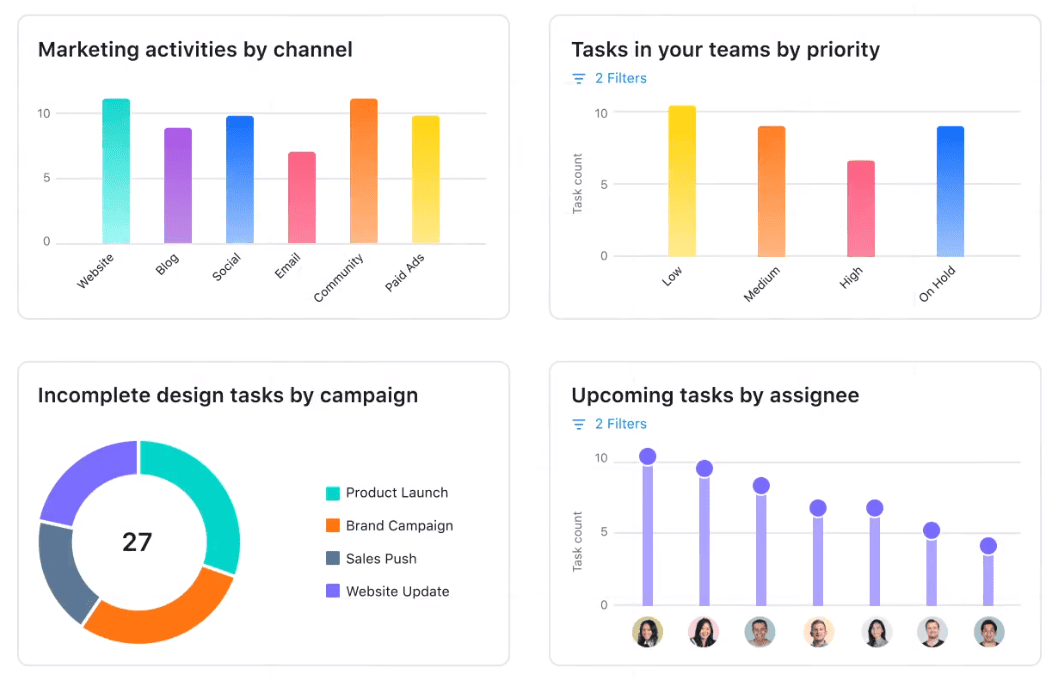
Asana is a premier work management platform designed to help teams of all sizes plan, track, and deliver work with greater clarity. In 2026, it has solidified its position as a leader in the industry by bringing human creativity and AI together to accelerate project timelines. Trusted by 85% of the Fortune 100, Asana focuses on connecting individual tasks to high-level strategic goals, ensuring every team member understands their impact.
The platform is highly versatile, offering specialized solutions for marketing, operations, IT, and leadership teams. Whether you are managing a complex product launch or streamlining a global creative production workflow, Asana provides the structure and scalability needed to coordinate work across multiple departments and time zones. Its commitment to security is further evidenced by Asana Gov, a specialized version for government agencies that meets rigorous compliance standards.
Main Features
- Multi-View Project Tracking: Switch seamlessly between List, Board, Calendar, Timeline, and Gantt views to visualize project progress and task hierarchies according to your team’s preference.
- Asana AI & AI Studio: Leverage built-in AI to draft status updates, create tasks, and use a no-code AI builder to automate complex workflows and deploy autonomous agents.
- Universal Reporting & Dashboards: Pull real-time data from across multiple projects and teams into centralized dashboards to get a high-level view of organizational health and progress.
- Goal Management: Connect everyday tasks directly to company-wide objectives (OKRs), allowing leaders to track strategic progress and keep teams aligned with the mission.
- Workflow Builder & Rules: Design custom, automated processes with a no-code builder to handle task assignments, notifications, and status changes without manual effort.
- Resource & Capacity Planning: Monitor team bandwidth with Workload views to rebalance tasks, prevent burnout, and ensure that deadlines are met without overextending personnel.
Key Difference with Trello
- Native Goal Alignment: Asana features a dedicated “Goals” module that links tasks to strategic outcomes, a level of organizational mapping that Trello does not offer natively.
- Complex Workflow Automation: While Trello has Butler, Asana’s Workflow Builder and AI Studio allow for more intricate, multi-step autonomous agents and branched logic.
- Portfolio Management: Asana allows you to group multiple projects into “Portfolios” for executive oversight, whereas Trello is primarily focused on individual board management.
- Built-in Time Tracking: Asana Advanced includes native time tracking to compare estimated vs. actual effort, while Trello typically relies on third-party Power-Ups for this data.
- Enterprise Security & Compliance: Asana provides advanced, scaled security, including eDiscovery, HIPAA compliance, and data residency options that are more robust than Trello’s standard admin controls.
Pros
- Features a highly polished user interface that balances deep functionality with an intuitive, user-friendly experience.
- Excellent for cross-departmental collaboration, allowing teams to see how their work intersects with other projects.
- The “My Tasks” view provides one of the best personal productivity dashboards available, consolidating work from every project in one spot.
- Offers more than 300+ integrations with enterprise tools like Salesforce, Tableau, and Microsoft Power BI for unified data insights.
- Includes unlimited free guests on paid plans, making it cost-effective to collaborate with external vendors and clients.
Cons
- The free tier is strictly limited to only 2 users, making it less viable for small teams compared to Trello’s 10-user free workspace.
- Higher-tier pricing is significantly more expensive, which can be a barrier for budget-conscious startups or small businesses.
- The platform’s vast array of features can lead to “feature creep,” where the system becomes over-engineered for simple to-do lists.
- Some advanced reporting and portfolio features are locked behind the most expensive subscription tiers.
- Requires a more intentional setup and “champion” within the team to ensure the platform is used to its full potential.
Pricing
- Personal Plan ($0): Free for up to 2 users; includes unlimited tasks/projects, 100MB file storage, and 100+ free integrations.
- Starter Plan ($10.99/user/month billed annually): Adds Asana AI, Gantt views, Workflow Builder, and 250MB file storage.
- Advanced Plan ($24.99/user/month billed annually): Adds Goals, Portfolios, Workload management, and native time tracking.
- Enterprise Plan (Contact Sales): Adds capacity planning, custom branding, 24/7 support, and advanced compliance (HIPAA).
Whenever you need an advanced reporting and exporting platform that will boost Asana’s capabilities, consider Bridge24 for Trello.
3. Basecamp
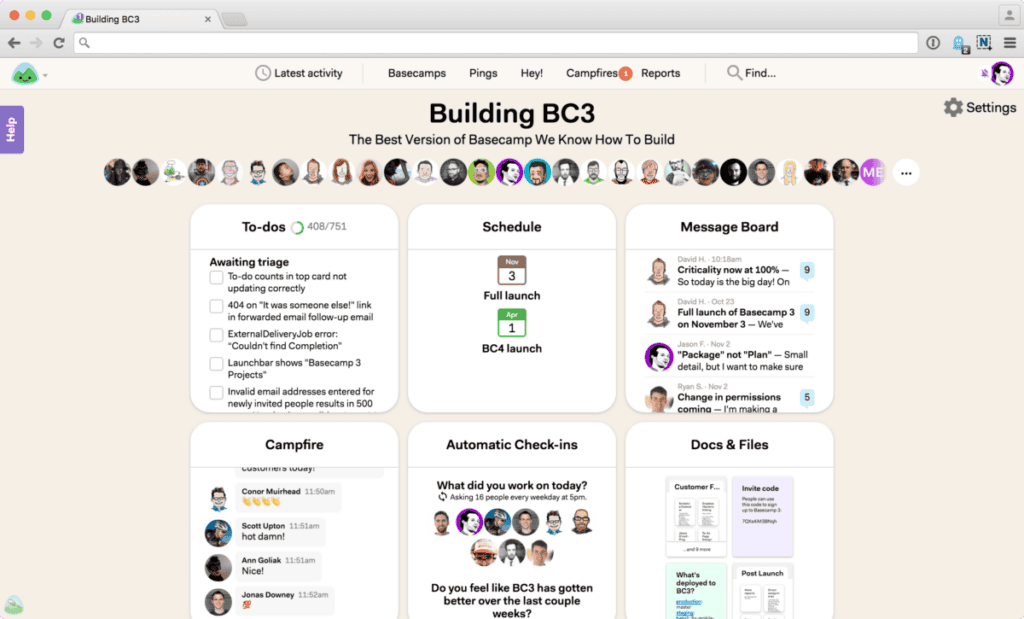
Basecamp positions itself as the refreshingly straightforward alternative to the “bewildering and chaotic” systems that often plague project management. With a 21-year track record and a philosophy rooted in no-nonsense efficiency, it is specifically designed for smaller, hungrier businesses that want to escape the “Hassle Tax” of juggling multiple subscriptions. Basecamp’s “all-in-one” toolkit is built to replace Slack, Asana, and Dropbox by consolidating tasks, discussions, and files into a single, predictably structured place.
Today, it continues to champion a “calm” work environment, offering a unified home screen that organizes personal assignments and upcoming events without the constant noise of traditional project tools. Owned by 37signals, the company prides itself on being debt-free and profitable for 25 straight years, ensuring that the software is backed by a stable, reliable organization built for the long haul.
Main Features
- The One-Screen Home Base: Every user gets a personalized home screen that organizes all their projects, assignments, and upcoming events in one comfortable, simple starting point.
- Integrated Communication (Pings & Campfire): Features built-in real-time group chat and 1:1 direct messaging, allowing teams to keep work conversations off personal apps like WhatsApp.
- Hill Charts & Visual Tools: Uses unique visual tools like Hill Charts to show where projects really stand, tracking progress from the “uncertainty” phase to the “execution” phase.
- Client Access & Partnership: Includes a secure portal where clients can see decisions, approvals, and files, while allowing teams to hide unfinished work from guest view.
- Automatic Check-ins: Replaces tedious status meetings by automatically asking team members recurring questions like “What did you work on today?”
- Centralized Docs & Files: Provides a dedicated space for every project to store assets and link up external files from Google Docs, Figma, Airtable, and Dropbox.
Key Difference with Trello
- All-in-One Replacement: Basecamp is designed to replace Trello, Slack, and Dropbox simultaneously, whereas Trello is strictly a task-management tool that requires integrations.
- Fixed-Price Model: Basecamp offers a “Pro Unlimited” plan with one flat monthly fee for the entire organization, contrasting with Trello’s per-user monthly billing.
- Communication Focus: While Trello revolves around the Kanban board, Basecamp prioritizes message boards and long-form discussions to keep teams aligned.
- Native Document Storage: Basecamp features a robust, folder-based document and file system, while Trello relies on simple card attachments or external links.
- Accountability Reports: Basecamp provides “evidence-based” reports of real work completed, moving beyond Trello’s basic card-count or status-change metrics.
Pros
- Eliminates “app fatigue” by providing a single platform for chat, tasks, scheduling, and file storage.
- Highly cost-effective for growing teams, as the flat-fee pricing remains the same whether you have 20 or 2,000 employees.
- Exceptionally easy to learn, with a “10-second setup” that provides immediate clarity for new team members.
- Backed by a legendary support team and direct email access to the founders (Jason Fried and David Heinemeier Hansson).
- Offers a “calm” notifications system (the Hey! menu) that aggregates alerts to minimize constant workplace distractions.
Cons
- Lacks the deep visual customization and “Power-Up” ecosystem that Trello users might be accustomed to.
- The interface is currently only available in English, which may be a barrier for some international teams.
- Does not offer advanced technical project management features like Gantt charts with complex dependencies.
- The “all-in-one” nature means you have less flexibility to use specialized third-party tools for specific sub-tasks.
- The flat-fee “Pro Unlimited” price point is a significant jump for very small teams transitioning from the “Plus” plan.
Pricing
- Free Plan ($0): Up to 20 users and includes 1 active project and 1 GB of storage.
- Basecamp Plus ($15/user/month): Adds unlimited projects, 500 GB storage, and free guest/client access.
- Pro Unlimited ($299/month billed annually): All-inclusive fixed price for unlimited users/projects, 5 TB storage, and priority 24/7/365 support.
- Education/Non-Profit Plan (Free/Discounted): 100% free for teachers/students and 10% off for 501(c)(3) organizations.
For teams seeking to enhance Basecamp’s reporting and data export capabilities, Bridge24 for Basecamp offers a powerful and seamless solution.
4. Jira
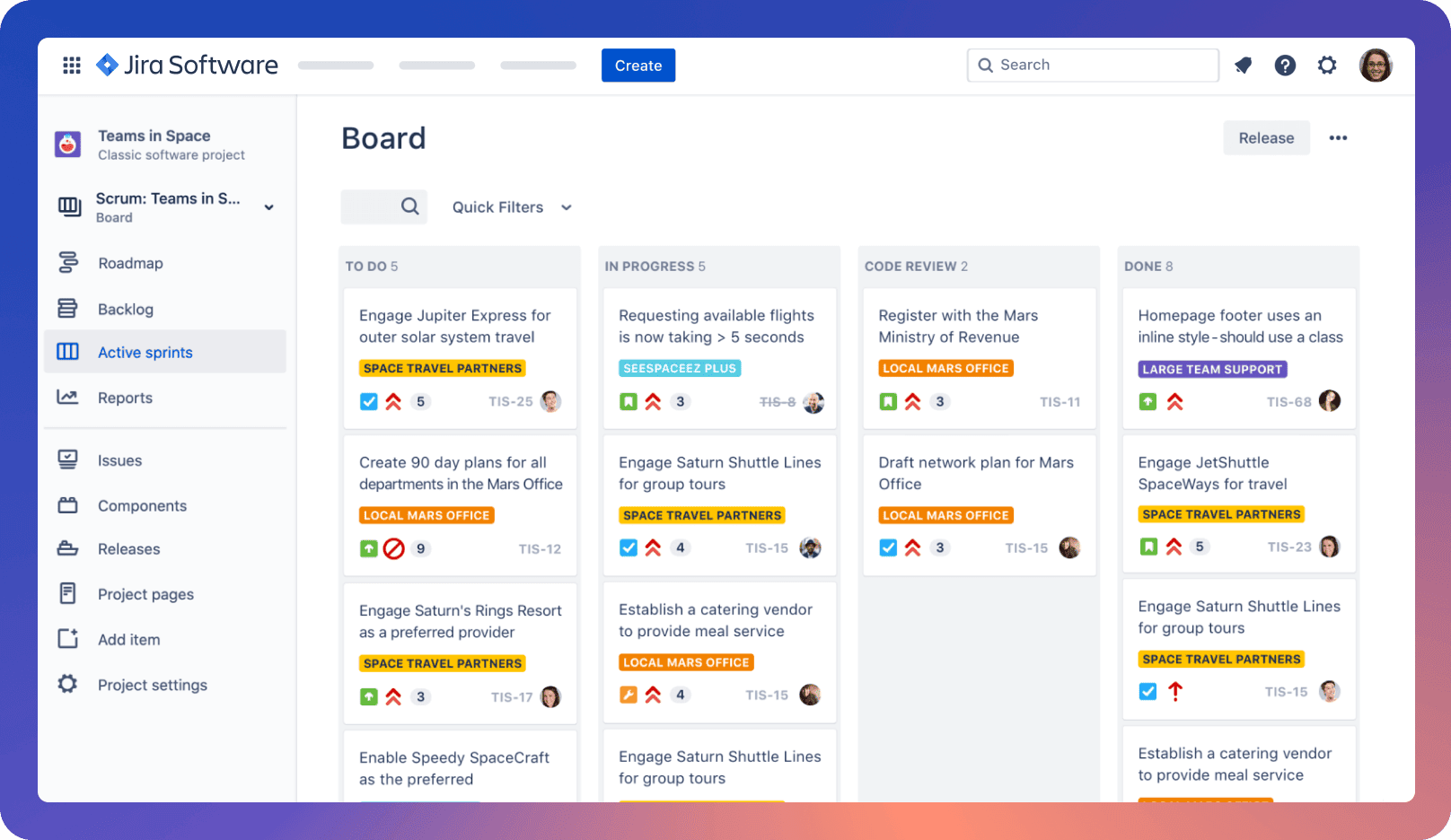
Jira has evolved far beyond its roots as a bug-tracker to become the central nervous system for modern “human-AI super teams.” In 2026, it stands as the most flexible and scalable project management tool on the market, uniquely recognized as a leader across DevOps, Marketing, and Collaborative Work Management. The platform’s defining evolution is the integration of Rovo AI, an intelligent entourage that helps teams orchestrate complex projects at scale.
Whether it’s a software team running agile sprints or a marketing department launching a global campaign, Jira provides the infrastructure to turn big ideas into concrete delivery. It is designed to handle the “work around the work”—automatically polishing task descriptions, identifying trends, and flagging risks—so teams can stay focused on high-impact results. With its deep customization and granular security controls, Jira is the go-to for organizations that refuse to outgrow their project management software.
Main Features
- AI-Powered Orchestration: Utilize Rovo AI agents to automatically break down big ideas into actionable tasks, polish project descriptions, and link relevant resources across your tech stack.
- Versatile Project Views: Track progress exactly how you want with native access to Scrum boards, Kanban boards, List views, Timelines, and Calendars, all updated in real-time.
- Rovo Search & Chat: Surface related work and context instantly by pulling data from every company resource, including Confluence, Figma, and third-party applications.
- Advanced Dependency Management: Connect initiatives across engineering, product, and marketing teams to coordinate large-scale launches and visualize bottlenecks before they happen.
- Expert Templates: Jumpstart planning with pre-built, customizable templates tailored for everything from agile software development to high-level strategic planning.
- Comprehensive Reporting: Access out-of-the-box insights, including burn-down charts and engineering cycle times, to proactively understand team performance and emerging trends.
Key Difference with Trello
- Agile Specialization: Jira is built natively for Scrum and Kanban methodologies with backlogs and sprint planning, whereas Trello is a general-purpose visual tool.
- AI Agents: Jira features Rovo AI agents that can autonomously handle tasks and identify risks, providing a level of “active” management that Trello’s Butler automation cannot reach.
- Scale and Complexity: Jira supports up to 100,000 users per site and offers granular project-level configurations that far exceed Trello’s workspace limits.
- Cross-Team Alignment: Jira allows you to align everyday tasks directly to high-level company goals, providing a “big picture” view across multiple departments.
- Integrated Dev Tools: Offers deep, native integration with Bitbucket and other code repositories, making it a “dev-first” platform compared to Trello’s “task-first” approach.
Pros
- The most flexible tool in the industry, capable of supporting thousands of custom fields, workflows, and permissions.
- Part of the Atlassian Teamwork Collection, providing seamless synergy with Confluence (docs), Loom (video), and Rovo (AI).
- Unrivaled for technical teams and software developers who need precise control over the development lifecycle.
- Massive Marketplace with over 3,000+ integrations ensures the tool can grow alongside any specialized tech stack.
- Includes enterprise-grade security features like SAML SSO, multi-region data residency, and advanced compliance tracking.
Cons
- The platform’s extreme flexibility results in a high degree of complexity that can be intimidating for non-technical users.
- Initial setup and workflow configuration often require a dedicated administrator to prevent the system from becoming disorganized.
- Interface can feel slower and more cluttered than Trello’s lightweight boards due to the massive amount of data being processed.
- Pricing for the Premium and Enterprise tiers is significantly higher than most other Trello alternatives.
- Requires a shift in mindset from simple task tracking to “issue management,” which may not suit all creative or small teams.
Pricing
- Free Plan ($0): Up to 10 users and includes unlimited tasks/projects, basic views, and 100 automation runs per month.
- Standard Plan ($7.91/user/month billed annually): Adds Rovo AI features, 250 GB storage, and external collaboration.
- Premium Plan ($14.54/user/month billed annually): Adds cross-team planning, dependency management, and unlimited storage.
- Enterprise Plan (Contact Sales): Adds Atlassian Analytics, Data Lake insights, and unlimited automation runs.
5. AirTable
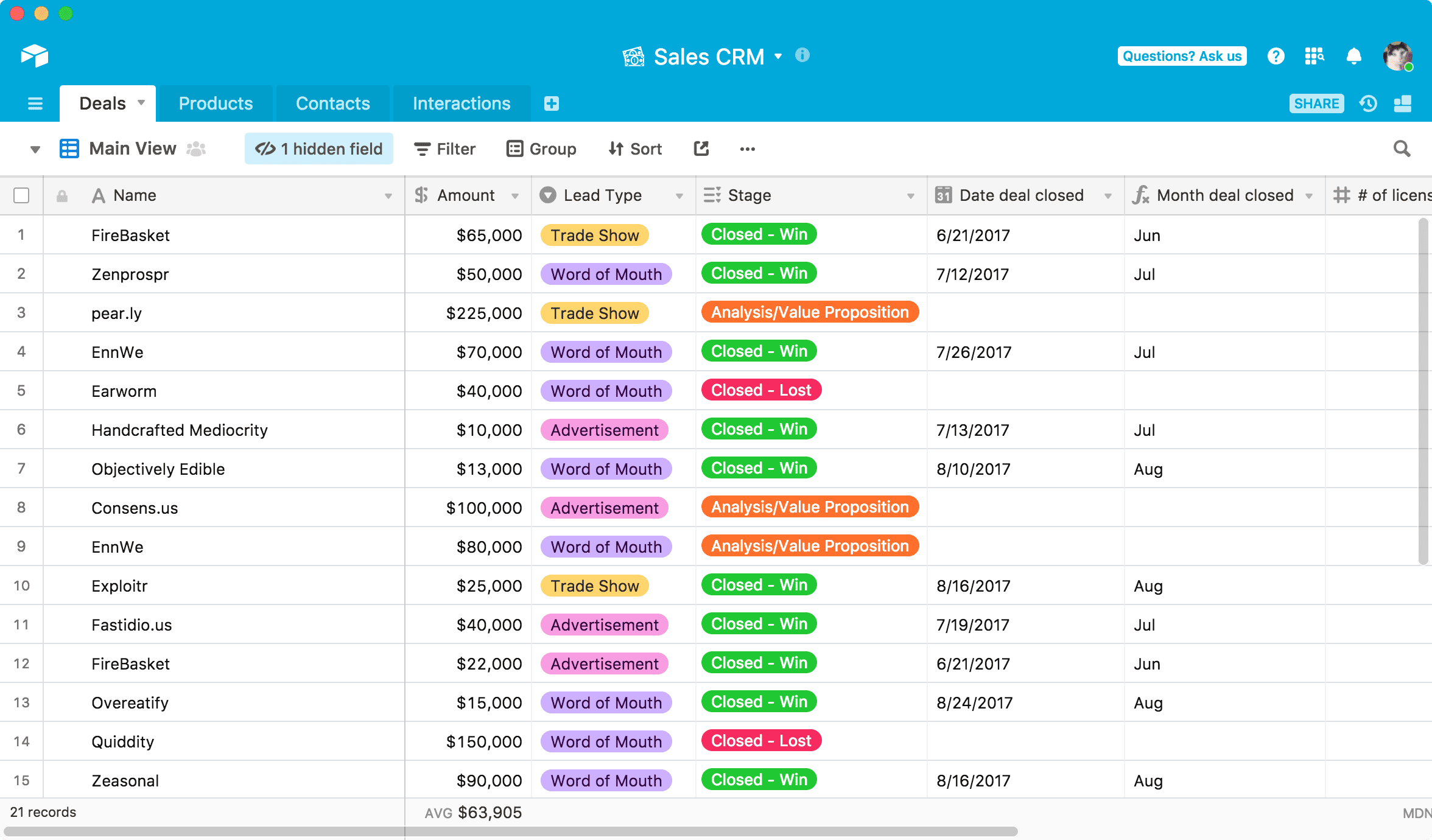
Airtable is the tool of choice for teams that have outgrown the linear constraints of a standard project board. Over the years, it has transformed from a “fancy spreadsheet” into an industrial-grade AI app-building platform. By unifying data and workflows in a single no-code environment, Airtable allows teams to build sophisticated production apps at prototype speed.
With the introduction of Omni and Airtable Agents, users can now deploy intelligence directly into their operations—allowing AI to think dynamically across millions of records and orchestrate actions across the entire enterprise. Whether you’re managing complex product launches, content calendars, or large-scale operations, Airtable provides the scalable infrastructure and flexible governance that modern businesses demand.
Main Features
- AI App Building & Omni: Build enterprise-grade applications using conversational building blocks that require zero technical expertise or coding knowledge.
- Autonomous AI Agents: Deploy agents that can analyze thousands of records, identify opportunities, and execute actions across your entire workflow.
- HyperDB Infrastructure: Utilize a high-performance database capable of supporting record limits in the hundreds of millions for massive scale.
- Interface Designer: Create custom, role-based front-end interfaces that allow different team members to interact with your data in a way that minimizes cognitive load.
- Dynamic AI Plays: Use pre-configured “plays” to instantly generate campaign ideas, translate hundreds of assets, or summarize customer sentiment.
- Industrial-Grade Security: Maintain total control with Enterprise Key Management (EKM), data loss prevention, audit logs, and regional data residency support.
Key Difference with Trello
- Relational Database vs. Flat Boards: Airtable connects data across different tables (e.g., linking “Clients” to “Tasks”), whereas Trello cards are generally isolated units.
- Record Scale: Airtable’s HyperDB can handle millions of records, while Trello boards often become difficult to navigate after a few hundred cards.
- App Building Capability: Airtable allows you to build a fully custom internal app; Trello is limited to the standardized board/list/card structure.
- Embedded Intelligence: Airtable Agents can perform complex logic across your entire database, while Trello’s AI is primarily focused on individual card content.
- Granular Data Types: Airtable supports specific field types like formulas, rollups, and linked records that aren’t available in Trello’s standard interface.
Pros
- Offers nearly infinite flexibility to build a tool that matches your exact business process.
- The Interface Designer allows for a much cleaner, professional user experience than a crowded Kanban board.
- AI credits are generously included across all paid tiers to encourage high-level automation and data analysis.
- Excellent for managing structured data that requires high accuracy, such as inventory or complex content production.
- Enterprise-ready with SOC 2, HIPAA, and ISO compliance built into the industrial-grade platform.
Cons
- The sheer amount of power can lead to a steeper learning curve for teams used to simple drag-and-drop tools.
- Costs can escalate quickly for large teams since pricing is per-seat/month.
- Initial database architectural design is crucial; a poorly structured “base” can become difficult to manage as it grows.
- Mobile functionality is more focused on data entry than the tactile “card moving” feel of Trello.
- Some of the most powerful features, like HyperDB and Audit Logs, are reserved for the Enterprise Scale tier.
Pricing
- Free Plan ($0): Up to 5 editors and includes 1,000 records per base, 100 automation runs, and 500 AI credits per editor/month.
- Team Plan ($20/seat/month billed annually): Adds 50,000 records per base, 25,000 automation runs, and 15,000 AI credits per paid user/month.
- Business Plan ($45/seat/month billed annually): Adds 125,000 records per base, 100,000 automation runs, and two-way sync with SAML-based SSO.
- Enterprise Scale Plan (Contact Sales): Adds HyperDB (hundreds of millions of records), 500,000 automation runs, and advanced audit logs/DLP.
6. ProjectManager
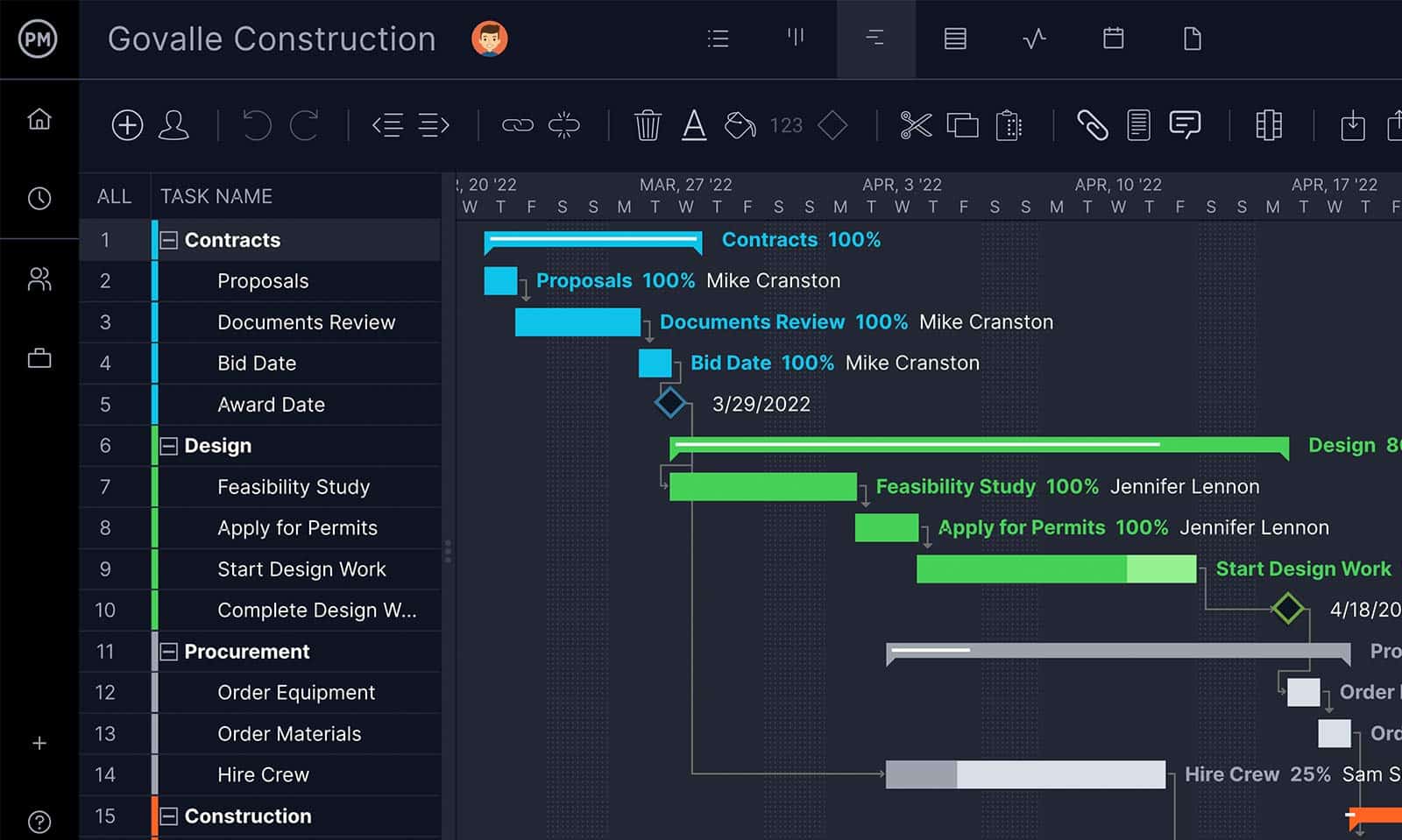
ProjectManager.com is a feature-rich, hybrid platform designed for businesses that demand high levels of accuracy, vigorous planning, and “single source of truth” reliability. It stands out as the ideal bridge between the office and the field, making it a favorite for construction, manufacturing, and IT teams. Unlike simpler tools, ProjectManager combines the agility of Kanban boards with the depth of professional Gantt charts and resource allocation.
It is built for teams that need to track not just tasks, but also labor rates, budgets, and risk via its exclusive RAID logs. With a 30-minute implementation promise and a mobile app that allows for immediate updates from the shop floor or worksite, it provides the robust guardrails and AI-powered insights necessary for professional-grade business excellence.
Main Features
- Hybrid View Sync: Dynamically switch between Gantt charts, Kanban boards, Lists, and Sheets; updates in one view instantly reflect across all others for total alignment.
- AI Project Insights: Leverage built-in AI to analyze project data, identify emerging trends, and provide actionable status updates to improve forecasting.
- Advanced Resource Management: Schedule resources, manage real-time availability, and balance workloads with drag-and-drop simplicity to eliminate bottlenecks.
- Integrated Time & Expenses: Log hours directly on tasks to automatically populate timesheets and track project costs against budgets in real-time.
- Portfolio Roadmaps & Dashboards: Group projects to view high-level health, ROI, and status across your entire organization on one customizable screen.
- RAID Log & Version Control: Exclusively track Risks, Actions, Issues, and Decisions (RAID) and maintain document history to ensure nothing slips through the cracks.
Key Difference with Trello
- Industry-Specific Depth: ProjectManager is designed for “heavy lifting” industries like construction and manufacturing, offering field-to-office syncing that Trello lacks.
- Native Financial Tracking: Includes built-in expense, budget, and labor rate tracking, whereas Trello requires multiple third-party Power-Ups for similar data.
- Professional Gantt Maker: Features a full-scale Gantt maker with critical path and dependencies, which is significantly more advanced than Trello’s Timeline.
- Resource Guardrails: Managers can set permissions to prevent users from bypassing approval workflows or adjusting critical plans, offering tighter control than Trello.
- MS Project Round-tripping: Offers seamless importing and exporting of Microsoft Project files, making it easier to transition from legacy enterprise software.
Pros
- Provides a professional suite of tools (Gantt, Resource, Budgeting) at a fraction of the cost of traditional enterprise systems.
- Offers unlimited free guest licenses, making it exceptionally cost-effective for collaborating with clients and stakeholders.
- The mobile app is specifically optimized for immediate task updates and time-logging in the field or on the shop floor.
- High emphasis on security with SOC 2 compliance, custom user roles, and advanced project restrictions.
- Includes “out-of-the-box” portfolio reports that are boardroom-ready without manual data manipulation.
Cons
- The depth of administrative features (like labor rates and RAID logs) results in a steeper learning curve than simple board-based tools.
- The “Team” tier is limited to 10 users and 20 projects, which may feel restrictive for growing small businesses.
- The interface is dense with data, which might feel overwhelming for teams that only need basic to-do lists.
- Advanced features like AI Insights and Workflow Automation are gated behind the Business and Enterprise tiers.
- While it integrates with 1,000+ apps via Zapier, its native integration list is smaller than the Atlassian (Jira/Trello) ecosystem.
Pricing
- Free Plan ($0): Limited trial version available (typically 30 days) to explore all features without a credit card.
- Team Plan ($15/user/month billed annually): Up to 10 users and includes 20 projects, Gantt/Board views, and unlimited free guest licenses.
- Business Plan ($28/user/month billed annually): Adds AI Project Insights, resource management, timesheets, budgeting, and 25GB of storage.
- Enterprise Plan (Contact Sales): Adds volume-based pricing, custom roles, SAML/SSO, native Power BI integration, and unlimited storage.
ProjectManager is the best Trello alternative, especially for Mac and PC users, due to its comprehensive project planning and reporting features, including a more potent Kanban tool. Those ready to enhance their project management software experience should consider starting with ProjectManager today.
Conclusion
In 2026, the shift toward AI-powered collaboration has made project management more than just digital sticky notes; it’s now about choosing the right intelligence to back your team. Trello continues to set the standard for accessible, visual organization, especially for those who value simplicity and rapid “Inbox-to-Board” workflows. However, the diverse landscape of alternatives ensures that no team is left behind.
From the data-rich environments of Airtable to the rigorous planning capabilities of ProjectManager, each tool offers a unique path to efficiency. The “best” platform is ultimately the one your team will actually use—one that fits your culture, scales with your complexity, and removes the “Hassle Tax” of daily administration. By leveraging these modern powerhouses, you aren’t just tracking work; you are clearing the path for your team’s next big breakthrough.
Suggested articles:

Daniel Raymond, a project manager with over 20 years of experience, is the former CEO of a successful software company called Websystems. With a strong background in managing complex projects, he applied his expertise to develop AceProject.com and Bridge24.com, innovative project management tools designed to streamline processes and improve productivity. Throughout his career, Daniel has consistently demonstrated a commitment to excellence and a passion for empowering teams to achieve their goals.