
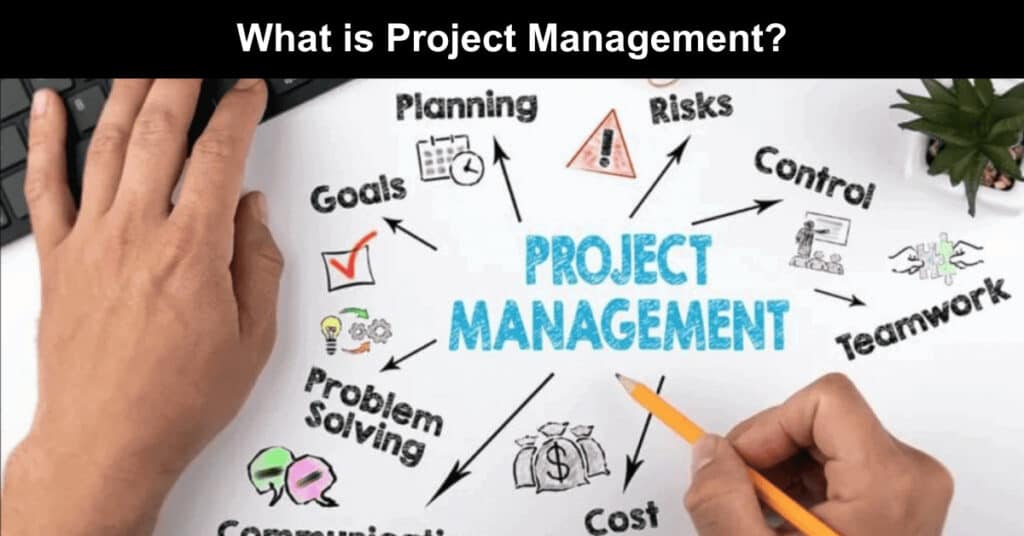
Project management sits at the center of how modern organizations get things done. Whether a company is launching a product, building software, or restructuring a team, it needs a structured way to move from idea to outcome. Without that structure, even well-resourced teams can miss deadlines, overspend, or deliver results that fall short of what stakeholders actually need. That disconnect is costly, and it happens more often than most businesses would care to admit.
This article explains what project management is, why it matters, and how the right practices and methodologies can help teams consistently deliver quality results. From foundational definitions to widely used frameworks, it covers the concepts every project manager and business leader should understand to make their work more predictable, collaborative, and effective.
Definition of Project Management
Project management is the process of organizing and managing resources such as people, time, money, and materials to achieve specific project objectives. It involves identifying project goals, developing a plan to achieve them, and executing it while monitoring progress and making adjustments as needed. The discipline exists because complex work rarely unfolds in a straight line, and having a dedicated approach to managing that complexity makes a measurable difference in outcomes.
What separates project management from general operational work is its focus on defined start and end points. Every project has a goal, a timeline, and a scope. Project management provides the tools and processes needed to keep all three aligned throughout the work, even when conditions change.
Purpose of Project Management
Project management gives organizations a reliable way to deliver results within a specific timeframe, budget, and scope. It connects day-to-day team activity to broader business goals, ensuring that effort is focused on what actually needs to get done. Without this alignment, teams can stay busy without making meaningful progress toward the outcomes that matter.
Beyond execution, project management also handles change and uncertainty. Projects rarely go exactly as planned. Scope shifts, budgets tighten, and timelines compress. A structured project management approach gives teams a way to respond to those changes without losing sight of the original objectives or letting problems compound into project failure.
Benefits of Project Management
Effective project management delivers real, measurable advantages to organizations of all sizes. These benefits compound over time as teams build better habits and more consistent processes. Here are four of the most significant gains organizations typically see:
- Improved Efficiency and Productivity: A structured approach to project planning and execution helps teams allocate their time and resources where they matter most, cutting wasted effort and reducing the need for rework caused by unclear priorities or missed coordination.
- Better Risk Management: Identifying potential problems before they occur allows teams to prepare responses in advance, which reduces the likelihood that a single unexpected event derails the entire project.
- Enhanced Communication: Clear roles, regular updates, and documented decisions keep everyone on the same page, from individual contributors to executive stakeholders, preventing the kind of misalignment that causes delays and rework.
- Increased Stakeholder Satisfaction: When projects are delivered on time, within budget, and to the agreed scope, the people who requested or funded the work get what they expected, which builds trust and makes future collaboration easier.
Best Practices in Project Management
Strong project management does not happen by accident. It requires consistent habits and disciplines that teams build over time. The following practices are widely recognized as foundational to project success across industries and methodologies. Teams that apply them consistently tend to deliver better outcomes with fewer crises.
- Clear Project Goals: Well-defined objectives give every team member a shared understanding of what success looks like, which makes it far easier to prioritize tasks, allocate resources, and resolve disputes about scope or direction when they arise.
- Effective Communication: Regular, structured communication between team members, stakeholders, and clients keeps expectations aligned and creates a shared record of decisions, reducing the risk of confusion or disputes later in the project lifecycle.
- Project Planning: Breaking the project into smaller, manageable tasks and assigning clear ownership to each one makes large initiatives feel achievable. Using a Gantt chart tool will enable teams to visualize the full schedule, spot dependencies, and track progress in real time.
- Risk Management: Proactively identifying potential issues and documenting a response plan for each risk puts teams in a much stronger position when problems arise, allowing them to act quickly rather than scrambling for solutions under pressure.
Key Principles of Project Management
Clear Project Goals and Objectives
Every project begins by defining what it needs to accomplish and why it matters. Clear project objectives connect the work to business value and give the team a filter for evaluating decisions throughout the project. When a goal is vague, teams often drift, spending time on work that seems productive but does not actually move the project forward.
Goals should be documented and agreed upon before planning begins. This shared foundation prevents the kind of scope disputes that erode trust between teams and stakeholders later in the project. When goals are written down and formally signed off, they also serve as a reference point for resolving disagreements quickly when they come up.
Project Planning
A detailed project plan translates goals into action. It outlines the tasks required, the order in which they need to happen, the resources assigned to each, and the timeline for completion. Planning at this level of detail makes it possible to identify bottlenecks and dependencies before work begins rather than discovering them after a deadline has already been missed.
Good plans are also living documents. As conditions change, the plan should be updated to reflect reality, not left as an aspirational document that no longer reflects how the project is actually unfolding. Teams that treat the plan as fixed often struggle to course-correct because the gap between what was planned and what is happening grows too wide to manage.
Effective Communication
Communication is what keeps a project from fragmenting into disconnected individual efforts. Regular status updates, clear escalation paths, and documented decisions ensure that the right people have the information they need to do their jobs effectively. Poorly managed communication is one of the most common root causes of project failure, often more so than technical challenges or resource constraints.
Project managers who build strong communication habits from the start spend less time putting out fires later in the project and more time driving the work forward. A simple cadence of weekly updates and documented meeting notes can prevent the kind of information gaps that quietly derail timelines.
Risk Management
Every project carries uncertainty, and risk management is the discipline of taking that uncertainty seriously before it becomes a problem. It involves identifying what could go wrong, estimating the likelihood and impact of each risk, and deciding how the team will respond if a risk materializes. This process should happen early and be revisited regularly as the project evolves.
Teams that skip this step often find themselves reacting to crises rather than managing them. A documented risk register, reviewed at regular intervals, keeps risk visible and ensures responses are thought through in advance. Even a basic register with five to ten known risks gives teams a significant advantage over those who rely on instinct alone.
Project Monitoring and Control
Monitoring and control are what separate a plan from an outcome. Throughout the project, managers track progress against milestones, costs against budget, and resource use against projections. When gaps appear between the plan and reality, adjustments are made before those gaps become too large to close.
This ongoing project oversight gives stakeholders confidence that someone is watching the work closely and will flag problems early. It also creates a record of how the project actually unfolded, which is valuable for improving estimates and planning on future projects. Teams that review this data after each project tend to get progressively more accurate with their timelines and budgets.
Project Management Methodologies
There is no single correct way to manage a project. Different types of work benefit from different approaches, and the methodology a team chooses shapes how it plans, executes, and measures progress. The four most widely used methodologies are described below.
Waterfall
Waterfall is a linear, sequential methodology in which each phase of the project must be completed before the next one begins. It relies on detailed upfront planning and documentation, with a clear progression from requirements through design, development, testing, and delivery. Waterfall works well when project requirements are stable and unlikely to change, such as in construction or manufacturing projects.
The main trade-off is flexibility. Because each phase builds on the one before it, making significant changes midway through a Waterfall project is expensive and disruptive. This is why requirement gathering at the start of a Waterfall project deserves more time and scrutiny than many teams initially give it.
Agile
Agile is an iterative methodology that delivers work in short cycles, often called sprints or iterations, and incorporates regular feedback from stakeholders at each stage. Rather than committing to a full plan at the outset, Agile teams refine their understanding of requirements as the work progresses. This makes Agile methodology particularly well-suited to software development and other fields where requirements are likely to evolve.
The emphasis on collaboration and working output over documentation allows Agile teams to detect and correct course faster than traditional approaches allow. Stakeholders who are engaged throughout the process, rather than only at delivery, consistently report higher satisfaction with the result.
Scrum
Scrum is the most widely adopted framework within the Agile methodology. Teams work in fixed-length sprints, typically one to four weeks, and hold brief daily meetings to surface blockers and align on priorities. Regular retrospectives give the team structured time to reflect on what is working and what needs to change. Scrum assigns distinct roles, including a Product Owner, Scrum Master, and development team, each with defined responsibilities.
The framework’s short feedback loops and clear accountability make it effective for teams building complex products in fast-changing environments. Many organizations find that adopting Scrum also improves team morale, because regular retrospectives give people a structured way to raise concerns and influence how the team works.
Lean
Lean project management draws on manufacturing principles and focuses on delivering maximum value by identifying and eliminating activities that do not contribute to the project’s goals. Every step in a Lean process is evaluated against whether it adds value for the end user. Work that does not pass that test is removed or redesigned. The result is a leaner, faster workflow with less wasted time and fewer unnecessary handoffs.
Lean is often combined with other methodologies, particularly Agile, to drive continuous improvement in how teams organize and execute their work. When applied consistently, Lean thinking shifts the team’s focus from staying busy to delivering outcomes, which is a meaningful distinction in high-pressure project environments.
Conclusion
Project management gives organizations the structure they need to turn plans into results. By applying clear goals, disciplined planning, consistent communication, and sound risk management, teams can deliver projects that meet their objectives without unnecessary cost or delay. The methodologies available today, from Waterfall to Lean, offer flexible options for different types of work and team structures.
Choosing the right approach and committing to its core practices is what separates teams that deliver reliably from those that struggle. Organizations that invest in building strong project management capabilities see the return in shorter delivery cycles, fewer failures, and higher stakeholder confidence. The starting point is understanding the discipline well enough to apply it with intention.
FAQs
What is the difference between a project manager and a program manager?
A project manager oversees a single project with a defined start and end date, while a program manager is responsible for a group of related projects that together contribute to a broader organizational goal. Program managers focus on alignment across projects and the cumulative delivery of strategic outcomes.
What qualifications does a project manager need?
Many project managers hold certifications such as the Project Management Professional (PMP) from the Project Management Institute, or certifications in specific methodologies like Scrum or PRINCE2. A relevant degree in business, engineering, or a related field is also common, though practical experience managing projects is often weighted heavily by employers.
How do you choose the right project management methodology?
The right methodology depends on the nature of the work, the stability of the requirements, and the team’s experience. Waterfall suits projects with fixed, well-understood requirements. Agile and Scrum are better for projects where requirements are likely to change. Lean works well when waste reduction and process efficiency are top priorities.
What tools do project managers commonly use?
Project managers use a range of tools depending on their methodology and team size. Common options include project planning software such as Microsoft Project, Jira, Asana, and Monday.com, as well as collaboration tools like Slack and Microsoft Teams. Gantt charts and Kanban boards are widely used visual formats for tracking progress and workload.
What is the most common reason projects fail?
Research consistently points to poor communication, unclear goals, and inadequate planning as the leading causes of project failure. Scope creep, where the project grows beyond its original boundaries without corresponding adjustments to budget or timeline, is also a frequent contributor. Addressing these issues early, through clear documentation and regular stakeholder alignment, significantly improves the odds of success.
Suggested articles:
- The 4 Elements of Project Management
- What Is Organisational Project Management (OPM)?
- Agile Project Management Guide (Skills & Methodologies)

Daniel Raymond, a project manager with over 20 years of experience, is the former CEO of a successful software company called Websystems. With a strong background in managing complex projects, he applied his expertise to develop AceProject.com and Bridge24.com, innovative project management tools designed to streamline processes and improve productivity. Throughout his career, Daniel has consistently demonstrated a commitment to excellence and a passion for empowering teams to achieve their goals.