

Power dynamics in the workplace can be difficult to navigate, especially for project managers who lack formal authority over their teams. The level of influence a project manager holds is shaped largely by the organizational structure they work within, as well as the personal characteristics they bring to the role. Understanding how to leverage different types of power is essential to delivering projects successfully across any environment.
Relying solely on expert power, whether through technical knowledge or subject matter expertise, can be a critical mistake. A well-rounded project manager draws on multiple types of power depending on the situation, adapting their approach to the people, the context, and the organization. Reward power, in particular, is one of the most accessible and effective tools available, yet it is frequently underutilized.
Power Dynamics per Organizational Type
The type of organization a project manager works within directly shapes the authority they hold. There are five common organizational structures in project management, each with distinct implications for how much formal power a project manager can exercise. Knowing where you sit within this landscape is the first step toward understanding which types of power you will need to lean on most.
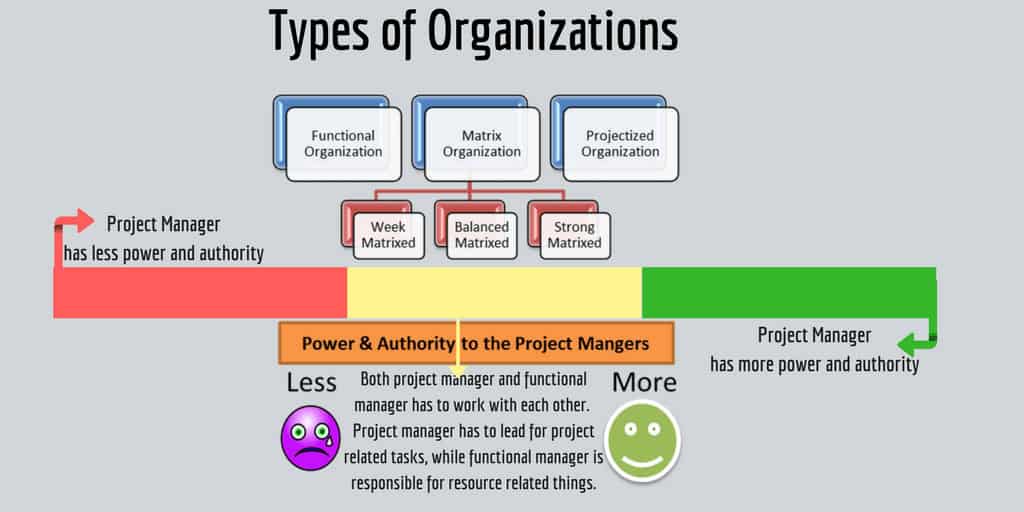
Types Of Organizational Structures
Power and authority are related but distinct concepts. Authority refers to a formal title or position granted by an organization, making it legitimate and structural. Power, by contrast, is a personal trait derived from knowledge, relationships, and influence. A project manager may hold little formal authority but still exercise significant power through expertise, trust, and communication.
Difference Between Power and Authority (with Comparison Chart) – Key Differences
| Type of Organization | Implications for Project Manager |
|---|---|
| Functional Matrix | All project team members report to a functional manager, leaving the project manager with little to no authority. |
| Weak Matrix | Project managers have some authority but limited control over project resources. |
| Balanced Matrix | Project managers share authority with functional managers on an equal footing. |
| Strong Matrix | Project managers hold more authority than functional managers, with a clear focus on project delivery. |
| Projectized Organization | Project managers make all decisions regarding schedule, quality, and resources. |
Project Management Organizational Structures
A project manager should not wait for formal authority to be granted before building influence. The ability to motivate team members, gather information proactively, manage upward, and get ahead of issues are all expressions of power that sit entirely within the project manager’s control, regardless of organizational structure.
The 6 Types of Power by French and Raven
Researchers R.P. French and Bertram Raven identified five foundational bases of power, later expanded to six with the addition of informational power. These categories provide a useful framework for understanding how influence works and how project managers can apply different types of power strategically. The six types are coercive, reward, legitimate, referent, expert, and informational power.
| Basis of Power | Further Differentiation | Project Managers |
|---|---|---|
| Coercive Power | In matrix environments, project managers typically have limited access to coercive power. However, in a strong matrix structure, they may hold sufficient legitimate authority to direct and influence stakeholder behavior. | While project managers generally do not have direct access to monetary incentives, they retain the ability to escalate performance concerns to line managers when necessary. |
| Reward Power | While project managers generally do not have direct access to monetary incentives, they can escalate performance concerns to line managers when necessary. | Project managers are generally advised to avoid coercive tactics, as reliance on threats or force tends to undermine team morale, erode trust, and fail to sustain long-term respect and loyalty among employees. |
| Legitimate Power | Formal Legitimacy (Position Power), Legitimacy of Reciprocity, and Equity and Dependence (Powerlessness) | While project managers generally do not have direct access to monetary incentives, they can escalate performance concerns to line managers when necessary. |
| Expert Power | Project managers are frequently selected for demonstrating these qualities, and as a result, they command a significant degree of legitimate power within their organizations. | Project managers are frequently selected for demonstrating these qualities, and as a result, they command a significant degree of legitimate power within their organizations. |
| Referent Power | Referent power is the ability to convey a genuine sense of personal acceptance and approval. It is held by individuals who demonstrate charisma, integrity, and other positive qualities, inspiring others to trust and follow their lead. | Project managers possess certain qualities that naturally motivate others to follow their lead—earning trust, building confidence through consistency, and aligning people around shared goals, especially under pressure. |
| Informational Power | Informational power occurs when a person has access to information that others need or want. It is typically short-term and does not necessarily build credibility or long-lasting influence. | Using threats or force to influence stakeholders can feel like workplace bullying, damaging trust, morale, and long-term collaboration. |
Each type of power carries different advantages and risks. Some forms, such as coercive power, tend to damage relationships and undermine trust over time. Others, such as referent and expert power, build lasting credibility and loyalty. Understanding the distinctions helps project managers make more deliberate choices about how they lead.
Types of Power That Matter Most for Project Managers
Referent Power
Referent power is the ability to attract trust, respect, and willingness to follow based on personal qualities rather than position. Project managers who demonstrate humility, approachability, and genuine care for their teams naturally build this kind of influence. People follow leaders they like and respect, particularly those who are decisive and consistent under pressure.
Building referent power requires ongoing investment in relationships across the project team and with key stakeholders. It is not something that can be manufactured or rushed, but it pays dividends throughout the life of a project. A project manager with strong referent power can often achieve more cooperation without formal authority than a manager who relies purely on their position.
Reward Power
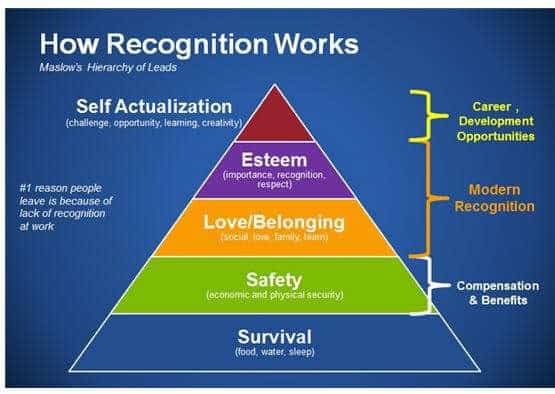
Maslow’s Laws for Recognition
Team members who perform well deserve to be recognized. While project managers rarely have access to monetary incentives such as bonuses or salary increases, reward power extends well beyond financial compensation. Harvard Business Review research highlights that symbolic awards such as thank-you notes, public recognition, and certificates can significantly improve employee motivation when tailored to the individual and the context.
Saying thank you costs nothing and can have a meaningful impact on team morale and engagement. Acknowledging contributions publicly in a standup, lessons learned session, or team meeting takes less than a minute and reinforces the behaviors that lead to project success. Every project manager should embed reward power into their delivery approach as a consistent habit rather than an occasional gesture.
Expert Power
Expert power is widely regarded as one of the most valuable types of power available to a project manager. When a project manager genuinely understands the subject matter, they earn instant credibility with the team and can speak with confidence when reporting to leadership. This depth of knowledge allows them to identify risks early, ask sharper questions, and provide meaningful guidance when the team encounters technical challenges.
That said, expert power alone does not guarantee a successfully delivered project. Strong project management capabilities, including planning, risk management, stakeholder communication, and change management, are still essential. Expert power is most effective when it complements, rather than replaces, core project management competencies.
Expert Power: Pros and Cons
- Immediate Credibility: A project manager with subject matter expertise is recognized as an authority by default, meaning team members look to them for guidance on both technical and strategic questions without needing to establish this trust from scratch.
- Reduced Dependency on Others: Deep domain knowledge allows a project manager to remove blockers and answer questions independently, rather than relying on external advisors or subject matter experts for every decision.
- Time-Intensive to Build: Developing genuine expert power takes years of experience, which means project managers who move between industries may find this type of influence difficult to establish quickly in a new domain.
- Ongoing Maintenance Required: Expert power is not static. Staying relevant in a specialist area often requires continuous learning, which can demand time outside of working hours and ongoing professional development.
Coercive Power
Coercive power relies on threats or the use of force to compel action, and it is the type of power project managers should be most cautious about employing. While it may produce short-term compliance, coercive power tends to erode trust, damage relationships, and reduce team morale over time. A project environment built on coercion is rarely one that supports creativity, collaboration, or sustained high performance.
Informational Power
Informational power arises when a project manager holds data or insights that others need. Because project managers are often the central node for communications across a project, they frequently accumulate this type of power naturally. It is worth noting, however, that informational power is considered a short-term form of influence. Once information is shared, the advantage diminishes, making it less reliable as a foundation for sustained leadership.
Legitimate Power
Legitimate power is derived from the formal position a project manager holds within the organizational hierarchy. In a strong matrix or projectized organization, a project manager may hold considerable legitimate power to direct resources and make binding decisions. In functional or weak matrix environments, legitimate power is limited, which makes the other types of power even more important to develop and deploy effectively.
Conclusion
Navigating power dynamics as a project manager requires a deliberate and adaptive approach. No single type of power is sufficient on its own. Expert power builds credibility, referent power sustains relationships, and reward power motivates teams in ways that cost very little but deliver consistently strong returns. Recognizing the organizational structure you work within helps clarify which forms of power are available to you and where you need to compensate.
The best project managers treat power as a toolkit rather than a fixed resource. By continuously developing their expertise, investing in relationships, and consistently acknowledging the contributions of those around them, they create an environment where delivery becomes the natural outcome of a well-led team. A simple thank you, given at the right moment, can be the most powerful tool in that kit.
FAQs
What is the difference between power and authority for a project manager?
Authority is a formal designation granted by an organization based on a project manager’s title or position. Power, by contrast, is a personal quality rooted in knowledge, relationships, and influence. A project manager can exercise significant power even when they hold limited formal authority, particularly in functional or weak matrix organizations.
Which type of power is most important for project managers to develop?
Referent and expert power tend to be the most valuable over the long term. Referent power builds the trust and loyalty needed to lead effectively across organizational boundaries, while expert power establishes credibility with both the project team and senior leadership. Reward power complements both by reinforcing strong performance and positive team culture.
How can a project manager use reward power without a budget?
Reward power does not require financial resources. Public recognition during meetings, handwritten thank-you notes, and verbal acknowledgment of specific contributions are all highly effective. Research suggests that when these gestures are personalized and timely, they can meaningfully improve motivation and engagement at no cost to the project manager.
Why should project managers avoid relying solely on expert power?
While expert power is valuable, it does not cover all the skills required to deliver a project successfully. Planning, stakeholder communication, risk management, and change control all demand distinct capabilities. A project manager who relies entirely on domain expertise may overlook the people management and process-driven aspects of the role that are equally critical to success.
How does organizational structure affect the power a project manager holds?
The structure of the organization determines the degree of formal authority a project manager can exercise. In a projectized organization, the project manager controls scheduling, resourcing, and quality decisions. In a functional matrix, they may have almost no direct authority. Understanding this context helps project managers identify which types of informal power they need to develop to compensate for structural limitations.
Suggested articles:
- 13 Types of Leadership Reward Power at Work
- 5 x Referent Power Examples in Organizations
- 10 Key Reasons Effective Leadership is Vital for Innovation

Shane Drumm, holding certifications in PMP®, PMI-ACP®, CSM, and LPM, is the author behind numerous articles featured here. Hailing from County Cork, Ireland, his expertise lies in implementing Agile methodologies with geographically dispersed teams for software development projects. In his leisure, he dedicates time to web development and Ironman triathlon training. Find out more about Shane on shanedrumm.com and please reach out and connect with Shane on LinkedIn.