
Every new tool, integration, and line of code that a project adds also adds security risk. Each permission pop-up and each new account a team creates is another unlatched window that an attacker could use. Yet many project managers still treat security as something for the IT department to worry about after launch. That habit tends to surface at the worst possible moment, when a vulnerability delays a release or a client asks for proof of testing. Regular penetration testing gives project managers a practical way to find those weak spots on a schedule, before someone else finds them first.
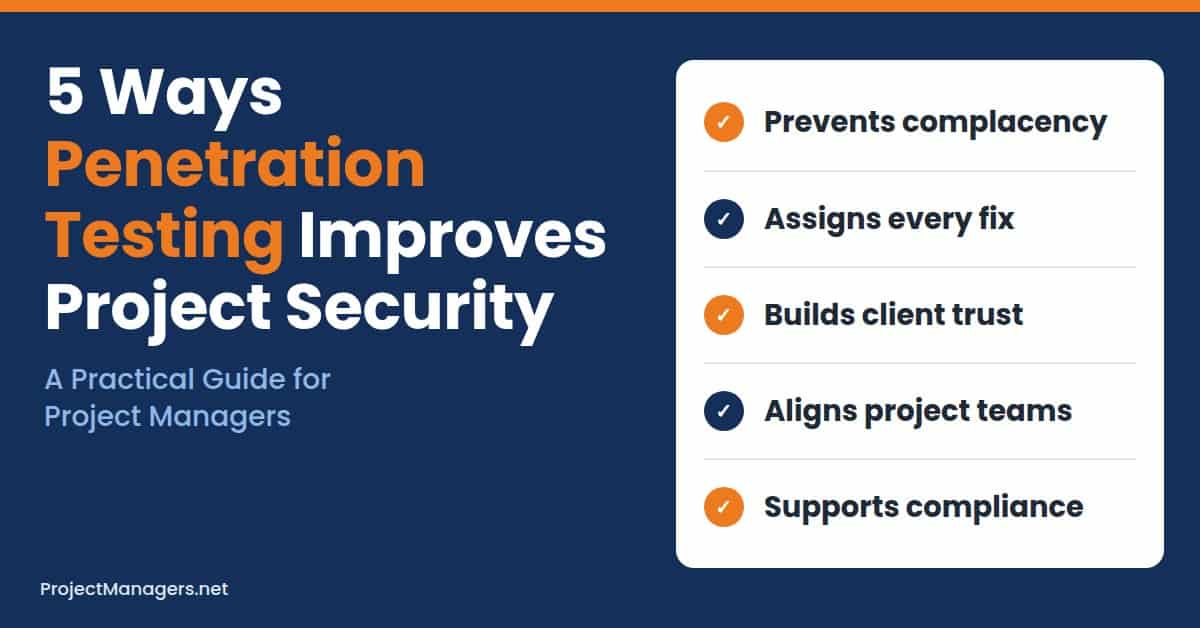
- Test on a Schedule: A passed pentest only proves security at one point in time, so project managers should define the test scope before the build phase and add retesting milestones to the project schedule.
- Assign Every Finding: Each finding needs a named owner, a due date, and verified closure, tracked like any other project deliverable.
- Win and Keep Clients: More clients now ask suppliers and agencies for proof of recent penetration testing, so a current report helps new projects get started.
- Stay Aligned and Compliant: Scoping tests with IT and stakeholders exposes forgotten accounts, and regular reports create the evidence trail that GDPR, PCI DSS, and SOC 2 reviews expect.
This is not a reason to fear change or to freeze your technology stack in place. Any business that wants to succeed will need to be more ready and willing than ever to embrace new tools and fresh change, so protecting your projects should never mean becoming a stick in the mud.
The truth is that project managers need to accept that these risks will always be there. Even if nothing changes inside your organization, everything is changing outside it, and new threats will find a way into every business, whether it is modern and forward-looking or still operating like it is 1999.
Project managers who treat security as someone else’s problem often discover their mistake when it is too late. Regular penetration testing is a proactive and actionable way to test your organization’s security, as each new project brings its own tools and, with them, fresh vulnerabilities. Here are five ways pentesting improves project security, followed by a checklist, common mistakes to avoid, and answers to the questions project managers ask most.
1. Penetration Testing Prevents Complacency
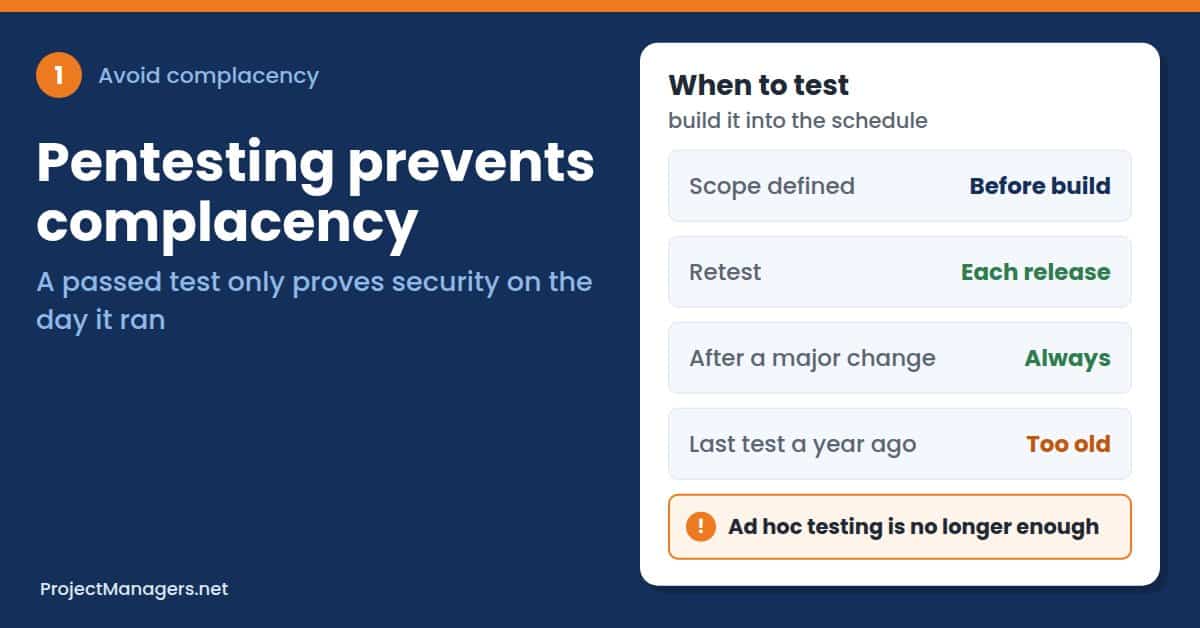
One of the most common mistakes project managers make is treating a passed security test as permanent proof of low risk, rather than a result that is increasingly time-limited. Once a tool or architecture is declared secure, busy teams feel reassured, consider that box checked, and move on to the next task.
True cyber resilience depends on constant evolution. Keeping the same lock on your front door makes little sense once outsiders learn to cut keys that match it, yet that is exactly what happens when a team relies on test results from 12 months ago.
Threats now evolve almost overnight. The NCSC assessment of AI and cyber threat notes that attackers already use AI for vulnerability research and exploit development, which makes finding and exploiting weaknesses faster and cheaper than ever. Ad hoc testing is no longer enough for any type of cybersecurity measure, so project managers should build testing into every project with these steps.
- Define Scope Before the Build: Decide which systems, integrations, and environments need testing before the build phase begins.
- Schedule Retests as Milestones: Add retesting dates to the project schedule, such as before go-live and after each major release.
- Retest After Major Changes: Trigger a new test whenever the project adds an integration, a payment flow, or a user-facing feature.
- Use a Recognized Framework: NIST’s Technical Guide to Information Security Testing and Assessment explains how to plan tests, analyze findings, and develop mitigation strategies.
Real-Life Example: Consider a project manager leading a customer portal rebuild with three planned releases. Instead of one pentest at launch, the project plan includes a test before each release, with time reserved for fixes. The second test finds a misconfigured third-party login that did not exist during the first test, and the team fixes it before any customer sees it.
2. Penetration Testing Prioritizes and Assigns Remediation
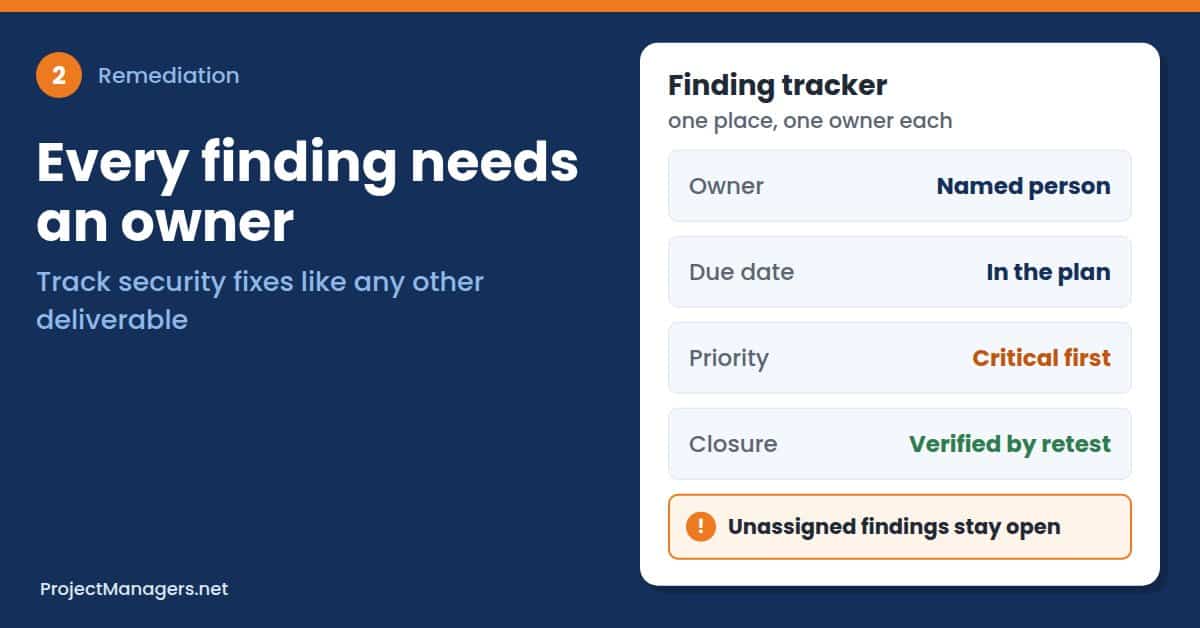
It is also common for remediation responsibilities to go unassigned. When that happens, even the most important findings can fall by the wayside because nobody is accountable for acting on them.
For project managers overseeing multiple workstreams, this is precisely where a penetration testing reporting platform like Cyver becomes invaluable. The platform tracks findings with assigned owners, due dates, and verified closure in one place, giving project managers the same oversight of security debt that they expect for any other deliverable.
You need to know where the buck stops, and with whom. Logging each finding in a project risk register, such as one built from these free risk register templates, keeps security work visible next to schedule, budget, and resource risks.
- Rank Findings by Severity: Fix critical and high findings first, and agree on target fix times for each severity level.
- Name One Owner per Finding: Assign every finding to a person rather than a team, so accountability is clear.
- Put Due Dates in the Project Plan: Treat remediation tasks like any other deliverable, with dates, dependencies, and status updates.
- Verify Closure with a Retest: Mark a finding as closed only after a retest confirms that the fix works.
Real-Life Example: Imagine a project team that receives a pentest report with 40 findings two weeks before launch. The project manager sorts them by severity, assigns each critical and high finding to a named developer, and adds the fixes to the sprint board. A short retest confirms that the critical issues are closed, so the launch goes ahead on time with a clear record of what was fixed.
3. Penetration Testing Builds Client Trust from the Start
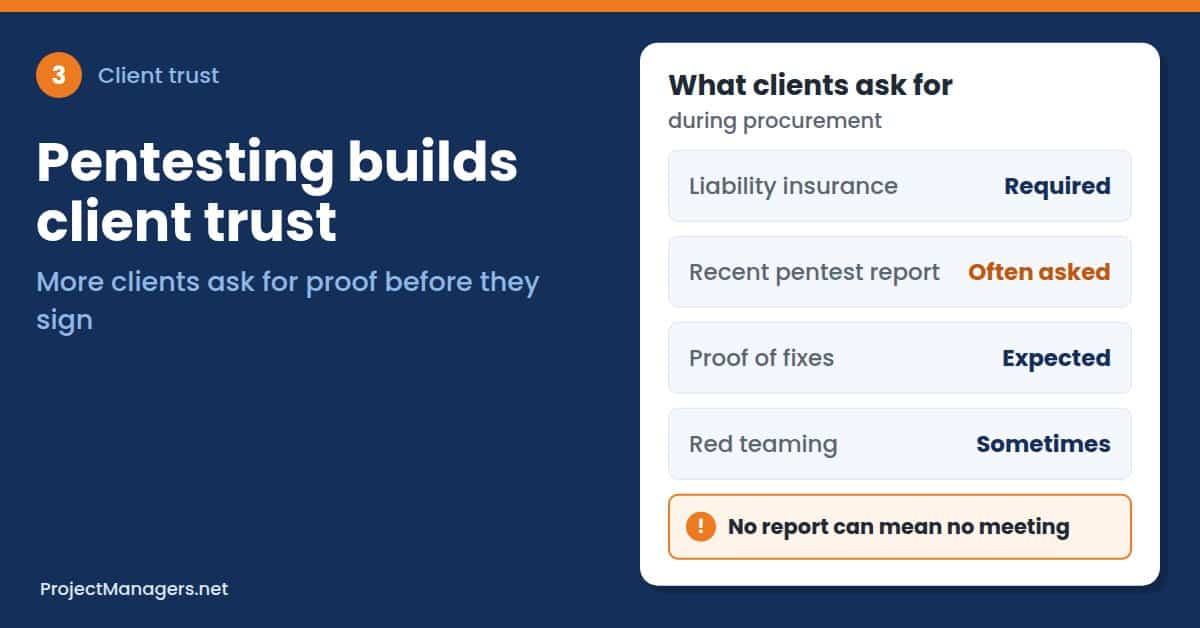
Proof of a strong project security framework does more than boost client trust. In a growing number of cases, it is a requirement for winning clients, or even for getting a first meeting with them.
Just as clients often ask project managers for evidence of general liability insurance, they now increasingly ask suppliers, consultants, and agencies for proof of robust penetration testing, and sometimes red teaming. Project managers who can share a recent, well-presented report remove a common obstacle in procurement.
- Keep a Current Summary Ready: Prepare a short executive summary of your latest pentest that sales and project teams can share under a nondisclosure agreement.
- Answer Security Questionnaires Faster: Reuse recent test results to answer client security questionnaires quickly and consistently.
- Show Remediation, Not Just Findings: Clients trust a report more when it shows how each issue was fixed and retested.
- Test Client-Facing Work Early: Test any portal, app, or integration that clients will use before it goes live.
Real-Life Example: Consider a digital agency bidding on a project for a large financial services client. The client’s procurement team asks for evidence of penetration testing within the last 12 months. Because the agency’s project manager schedules an annual test and keeps a summary on file, the agency answers within a day and moves to the next stage while slower competitors are still arranging tests.
4. Penetration Testing Keeps Project Managers, IT Teams, and Stakeholders Aligned
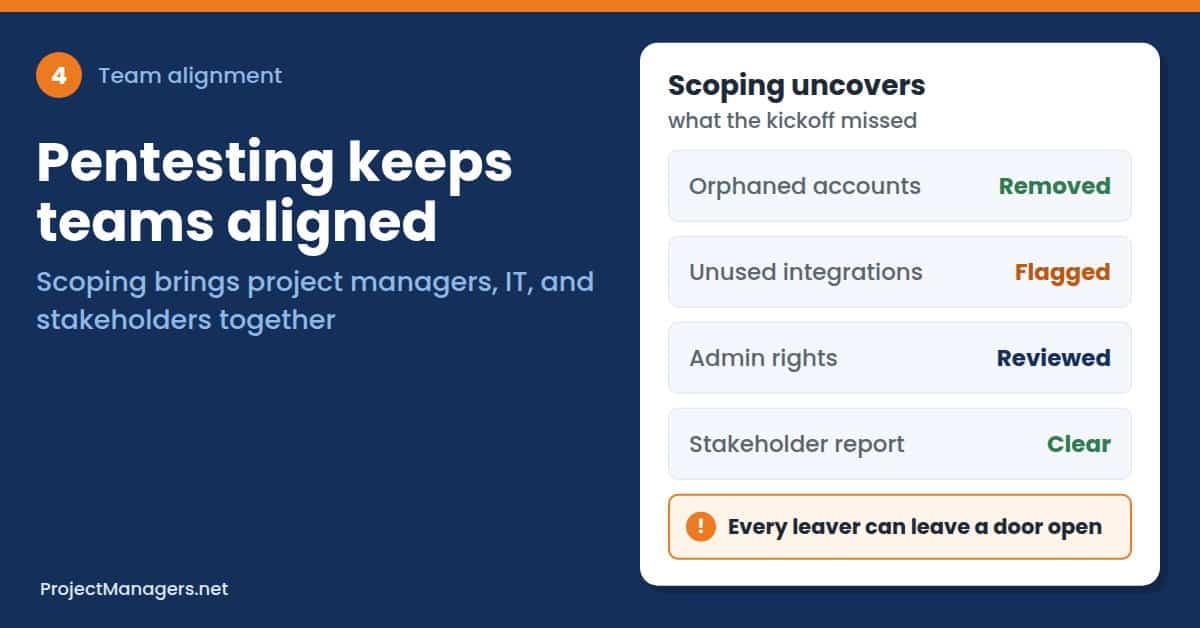
Most organizations use more tools and platforms, and maintain more accounts, than any one person could track. Unless project managers, IT teams, and stakeholders work to stay on the same page, accounts orphaned when someone leaves a project can become a glaring and systemic security hole.
Scoping a pentest also forces conversations that would otherwise never happen. A project manager who sits down with IT to scope a test will inevitably learn things about the stack that did not come up in the kickoff meeting. Stakeholders benefit too, because a pentest report written in plain language gives them something concrete to measure risk against.
- Run a Joint Scoping Session: Bring the project manager, IT, and each system owner together to agree on what is in and out of scope.
- Inventory Accounts and Integrations: List every account, API key, and third-party tool the project uses, and remove the ones that are no longer needed.
- Close Access When People Leave: Add account removal to the offboarding checklist for every team member and contractor on the project.
- Share Plain-Language Results: Give stakeholders a short summary of the risks found, the fixes made, and the exposure that remains.
Real-Life Example: Imagine a project manager preparing a pentest for a marketing automation rollout. During scoping, IT discovers six active accounts belonging to contractors who left the project months earlier, two of them with admin rights. The team disables them before testing even starts, and the stakeholder summary later shows the risk reduction in plain terms.
5. Penetration Testing Supports Ongoing Regulatory Compliance
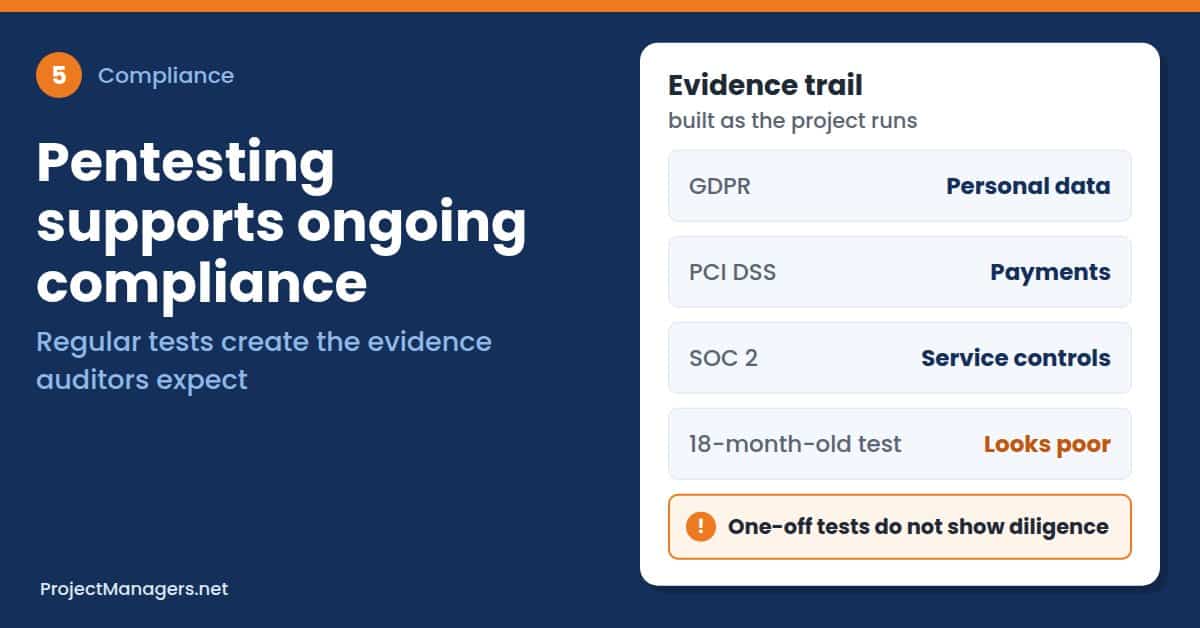
Regulations and frameworks such as GDPR, PCI DSS, and SOC 2 offer little leniency if project managers explain that systems were secure this time last year. There is no credit for getting it right once. Instead, regulators look at whether you can show ongoing diligence that matches the threat level, so a one-off test from 18 months ago looks very poor.
Regular pentesting creates a documented trail that proves you are serious about meeting threats and anticipating them. Findings and remediation actions map directly to what most compliance frameworks actually require.
For project managers, compliance obligations shift when a new project introduces a payment gateway, a customer-facing portal, or a data migration. Scoping pentests alongside those milestones generates compliance evidence as a byproduct of work you would do anyway, rather than leaving you to backfill documentation three weeks before an audit deadline. It also means fewer surprises from the legal team, which is always worth the effort.
- Map Projects to Obligations: Note which rules each project affects, such as PCI DSS for payment features or GDPR for personal data.
- Time Tests to Milestones: Test before launches, migrations, and major changes that alter your compliance scope.
- Store Reports Centrally: Keep pentest reports, remediation records, and retest results where auditors can find them.
- Review Evidence Every Quarter: Check your evidence on a regular cycle rather than in the weeks before an audit.
Real-Life Example: Consider a project team adding online payments to a subscription platform. The project manager schedules a pentest of the new checkout flow two weeks before launch and a retest after the fixes. When the annual compliance review arrives, the report and retest results are already filed, and the team spends hours rather than weeks gathering evidence.
Penetration Testing Checklist for Project Managers
Use this checklist whenever you plan a project that adds systems, code, or integrations. It helps project managers build testing into the schedule instead of bolting it on at the end.
- Identify the systems, data, and integrations that the project adds or changes.
- Define the pentest scope with IT before the build phase begins.
- Add testing and retesting milestones to the project schedule.
- Reserve time and budget for remediation after each test.
- Assign an owner and a due date to every finding.
- Confirm each fix with a retest before you mark the finding as closed.
- Share a plain-language summary with stakeholders, and store the full report for audits.
Review the checklist at each phase gate, not just at kickoff. Project scope often grows over time, and new features need new tests.
Common Mistakes to Avoid When Managing Penetration Testing
Even teams that test regularly can undermine the value of their pentests. Watch for these common mistakes in your projects.
- Treating One Test as Permanent Proof: A clean report goes out of date as soon as the code, the tools, or the threats change.
- Testing Too Late: A test scheduled for the week before launch leaves no time to fix what it finds.
- Leaving Findings Unassigned: Findings without owners and due dates rarely get fixed.
- Scoping Too Narrowly: Skipping integrations, admin panels, or third-party tools leaves the riskiest areas untested.
- Writing Reports Only for Specialists: Stakeholders cannot act on results that they cannot understand.
How to Work with a Penetration Testing Provider
The right testing partner makes it far easier to fit security into project plans. Before you agree on a test, ask the provider the following questions.
- Scope and Methods: Which systems will be tested, and which methods and standards will the testers follow?
- Timing and Disruption: How long will testing take, and how will the testers avoid disrupting live systems?
- Reporting Format: Will the report rank findings by severity and include a plain-language summary for stakeholders?
- Retesting: Is a retest of fixed findings included, and how soon after the fixes can it happen?
- Credentials and Data Handling: Which certifications do the testers hold, and how will they protect your data during the test?
Video: What Is Pen Testing and Why Is It Important?
Prefer to watch? This short explainer covers what a penetration test is and why it matters, which helps project managers explain testing to stakeholders.
What Is Pen Testing and Why Is It Important? (Eye on Tech, 2:51)
A December 2024 explainer from Eye on Tech on how ethical hackers simulate real attacks to find weaknesses before criminals do. It gives project managers and project teams a quick, clear picture of what a pentest involves.
Penetration Testing and Project Security FAQ
Penetration Testing for Project Managers: FAQ
What Is Penetration Testing in Project Management?
Penetration testing is an authorized, simulated attack on a system to find vulnerabilities before real attackers do. In project management, it is a planned activity with a scope, a schedule, owners, and deliverables, just like any other project task.
How Often Should a Project Be Penetration Tested?
Test before major launches and after significant changes, such as new integrations or payment features. Many organizations also test at least once a year, and standards such as PCI DSS expect regular testing, so build retest milestones into the project schedule.
When Should Project Managers Define the Pentest Scope?
Define the scope before the build phase begins. Early scoping lets the project team reserve time and budget for testing and remediation instead of squeezing them in just before launch.
Who Should Own Pentest Findings?
Every finding needs one named owner and a due date, usually the developer or system owner who can fix it. The project manager tracks progress and confirms each fix with a retest.
How Does Penetration Testing Help with Compliance?
Regular tests and remediation records create a documented trail that shows ongoing diligence. That evidence maps to what frameworks such as GDPR, PCI DSS, and SOC 2 expect during audits.
What Is the Difference between a Vulnerability Scan and a Penetration Test?
A vulnerability scan is an automated check for known weaknesses. A penetration test goes further, with skilled testers trying to exploit weaknesses and chain them together to show the real business impact.
How Can Project Managers Share Pentest Results with Stakeholders?
Share a short, plain-language summary that lists the main risks, what was fixed, and what remains open. Stakeholders can then weigh the remaining risk against project goals and approve the next steps.
Conclusion: Make Penetration Testing Part of Every Project Plan
Security risk is a project management problem, not just an IT concern. Regular penetration testing prevents complacency, gives every finding an owner, builds client trust, keeps teams aligned, and creates the evidence that compliance demands.
Start by adding scoping and retesting milestones to your next project plan, and track findings the way you track any other deliverable. Project managers who test early and often will deliver projects that are both on time and secure.
Suggested articles:
- How to Manage Penetration Testing in DevOps Projects for Secure Web Applications
- The Role of Continuous Security Testing in Risk Management
- 5 Ways to Integrate Cybersecurity Best Practices Into IT Projects

Daniel Raymond, a project manager with over 20 years of experience, is the former CEO of a successful software company called Websystems. With a strong background in managing complex projects, he applied his expertise to develop AceProject.com and Bridge24.com, innovative project management tools designed to streamline processes and improve productivity. Throughout his career, Daniel has consistently demonstrated a commitment to excellence and a passion for empowering teams to achieve their goals.