
In project management, several types of charters exist: team charters, project charters, agile charters, and agile team charters. While this may be confusing, the key distinction lies with the project charter, which is specific to waterfall project management. The remaining charter types, team charter, agile charter, and agile team charter, are essentially synonymous, representing the same concept under different names.
They simply are a high-level document that states the Agile teams mission, goals, values, and operational scope of the Agile team. This is required because Agile teams expect change and work in a turbulent environment, but understanding their remit is essential. That is why having an Agile charter is critical to set up the team for success so they can move through Tuckman’s phases of team development.
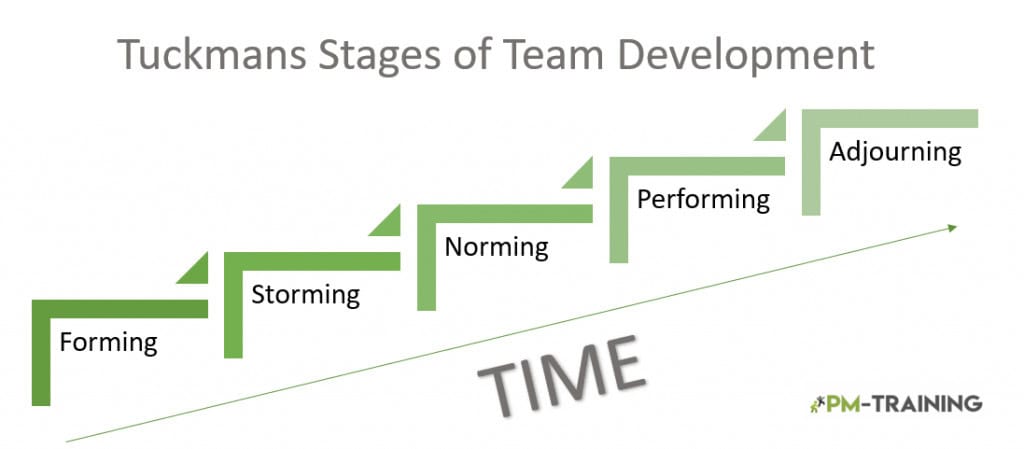
Agile chartering is different from other project chartering methods in that it allows co-ownership of projects and therefore increases commitment to a project. It will help respond to questions, set boundaries, and address other critical aspects of the team-forming stage. An agile charter helps to unify projects between stakeholders and developers. In essence, every person in a team, from business owners and executives down to the lowest rungs of a team, takes on the responsibility and ownership of a project during agile chartering.
What’s the Difference Between Agile and Project Chartering?
An agile charter uses these 12 principles of the Agile manifesto to ensure software, and really any projects, are done with the ability to adapt to change in mind and create a unified team.
A project charter, as defined by the PMBOK Guide, 3rd Edition, is
(PMI, 2004, 368).
The “authority” part of that definition refers to the authority for a project manager to implement changes to further the success of a project. It also authorizes the project itself, including budgets, resources, time, and everything else that will go into the completion of a project.
The Problem with Traditional Project Chartering
Project chartering can be an amazing tool to define roles, allocate resources, and provide a solid foundation that better defines the success of the project and the steps that will be taken to complete it. They are also necessary to provide accountability for businesses when first beginning a project. However, project charters can sometimes be lengthy, ranging from 50 to 100 pages or even more.
Although project charters are not legally binding, they are heavily referred to by project sponsors and project managers. But, guess who doesn’t look at those 500 to 100-page project charters? Those team members work directly to complete a project. This is where agile chartering comes into play. Agile chartering understands that a volatile environment is a given, so agile charters are not contractually binding and are open to change.
Sometimes, a project charter might be beneficial to add to a project. Unlike an agile charter, a product charter defines specific KPI’s, or key performance indicators, that succinctly define success. A project charter might also define the company’s mission, objectives, and additional guiding principles.
Agile Project Charter
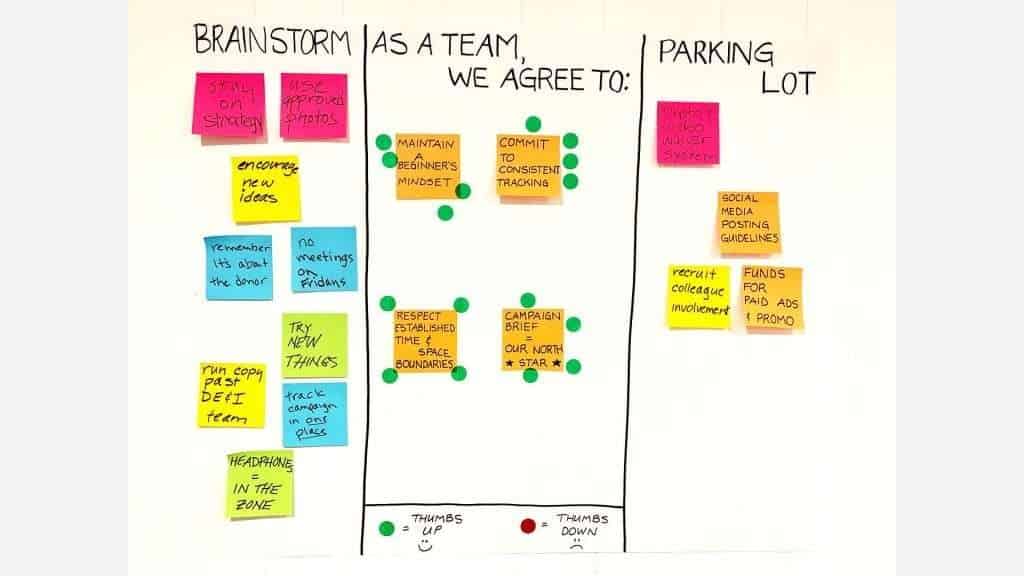
As a team, create a list of expectations for each other so you can work together successfully and avoid misunderstandings that may come up.
Elements of Agile Charter
Using agile chartering, teams will develop the following three main components of the agile charter that are essential for the success and outcome of a project without the need to spend 50 or 100 pages discussing them.
Purpose of Agile Team
The biggest question answered during agile chartering is why are we here? It might seem simple, but if every team member has a different answer, then that question, and therefore the purpose, mission, and vision of a project, is left unanswered and non-existent. When agile chartering, teams must make a solid definition of why they are there, what success looks like, and how to measure success. Why are they developing a particular product? How will they get there? All these questions are addressed during agile chartering.
Alignment of Team Members
Alignment connects values to the purpose of a project. For instance, why are we developing an app that tracks food poisoning cases? Is it for safety? For consumerism? What are the must-haves? Without aligning values and purpose, it’s difficult to know what tradeoffs a project can have (and all projects will have trade-offs eventually).
Context of Risks & Opportunities
Agile chartering also attempts to answer the tough questions first and establish boundaries. Context is all about knowing what the limits of the team are. What are some risks and opportunities that will arise during project development? How can we mitigate those risks? What are our constraints? These questions are answered in the context portion of an agile charter.
Agile Team Charter Template
It might seem daunting to begin a project and start utilizing agile chartering principles. However, all it takes is a little bit of extra planning, inspiration from real-life practices, and knowledge of agile principles. You can create a copy of the Agile Team Charter Template here. The template can be used by the product owner (scrum business owner) or another similar owner who reaches out to a product manager for advice on completing a project.
During agile chartering, they help provide a definition of success and answer the question of why we are here (i.e., purpose) and communicate it to the development team. Agile chartering helps teams and their team leader work with a product manager and product owner to collaboratively agree on a charter that is constantly changing, establishes the boundaries of the team, and addresses the three agile charter principles of purpose, alignment, and context.
Organize an Agile Team Charter Kick-Off Meeting
As important as a team is, its collaboration with high-level executives and stakeholders is equally important. To put together these moving parts, a kick-off or lift-off meeting to start a project can be done, where a lean-approach agile charter can be developed. Again, this agile charter must fit on one page, describe objectives and values succinctly, and have an end goal of ensuring everyone on the team is on the same page about the “definition of success.”
During a kick-off, it’s also a great time to bring up boundaries and limits and get the hard questions out of the way first (i.e., context). Team meetings for agile chartering should be done continuously throughout the duration of a project, and similar to scrum, can be done for sprints, or simply to update the team on where a project stands. Although a timeline is important, agile takes into account the volatility of a project, so flexibility, collaboration, and communication during team meetings are key.
Agile Charter Examples in Agile Software Development
Scrum Team Charter Example

The Scrum Team Charter Canvas – TheScrumMaster.co.uk
Team charters are exactly what they sound like- charters that help define the team and their objectives, any constraints that can arise, and resources available to them. More importantly, team charters also define the roles and responsibilities of all team members. This is crucial for agile chartering, where teams must develop a charter, vision, and mission for a project that is agreed upon.
Scrum is a unique agile framework that is highly driven by the idea that a project might be volatile and constantly needs readjusting. Agile chartering during Scrum is done with the purpose of developing an understanding between product owners and the Scrum team on constraints, product change, and, of course, the vision and mission of a product.
Scrum’s weekly meetings make it easy to implement agile chartering, as both require constant evolution and adaptability, and work on the agile principle of iteration. Iteration in agile is short periods, usually one to two weeks, where teams build completely tested software products for their customers to help track progress. In Scrum, these are known as sprints.
Scrum Master Role in Agile Charter
As the name suggests, scrum masters ensure that all members of the team are trained in scrum and can be self-sufficient and work cross-functionally. They remove barriers that can interfere with the team’s progress, and ensure all work during sprints meets the “Definition of done.” During agile chartering, scrum masters stress the importance of collaboration by managing teams working together, helping teams adapt to change, and providing a liaison between product owners and the team itself.
Scaled Agile
The scaled agile framework, also known as SAFe, is the leading agile framework for larger businesses. Although SAFe is used on a much larger scale, it still uses agile chartering methodologies to create charters that employ a collaborative team and succinctly summarize roles and responsibilities, how to plan and manage projects, and values.
93 Agile Self-Assessments
- My Agile Self-Assessment Game and my book, The Agile Self-Assessment Game
- The Scrum Checklist from Henrik Kniberg
- 42 point test: How Agile are You by Kelly Waters
- Questions for Transitioning to Agile from Johanna Rothman
- Agile Adoption Framework by Ahmed Sidky
- Team Barometer by Jimmy Janlén
- Scrum Checklist by Boris Gloger
- Corporate Agile 10-point checklist by Elena Yatzeck
- Joe’s Unofficial Scrum Checklist by Joe Little
- A 6-Step Agile Transformation Roadmap to Success by Business Map
- ScrumButt Test, aka the Nokia Test, by Jeff Sutherland
- How to Measure Team Agility by Len Lagestee
- Scrum Assessment Series by David Hawks
- Agile Maturity Self Assessment by Robbie Mac Iver
- Enterprise Agility Maturity Matrix by Eliassen Group
- Enterprise Agile Practice Assessment Tool (paid services) by DrAgile
- Comparative Agility by Mike Cohn and Kenny Rubin
- Open Assessments from scrum.org
- Readiness & Fit Analysis from the Software Engineering Institute by Suzanne Miller
- Agile Journey Index by Bill Krebs
- Seven Questions to Ask to Determine if Your Organization is Agile Ready from PMI Austin
- An Organizational Transformation Checklist by Michael Sahota
- Agile Maturity Matrix in JIRA by Atlassian
- Assessing Your Client’s Agility by Marcel Britsch
- Agile Assessments
- Agile Self Assessment by Cape Project Management
- Agile Maturity Model (AMM) by Chetankumar Patel and Muthu Ramachandran
- Test your Organisation’s Agile Credentials by Storm-Consulting
- Depth of Kanban by Christophe Achouiantz
- Agile Essentials (card game) by Ivar Jacobson International
- IBM DevOps Practices Self Assessment
- Agile Team Assessment by Impact Matters
- Ready for Agile Part 1 and Part 2 by Salah Elleithy (based on research by Ahmed Sidky)
- Squad Health Check model from Spotify / Henrik Kniberg
- Assessing the level of Agility by Yuval Yeret
- Assess Your Agility by James Shore
- Testing maturity in an agile/CDT environment by Huib Schools
- AgilityHealth Radar (paid service)
- Rojooms: How Deep is your Agile? by Shirly Ronen-Harel
- Agile 3R Model of Maturity Assessment by Phani Thimmapuram
- Cargo Cult Agile Checklist by Age of Product
- 9 Self-Assessment Examples to Prove Your Team’s Worth by Meredith Wholley
- Your Path through Agile Fluency by Diana Larsen and James Shore & Finding Agile That’s Fit-for-Purpose by Diana Larsen
- The InfoQ Minibook Scrum Hard Facts: Roles. Artifacts. All meetings provide a Scrum checklist
- The InfoQ minibook, An Agile Adoption and Transformation Survival Guide, includes a checklist for change agents
- Organizational Agile Transformation by LeadingAgile
- Agile Maturity Self-Assessment Survey by Eduardo Ribeiro
- Implementing Lean Software Development (Poppendieck)
- Xebia essentials (free app)
- XebiaLabs DevOps Self-Assessment
- Teammetrics by Christiaan Verwijs
- Agile Assessment by Piotr Nowinski
- Assess your agile engineering practices by Corinna Baldauf
- Agile Maturity Model by Jez Humble and Rolf Russell
- Maturity Assessment Model for Scrum Teams by Marmamula Prashanth Kumar
- The Joel Test: 12 Steps to Better Code by Joel Spolsky
- Agile Assessment by DZone
- Are you really agile? by People10
- Process Goals from Disciplined Agile (submitted by Scott W.Ambler)
- Scrum Master Checklist by Michael James
- Top 20 self-assessment questions by Gene Gendel
- Project Approach Questionnaire by Agile Business Consortium
- Visual Management Self-Assessment by Tervene
- Lean Agile Intelligence by Michael McCalla (free tool, registration required)
- Continuous Delivery Maturity Checklist by DZone
- The Agendashift™ values-based delivery assessment by Mike Burrows (commercial service with free mini edition)
- Retropoly by Sorin Sfirlogea and Florian Georgescu
- How Agile Are You? by Mark Balbes
- Quick self-assessment of your organization’s agility by LeadX
- Agile Software Development Complete Self-Assessment (paid service)
- DevOps Self-Assessment by Microsoft in collaboration with DevOps Research and Assessment (DORA) – Registration required
- Health Monitors from the Atlassian Team Playbook
- Kanban Service Maturity Assessment by Gerard Chiva
- fluent@agile game by Peter Antman and Christian Vikström
- Agile Alert by Agile CRM
- Team Agility Self Assessment by Yodiz
- SAFe Team Agility Self-Assessment by Scaled Agile
- Agile Software Product Line Automotive – Assessment Model (aspla) by Philipp Hohl
- Business Agility Manifesto – Diagnostics by Roger T. Burlton, Ronald G. Ross & John A. Zachman
- New Agile Assessment by AgileTrailblazers (paid service)
- New Enterprise Business Agility Maturity Assessment by Eduardo Ribeiro
- New Measure. Team by Kelly Albrecht
- New Detecting Agile BS by the US Department of Defense (DoD)
- New Skills Self-Assessments by BPMInstitute.org
- New Agile Adoption Interview by PLADcloud
- New Agility Assessment by RefineM
- New Lean-Agile Coach self-assessment radars by Luca Minudel
- New Scrum master self-assessment kit by SmHarter
- New How Agile is Your Team? A 50 Point Test by Finite
- New Agile Leadership Game by Agile Consortium
- New My favorite Agile Self-Assessment for Teams by Anja Stiedl
Further Reading: Agile Self-Assessments
The articles and books mentioned below can help you to do agile self-assessment or to develop your own assessment:
- How Agile Are You? on LinkedIn
- My book, The Agile Self-assessment Game
- Agile Addresses “The Five Dysfunctions of a Team” from InfoQ
- Drexler/Sibbet Team Performance Model
- Personality types: Myers-Briggs Type Indicator and DISC assessment
- Team Dynamics: Satir Change Model, Human Dynamics, and Tuckman’s Stages of Team Formation
- Measuring and managing agile maturity (tag: measurement) by Brad Murphy
- Something agile: new ideas for agile implementation by Jan Gentsch
- A List of Agility Tests by David Koontz
- Agendashift by Mike Burrows
- Agile Managen and Agile Management by Mike Hoogveld
- Assess Your Team’s Scrum Level Using ShuHaRi and the Celebration Grid by Juergen Mohr
- New Are You Agile? An Assessment Can Tell You by Joel Bancroft-Connors
- New Model for Team Effectiveness, based on research by Richard Hackman, described in Leading Teams
- New 7 vragen om te kijken hoe agile men is op Sigma
- New Agile Assessment Guide – Best Practices for Agile Adoption and Implementation by US Government Accountability Office (GAO)
- New A Catalogue of Agile Smells for Agility Assessment by Ulisses Telemaco, Toacy Oliveira, Paulo Alencar, and Don Cowan
Other Charters in Agile Development
Extreme Programming – Project Charters
XP, or extreme programming, is a software development framework with the purpose of producing high-quality software and a high quality of life for a development team. The XP article defining project chartering as an agile practice was published in 2001. Chartering provides a mechanism for negotiating and formalizing the understanding between the two groups, and the Charter is the official
A container for the shared contractual agreement between both sides
“Charters + Chartering: Immunizing Against Predictable Project Failure”
Although XP is more geared toward software development projects, it utilizes an agile chartering framework that requires a close-knit team dedicated to completing a project.
Just like agile chartering requires teams to work together to produce a vision and mission for a project, XP does the same by using co-located teams that provide constant feedback, communication, and respect to each other. Feedback, respect, and communication are just 3 of the 5 principles of XP.
Lean – A3 Problem Solving
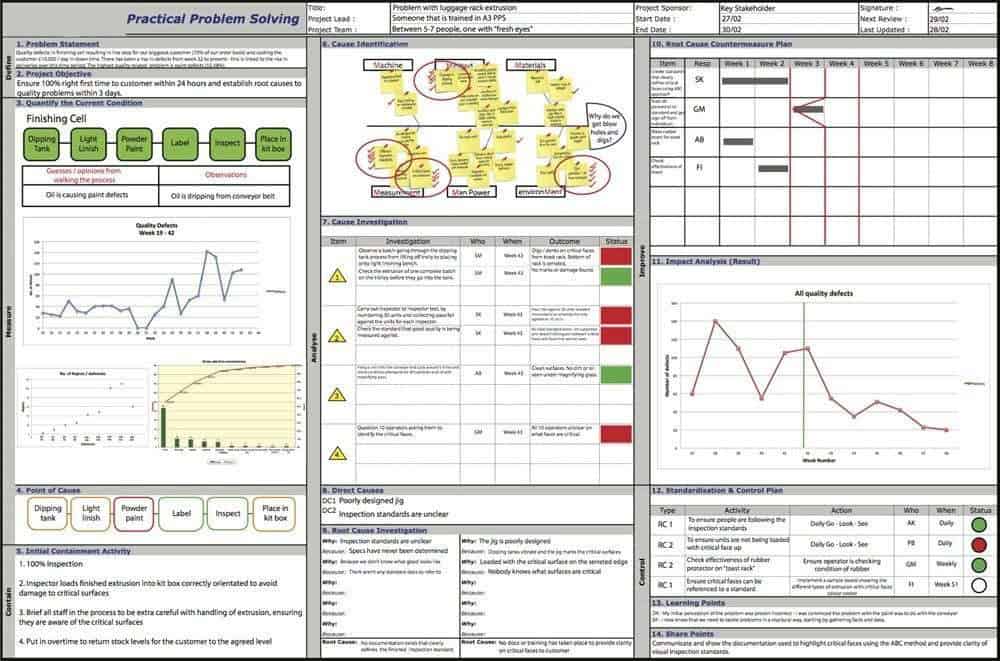
The Lean A3 is more commonly used to solve problems, but can be confused with a charter. It avoids the problems of lengthy project charters, and to better assist teams in having a solid point of reference, the A3 method of agile chartering is now quite popular and deceptively simple.
The A3 approach is named after the 11.7 by 16.5 inch size paper that the charter is to fit on. Although every charter will be unique to the project and team, the A3 charter is ideally crafted with the problem, not the solution, in mind.
The left-hand side of an A3 charter project, as it stands, includes background, current conditions, goal or target conditions, and a root cause analysis. The right side of the A3-style charter would have countermeasures, results, and follow-up actions.
Pitfalls of the A3 Approach
The document for agile chartering is in itself not important. This makes A3 chartering challenging for teams that constrain themselves too much by trying to fit everything on one page and formatting. The true value of an A3 chartering session lies in the meeting of a team, from the administrative to the support level, to get all the information for a project on paper, share ideas, and describe them succinctly.
Agile Chartering in Kanban to Track Progress
Kanban is a framework of agile that aims to speed up the timeline for completing a project, known as the user story, maximizing workflow, and utilizing work in progress limits to minimize multitasking and finish projects faster. Kanban does not use the iteration principle of agile, but it does utilize increments, or small amounts of updates and features on a product in cycles ranging from mere minutes to months. Agile chartering is used in Kanban to track progress and support constant changes to products.
Amazon Version of Agile Charter: A Product Charter
The Agile charter can easily get confused with a business case or statement of work in some workplaces. How it differs, though those documents are written by one person in isolation to get a project reviewed or gather a set of project requirements. Product charters have guiding principles that make use of the question- Why? Is it safety, customer service, or sales that drives a product’s purpose? A product charter is useful for defining these additional parameters.
Most companies now utilize an agile mindset. For instance, take Amazon, perhaps the biggest and most successful company in the world today. Amazon uses a lean approach when it comes to product development. Amazon’s method is known as “working backwards,” as in working backwards from a customer. To put it simply, Amazon writes a one-word internal press release that helps guide its purpose and vision for a product.
Amazon’s press release includes a simple summary of the new product or service, along with the problem that a customer has and the solution this product will provide. What’s important about the press release is the excitement it causes. A dull, boring press release with a product that has no excitement indicates that the product isn’t worth making.
Here’s an example outline for the press release:
- Heading
- Sub-Heading
- Summary
- Problem
- Solution
- Quote from You
- How to Get Started
- Customer Quote
- Closing and Call to Action
Although this might seem like a hard truth to face, Amazon’s method saves valuable time, resources, and overall heartache. It also ensures that a customer will be excited and buy a product without much effort. The product speaks for itself.
Conclusion
Agile chartering represents a fundamental shift from traditional project management approaches, emphasizing collaboration, flexibility, and shared ownership. Whether you’re using Scrum, Kanban, XP, or SAFe, the core principle remains the same: create a concise, one-page charter that unifies your team around a common purpose, aligns values, and establishes clear context for risks and opportunities.
The 93 self-assessment tools listed above provide valuable frameworks for evaluating your team’s agility and identifying areas for improvement. Remember, an agile charter isn’t a static document—it evolves with your project. By regularly revisiting your charter through team meetings and incorporating feedback from these assessments, you’ll foster the adaptability and commitment necessary for success in today’s rapidly changing business environment. Start small, iterate often, and watch your team’s collaboration flourish.
Suggested articles:
- Top 10 Mistakes in Project Charters
- Top 10 Cons or Disadvantages of Using a Project Charter
- Top 10 Pros or Advantages of Using a Project Charter

Shane Drumm, holding certifications in PMP®, PMI-ACP®, CSM, and LPM, is the author behind numerous articles featured here. Hailing from County Cork, Ireland, his expertise lies in implementing Agile methodologies with geographically dispersed teams for software development projects. In his leisure, he dedicates time to web development and Ironman triathlon training. Find out more about Shane on shanedrumm.com and please reach out and connect with Shane on LinkedIn.