
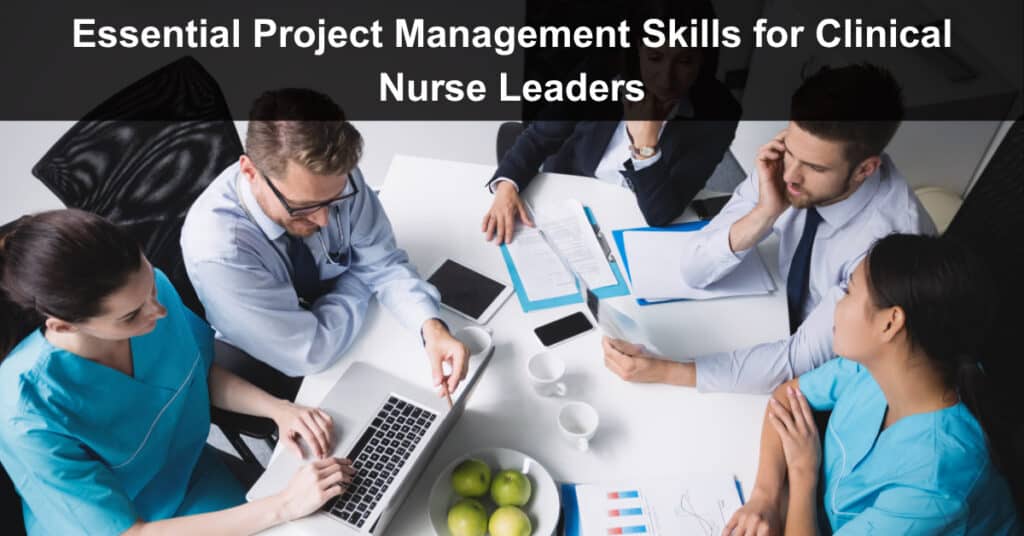
Strong leadership and teamwork are essential for quality patient care because every nursing team needs a leader who can motivate members. Nursing leadership skills support positive outcomes and smooth operations, yet applying them well requires project management ability.
These skills, which you can develop through clinical nurse leader online programs, are a stepping stone to success in a nursing leadership career. The nursing environment is changing rapidly, expanding responsibilities far beyond the bedside and into coordination, planning, and quality improvement. Nurse leaders now influence patient care, health outcomes, and team dynamics across the whole organization.
The seven skills below show what a clinical nurse leader needs to manage projects, guide teams, and deliver consistently excellent care.
Leadership
Leadership is perhaps the most important project management skill a clinical nurse leader can have, because guiding the team drives outcomes. With hospital Registered Nurse (RN) turnover near 17.6 percent in the 2026 NSI report cited by the AACN, strong leaders cut attrition. A strong leader builds a productive environment and uses proven delegation tips for managers, so staff gain skills and patients benefit.
- Delegate Thoughtfully: Assign tasks, set clear goals, and offer constructive feedback while evaluating both team and individual performance.
- Recognize Achievements: Acknowledge team members’ contributions openly, so people know their work is genuinely valued and appreciated.
- Negotiate Skillfully: Handle discussions about timelines, resources, and budgets tactfully, applying persuasion without harming workplace relationships.
Real-Life Example: A hospital unit introduced weekly leadership rounds where the nurse leader delegated tasks, set clear goals, and recognized achievements openly. Staff reported higher engagement and clearer ownership of patient outcomes, and the unit saw fewer missed deadlines and smoother handoffs between shifts throughout the following three-month end-of-quarter reporting period.
Communication Skills
Strong communication is the foundation of safe, coordinated care, because a nurse leader must keep the team and families informed and aligned. Clear communication matters more than ever in the workplace, and leaders need both verbal and nonverbal skills such as body language and active listening. Delivering complex information with empathy and clarity also helps document patient treatment accurately.
- Listen Actively: Pay full attention to patients, families, and staff, confirming understanding before acting on what you have heard.
- Speak With Clarity: Convey complex medical information plainly so families and teams grasp it, using empathy to soften difficult news.
- Document Precisely: Record treatments and updates accurately, because clear documentation protects patients and supports continuity of care.
Real-Life Example: A nurse leader introduced structured shift handoffs built on active listening and clear documentation. Families received simpler explanations of care plans, staff reported fewer misunderstandings between different clinical roles, and the unit reduced communication-related delays in treatment planning across multiple shifts and handoff points over the course of several weeks of care.
Adaptability
Adaptability is a crucial skill in healthcare, and it matters even more for clinical nurse leaders who must revise plans around new information, regulations, and challenges, following adaptive leadership principles. An adaptable leader adjusts plans, stays on schedule, and implements emergency responses. Calmly accepting new information and using it to build better plans demonstrates this strength clearly.
- Embrace Change: Welcome new regulations and information calmly, turning them into better plans rather than resisting the shift.
- Respond Quickly: Adjust schedules and priorities fast, so the team stays on track even when unexpected challenges arise.
- Find Solutions: Use innovative thinking to solve unexpected problems and keep patient care moving without unnecessary delay.
Risk and Time Management
Effective risk and time management improves patient outcomes and reduces burnout and stress across the team. These skills help leaders plan with realistic timelines, unexpected events, and human resource limits, using proven time management strategies for projects. Every organization faces uncontrollable variables, so clinical nurse leaders must put plans in place to manage internal and external risks that could compromise daily operations.
- Plan Realistically: Build schedules that account for unexpected events and staffing limits, protecting the team from overload.
- Delegate Early: Protect tasks and assign them when needed, staying organized and anticipating needs before they become urgent.
- Guard Resources: Use good time management to meet objectives and protect company resources, because missed deadlines hinder success.
Technical Skills
As technology advances, its role has become essential to patient care, and a nursing leader must stay acquainted with technology, following technology shifts in nursing education. Leaders handle equipment, manage health records, and guide the team through new healthcare systems. Because staff look to leaders for guidance, technical competence helps when new hires start or new equipment is introduced.
- Master Equipment: Handle the devices used in your scope of practice confidently, so you can assist when staff need technical help.
- Manage Records: Access and maintain electronic health records accurately, protecting patient data and supporting clinical decisions.
- Learn Continuously: Stay prepared to learn new healthcare technology, because the tools available to clinical teams keep advancing.
Team Management
The healthcare environment is complex, with collaboration, team building, and mentorship at its center. Nurse leaders work alongside other professionals to ensure patients get effective, coordinated treatment, and their roles have expanded with specialization. They lead meetings, coordinate interdisciplinary rounds, and help shape care models and policies that emphasize teamwork and patient-centeredness.
- Coordinate Care: Lead team meetings and interdisciplinary rounds so every professional contributes to a unified treatment plan.
- Build Cohesion: Create care models that emphasize teamwork and communication, keeping diverse professionals aligned on goals.
- Shape Policy: Contribute to healthcare policies at institutional and regional levels, influencing how care is organized and delivered.
Critical Thinking and Problem-Solving
Critical thinking in the healthcare environment is the ability to identify, analyze, and resolve problems that surface during patient care. Nurse leaders think fast to adjust treatment plans based on unexpected challenges or patient progress. With critical thinking, leaders make effective, informed decisions during high-pressure situations, and problem-solving helps create interventions tailored to each patient’s needs.
- Analyze Fast: Identify and assess problems quickly so treatment plans adjust to changes in patient condition without delay.
- Decide Under Pressure: Use flexibility and analytical thinking to make sound decisions when the situation demands immediate action.
- Tailor Interventions: Create solutions that fit each patient’s individual needs and overcome the obstacles that block progress.
How Project Management Skills Improve Nursing Leadership
Project management skills translate directly into nursing leadership because they bring structure to coordination, planning, and quality. Tools such as delegation, realistic scheduling, and risk assessment let nurse leaders run initiatives with the same discipline as clinical work. This overlap explains why nurse leaders who think like project managers deliver steadier outcomes and stronger teams.
How project management thinking strengthens clinical nursing leadership in practice here:
- Plan Like a Project: Treat initiatives as projects with clear goals, milestones, and owners, so progress is visible and measurable.
- Manage Risk: Identify clinical and operational risks early, then put contingency plans in place before problems grow.
- Measure Outcomes: Track results against defined targets, using data to improve care quality and team performance.
How Core Skills Translate Into Everyday Practice
Each project management skill takes a distinct shape in a clinical setting, and pairing the skill with the outcome it supports helps leaders focus their development efforts. The table below maps the core skills to what they look like in daily nursing work, and the patient impact each one creates. Use it as a quick reference when planning your own growth.
| Skill | In Practice | Patient Impact |
|---|---|---|
| Leadership | Setting clear unit goals and delegating tasks | Higher retention and steadier staffing |
| Communication | Structured handoffs and plain-language updates | Fewer errors and safer transitions |
| Adaptability | Adjusting plans when conditions change midshift | Faster response to urgent needs |
| Risk and Time Management | Prioritizing tasks and flagging hazards early | Fewer delays and preventable harm |
| Team Management | Coordinating roles and resolving conflict | Smoother workflows and morale |
Conclusion
Clinical nurse leaders shape patient care, health outcomes, and team dynamics, which is why a wide set of skills matters so much. Leadership, communication, adaptability, risk and time management, technical competence, team management, and critical thinking together let a leader run projects and care delivery effectively. Each skill reinforces the others, creating a more capable and confident leader.
The nursing environment continues to expand beyond the bedside, so leaders who master these skills will meet the profession’s rising demands. Investing in these abilities, often through formal education and consistent practice, prepares you to manage complex work with skill. As nurse leaders, you influence lives daily, and strengthening these capabilities directly improves the quality of care patients receive.
Frequently Asked Questions About Clinical Nurse Leader Skills
What project management skills do clinical nurse leaders need?
Clinical nurse leaders need leadership, clear communication, adaptability, risk and time management, technical skill, team management, and critical thinking. Together, these help them plan care, coordinate staff, respond to change, and solve problems under pressure. They allow a nurse leader to run initiatives with structure while keeping patient care and team morale central to every decision.
Why is communication so important for nurse leaders?
Communication is essential because nurse leaders coordinate teams, families, and other professionals while managing complex information. Active listening and clear explanation reduce misunderstandings and improve care continuity, while accurate documentation protects patients. When a leader communicates well, the whole team stays aligned on shared goals and delivers safer, more coordinated, higher-quality care to every patient.
How does adaptability help in clinical nursing leadership?
Adaptability helps nurse leaders revise plans quickly when new information, regulations, or challenges appear. An adaptable leader calmly accepts change and uses it to build better plans, staying on schedule even under significant pressure. This flexibility also supports emergency responses and keeps the team functioning smoothly even when the unexpected disrupts daily operations and routines.
Why is risk and time management important for nurse leaders?
Risk and time management improve patient outcomes while reducing burnout and stress among staff. Planning with realistic timelines and staffing limits lets leaders respond to unexpected events, while delegating protects the team from overload. Good time management ensures objectives are met and resources are protected, preventing missed deadlines that would otherwise hinder the delivery of quality care.
How do project management skills improve patient care?
Project management skills bring structure to care coordination, planning, and quality improvement. Tools such as delegation, scheduling, and risk assessment let nurse leaders run initiatives with discipline, while tracking outcomes supports continuous improvement. This structure translates into steadier results, stronger teams, and more consistent, high-quality care for every patient the unit serves across the organization.
Suggested articles:
- A Project Manager’s Guide to Clinical Trial Data Management
- How Healthcare Teams Plan Around Roles They Can’t Fill
- Running a Clinic Like a Project: What Service Businesses Can Teach Project Managers

Daniel Raymond, a project manager with over 20 years of experience, is the former CEO of a successful software company called Websystems. With a strong background in managing complex projects, he applied his expertise to develop AceProject.com and Bridge24.com, innovative project management tools designed to streamline processes and improve productivity. Throughout his career, Daniel has consistently demonstrated a commitment to excellence and a passion for empowering teams to achieve their goals.