

A daily scrum that runs fifteen minutes over schedule feels like a small failure each time it happens. Team members arrive late or are distracted. Quick updates turn into full conversations about unrelated topics. What should be a fast sync becomes a drain on everyone’s morning. These problems are avoidable once you understand what causes them and how to prevent them.
The daily scrum is the most frequently recurring ceremony in any agile team’s sprint cycle. When it goes well, it improves communication and surfaces blockers before they become bigger problems. When it goes poorly, it wastes valuable time and frustrates everyone involved. This article covers five common mistakes teams make with their daily scrum and practical ways to fix each one.
Daily Scrum/Stand-Up Explained

The daily scrum is a fifteen-minute event held each morning where team members gather to share their updates. Only team members speak during this meeting as a general rule to follow. Each person answers three specific questions and should take no more than a few minutes to deliver. The scrum master enforces these rules and keeps the meeting moving on schedule.
The structure is intentionally simple so the meeting stays fast and focused on the right information. Every team member answers the same three questions in the same order each day without variation. Each question covers a specific part of the work cycle and keeps updates consistent across the entire team from one standup to the next.
Each team member answers these three questions during their daily update:
- What I Did Yesterday: Briefly share the work you completed since the last standup took place. This gives the team visibility into progress and helps identify dependencies between different tasks or work items across the team.
- What I Plan on Doing Today: State your priorities for the current day clearly and concisely without extra detail. This helps the team understand where to focus support and coordination efforts for the next sprint cycle.
- Any Blockers to Report: Flag any obstacles blocking your progress so the team can help resolve them quickly and efficiently. This is the most valuable part of the standup for removing impediments and keeping work flowing.
The daily standup is a core practice in any Scrum development methodology for good reason and strong effectiveness. It improves communication across the team and identifies blockers that can be resolved quickly before they grow. Acting on these impediments early prevents them from slowing the entire project down and keeps the team moving forward at a steady pace.
5 Mistakes of Daily Scrum
Even experienced agile teams fall into patterns that quietly undermine their daily scrum over time. The ceremony starts with good intentions but slowly drifts away from its original purpose and structure. Recognizing these common mistakes is the first step toward fixing them permanently. Here are five frequent problems teams face and practical ways to address each one before they cause lasting damage.
1. Not Setting Ground Rules
A daily standup should be the most consistent of all team meetings that happen on a regular schedule. Same place, same time, same structure every single day without exception or deviation from the set plan. If you do not set this precedent and enforce it consistently with all team members, you are setting yourself up for failure in the long run.
A team member who arrives late consistently damages the meeting for everyone involved in the process. Instead of ignoring the behavior, take them aside privately and explain that their lateness delays everyone else. One agile team discovered a member struggled to arrive on time because he dropped his kids off at school. They simply moved the standup one hour later with no harm done.
Follow these ground rules to keep your daily standup consistent and effective every morning:
- Same Time Every Day: Pick a consistent time for the standup and stick to it without variation or exceptions. This builds a strong habit and makes it easy for everyone to plan their morning around the meeting schedule.
- Same Place Every Day: Hold the standup in the same location so there is no confusion about where to gather or go. Consistency removes the need for decision-making and reduces friction each morning before work starts.
- Enforce Rules Fairly: Apply the same standards to every team member without exceptions for seniority or tenure. When the ground rules are enforced consistently, people respect them and follow them without complaint.
2. Not Setting Business People’s Expectations
Business stakeholders often focus only on their own priorities when it comes to product development decisions and business direction. They may not fully consider the technical complexities behind feature requests and delivery timelines in great detail. This dynamic can lead to built-up frustration on both sides if not addressed early in the project lifecycle.
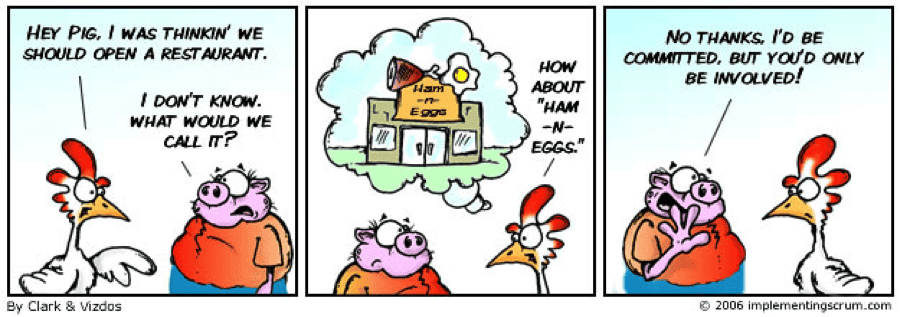
The classic chicken and pig analogy from Scrum describes this relationship and its tensions well. Chickens have input on the product being developed, like the product owner providing strategic direction and feedback to the team. Pigs decide how the work gets done, like the engineering team managing their own capacity and velocity during each sprint.
Here are practical ways to manage stakeholder expectations during the daily scrum:
- Include Them as Listeners: Invite business people to attend the standup as observers who listen but do not speak unless asked a direct question by the team during the meeting.
- Keep Them Out of Tactical Discussions: The daily scrum is for the engineering team to coordinate their work together. It is not a forum for changing priorities or adding scope to the current sprint cycle.
- Clarify the Purpose Upfront: Explain to business stakeholders that the daily scrum is for team coordination, not status reporting. When expectations are clear from the very start of the engagement, conflicts are far less likely to arise later on.
3. Not Sticking to the Script
The daily scrum has three simple questions that each team member answers in order and nothing more than that. Participants are expected to answer these questions clearly and move on to the next person without elaboration. It is a matter of respecting other people’s time and keeping the meeting focused on its core purpose of progress tracking and blocker identification.
The daily standup is not a place to discuss unrelated topics or what happened last night during your personal time. Side conversations and tangents eat into the fifteen-minute timebox incredibly quickly. If a topic deserves deeper discussion, schedule a separate conversation after the standup with only the relevant people attending that follow-up session.
Use these guidelines to keep everyone on script and respect the team’s time together:
- Answer the Three Questions Only: Stick to what you did yesterday, what you plan today, and any blockers in your way. Extra commentary and unrelated updates waste valuable time and dilute the meeting’s focus significantly.
- Save Deep Discussions for Later: If a topic needs more than a quick thirty-second update, table it for after the standup ends. Only the relevant people stay behind for the follow-up conversation that follows.
- Respect the Timebox: Keep each person’s update to a minute or less during the standup. Long monologues push the meeting over time and frustrate teammates who are waiting for their turn to speak.
4. Not Having a Moderator
In Scrum, there is a dedicated role called the scrum master who organizes all ceremonies and meetings for the entire team. They ensure that meetings run exactly as planned and follow the established ground rules consistently over time. Without someone fulfilling this role, the daily scrum can drift off track and lose its effectiveness gradually.
Not every team has a dedicated scrum master on their headcount or budget to fill the role. I have worked in teams where the engineering lead or product owner stepped into the facilitator role during meetings as needed. The key is having someone responsible for keeping the daily standup running each morning smoothly without fail.
A strong facilitator handles these key responsibilities during every daily standup meeting:
- Keep the Meeting on Track: The facilitator watches the clock and redirects conversations that drift into unrelated topics or tangents. Their primary job is protecting the team’s time during the standup each morning without fail.
- Ensure Everyone Speaks: The facilitator makes sure each team member gets a turn to share their update during the meeting. Quiet or interrupted team members get space to speak without being overlooked by louder voices.
- Enforce Rules Respectfully: The facilitator calls out rule violations when they happen without singling anyone out personally. Respectful enforcement keeps the meeting productive without creating tension or awkwardness in the team.
5. Not Time Boxing
The daily standup is designed to last fifteen minutes at a maximum and no longer than that limit. If your standup consistently runs over that limit, you likely have one of several underlying issues to address as a team. The problem is rarely the timebox itself and almost always something else going wrong with the meeting structure or participant behavior.
Four common causes push daily scrums past their fifteen-minute time limit regularly:
- Too Many Attendees: When too many people attend the standup, each person’s update adds to the total meeting time. Keep the meeting to core team members only and invite others to join as silent listeners who observe.
- Too Long Updates: Some team members provide excessive detail about their work rather than concise, focused updates. Encourage everyone to keep their answers brief and stick to the three core questions without extra context.
- More Conversation Than Updates: The standup becomes a problem-solving session instead of a quick project status meeting for the team. Remind everyone that detailed discussions happen after the standup, with only the relevant people staying behind.
- Not Having Information at Hand: Team members may not have the information needed to answer questions quickly during their update. Encourage everyone to prepare their three answers before the meeting starts each day to save time.
Video About Daily Scrum
Want to see the daily scrum in action? Watch this video for a complete breakdown of how to run an effective daily standup and get the most out of every fifteen-minute meeting with your team.
Conclusion
The daily scrum is a simple ceremony that delivers real value when teams follow its basic ground rules consistently over time. Most problems stem from losing sight of what the meeting is actually designed to accomplish each day and why it matters. It is a quick status update for the team to coordinate their work and surface any blockers requiring immediate attention from the group.
By avoiding these five common mistakes, you can keep your daily standup focused, productive, and on time every morning without fail or frustration. Consistent ground rules, clear expectations for business stakeholders, and a dedicated facilitator make all the difference. Apply these fixes to your routine, and your team will get more value from a fifteen-minute standup than most teams ever see.
Frequently Asked Questions About Daily Scrum Mistakes
What is the purpose of a daily scrum?
The daily scrum helps the team synchronize their work and plan the next twenty-four hours together. Each member shares what they completed, what they plan to do next, and any blockers they are facing. The meeting is not a status report for management. It is a coordination tool for the development team to stay aligned on priorities and dependencies.
Who should attend the daily scrum?
Only core team members who are actively working on the sprint deliverables should speak during the daily scrum meeting. Stakeholders, managers, and other interested parties can attend as silent observers if they want visibility into the team’s progress. They should not speak unless invited by the team to address a specific question or blocking issue that needs resolution.
What happens if the daily scrum runs over fifteen minutes?
When a daily scrum consistently runs over fifteen minutes, it usually signals a deeper problem with the meeting structure or format. Common causes include too many attendees, updates that are too detailed, or conversations turning into problem-solving sessions. Address the root cause of the issue rather than simply extending the timebox for the meeting.
Can the daily scrum be done remotely?
Remote daily scrums work well when the team uses the right collaboration tools and follows the same structure as an in-person meeting would use. Video calls help maintain visual cues and engagement across distributed team locations easily. The same three questions and fifteen-minute timebox apply regardless of where team members are physically located each morning.
What is the difference between a daily scrum and a status meeting?
A daily scrum is for the team to coordinate with each other, not to report status to management. The tone is collaborative and focused on what the team needs to accomplish together. A traditional status meeting often flows upward to managers. The daily scrum flows sideways across the team to enable better collaboration and faster problem-solving.
Suggested articles:
- Agile Scrum for Beginners Made Easy: Roles, Practices and Ceremonies
- What Are the 5 Scrum Ceremonies?
- The 5 Scrum Phases and Their Benefits

Shane Drumm, holding certifications in PMP®, PMI-ACP®, CSM, and LPM, is the author behind numerous articles featured here. Hailing from County Cork, Ireland, his expertise lies in implementing Agile methodologies with geographically dispersed teams for software development projects. In his leisure, he dedicates time to web development and Ironman triathlon training. Find out more about Shane on shanedrumm.com and please reach out and connect with Shane on LinkedIn.