
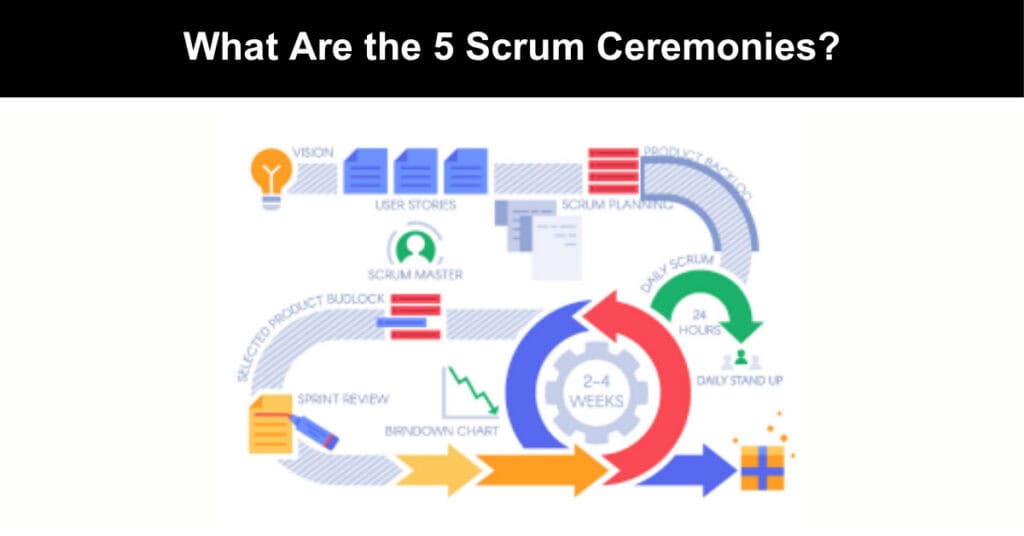
Scrum is a widely adopted agile framework that helps teams deliver high-quality work through structured, time-boxed cycles. At the heart of this framework are five core ceremonies that guide how teams plan, execute, review, and improve their work. These ceremonies create predictability and rhythm within a team, ensuring that every sprint produces measurable value while minimizing unnecessary disruptions to development.
A common point of confusion is the difference between scrum ceremonies and scrum meetings. Every ceremony is technically a meeting, but not every meeting qualifies as a ceremony. The distinguishing factor is purpose and structure. Scrum ceremonies follow strict time-boxing rules, serve a defined goal, and are embedded within the sprint cycle. This distinction matters because it shapes how teams prioritize and protect their time during active development work.
A Guide to Scrum Meetings
The scrum ceremonies are designed to create regularity and minimize distractions on the development team. Each ceremony carries a maximum duration to prevent it from disturbing active development work. Beyond the sprint itself, the remaining ceremonies are used to review and adapt where required. For a complete overview of Scrum, refer to the 2020 Scrum guide by Ken Schwaber & Jeff Sutherland.
| Scrum Ceremonies | Scrum Meetings |
|---|---|
| Daily Stand Up | Daily Stand Up |
| Backlog Refinement | Backlog Refinement |
| Sprint Planning | Sprint Planning |
| Sprint Review | Sprint Review |
| Sprint Retrospective | Sprint Retrospective |
The Sprint: The Foundation of Scrum
What Is a Sprint?
The sprint is the core container within which all Scrum ceremonies and development work take place. It has a fixed duration, typically between two and four weeks, and this duration must remain consistent and strictly observed. Work that is not completed within a sprint does not automatically carry over. Instead, it is returned to the product backlog and re-prioritized for inclusion in a future sprint, ensuring that planning remains accurate and honest.
How Sprints Are Structured
Each sprint begins immediately after the previous one ends, creating a continuous delivery cycle. Within a sprint, teams move through planning, daily coordination, active development, review, and reflection. Only the Product Owner holds the authority to cancel a sprint, though this decision is rarely made and typically reserved for situations where the sprint goal has become entirely irrelevant. Cancelling sprints disrupts team momentum and should be avoided wherever possible.
The 5 Scrum Ceremonies
Scrum Meetings vs Scrum Ceremonies
1. Backlog Refinement
Duration: One to two hours per session
Backlog refinement, sometimes called backlog grooming, story time, or estimation session, serves one primary purpose: preparing the product backlog for sprint planning. During this ceremony, the Product Owner identifies user stories that are candidates for the upcoming sprint. The development team then reviews those stories to confirm they are clearly written, appropriately scoped, and accurately estimated before any commitment is made.
The Scrum Master often introduces structured estimation techniques to help the team align on effort and complexity. Two commonly used approaches include the following:
- Planning Poker: A consensus-based estimation technique where each team member simultaneously reveals a card showing their effort estimate, prompting discussion when values differ significantly and helping the team reach a shared understanding.
- Estimation Games: Collaborative activities such as affinity mapping or bucket sizing that allow teams to quickly group and rank stories by relative complexity, making the refinement process faster and more engaging for larger backlogs.
After a successful refinement session, the backlog should contain a clear set of stories that are ready to be selected during sprint planning without requiring significant additional discussion or clarification.
2. Sprint Planning
Duration: Maximum eight hours for a one-month sprint
Sprint planning is the ceremony where the team collectively decides what work will be completed in the upcoming sprint. The Scrum Master is responsible for facilitating this session and ensuring it stays within the recommended time box. Two central questions drive the entire session, and the team should not leave until both have been fully addressed with confidence and alignment.
The first question asks what can realistically be delivered by the end of the sprint. The second asks what specific work is required to deliver each selected item. The Product Owner opens the session by presenting the sprint goal, which defines the overarching objective. Stories are then pulled from the top of the product backlog and added to the sprint backlog based on team capacity and estimated effort.
The team takes full ownership of selecting how much work to commit to, balancing ambition with sustainability. Overcommitting leads to technical debt and incomplete sprints, which erodes trust and accuracy in future planning. Once finalized, the sprint backlog is sequenced so tasks are organized in the order the team intends to work through them throughout the sprint.
3. Daily Scrum
Duration: Fifteen minutes
The daily scrum, often called the daily stand-up, is a short synchronization event held each morning at a consistent time and location within the team’s working area. It is strictly limited to team members, and the Scrum Master enforces this boundary to protect the team’s focus and prevent the meeting from becoming a status report for external stakeholders. Each team member answers three questions that are designed to surface blockers and promote alignment.
- What I Did Yesterday: A brief summary of the work completed since the last stand-up, helping the team understand progress made against the sprint backlog and confirming that items are moving forward as expected.
- What I Plan to Do Today: A clear statement of what the team member intends to accomplish before the next stand-up, giving the team visibility into daily priorities and allowing for early identification of overlapping efforts.
- Any Blockers to Report: An opportunity to flag anything preventing progress, whether technical, resource-related, or process-based, so the Scrum Master or team can act on it immediately rather than allowing it to compound.
The daily scrum is non-negotiable in any effective scrum environment. Its consistent practice that improves communication, keeps the team aligned, and ensures that issues are surfaced and resolved quickly rather than discovered at the end of a sprint.
4. Sprint Review
Duration: Maximum four hours for a one-month sprint
The sprint review is a collaborative ceremony where the development team demonstrates the work completed during the sprint to stakeholders, customers, and business representatives. The Product Owner opens the session by revisiting the sprint goal and confirming which backlog items were completed. The development team then walks through the work produced, sharing both what was built and the challenges encountered along the way.
This ceremony is not simply a one-way presentation. It is an opportunity for stakeholders to provide direct feedback, ask questions, and influence the direction of future sprints. The product backlog may be updated following the review based on what is discussed. Treating the sprint review as a genuine feedback loop, rather than a sign-off formality, significantly increases the team’s ability to deliver work that meets real business needs.
5. Sprint Retrospective
Duration: Maximum three hours for a one-month sprint
The sprint retrospective takes place after the sprint review and before the next sprint planning session. Its sole focus is continuous improvement of the team’s process, not the product itself. The Scrum Master leads this ceremony and creates a safe environment where honest reflection is encouraged. The retrospective is built around three areas of inquiry that guide the conversation toward actionable outcomes.
- Inspect the Previous Sprint: A structured look at how the team worked together across people, relationships, tools, and processes, identifying patterns that either supported or hindered progress during the sprint.
- Identify Improvement Opportunities: A collaborative effort to surface the most impactful changes the team could make, prioritized not by volume but by the potential effect each improvement would have on future sprints.
- Create an Improvement Plan: A concrete commitment to implementing the identified changes in the very next sprint, with clear ownership and measurable expectations so that improvements are actually realized rather than simply discussed.
The retrospective is one of the most powerful ceremonies in the Scrum framework. When facilitated well, it drives compounding improvements over time and keeps teams engaged, accountable, and motivated throughout long development cycles.
Conclusion
The five Scrum ceremonies, including backlog refinement, sprint planning, the daily Scrum, sprint review, and sprint retrospective, form a complete system for delivering work with consistency and quality. Each ceremony serves a specific purpose within the sprint cycle, and all five must be practiced with discipline to realize the full benefits of the Scrum framework. Skipping or shortening ceremonies without a good reason weakens the structure that makes Scrum effective.
Adopting these ceremonies is not simply a procedural exercise. It is a commitment to transparency, collaboration, and continuous improvement at every level of the team. Organizations that invest in running these ceremonies well consistently see faster delivery, stronger team alignment, and higher stakeholder satisfaction. Understanding and applying each ceremony with intent is the clearest path to getting the most out of Scrum.
Frequently Asked Questions
What is the difference between scrum ceremonies and scrum meetings?
Scrum meetings and scrum ceremonies refer to the same set of events, but the term “ceremony” emphasizes that each event is structured, time-boxed, and tied to a specific purpose within the sprint cycle. Regular meetings lack this formality, while ceremonies are embedded into the scrum process and designed to minimize unnecessary disruptions to development work.
How long should each Scrum ceremony last?
Each ceremony has a recommended maximum duration that scales with sprint length. For a one-month sprint, sprint planning is capped at eight hours, the sprint review at four hours, and the retrospective at three hours. The daily scrum is always fifteen minutes regardless of sprint length, and backlog refinement typically runs one to two hours per session.
Who is responsible for facilitating Scrum ceremonies?
The Scrum Master is responsible for ensuring all ceremonies take place, stay within their time boxes, and are conducted effectively. While the Product Owner leads elements of sprint planning and the sprint review, the Scrum Master sets the conditions for every ceremony to run smoothly and ensures the team follows Scrum principles throughout.
Can a sprint be cancelled before it ends?
Yes, but only the Product Owner has the authority to cancel a sprint. This decision is typically made when the sprint goal becomes obsolete due to a significant shift in business direction or priorities. Sprint cancellations are disruptive and should be treated as a last resort, as they interrupt momentum and require the team to restart the planning process.
What happens to incomplete work at the end of a sprint?
Any work not completed by the end of a sprint is returned to the product backlog rather than automatically carried into the next sprint. The Product Owner then re-evaluates and re-prioritizes those items alongside other backlog entries. This approach keeps planning honest and ensures that every sprint commitment is based on accurate capacity and effort estimates.
Suggested articles:
- Scrum Master vs. Product Manager: Roles and Responsibilities Defined
- The 5 Scrum Phases and Their Benefits
- Scrum Masters Deciding Between PMP vs PMI-ACP Certificate

Shane Drumm, holding certifications in PMP®, PMI-ACP®, CSM, and LPM, is the author behind numerous articles featured here. Hailing from County Cork, Ireland, his expertise lies in implementing Agile methodologies with geographically dispersed teams for software development projects. In his leisure, he dedicates time to web development and Ironman triathlon training. Find out more about Shane on shanedrumm.com and please reach out and connect with Shane on LinkedIn.