
A burst pipe at 2 a.m., a tenant who cannot reach the office, and a repair crew waiting on paperwork can wreck a property manager’s week before it starts. Most of these delays come from slow information rather than a lack of effort. Advanced mobile networks, particularly 5G, now carry sensor data, tenant requests, and security alerts straight to a phone, so property teams can act in minutes instead of days.
Demand for that capacity keeps climbing, with mobile data traffic expected to reach 330 exabytes per month by 2028. For property managers and the project managers who run building upgrades, connectivity is no longer just a utility bill but a core part of every property project.
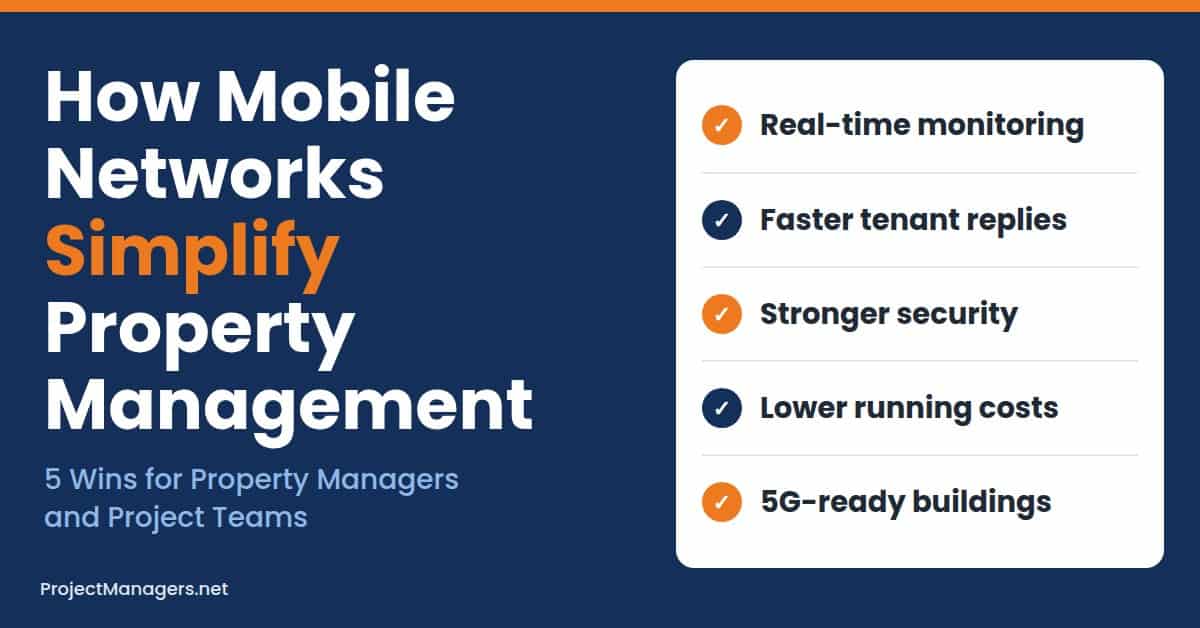
- Real-Time Monitoring: IoT sensors on fast mobile networks send instant alerts about leaks, HVAC faults, and energy spikes, so property managers fix problems before tenants notice them.
- Tenant Communication: Mobile apps keep lease documents, rent payments, and maintenance requests in one place, which speeds up responses and leaves a complete record of every request.
- Security and Cost Control: Smart cameras, remote access control, and connected meters protect buildings and tenant data while cutting energy waste and manual work.
- Phased Rollout: Treating each connectivity upgrade as a planned project, with a coverage survey, security rules, and success metrics, prevents costly gaps after installation.
This guide explains how advanced mobile networks support real-time monitoring, tenant communication, building security, and cost control. Each section includes practical steps and a real-life example of how a property team or project manager applies the idea.
You will also find a side-by-side comparison with traditional methods, a rollout checklist for connectivity projects, common mistakes to avoid, and tips for choosing a provider. Start with the change that affects property managers every day: faster access to building data.
Real-Time Data and Monitoring through Mobile Networks
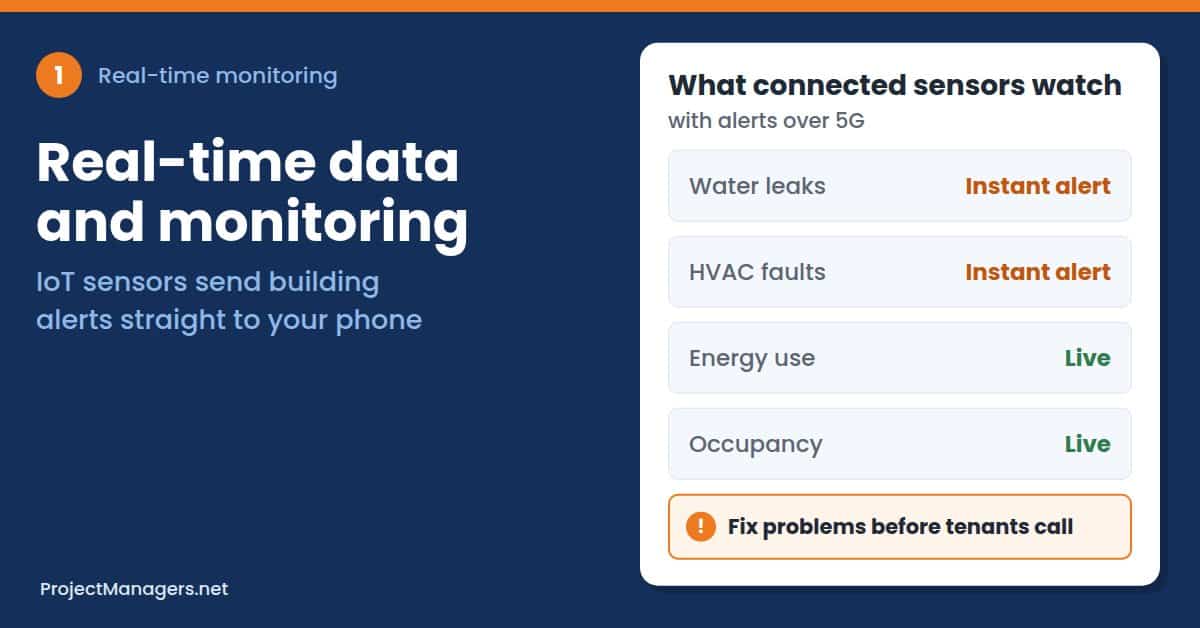
In the past, property management often meant long delays in receiving critical data. Property managers relied on physical inspections, paper reports, and slow systems to track occupancy, energy use, and maintenance issues. However, with advanced mobile networks and custom software development for real estate industry, real-time monitoring has become standard, so property managers can make faster, better-informed decisions.
Mobile networks, particularly 5G, let property management companies connect IoT sensors, smart cameras, and thermostats that watch building conditions around the clock. Managers receive instant alerts when energy use spikes, an HVAC unit fails, or a pipe starts leaking. To get the most from real-time monitoring, property managers should follow these steps.
- Start with High-Risk Systems: Put sensors on boilers, HVAC units, water lines, and elevators first, because failures there cost the most.
- Set Clear Alert Thresholds: Define what counts as urgent so the maintenance team is not flooded with low-priority notifications.
- Route Every Alert to an Owner: Assign each alert type to a named person or vendor, and record response times in the project log.
- Review the Data Monthly: Look for repeat faults and rising energy use, and then add the fixes to the maintenance plan.
Real-Life Example: Managing properties in France, a country known for its strong real estate market and popular tourist destinations, demands constant communication and efficient coordination. Consider an international property manager who oversees holiday rentals there while traveling between sites. With an eSIM France solution, the manager activates a data plan without swapping physical SIM cards, so sensor alerts and tenant messages keep arriving wherever they are. That steady connection lets the project team approve urgent repairs the same day instead of waiting for the manager to find Wi-Fi.
Comparison Table: Traditional versus Advanced Mobile Networks in Property Management
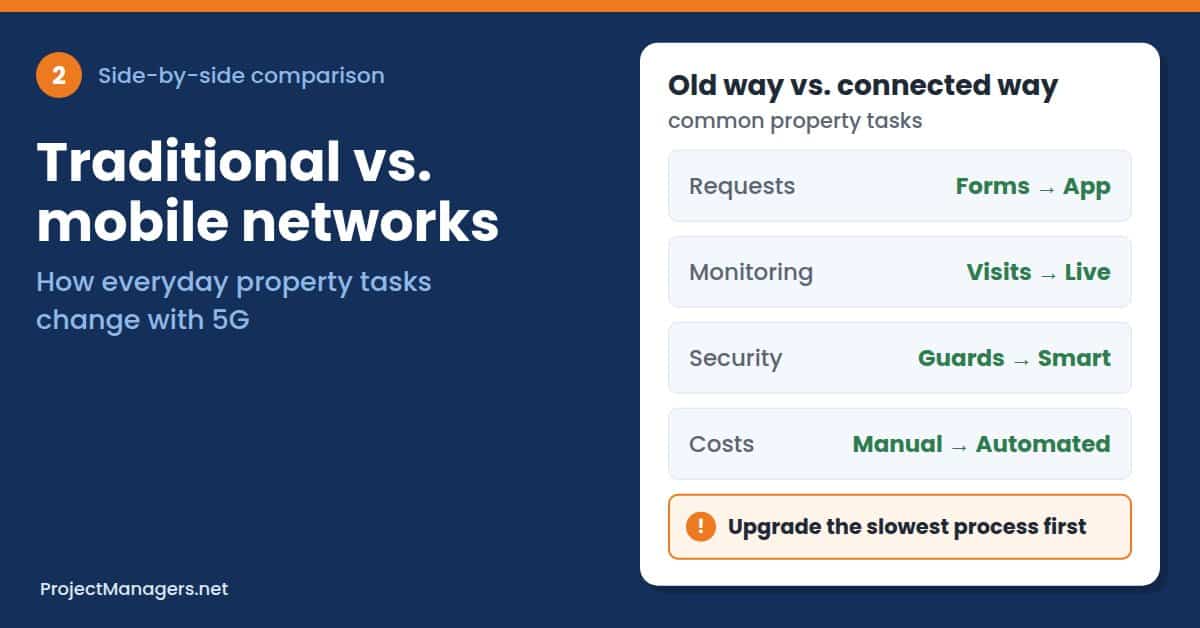
The table below compares how common property management tasks work with traditional methods and with advanced mobile networks. Use it to spot which processes on your properties would gain the most from an upgrade project.
Traditional versus Advanced Mobile Networks
| Feature | Traditional Property Management | Advanced Mobile Networks (5G) |
|---|---|---|
| Communication | Phone calls, emails, and paper-based systems | Mobile apps, instant notifications, and real-time updates |
| Data Monitoring | Manual inspections and periodic updates | Real-time monitoring with IoT devices and smart cameras |
| Maintenance Requests | Phone calls or physical forms | App-based requests and automated notifications |
| Security | Standard surveillance and on-site guards | Smart surveillance, remote access, and real-time alerts |
| Cost Efficiency | Manual processes and higher operating costs | Automated routine tasks and optimized energy and resources |
Streamlined Communication with Tenants and Stakeholders

Clear communication is one of the most important skills a property manager can have. Yet many property managers still juggle phone calls, emails, and paperwork for every request. Modern mobile network technology streamlines these processes and improves interactions among property managers, tenants, and contractors.
Mobile apps connected to fast networks let tenants view lease documents, rent history, payment due dates, and scheduled visits. Tenants can also submit service requests, pay rent, and message the management team from their phones. Because every request and reply sits in one system, property managers respond faster, and nothing slips through the cracks.
The same principles apply to contractors working on site. A clear communication strategy for on-site project teams keeps tenants, vendors, and managers working from the same information. Key benefits of streamlined communication include the following.
- Faster Issue Resolution: Tenants and managers receive immediate updates on maintenance requests and repairs.
- Seamless Rent Payments: Tenants pay directly in the app, which reduces late payments and improves cash flow.
- Real-Time Status Tracking: Managers and tenants can follow the progress of maintenance requests and ongoing projects.
- Complete Communication Records: A full history of messages and approvals protects the team in disputes and audits.
Real-Life Example: Consider a property team managing 400 apartments that still took maintenance requests by phone. Calls went unanswered after hours, and repeat requests clogged the inbox. After the team launched a tenant app with push notifications, every request arrived with photos and reached a technician within minutes. Duplicate requests dropped, and the project manager could report average repair times to the owners each month.
Enhanced Security with Advanced Connectivity
As buildings rely more on technology, security becomes a bigger part of property management. Property managers must protect both the physical building and the tenant information stored in their systems. Advanced mobile networks improve how teams handle both.
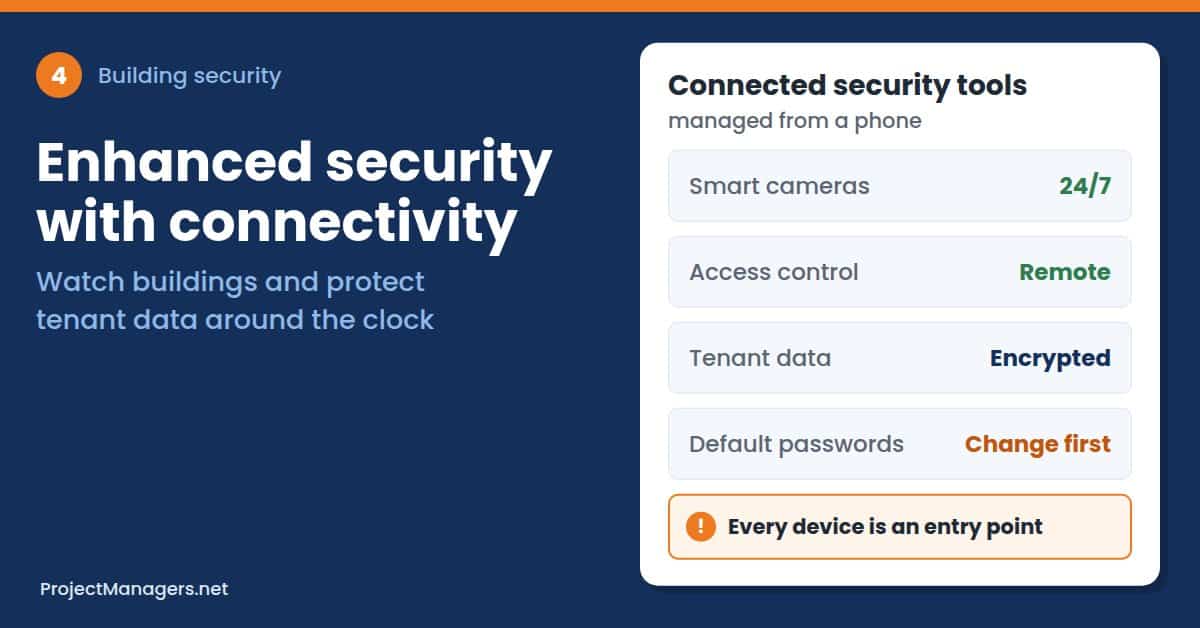
The 5G network supports smart cameras, access control systems, and mobile security tools. Lower latency and faster data transfer let property managers watch their buildings 24/7 and respond to alerts in real time. Encrypted communication also keeps sensitive tenant data secure and helps teams comply with privacy rules such as GDPR.
Every connected device is also a possible entry point for attackers, so security belongs in the project plan from day one. The NIST Cybersecurity for IoT Program publishes baseline guidance that helps project teams decide which security features to require from connected devices.
- 24/7 Monitoring: Real-time surveillance and alerts help teams stop incidents before they escalate.
- Remote Access Control: Property managers can grant or revoke entry from anywhere, which simplifies contractor visits and move-outs.
- Data Security: Encrypted communication protects tenant and property data from cyber threats.
- Device Hygiene: Change default passwords, apply firmware updates, and keep an inventory of every connected device.
Real-Life Example: Imagine a project manager leading a security upgrade across three office buildings. Instead of issuing physical keys to dozens of contractors, the team installs mobile access control and creates time-limited digital passes for each work package. When a contractor finishes, the pass expires automatically. The project closes with a full entry log that the facilities team can use for future audits.
Cost Efficiency and Resource Optimization

One of the biggest benefits of advanced mobile networks is the chance to cut costs and use resources more efficiently. In a competitive property management market, controlling costs is essential for profitability.
Mobile networks make it possible to automate rent collection, maintenance management, and financial reporting. These automations reduce manual work and supervision, which lowers operating costs. Connected meters and controls also let managers track energy, water, and building systems so nothing goes to waste.
Measuring energy performance pays off. According to the ENERGY STAR program, certified buildings use 35% less energy on average than typical buildings. Monitoring data from connected systems is often the first step toward that kind of improvement.
- Automation: Rent reminders, automated payments, and smart maintenance requests save staff hours every week.
- Resource Management: Monitoring energy and water use helps managers find waste and fix it quickly.
- Scalable Operations: Managers can add properties to the portfolio without adding the same amount of overhead.
- Budget Tracking: Comparing monthly utility and maintenance costs against the project budget proves the savings.
Real-Life Example: Consider a project manager tasked with cutting utility costs across a portfolio of mid-size office buildings. The project team installs connected meters and smart thermostats and then reviews usage dashboards every week. Within the first quarter, the team finds heating systems running on empty floors overnight and adjusts the schedules. The savings fund the next phase of the project, which adds smart lighting controls.
Future-Proofing Property Management with 5G
As 5G networks expand, property managers will have even more opportunities. Ultra-low latency, high bandwidth, and the ability to connect many devices at once allow teams to bring more advanced technology into daily operations.
These innovations include smart devices, predictive maintenance systems, and advanced energy management tools. Together, they help turn properties into more efficient, cleaner, and more resilient buildings. Property managers who adopt them early will gain a clear competitive edge.
- Smarter Buildings: Connected systems learn from tenant behavior to optimize energy and resource use.
- Predictive Maintenance: Sensor data forecasts maintenance needs before they become problems, which reduces downtime and improves tenant satisfaction.
- Scalability: A 5G-ready building adapts easily to new technologies as coverage grows.
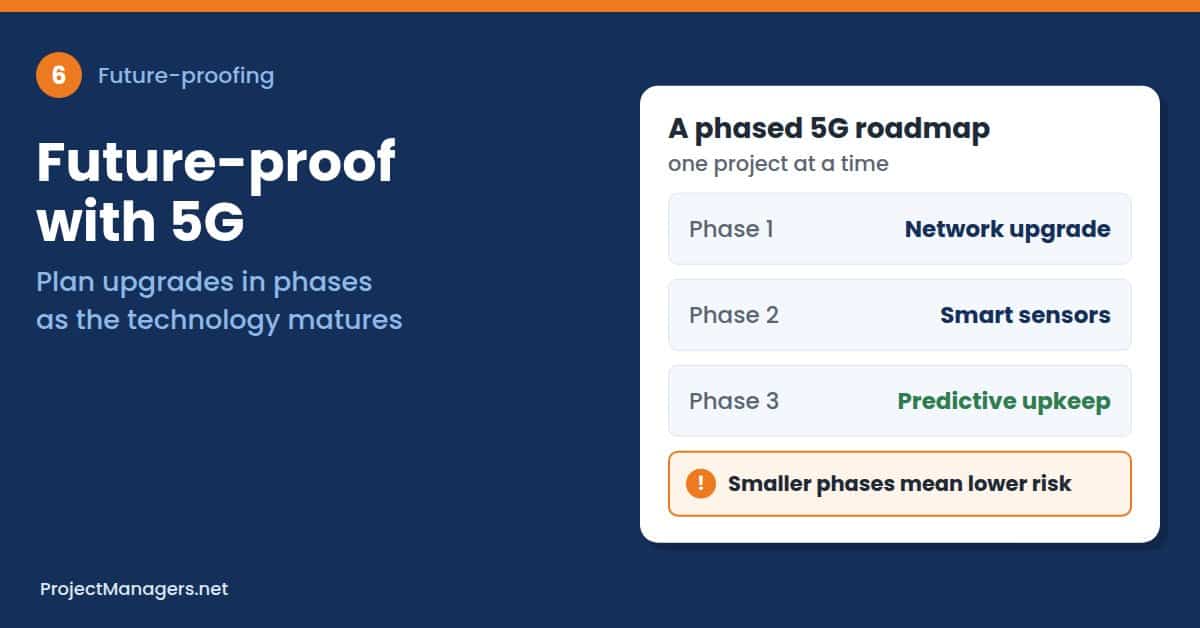
- Phased Upgrades: Planning upgrades as a series of small projects spreads costs and lowers risk.
Real-Life Example: Imagine a property owner planning a five-year technology roadmap for an aging residential complex. The project manager breaks the work into phases, starting with network upgrades, then sensors, and then predictive maintenance software. Each phase has its own budget, success metrics, and review point. This approach lets the owner adopt new tools as they mature without committing the full budget up front.
Mobile Network Rollout Checklist for Property Projects
Use this checklist before you launch a connectivity or smart building project. It helps project managers close the gaps that cause delays after installation.
- Survey mobile coverage in every building, including basements, stairwells, and parking areas.
- List the systems you want to connect, and rank them by risk and cost.
- Confirm that new devices work with your property management software.
- Set security requirements for every connected device before you buy it.
- Decide who receives each alert and how quickly they must respond.
- Plan tenant communication, including app training and a support contact.
- Agree on success metrics, such as response times, energy use, and tenant satisfaction.
Review the checklist at each project milestone, not just at kickoff. Conditions in occupied buildings change, and early assumptions about coverage or devices often need updating.
Common Mistakes to Avoid When Upgrading Property Connectivity
Connectivity projects often fail for avoidable reasons. Watch for these common mistakes before they reach your budget or your tenants.
- Buying Devices Before Testing Coverage: Weak signal in basements and plant rooms can leave sensors offline.
- Ignoring Integration: Devices that do not connect to existing software create extra manual work.
- Skipping Security Basics: Default passwords and unpatched firmware expose tenant data and building controls.
- Forgetting the Tenants: A new app fails if tenants do not know how or why to use it.
- Treating It as a One-Time Purchase: Connected systems need ongoing updates, monitoring, and budget.
How to Choose a Connectivity or Smart Building Provider
The right partner makes a connectivity project far easier to deliver. Before you sign a contract, ask each provider the following questions.
- Coverage and Reliability: Can the provider show coverage data and uptime commitments for your building types?
- Integration Support: Do the devices and platforms work with your property management software?
- Security Practices: How does the provider handle firmware updates, encryption, and device authentication?
- Scalability: Can the system grow as you add buildings, units, or new sensors?
- Support and Reporting: What response times are guaranteed, and what reports will your project team receive?
Video: What Is a Smart Building?
Prefer to watch? This short explainer shows how sensors, networks, and building systems work together, so project managers can picture the technology behind each section of this guide.
What Is a Smart Building? (Anixter, 4:58)
A May 2017 explainer from Anixter on how connected lighting, security, HVAC, and network systems combine into one smart building. It gives property managers and project teams a clear picture of what a connected building needs.
Mobile Networks and Property Management FAQ
Mobile Networks for Property Managers: FAQ
How Do Advanced Mobile Networks Improve the Tenant Experience?
Mobile networks let tenants raise maintenance requests, pay rent, and receive property updates through apps. This speeds up service and adds convenience, which improves tenant satisfaction and retention.
How Do Mobile Networks Help Reduce Property Management Costs?
They make it possible to automate rent collection, maintenance management, and financial reporting. Connected meters also reveal energy and water waste, so property managers can lower operating costs and track the savings.
Which Mobile Network Features Improve Property Security?
5G networks support remote monitoring, smart gates, mobile access control, and real-time security alerts. These features let property managers oversee buildings continuously and respond quickly when something goes wrong.
Do Property Managers Need 5G, or Is 4G Enough?
Fast 4G connections handle tenant apps and many basic sensors well. 5G becomes valuable when a building runs large numbers of sensors, live video, or systems that need very low latency, so many teams plan 5G as a later project phase.
How Should a Project Manager Plan a Smart Building Upgrade?
Start with a coverage survey and a list of the systems that cost the most when they fail. Then run a small pilot, set security rules and success metrics, and expand in phases once the results are proven.
How Can Property Teams Keep Connected Devices Secure?
Change default passwords, apply firmware updates, and keep an inventory of every device. Guidance from the NIST Cybersecurity for IoT Program can help project teams decide which security features to require from vendors.
What Is an eSIM, and Why Does It Help Property Managers Who Travel?
An eSIM is a digital SIM built into a phone that can download a data plan without a physical card. Property managers who travel between sites can stay connected to alerts and tenant messages without swapping SIM cards.
Conclusion: The Future of Property Management Is Mobile
Advanced mobile networks are changing how property managers work. Real-time monitoring, faster tenant communication, stronger security, and lower operating costs all depend on reliable connectivity. Teams that treat each upgrade as a planned project, with clear goals and milestones, get the most from the technology.
Start small with the systems that cost you the most when they fail, measure the results, and expand from there. Property managers who build on these innovations will stay efficient, competitive, and adaptable in any market.
Suggested articles:
- Top 5 Tenant Screening Project Mistakes That Delay Leasing
- Managing a Multi-Family Rental Property Upgrade: A Project Manager’s Guide to Budget Control
- 12 Ways Smart Software Improves Onsite Project Team Efficiency

Daniel Raymond, a project manager with over 20 years of experience, is the former CEO of a successful software company called Websystems. With a strong background in managing complex projects, he applied his expertise to develop AceProject.com and Bridge24.com, innovative project management tools designed to streamline processes and improve productivity. Throughout his career, Daniel has consistently demonstrated a commitment to excellence and a passion for empowering teams to achieve their goals.