
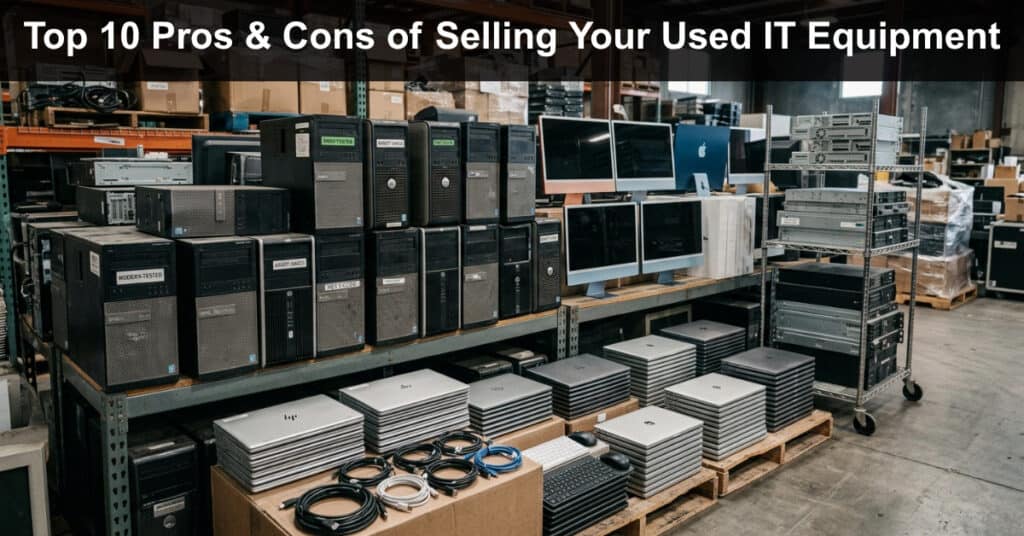
Businesses upgrading technology face a simple question: what should you do with old equipment sitting idle in storage rooms or closets? Selling used tech, from computers and monitors to network hardware and servers, offers a meaningful financial return while keeping items out of landfills, supporting sustainability goals, and giving other companies access to affordable, reliable devices.
Deciding to sell used credit card payment terminals and other gear can be appealing, but it is not always the best choice for every company. The refurbished computers and laptops market is projected to grow from about 6.2 billion dollars toward 12.2 billion by the next decade, reflecting steady demand for pre-owned devices. That momentum creates real resale opportunities, yet data security, depreciation, and tax trade-offs still matter.
This guide weighs five clear benefits against five drawbacks so you can make an informed decision.
The 5 Benefits of Selling Your Used IT Equipment
Selling used IT equipment delivers practical advantages that go far beyond recovering a little cash from old devices. It frees up valuable storage space, supports sustainability, and can even help other businesses get affordable technology they genuinely need. Understanding these benefits helps you see exactly where selling adds real value before you commit to the process.
1. Financial Return
One of the most obvious benefits of selling used IT equipment is the chance to earn money, because even slightly outdated devices hold resale value. Business-class laptops under three years old typically retain between 150 and 400 dollars, a pattern explained in retired IT asset value guides. A current-generation rack server can fetch several thousand, and that income offsets new purchases.
- Tap Real Value: Slightly outdated servers, desktops, and routers still command meaningful prices from buyers who need reliable hardware.
- Reinvest Smartly: Income from old equipment helps fund upgraded technology and reduces the net cost of refreshing your infrastructure.
- Sell in Bulk: A full equipment refresh can generate tens of thousands of dollars in recovered revenue rather than recycling everything.
Real-Life Example: A mid-sized business refreshing its laptop fleet recovered more than 100,000 dollars by selling about five hundred units through a certified reseller. That recovered revenue funded most of the new hardware purchase and cut the upgrade cost sharply, turning what would have been a disposal expense into a meaningful return.
2. Reduced Storage Needs
Obsolete equipment accumulates quickly and takes up valuable office or storage space, so selling frees room for essential resources and daily operations, and tracking IT assets effectively shows what is piling up. Clearing out old machines reduces clutter and improves how the entire workspace is organized and used. With less outdated technology lying around, companies create a more streamlined working environment.
- Free Valuable Space: Removing retired devices opens up offices and storage rooms for things that support daily operations and growth.
- Reduce Clutter: Fewer idle machines mean cleaner workspaces and easier organization across departments and storage areas.
- Improve Efficiency: A tidy, well-organized environment helps staff move, work, and find what they need without delay.
Real-Life Example: A growing company sold its decommissioned desktop fleet and reclaimed an entire storage room that had been filled with unused machines. The team converted the space into a collaboration area that supported new hires and smoother team workflows, removing clutter and visibly improving how the office operated and functioned every day.
3. Environmental Responsibility
Selling used equipment instead of discarding it supports sustainability because many components can be refurbished, reused, or recycled, an approach encouraged by EPA e-waste guidance. This reduces the need for new raw materials and minimizes e-waste, which matters as the world generates more electronic waste each year. By selling rather than throwing technology away, you support a cleaner environment.
- Cut E-Waste: Reselling keeps devices in use longer and reduces the volume of electronics ending up in landfills and dumps.
- Reuse Materials: Refurbished parts and whole devices lower the demand for newly extracted raw materials in manufacturing.
- Support Circularity: Selling helps create a circular economy where valuable technology is reused instead of discarded after first use.
Real-Life Example: A regional hospital network sold retired monitors and laptops to a refurbisher rather than sending them to a landfill. This kept thousands of working devices in service for other users and diverted a large volume of e-waste from disposal, supporting both its sustainability goals and community access to affordable technology.
4. Data Security Benefits
Selling through reputable resellers or certified recyclers can improve data security because these companies follow strict data-wiping protocols and standards, a point in secure IT asset disposal guidance. They offer data sanitization and disposal services that ensure sensitive information is properly erased before reuse. While you should always wipe data yourself, reputable buyers add a valuable layer of protection against unauthorized access.
- Use Certified Wiping: Certified providers follow standards like NIST 800-88 to erase drives while keeping devices functional for resale.
- Get Documentation: Reputable buyers issue serialized certificates of destruction, giving you proof that data was erased safely.
- Reduce Breach Risk: A verified erasure process lowers the chance that sensitive company data resurfaces after the device is sold.
Real-Life Example: A financial firm selling decommissioned servers worked with a certified ITAD provider that wiped every drive to NIST 800-88 standards and returned serialized certificates of destruction. This protected sensitive client data and satisfied strict audit requirements, giving the firm documented proof that no sensitive information was ever left at risk.
5. Support for Small Businesses or Startups
Selling used equipment often supports smaller companies or startups that cannot afford the very latest models, a need served by the growing refurbished computer market. Many businesses gladly purchase high-quality, pre-owned hardware because it delivers reliable performance at a fraction of the price of new devices. By selling your used IT assets, you indirectly support other organizations.
- Help Other Firms: Startups and small companies gain access to dependable hardware they could not otherwise afford at full price.
- Build Relationships: Repeated sales can open the door to useful partnerships with buyers and refurbishers in your industry.
- Extend Useful Life: Pre-owned devices keep working productively for years, reducing waste and spreading the value of the equipment.
Real-Life Example: A design agency sold its previous-generation workstations to a local startup at a fair price. The young company gained capable machines it could not otherwise afford, and the transaction established a referral relationship that later brought the agency valuable new client work, strong referrals, and recurring design projects from the new relationship.
The 5 Drawbacks of Selling Your Used IT Equipment
Selling used IT equipment is not without its challenges, and a clear-eyed look at the drawbacks can prevent costly surprises. Depreciation, data security risks, and the time involved can easily outweigh the financial return in some cases. Weighing these negatives carefully alongside the benefits helps you decide whether selling is genuinely the right move for your business.
1. Depreciating Value
Technology rapidly depreciates in value, so by the time you are ready to sell, your equipment may not be worth much, as explained in used equipment appraisal guidance. The resale market is often saturated with similar items, especially for common devices. If you wait too long, equipment can become obsolete and its value drop to the point where selling is no longer worthwhile.
- Value Drops Fast: A laptop worth 300 dollars today may be worth far less within a year as newer models push prices down.
- Market Gets Crowded: Common devices flood resale platforms, so sellers compete against many identical listings and lower prices.
- Obsolescence Bites: Older hardware loses relevance quickly, and niche machines can become nearly impossible to sell at all.
Real-Life Example: A company that stored decommissioned laptops for eighteen months found their value had fallen sharply by the time it finally sold them. The firm earned only a fraction of what the devices were worth when first retired, a costly reminder that delaying resale destroys value quickly in fast-moving technology markets.
Solution: Sell equipment within thirty to sixty days of decommissioning, while devices still carry current resale value and buyer demand remains strong in the market. Act quickly to avoid the steep depreciation that erodes the worth of technology the longer it sits unused in storage waiting for a sale to be completed.
2. Data Security Risks
Although selling IT equipment can be done securely, there is always a risk if sensitive information is not thoroughly wiped. Hard drives and servers may still contain traces of personal or company data after deletion, so follow NIST media sanitization guidelines. Any lapse in security during the process could lead to a data breach that harms your reputation and trust.
- Traces Remain: Deleted files can sometimes be recovered, so drives need certified erasure or physical destruction before resale.
- Breach Costs Trust: A single data leak from sold hardware can damage customer confidence and invite regulatory scrutiny.
- Responsibility Is Yours: Even with a buyer’s help, the selling organization bears the final responsibility for protecting sensitive data.
Real-Life Example: A healthcare clinic once sold used computers without fully wiping the records on them, and a later audit flagged recoverable patient data on the drives. The finding created serious compliance and reputational problems that the clinic had to resolve, showing how one security lapse can undo years of trust and careful work.
Solution: Partner with a certified ITAD provider that performs NIST 800-88 data erasure and issues serialized certificates of destruction for every device you sell. Always verify the wipe was fully completed before any unit ships, and keep that documentation as clear, auditable proof that sensitive data was completely protected and destroyed.
3. Time and Effort Involved
Selling IT equipment is not always straightforward, because it involves assessing condition, listing items, negotiating with buyers, and arranging pickup or shipping, even when using top used tech selling services. For a company with many devices, managing the sale becomes a logistical challenge that consumes significant time. The process can also pull staff away from more important business tasks and priorities.
- Many Steps Involved: Assessing, listing, negotiating, and shipping each device takes considerable time and careful coordination.
- Logistics Add Up: Large fleets require organizing pickup, packaging, and paperwork that quickly becomes a full project.
- Distracts the Team: Hours spent on resale can divert attention and effort from core work and revenue-generating activities.
Real-Life Example: A firm with several hundred retired devices spent weeks coordinating photos, listings, and shipping on its own. That effort delayed other important work and consumed valuable staff time before the company finally hired a reseller to take over, a clear lesson in how quickly resale becomes a distraction at scale.
Solution: Use a third-party ITAD or resale partner that handles assessment, listing, data wiping, and shipping end-to-end for the entire fleet. This keeps your team focused on core work instead of devoting weeks to photos, negotiations, packaging, and the logistics involved in selling every single retired device in the fleet.
4. Limited Resale Market for Niche Equipment
Certain niche items, such as specialized network hardware or software-integrated devices, may not have a broad resale market at all, even as the resale market goes mainstream. Standard laptops and desktops are easy to sell, but industry-specific technology can be hard to place. Limited buyer demand can force you to accept a lower price or hold equipment longer than expected.
- Narrow Demand: Specialized hardware attracts far fewer buyers than mainstream devices, so finding a buyer takes longer.
- Lower Offers: Limited competition among buyers often means accepting a price well below what the device originally cost.
- Longer Holding: Niche items may sit unsold for months, tying up space and reducing the value you eventually recover.
Real-Life Example: A logistics company struggling to sell specialized fleet-tracking hardware found no general-market buyer for the equipment. After months of trying, the firm eventually sold it at a steep discount to a niche reseller, accepting far less than expected because so very few buyers in the market needed that specific technology at all.
Solution: Research demand before buying niche equipment in the first place, and when selling, use specialized resale channels that connect with industry-specific buyers. This targeted approach reduces the risk of holding specialized hardware that no general-market buyer actually wants to purchase the item at all in the wider resale market today.
5. Reduced Tax Benefits Compared to Donation
In some cases, donating used IT equipment can offer better tax benefits than selling it. Donating to qualified organizations may let you deduct the fair market value, guided by IRS donated property rules. Selling usually does not provide the same incentive, so businesses focused on tax efficiency might prefer donation when the deduction outweighs resale value.
- Deduction Available: Qualified donations can produce a tax deduction equal to the equipment’s fair market value.
- Selling Lacks Incentive: Resale income is ordinary revenue with no special tax benefit attached to the transaction.
- Compare Outcomes: A charitable deduction may exceed what the equipment would fetch on the open resale market.
Real-Life Example: A corporation deciding between donating and selling old servers compared both options carefully. It found that a qualified donation produced a larger tax deduction than the modest resale price, so the firm chose to donate the equipment, capturing more value through the deduction than the open market could offer.
Solution: Before deciding, estimate the equipment’s fair market value and compare the potential tax deduction from donation against the net proceeds you would keep from selling. This simple comparison clearly shows which path delivers more real, lasting value for your business and its overall financial position in the long term.
Making the Decision: Is Selling the Right Move for Your Business?
Selling used IT equipment has a clear list of pros and cons, but deciding whether it is right for your business starts with your goal. A certified ITAD service provider can simplify the process and improve outcomes. If you want to recoup value, free up space, and reduce environmental impact, selling is a strong option, while donation may serve better for tax benefits.
Also consider the resources you can devote to the process, because selling takes real time and coordination from start to finish. Companies with enough time and manpower can handle negotiations, packaging, and shipping themselves without outside help. Those without those resources may find that a third-party reseller is the wiser, smoother, and far more efficient choice overall.
Weighing both sides side by side makes the choice clearer, and the table below condenses the main trade-offs into a quick reference. Match the factors against your own security needs, storage pressure, and how much time your team can give to the sale. This summary helps you decide where the balance tips for your specific situation.
| Aspect | Benefit of Selling | Drawback of Selling |
|---|---|---|
| Revenue | Recovers cash from idle hardware | Value drops as devices age |
| Storage | Frees office and warehouse space | Sale process takes coordination |
| Data | Certified wiping protects information | Risk if erasure is mishandled |
| Impact | Supports reuse and sustainability | Niche items can be hard to place |
| Tax | Simple cash transaction | Donation may offer better deduction |
Tips for Selling Used IT Equipment Successfully
Selling used IT equipment successfully comes down to careful preparation, honest presentation, and choosing the right sales channel, from retailers that pay for old electronics to specialized resellers. Practical steps help you protect your data, price items fairly, and reach buyers most likely to pay a strong, realistic price for the equipment you intend to sell.
- Evaluate and Clean: Before listing your items, clean them thoroughly and check for any functional issues. Equipment in good condition is likely to fetch a better price.
- Back Up and Wipe Data: Always back up important data before wiping devices. Use certified data-wiping software or partner with a reputable buyer for additional security.
- Research the Market: Check current market prices for similar devices so you can avoid over- or under-pricing your items compared to real demand.
- Choose the Right Selling Platform: For mainstream devices, online marketplaces may offer the best reach. For industry-specific equipment, consider specialized resale channels or directly approach companies that might have use for your items.
- Document the Condition: Be honest about any wear and tear, and take clear photos for potential buyers. Transparency can increase trust and lead to a smoother transaction.
Is Selling Used IT Equipment Worth It?
Selling used IT equipment can be a profitable and environmentally responsible choice for businesses ready to upgrade, especially when it supports a circular economy for electronics. By weighing the financial returns, storage savings, and environmental benefits against data risks, depreciation, and market limits, you can make a fully informed and confident decision.
Conclusion
Deciding whether to sell your used IT equipment comes down to balancing financial, environmental, and security considerations. Selling offers cash, frees space, supports sustainability, and helps other businesses, but it also carries risks around data, depreciation, and effort. A clear look at both sides lets you choose the path that best matches your company’s goals.
Move quickly once you decide to sell, protect your data with certified wiping, and price items realistically to maximize your return. Whether you sell, donate, or recycle, the goal is to recover value responsibly without ever compromising security. With careful planning, you can turn retired technology into real, lasting benefit for your business and the wider market.
Frequently Asked Questions About Selling Used IT Equipment
Is it worth selling used IT equipment?
Yes, selling used IT equipment is worth it for many businesses because it generates cash, frees storage space, and supports sustainability. However, the value depends heavily on the age and condition of the devices and how quickly you act to sell them. Weigh the financial return against data security, depreciation, and the effort involved before making your final decision.
How much is my old IT equipment worth?
Value depends on the type, age, condition, and current market demand. Business-class laptops under three years old typically sell for 150 to 400 dollars, while current-generation rack servers can fetch several thousand dollars depending on configuration. Niche or very old equipment holds far less value and may be better suited to donation or recycling instead of a sale.
Should I wipe data before selling IT equipment?
Yes, you should always wipe data before selling any IT equipment. Use certified data-erasure software that meets standards such as NIST 800-88, or work with a trusted buyer that performs secure destruction for you. Keep a serialized certificate of destruction as documented proof, because a data breach from recovered files can seriously harm your reputation and compliance standing.
Is it better to sell or donate used IT equipment?
It depends entirely on your priorities and goals. Selling provides cash and is a good choice when devices still hold meaningful resale value. Donating to a qualified organization can offer a tax deduction equal to fair market value, which may exceed what you would earn from a sale. Compare the net proceeds against the potential deduction to decide which path benefits you more.
What is the best way to sell used IT equipment?
The best way is to act quickly, wipe data securely, research prices, and choose the right sales channel for each item. Use online marketplaces for mainstream devices and specialized resale channels for niche hardware. For large fleets, a certified ITAD provider can handle assessment, data destruction, listing, and shipping so your team stays focused on core business work.
Suggested articles:
- How Project Managers Can Reduce IT Project Costs with Refurbished Server Infrastructure
- Dell Rack Servers: The Key To Improving Your PM
- How to Choose the Right IT Partner for Your Business

Daniel Raymond, a project manager with over 20 years of experience, is the former CEO of a successful software company called Websystems. With a strong background in managing complex projects, he applied his expertise to develop AceProject.com and Bridge24.com, innovative project management tools designed to streamline processes and improve productivity. Throughout his career, Daniel has consistently demonstrated a commitment to excellence and a passion for empowering teams to achieve their goals.