
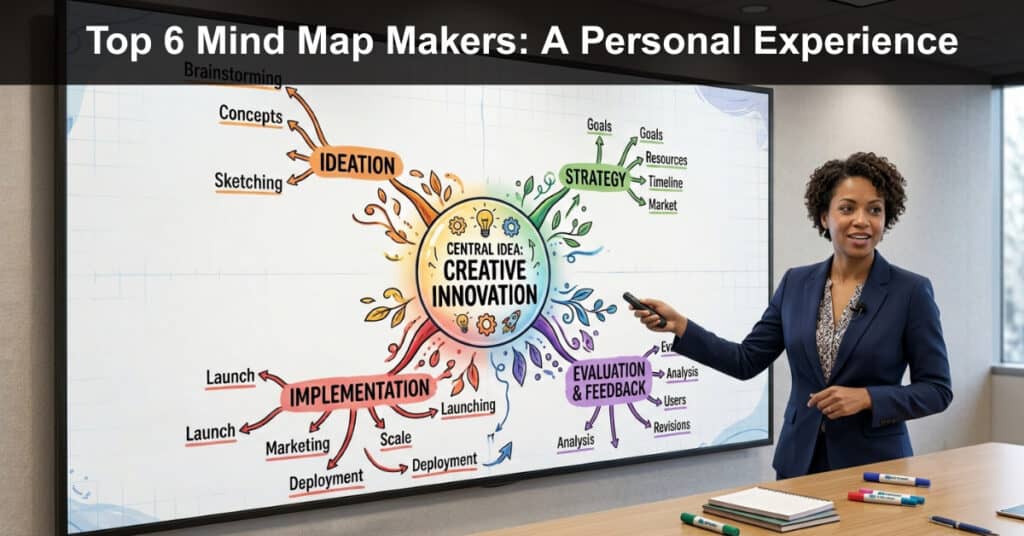
Mind mapping is a powerful tool for organizing your thoughts, brainstorming new ideas, and planning projects visually and intuitively. It lays out connections between concepts, making it easier to see the big picture and break down complex information into manageable pieces. Whether you are a student, a professional, or someone who loves organizing their ideas creatively, a mind map can transform how you work and approach problems.
Mind mapping helps you visually organize information around a central concept, starting with a main idea and branching out into related subtopics with more detail. This method is popular because it aligns with how our brains naturally process information by making meaningful connections. People use mind maps to brainstorm, take notes, plan projects, create study guides, and outline content effectively.
What Is a Mind Map and Why Use It?
A mind map is a diagram that helps you visually organize information around a central idea. You place the main concept at the center and branch out into related subtopics, adding detail as you explore each connection. This structure reflects how the brain naturally associates ideas and processes complex information, making it easier to understand, brainstorm, and retain key concepts.
People use mind maps for a wide range of purposes, including brainstorming ideas, capturing meeting notes, planning projects, building study guides, and outlining books or articles. Because their visual structure makes connections between concepts immediately clear, mind maps can strengthen creativity and significantly improve memory retention. They also help teams solve complex problems faster by sharing ideas and insights in a structured, easy-to-follow format.
Top 6 Best Mind Map Makers
Over the years, a wide range of mind map makers has been tested, each offering distinct strengths for different user needs. After extensive evaluation, the six best tools have been selected based on real-world usability, feature depth, pricing, and platform availability. This guide shares hands-on experience with each option, helping readers quickly identify the right fit for their workflow.
1. MindOnMap
MindOnMap is a user-friendly online mind map maker that works well for beginners and experienced users alike. It is designed to be intuitive with drag-and-drop features that make creating mind maps simple and fast without any prior experience needed. The interface is clean, uncluttered, and thoughtfully organized, which helps you focus entirely on your ideas rather than navigating complicated menus or searching for basic tools.
Pros:
- Exceptionally easy to learn and start using right out of the box with zero training required
- Offers a wide variety of professionally designed templates that help you get started creating mind maps in seconds
- Collaboration features are solid and reliable, making it a great option for group projects and team brainstorming sessions
- Shared mind maps can be edited by anyone who receives the link, simplifying teamwork across remote teams
- Most core functions are available in the free version, making it accessible for users on a tight budget
- Fully web-based with no downloads required, though desktop apps are available for convenience
Cons:
- Fewer advanced resources and integrations compared to premium enterprise-grade tools on the market
Price: Free version available. Paid plans start at $15 per month or $6 per month when paid annually.
Platform: Web-based, Windows, and macOS.
Summary: MindOnMap is an excellent choice for beginners and casual users who want a straightforward mind mapping tool without a steep learning curve or high cost. While it lacks some of the advanced features found in premium alternatives like Lucidchart, it delivers everything most users need for everyday brainstorming and planning at a very reasonable price point.
2. Lucidchart
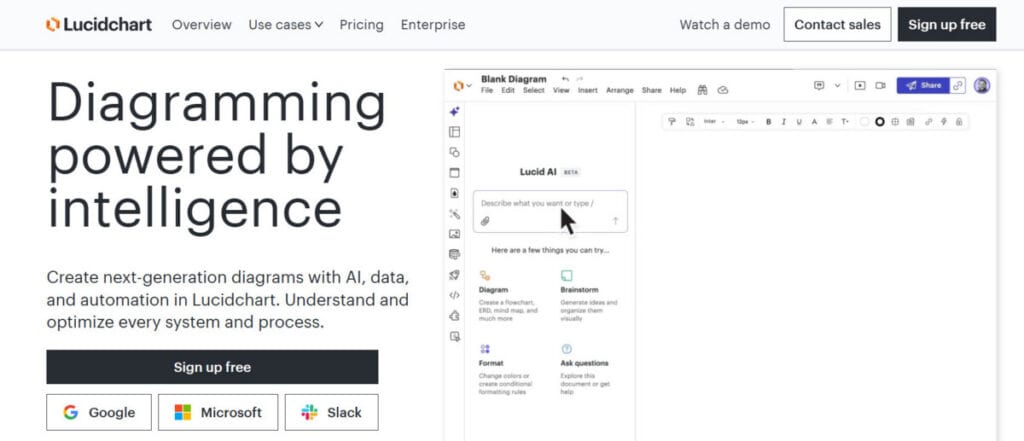
Lucidchart is more than just a mind map maker. It is a powerful, full-featured diagramming tool used by professionals across various industries for flowcharts, wireframes, network diagrams, and detailed mind maps. If you need to create complex visual documentation that goes beyond simple brainstorming, Lucidchart offers the depth, flexibility, and integration capabilities that simpler tools cannot match.
Pros:
- Extremely versatile with a comprehensive range of diagramming options beyond just mind maps
- Excellent real-time collaboration features that allow multiple team members to work on the same document simultaneously
- Integrates seamlessly with popular business tools including Google Drive, Slack, Confluence, and Jira
Cons:
- Can feel overwhelming for new users due to the sheer number of features and options available in the interface
- More expensive than dedicated mind map makers, especially for teams that only need basic mapping functionality
Price: Free version available. Paid plans start at $9/user/month for individuals and $10/user/month for teams
Platform: Web-based.
Summary: Lucidchart is the best choice for professionals and power users who need a versatile diagramming platform that can handle everything from simple mind maps to complex technical diagrams. It may be more tool than necessary for casual users who only want basic mind mapping, but its feature depth and integration ecosystem are unmatched for serious business use.
3. Canva
Canva is widely known as a leading graphic design platform, but it also includes a surprisingly capable mind map maker feature within its ecosystem. Canva’s intuitive drag-and-drop interface and stunning collection of beautifully designed templates make it a favorite for users who prioritize aesthetics and polished visual output in their work presentations and materials.
Pros:
- Visually stunning templates that produce professional, presentation-ready mind maps with minimal effort required
- Extremely easy to use with intuitive drag-and-drop features that feel natural even for complete beginners
- Excellent for creating mind maps that need to look polished and shareable with clients or stakeholders directly
Cons:
- Limited mind mapping-specific features compared to dedicated tools like MindMeister or Lucidchart
- Many advanced features, including premium templates and brand kits, are locked behind the Canva Pro paywall
Price: Free version available. Canva Pro starts at $15.00 per month.
Platform: Web-based, iOS, Android.
Summary: Canva is the top choice for users who need visually impressive mind maps for presentations, client-facing materials, or creative projects where design quality matters as much as the content. However, users who need dedicated mind mapping features like outline view, task management, or deep collaboration may find Canva limited compared to specialized alternatives.
4. MindMup
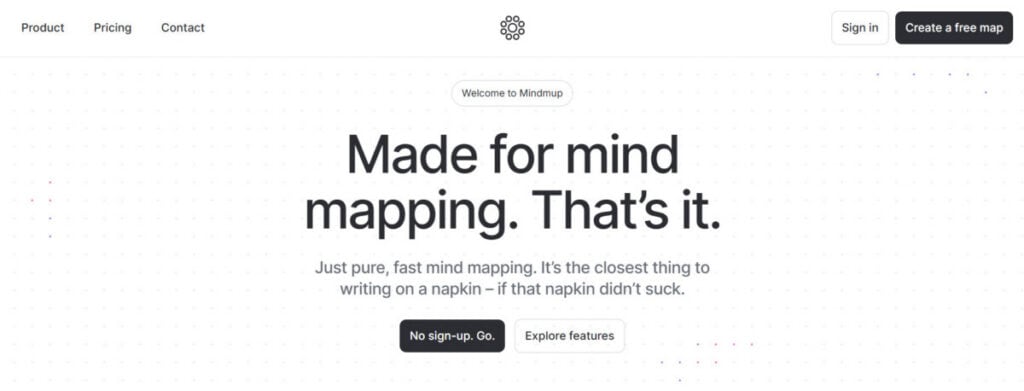
MindMup is a simple, no-frills mind map maker designed specifically for users who need to create quick maps without any distractions or feature bloat. It is lightweight, fast to load, and refreshingly straightforward, making it a go-to choice for minimalists who value speed and simplicity over an abundance of features that they may never actually use in practice.
Pros:
- A free tier that is actually useful with solid basic features that cover most simple mind mapping needs adequately
- Fast and lightweight performance that loads instantly even on slower internet connections and older devices
- Integrates smoothly with Google Drive for effortless cloud saving and sharing across devices and team members
Cons:
- Lacks advanced features like templates, themes, and rich formatting options found in most premium tools
- The interface is quite basic and visually minimal, which may feel dated to users accustomed to modern design
Price: Free, with premium plans starting at $6 per month for personal use to $9 per month billed annually for teams (minimum 3).
Platform: Web-based.
Summary: MindMup is an excellent choice for users who need a quick, no-distraction mind mapping tool for personal use or simple projects. It is not the most feature-rich or visually polished option available, but it gets the job done reliably without any unnecessary complexity, learning curve, or cost barrier for basic mapping needs.
5. MindMeister
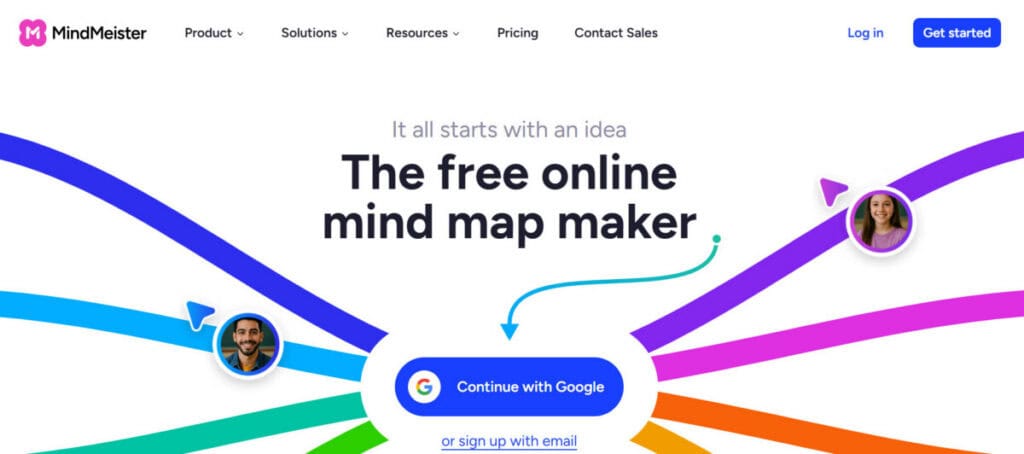
MindMeister is a well-known and widely respected online mind map maker recognized primarily for its outstanding collaboration features and real-time teamwork capabilities. It is purpose-built to help teams brainstorm, plan, and organize together effectively regardless of physical location, making it a top choice for group projects and distributed team-based ideation sessions across organizations.
Pros:
- Exceptional real-time collaboration tools that allow multiple users to edit and comment on mind maps simultaneously
- Intuitive and user-friendly interface that is easy to navigate even for first-time users joining a team workspace
- Good selection of professionally designed templates that help teams get started quickly without building from scratch
Cons:
- The free version is severely limited to only three mind maps, which is restrictive even for personal use
- Can become expensive for larger teams, especially when compared to alternatives with similar collaboration features
Price: Free version available. Paid plans start at $3.50/user/month for personal use and $5.50/user/month for small teams.
Platform: Web-based, iOS, Android.
Summary: MindMeister is the go-to tool for teams and collaborative brainstorming sessions where real-time co-creation is essential. It is hard to beat if you regularly work on group projects that require shared ideation. You may also explore project management tools as complementary alternatives for planning and organizing your work beyond mind mapping.
6. Bubbl.us
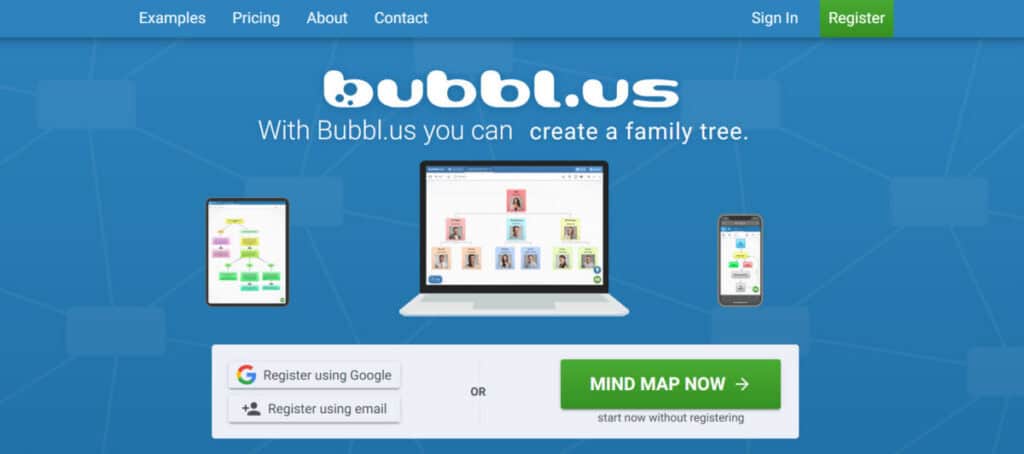
Bubbl.us is a straightforward, no-nonsense online mind map maker built specifically for personal use or small-scale projects that do not require extensive features. Its simplicity is its biggest strength and main selling point, making it accessible to absolutely anyone who needs to create a basic mind map quickly without signing up for an account or learning a complex user interface with a steep learning curve involved.
Pros:
- Extremely easy to use and highly intuitive with a minimal learning curve that virtually anyone can master in minutes
- No sign-up or account creation required to start creating a basic mind map immediately on the website
- Affordable pricing for individual users with a generous free tier and low-cost premium plans available
Cons:
- Limited customization options for users who want to control colors, fonts, layouts, and visual styling in detail
- Lacks advanced features found in competing tools such as templates, integrations, and presentation modes
Price: Free version available. Paid plans start at $$4.91 /month.
Platform: Web-based.
Summary: Bubbl.us is ideal for users who need a simple, accessible, no-cost tool for occasional personal mind mapping projects. It lacks the advanced features, templates, and collaboration capabilities that power users and teams require, but it excels at being instantly usable by anyone without any barriers to entry or learning investment needed.
Part 3: Comparison Table
| Tool | Best For | Pricing | Platform | Ease of Use |
|---|---|---|---|---|
| MindOnMap | Beginners | $6/month | Web, Windows, macOS | Very easy |
| Lucidchart | Professionals | $9/month | Web-based | Moderate |
| Canva | Aesthetics | $15/month | Web, macOS, Windows | Very easy |
| MindMup | Minimalists | $6 /month | Web-based | Very easy |
| MindMeister | Collaboration | $$3.50/month | Web, macOS, Windows | Easy |
| Bubbl.us | Personal projects | $4.91/month | Web-based | Very easy |
Conclusion
Mind mapping is a fantastic way to organize your thoughts, brainstorm new ideas, and plan projects more effectively daily. Whether you are new to mind mapping or a seasoned professional, there is a tool on this list that fits your specific needs, workflow, and budget perfectly. From the simple Bubbl.us to the feature-rich Lucidchart, each option brings something unique and valuable to the table.
Take your time to explore these options and consider what matters most to you, whether it is ease of use, collaboration features, pricing, or visual quality. The right mind map maker can transform how you capture and organize your ideas, making you more productive and creative in the process. Happy mind mapping with the tool that best suits your personal style and needs.
Frequently Asked Questions
What is the best mind map maker for beginners?
MindOnMap is the best choice for beginners due to its intuitive interface, drag-and-drop functionality, and generous free version. It requires no learning curve and includes templates to help you get started creating mind maps immediately.
Which mind map maker is best for team collaboration?
MindMeister offers the best collaboration features for teams, including real-time editing, comments, and sharing options. Lucidchart also provides strong collaboration tools, especially for users who need diagramming capabilities beyond mind maps.
Are there any free mind map makers available?
Yes, all six tools covered in this article offer free versions. MindMup and Bubbl.us have the most generous free tiers, while MindMeister limits free users to three mind maps. Canva and Lucidchart also offer solid free options with paid upgrades for advanced features.
Which mind map maker works offline?
Most mind map makers covered here are web-based and require an internet connection. However, MindOnMap offers desktop apps for Windows and macOS that may provide offline capabilities. For offline use, consider dedicated desktop software like XMind or FreeMind.
Can I use these mind map makers for project management?
Yes, mind maps are excellent for project planning, task organization, and brainstorming. Tools like Lucidchart and MindMeister are particularly well-suited for project management workflows. You can also explore dedicated project management software for more comprehensive planning features.
Suggested articles:
- 27 Concept Map Templates with Free Examples
- 10 Free Perceptual Map Templates
- 15 Empathy Map Templates

Daniel Raymond, a project manager with over 20 years of experience, is the former CEO of a successful software company called Websystems. With a strong background in managing complex projects, he applied his expertise to develop AceProject.com and Bridge24.com, innovative project management tools designed to streamline processes and improve productivity. Throughout his career, Daniel has consistently demonstrated a commitment to excellence and a passion for empowering teams to achieve their goals.