
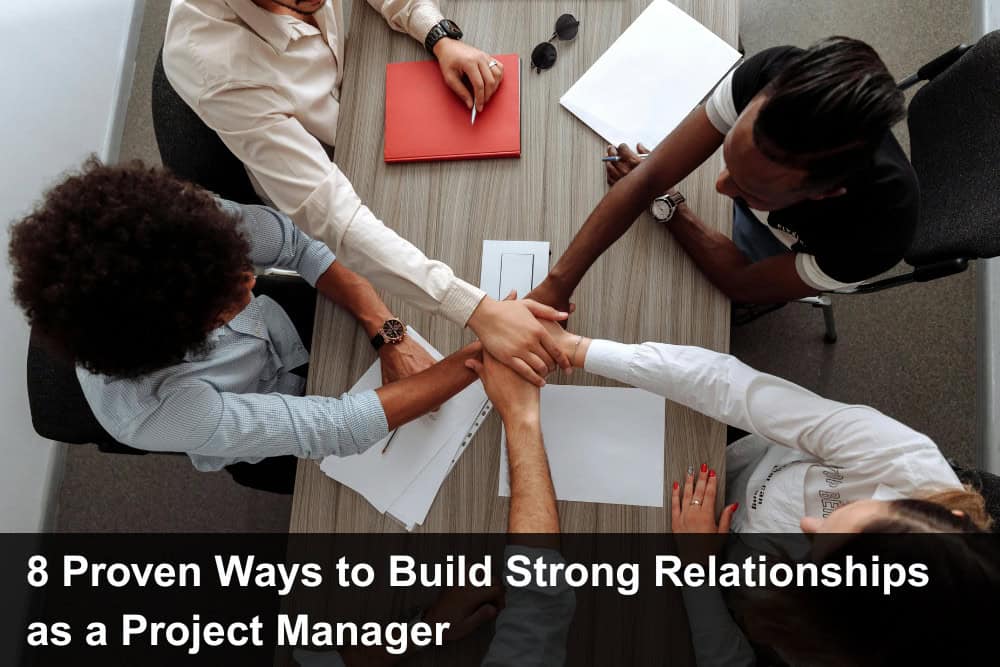
In project management, success rarely comes from technical skills alone. While timelines, budgets, and deliverables matter, your ability to build strong relationships within your team, across departments, and with external stakeholders is often the true differentiator. Relationships create the glue that holds projects together during uncertainty, scope changes, and tight deadlines.
Whether you’re a seasoned professional or new to the role, strengthening your relational skills is a lifelong asset. Below are eight proven ways to build powerful connections as a project manager, complete with real-world examples and actionable takeaways.
1. Build Trust Through Everyday Interactions
Trust isn’t a one-time milestone—it’s an outcome of everyday behavior. As a project manager, you earn trust by being consistent, accountable, and respectful. It shows up in how you handle disagreements, meet deadlines, follow through on promises, and give credit where it’s due. Small acts of reliability and empathy can build a solid foundation over time. When trust is present, people are more likely to share concerns early, take ownership of their work, and collaborate more effectively, making your job smoother and your projects more resilient.
Example: Let’s say your QA lead flags a serious bug two hours before a product demo. Rather than blame or panic, you thank them for catching it and swiftly shift the team’s focus to resolving it. Your calm response builds psychological safety, and the team feels confident bringing issues to you in the future.
Action Steps:
- Use people’s names often.
- Avoid overpromising—if you commit to something, deliver.
- Normalize feedback sessions to show you value input.
2. Discover What Truly Matters to Others
Strong relationships are built on understanding. When you know what motivates others—whether it’s recognition, autonomy, learning, or security—you can align your communication, delegation, and support to meet their needs. This doesn’t mean becoming a therapist; it means being observant and curious enough to spot what drives each person. Pay attention to what they talk about, how they react to different situations, and what brings them energy or stress. People are more loyal to leaders who see them as individuals, not just roles on a chart.
Example: Your data analyst always lights up when talking about machine learning. Though their day-to-day work involves dashboards, you ask them to lead a data science exploration for an upcoming initiative. That move increases their engagement, boosts performance, and deepens your professional bond.
Action Steps:
- Ask open-ended questions like: “What part of this project excites you the most?”
- Pay attention to body language and recurring themes.
- Follow up on previous conversations (“Hey, how’s that course you mentioned going?”).
3. Be Generous With Help and Connections
Relationships thrive when people feel supported. Being generous doesn’t always mean giving away hours of your time—it can be as simple as making a helpful introduction, sharing a useful resource, or volunteering your expertise during a tough decision. When you show up for others without expecting immediate returns, you create a reputation as someone people can count on. Over time, that goodwill becomes a powerful network effect—people will be more likely to help you when you need it, because you’ve already extended that courtesy.
Example: A designer from another team expresses interest in the project work. You connect them with your UX lead, who happens to be short-staffed. That small act opens up cross-team collaboration, earns you respect from leadership, and helps the designer grow in a new area.
Action Steps:
- Introduce contacts who could benefit from knowing each other.
- Share helpful articles or tools based on others’ interests.
- Offer mentorship or just a listening ear, especially to junior staff.
4. Practice Intentional Curiosity
Curiosity is one of the most underrated leadership traits. When you show authentic interest in others’ perspectives, experiences, and suggestions, you make them feel valued. This doesn’t mean interrogating them—it means approaching conversations with a desire to learn rather than control. As a project manager, curiosity helps you ask better questions, uncover hidden risks, and avoid assumptions that could derail a project. It also deepens trust and makes people more open to dialogue, especially in tense or uncertain moments.
Example: During a retrospective, instead of simply reviewing the sprint board, you ask, “What blockers did we not see coming—and how could we have spotted them earlier?” That question sparks new insights and creates space for team members to reflect more honestly.
Action Steps:
- Ask, “How did you approach this at your previous company?” or “What would you do differently?”
- Listen more than you speak.
- Keep a running list of what motivates your team members and revisit it during 1:1s.
5. Ask Questions—Even When You Know the Answer
It’s tempting to step in with solutions, especially when you’ve seen a similar problem before. But holding back and asking questions instead empowers others to think critically and grow. It also demonstrates humility—an underrated trait in high-stakes environments. When you consistently ask thoughtful questions, you encourage creativity, build engagement, and uncover alternative perspectives. Even when you have a clear answer in mind, resisting the urge to speak first opens the door to richer conversations and stronger collaboration.
Example: A team member proposes a feature you know will introduce scope creep. Instead of shutting it down, you ask, “What’s the impact if we delay that to phase two?” The discussion surfaces timeline concerns and leads to a compromise everyone supports, without shutting down innovation.
Action Steps:
- Use the Socratic method in problem-solving sessions.
- Avoid rhetorical questions—ask with genuine intent to listen.
- Regularly ask, “What do you think?” even if you have a direction in mind.
6. Follow Up and Follow Through
One of the fastest ways to erode trust is by forgetting to follow up. Strong project managers track conversations, deliver on promises, and check in—even when it’s not urgent. These small moments of follow-through show you value people’s time and input. They also build consistency and reliability, especially across long or complex projects. When people know you’ll circle back, they’re more likely to engage openly, contribute ideas, and stick to their commitments.
Example: After a vendor shares pricing concerns during a kickoff call, you email a week later with an updated scope and an offer to renegotiate. That simple follow-up prevents tension, reassures the vendor, and keeps the project on track without last-minute surprises.
Action Steps:
- Send thank-you messages after major milestones.
- Set reminders to check in on personal events (birthdays, vacations, etc.).
- Ask for feedback: “How can I support you better next time?”
7. Celebrate Wins—Big and Small
Recognition is a basic human need, and too often, it’s overlooked in fast-paced environments. Acknowledging people for their effort and impact, even informally, can boost morale and strengthen relationships. It doesn’t require grand gestures. Simple public praise, thoughtful messages, or celebrating small milestones can create a culture of appreciation. When people feel seen, they’re more likely to stay engaged, go the extra mile, and support others on the team. Recognition also reinforces the behaviors and values you want to see repeated.
Example: At the end of a tough sprint, you write a Slack post recognizing your junior developer’s refactoring work that saved the team hours of debugging. That message earns them praise from peers and leadership, boosting confidence and motivation for future work.
Action Steps:
- Include a “Win of the Week” slide in your project updates.
- Write a public LinkedIn kudos post when someone exceeds expectations.
- Advocate for deserving team members during performance reviews or promotions.
8. Adapt Your Communication Style
Not everyone communicates or receives information in the same way. Some people are visual learners, others prefer bullet points. Some thrive in brainstorming meetings; others need time to process and respond. The most effective project managers tailor their communication based on who they’re talking to. This doesn’t mean being inauthentic—it means being aware of others’ preferences and adjusting accordingly to remove friction. When you adapt your style, you show empathy and emotional intelligence, both critical traits for leadership and trust-building.
Example: A senior stakeholder rarely responds to email updates but consistently accepts calendar invites. You switch from emailing detailed briefs to scheduling short syncs with agendas. As a result, you get faster decisions, fewer misunderstandings, and a stronger working relationship.
Action Steps:
- Ask: “How do you prefer updates—email, dashboard, Slack?”
- Mirror energy levels and language style without being inauthentic.
- Be clear, concise, and timely in all communications.
Final Thoughts
At its core, project management is fundamentally about people. While tools, methodologies, and technologies continuously evolve, the human element remains constant and critical. The ability to foster trust, communicate clearly, and build meaningful, lasting relationships is what sets exceptional project managers apart. These skills are the foundation for navigating challenges, resolving conflicts, and inspiring collaboration within teams and across stakeholders.
By consistently applying these eight strategies, you cultivate an environment where individuals feel valued, heard, and motivated to contribute their best. This not only leads to the successful delivery of projects but also creates a culture of mutual respect and teamwork. Over time, you build teams that are not only effective but also eager to work together again, fostering long-term success and professional growth for everyone involved. Project management, at its best, is about creating connections that endure beyond the scope of any single project.
Suggested articles:
- 15 Benefits of Relationship-Building Activities
- Guide to Becoming a Successful Project Manager
- Effective Strategies for Recognizing Team Efforts

Daniel Raymond, a project manager with over 20 years of experience, is the former CEO of a successful software company called Websystems. With a strong background in managing complex projects, he applied his expertise to develop AceProject.com and Bridge24.com, innovative project management tools designed to streamline processes and improve productivity. Throughout his career, Daniel has consistently demonstrated a commitment to excellence and a passion for empowering teams to achieve their goals.