
Risk management is one of the most critical and most misunderstood disciplines in project management. When most people hear the word “risk,” they instinctively think of threats, setbacks, and damage control. But risk is not inherently negative. In project management, risk is simply an uncertain event or condition that, if it occurs, will have an effect on the project’s objectives, and that effect can be positive just as easily as it can be negative. Positive risk management is the practice of identifying and actively leveraging these upside uncertainties to improve project outcomes.
Organizations that embrace this approach consistently improve their chances of success, unlock unexpected opportunities, and build more resilient, adaptable project teams. This article explores what positive risk is, how to identify it, and how to respond to it productively.
Risk Management in a Nutshell
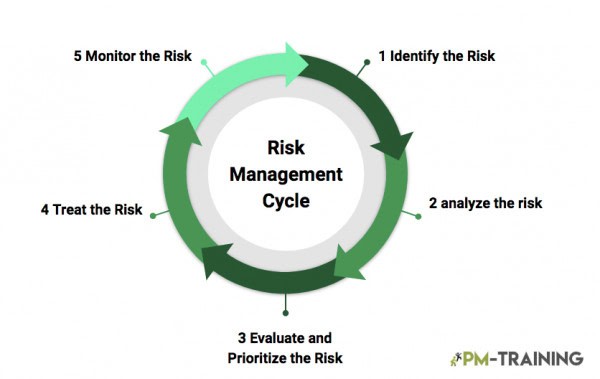
Before exploring positive risk specifically, it is important to understand what risk management involves across the full lifecycle of a project. Risk management is the ongoing process of identifying, analyzing, and responding to risks, both positive and negative, in a structured and deliberate way. It is not a one-time activity confined to the planning stage. It should be embedded into every phase of the project, from initiation through closure.
The benefits of a well-executed risk management process are substantial:
- It helps organizations avoid or mitigate losses before they occur, reducing the likelihood of costly surprises late in the project.
- It improves the quality of decision-making by giving project managers a clearer picture of the uncertainties they are navigating and the options available to them.
- It increases profitability by enabling teams to act on opportunities that less prepared organizations would miss entirely.
- It builds organizational resilience, helping teams adapt more effectively to change and uncertainty throughout the project lifecycle.
Understanding risk management in its full scope, including its positive dimension, is what separates reactive project managers from truly strategic ones.
What Makes a Risk Positive or Negative in Project Management?
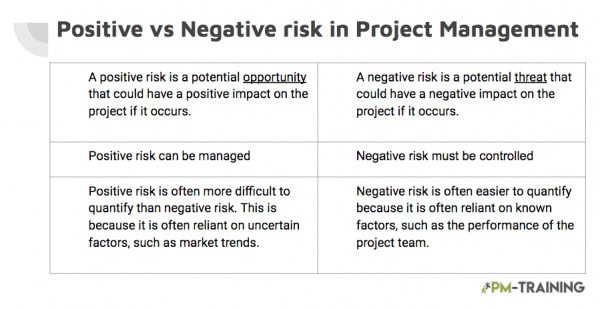
Risk in project management can be classified into two fundamental categories: positive risk, commonly referred to as opportunity, and negative risk, commonly referred to as threat. Both types can have a significant impact on a project, but they require different management strategies and mindsets.
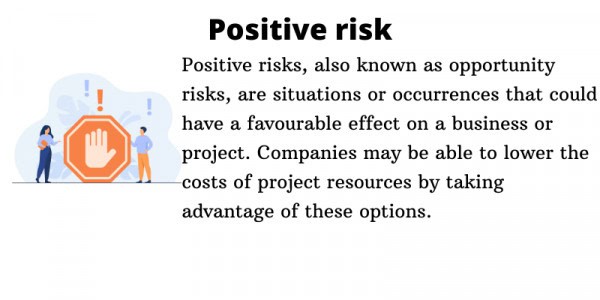
Positive risks are uncertain events or conditions that, if they occur, would improve the project in some meaningful way. They represent upside potential, chances to make the project more efficient, more effective, or more successful than originally planned. Positive risks should be actively encouraged and pursued wherever possible.
- A new technology becoming available mid-project that could significantly improve the team’s productivity or the quality of the final deliverable.
- A key resource becoming available ahead of schedule, creating an opportunity to accelerate delivery or enhance scope without additional cost.
Negative risks are uncertain events or conditions that, if they occur, would harm the project, causing delays, increasing costs, reducing quality, or threatening the project’s objectives entirely. Negative risks should be minimized, mitigated, or transferred wherever possible.
- A key supplier going out of business mid-project, potentially delaying the delivery of critical components.
- A sudden change in regulatory requirements that forces a redesign of work already completed.
The ability to distinguish clearly between positive and negative risk, and to respond to each appropriately, is a foundational skill for any project manager committed to delivering consistent, high-quality results.
Identifying Positive Risks in Project Management
Identifying positive risks requires the same rigor and structured thinking that goes into identifying threats. Organizations must be able to recognize, assess, and respond to positive risks before the window of opportunity closes. Here are the key principles to follow when identifying positive risks:
- Look for Risks That Improve the Project: The first indicator of a positive risk is its potential to make the project more efficient, effective, or valuable. These are opportunities to enhance outcomes beyond what was originally scoped, and they deserve the same level of attention as any threat in your risk register.
- Focus on Manageable Risks: Positive risks worth pursuing are those that fall within the project manager’s sphere of influence and control. Opportunities that are entirely dependent on external factors outside the team’s reach are harder to exploit and should be assessed carefully before resources are committed to them.
- Ensure Relevance to Project Goals: Not every positive uncertainty is worth pursuing. Positive risks should be directly relevant to the project’s goals and objectives. If an opportunity does not contribute meaningfully to the project’s defined outcomes, it risks becoming a distraction rather than an advantage.
- Document and Track Them Formally: Positive risks belong in the project’s risk register alongside threats. Documenting them formally ensures they are monitored, assigned to a responsible owner, and reviewed regularly as the project evolves.
How to Productively Respond to Positive Risk During a Project
When a positive risk is identified, the project manager must decide how to respond. The right response depends on the nature of the opportunity, the resources available, and the potential impact on the project’s objectives. Four primary response strategies are available:
- Exploit: The most proactive response to a positive risk. Exploiting means taking deliberate steps to ensure the opportunity occurs and that the project benefits from it fully. This might involve reallocating resources, adjusting the schedule, or changing the approach to maximize the upside potential of the identified risk.
- Enhance: When full exploitation is not feasible, the team can focus on increasing the probability or impact of the positive risk occurring. This involves identifying the key drivers of the opportunity and taking targeted actions to strengthen them, even if the outcome cannot be guaranteed.
- Share: Positive risks can sometimes be shared with a third party who is better positioned to exploit them. This might involve partnering with another organization, bringing in a specialist, or engaging a vendor who has the specific capability needed to capture the opportunity effectively.
- Accept: When the cost or effort of actively pursuing a positive risk outweighs the potential benefit, the team may choose to accept risks passively, acknowledging the opportunity exists and remaining open to benefiting from it if it occurs naturally, without investing specific resources to make it happen.
Examples of Positive Risk in Project Management
Positive risks appear in many forms across different project types and industries. Recognizing them in practice is an important skill for any project manager. Common examples include:
- New Technology Outperforming Expectations: A technology adopted for the project delivers significantly better results than anticipated, creating an opportunity to improve efficiency, reduce costs, or enhance the quality of the deliverable beyond the original plan.
- Working with New or Unproven Vendors: Engaging a new vendor carries inherent uncertainty, but it also opens the possibility that the vendor will exceed expectations, delivering superior quality, faster turnaround, or added value that a familiar but complacent supplier would not have provided.
- A Beneficial Change in Project Scope: A policy change or strategic shift introduces new requirements that, while initially disruptive, ultimately align the project more closely with organizational priorities and increase its overall value to stakeholders.
- Unexpected Additional Resources: The project team receives additional budget, personnel, or tooling that was not part of the original plan, creating an opportunity to accelerate delivery, expand scope, or invest in quality improvements that would otherwise not have been possible.
- A Schedule Change That Creates Capacity: A shift in the project timeline that frees up time for the team to address technical debt, conduct additional testing, or refine deliverables, resulting in a stronger, more polished final product than the original schedule would have allowed.
Video About Positive vs Negative Risks on Projects
Not sure how positive and negative risks differ in practice? Watch this quick video for a clear, visual breakdown of both risk types and the key strategies project managers use to handle each one.
Conclusion
Positive risk management is not an optional add-on to a well-run project; it is a core discipline that separates good project managers from great ones. By recognizing that uncertainty cuts both ways, and by applying the same structured thinking to opportunities that most teams reserve exclusively for threats, project managers can unlock outcomes that go well beyond what the original plan envisioned.
The strategies outlined in this article, identifying, assessing, and responding to positive risks through exploitation, enhancement, sharing, or acceptance, provide a practical framework for turning uncertainty into advantage. Teams that embrace positive risk management consistently deliver stronger results, build greater stakeholder confidence, and develop the adaptability needed to thrive in an increasingly complex and unpredictable project environment.
Frequently Asked Questions
What is positive risk in project management?
Positive risk in project management refers to an uncertain event or condition that, if it occurs, would have a beneficial impact on the project’s objectives. Rather than representing a threat to be mitigated, positive risks are opportunities to be identified, assessed, and actively leveraged to improve project outcomes, efficiency, or overall success.
What are examples of positive risk in project management?
Common examples include a new technology being implemented more successfully than expected, resulting in improved efficiency; a new product being exceptionally well-received by the market, driving increased sales; or an unplanned resource becoming available that allows the team to accelerate delivery or enhance the quality of the final deliverable.
What are the differences between positive and negative risk in project management?
Positive risks, or opportunities, have the potential to improve project outcomes if they occur and should be actively pursued. Negative risks, or threats, have the potential to harm the project and should be minimized or mitigated. Both require structured management, but the strategies and responses applied to each are fundamentally different.
How should a project manager respond to a positive risk?
A project manager can respond to a positive risk in four ways: exploit it by taking deliberate steps to ensure it occurs; enhance it by increasing the probability or impact of the opportunity; share it with a third party better positioned to capitalize on it; or accept it passively and benefit from it if it occurs naturally without dedicated effort.
Why do many project managers overlook positive risks?
Many project managers focus exclusively on threats because risk management is traditionally framed around damage limitation. This narrow view causes teams to miss valuable opportunities that could significantly improve project outcomes. Building a risk management culture that treats opportunities with the same rigor as threats is essential for maximizing the full potential of any project.
Suggested articles:
- Common Operational Risks and How to Address Them Effectively
- 7 Best Strategies for Managing Unexpected Project Risks
- Quickly Calculate Risk Propinquity In Project Management

Shane Drumm, holding certifications in PMP®, PMI-ACP®, CSM, and LPM, is the author behind numerous articles featured here. Hailing from County Cork, Ireland, his expertise lies in implementing Agile methodologies with geographically dispersed teams for software development projects. In his leisure, he dedicates time to web development and Ironman triathlon training. Find out more about Shane on shanedrumm.com and please reach out and connect with Shane on LinkedIn.