

A Hardening Sprint is an integral part of the agile framework and a critical step in preparing software for release. It is a time-boxed event, typically lasting between one and four weeks, in which an agile team focuses exclusively on stabilizing, testing, and refining a product before it goes live. Unlike standard development sprints, a Hardening Sprint is not about building new features. It is about ensuring that everything already built is working correctly, thoroughly tested, and ready for production.
Used at the right moment in a project lifecycle, a Hardening Sprint is one of the most effective tools an agile team has for delivering a high-quality, reliable product and avoiding the costly last-minute surprises that derail launches and damage stakeholder confidence.
Scope and Activities of a Hardening Sprint
The specific scope of a Hardening Sprint will vary depending on the size and complexity of the project. However, most Hardening Sprints are organized around three core activity areas: code review, testing, and documentation. Each plays a distinct and essential role in preparing the product for release.
Code Review
Code review is a foundational activity within the Hardening Sprint. Its primary purpose is to identify and resolve any potential security vulnerabilities, technical debt, or quality issues in the codebase before the product is deployed to production. The process begins with a comprehensive security code audit, followed by a line-by-line review in which each section of code is examined for potential weaknesses or errors.

Any areas identified as insecure or problematic are addressed and fixed before deployment. A rigorous code review at this stage provides a critical final checkpoint that helps ensure the codebase is secure, stable, and free from vulnerabilities that could surface in production.
Testing
Testing is at the heart of every Hardening Sprint. The goal is to verify that all of the product’s features and functionality are working as expected before the product goes live. The team conducts a comprehensive series of tests that typically includes unit testing, integration testing, system testing, and user acceptance testing. Each layer of testing serves a different purpose, from validating individual components to confirming that the product as a whole meets the requirements of the end user.

In addition to identifying and resolving defects, the testing phase allows the team to fine-tune the product and make any final adjustments needed before launch. This thorough approach significantly reduces the risk of post-release issues and ensures the product is genuinely ready for users.
Documentation
Documentation is an often-underestimated component of the Hardening Sprint, but it plays an important role in the long-term health of the project. A Hardening Sprint provides a dedicated opportunity to audit existing documentation, identify gaps, and write or revise content to ensure it accurately reflects the current state of the product.
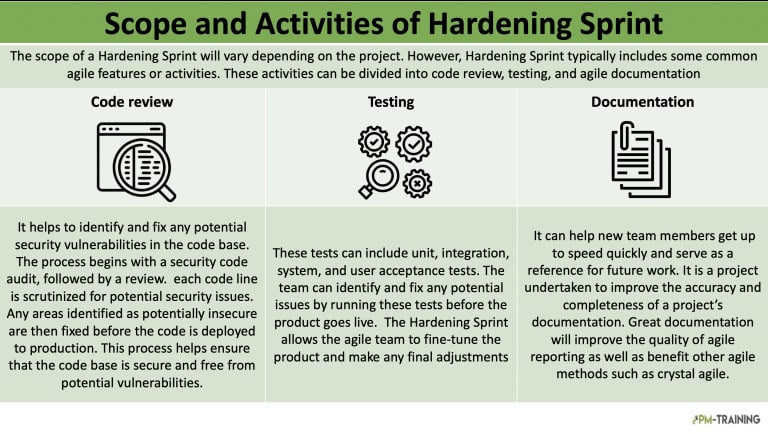
Well-maintained Agile documentation helps new team members get up to speed quickly, supports future development work, and improves the quality of agile reporting. It also benefits other agile methodologies that rely on clear, accessible project records. While documentation work can be demanding, the investment pays dividends in improved team communication, greater organizational clarity, and a stronger foundation for ongoing project management.
When to Use a Hardening Sprint
As a general rule, a Hardening Sprint should be considered whenever significant changes or additions are being made to a product. Specific scenarios where a Hardening Sprint is appropriate include:
- Before Launching a New Feature: When a major new feature is being added to an existing product, a Hardening Sprint ensures that the new functionality integrates correctly with existing components and performs as expected under real-world conditions.
- Before Releasing a New Product Version: Any time a new version of a product is being prepared for release, a Hardening Sprint provides the structured validation needed to confirm that all new and existing features are working correctly before the update reaches users.
- After a Period of Intensive Development: Following a series of rapid development sprints, technical debt and untested code can accumulate. A Hardening Sprint provides the dedicated time and focus needed to address these issues systematically before they compound into larger problems.
- When Preparing for a High-Stakes Launch: For product releases with significant business or reputational implications, a Hardening Sprint offers an additional layer of assurance that the product is stable, secure, and ready for the scrutiny of a broad user base.
Benefits of a Hardening Sprint
Investing in a Hardening Sprint before a product release delivers tangible benefits that extend well beyond the immediate launch. Key advantages include:
- Higher Product Quality: By dedicating focused time to identifying and fixing bugs, vulnerabilities, and performance issues before release, teams significantly reduce the risk of defects reaching end users. A cleaner, more stable product builds credibility and user trust from day one.
- Improved Communication Between Developers and Testers: The collaborative nature of a Hardening Sprint brings developers and testers into closer alignment. Working together to identify and resolve issues ensures that everyone shares the same understanding of the product’s current state and what needs to be done before launch.
- Stronger Stakeholder Trust: Demonstrating a commitment to quality through a structured pre-release stabilization process signals to stakeholders that the team takes delivery seriously. This investment in getting the product right builds confidence and strengthens the working relationship between the development team and the broader organization.
- Reduced Post-Release Risk: A thorough Hardening Sprint reduces the likelihood of critical issues surfacing after launch — issues that are always more costly and disruptive to fix in production than they would have been to catch before release.
- A Stronger Agile Team Culture: The shared focus and collective accountability of a Hardening Sprint reinforce the collaborative values that underpin effective agile teams, fostering an agile team culture of quality, ownership, and continuous improvement.
Alternatives to a Hardening Sprint
While a Hardening Sprint is the preferred approach for pre-release stabilization in agile, there are situations where it may not be practical. In those cases, the following alternatives can provide a comparable level of quality assurance:
Soft Launch
A soft launch involves releasing the product to a limited subset of users rather than deploying it to the full user base all at once. Features are gradually rolled out, allowing the team to gather real-world feedback, identify any issues, and make corrections before the product reaches a wider audience.
This approach reduces the risk associated with a full launch while still creating an early feedback loop with real users. Soft launching has become an increasingly popular alternative to the Hardening Sprint, particularly for teams operating in fast-moving environments where a dedicated stabilization sprint may not be feasible.
Beta Testing
Beta testing involves releasing the product to a dedicated group of testers, often external users, who put it through its paces under real-world conditions before the general release. This process allows developers to catch bugs and usability issues that internal testing may have missed, providing a valuable external perspective on product quality.
While beta testing can be time-consuming and resource-intensive, it is a proven method for improving product stability and gathering actionable user feedback before a full launch. When executed well, it can surface critical issues that would otherwise only emerge under the unpredictable conditions of a real-world release.
Video About Hardening Sprint
Not everyone agrees on the value of Hardening Sprints. In this video, we explore the controversy, from the genuine benefits they bring to agile teams, to the criticisms they attract, and the pitfalls that can make them go seriously wrong.
Conclusion
A Hardening Sprint is one of the most valuable investments an agile team can make in the quality and reliability of its product. By dedicating focused time to code review, comprehensive testing, and documentation before a release, teams dramatically reduce the risk of post-launch issues and demonstrate a genuine commitment to delivering work that meets the highest standards.
Whether you opt for a full Hardening Sprint or an alternative approach such as a soft launch or beta testing, the principle remains the same: taking deliberate, structured steps to stabilize and validate your product before it reaches users is not a luxury; it is a core responsibility of professional agile delivery. Teams that build this discipline into their process consistently ship better products, earn stronger stakeholder trust, and set themselves up for long-term success.
FAQs About Hardening Sprints in Agile Project Management
What is the main purpose of a hardening sprint?
The main purpose of a Hardening Sprint is to stabilize and validate a product before it is released to users. Rather than building new features, the team focuses entirely on fixing bugs, reviewing code, completing testing, and ensuring the product meets the quality standards required for a successful launch.
How long does a hardening sprint typically last?
A Hardening Sprint typically lasts between one and four weeks, depending on the size and complexity of the project. The duration should be long enough to thoroughly address all outstanding issues but short enough to maintain momentum and avoid delaying the release beyond what is necessary or practical.
Who is involved in a hardening sprint?
A Hardening Sprint involves the full agile team, including developers, testers, and the product owner. Developers focus on resolving bugs and completing code reviews, testers conduct comprehensive testing across all product areas, and the product owner provides guidance on priorities to ensure the most critical issues are addressed before launch.
Can gold plating occur during a hardening sprint?
Yes, gold plating can occur during a Hardening Sprint if team members use the stabilization period as an opportunity to add unrequested features or enhancements. To prevent this, the team should maintain a strict focus on the defined scope of the sprint and resist any temptation to introduce new functionality outside the agreed objectives.
How does a hardening sprint differ from a regular sprint?
A regular sprint is focused on building and delivering new features or functionality. A Hardening Sprint, by contrast, is focused entirely on stabilization, fixing defects, completing testing, and preparing the product for release. No new features are introduced, and the team’s sole objective is ensuring the existing product is release-ready.
Suggested articles:
- 25 Sprint Retrospective Examples for Scrum Masters
- 5 Sprint Planning Templates Word & XLS
- 9 Free Sprint Review Templates – Word, Google Docs

Shane Drumm, holding certifications in PMP®, PMI-ACP®, CSM, and LPM, is the author behind numerous articles featured here. Hailing from County Cork, Ireland, his expertise lies in implementing Agile methodologies with geographically dispersed teams for software development projects. In his leisure, he dedicates time to web development and Ironman triathlon training. Find out more about Shane on shanedrumm.com and please reach out and connect with Shane on LinkedIn.