
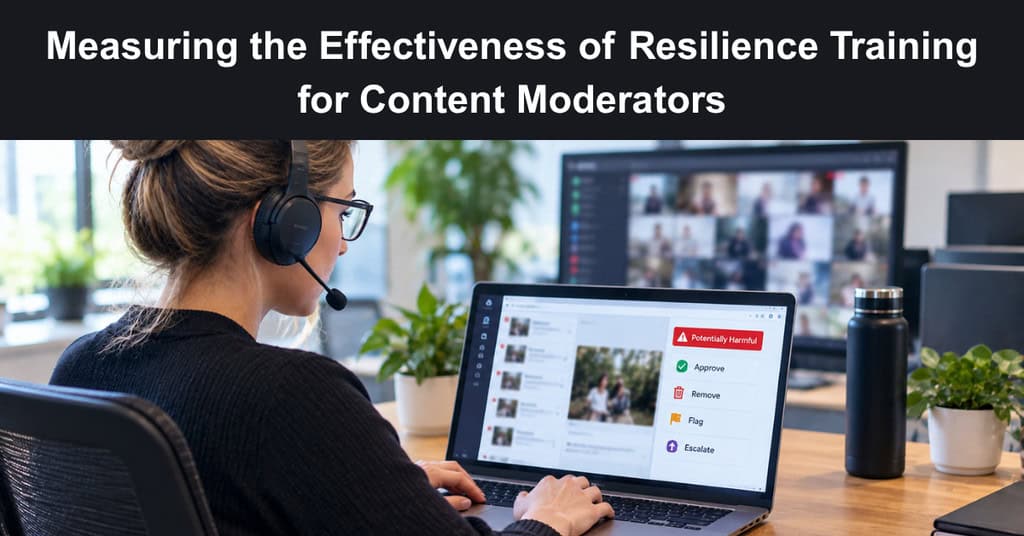
Content moderators review thousands of graphic posts every week, absorbing violence, abuse, and cruelty so the rest of the internet does not have to. Resilience training promises to soften that toll, teaching moderators to recover from distressing exposure rather than accumulate it. Yet many organizations roll out these programs without ever confirming whether they change outcomes, leaving burnout, turnover, and quiet suffering unaddressed.
Measuring effectiveness closes that gap, turning resilience training from a wellness checkbox into a program leadership can defend with data. Real evaluation tracks stress levels, engagement, retention, and long-term psychological health rather than attendance sheets alone. It also reveals which techniques genuinely help moderators cope with disturbing material. The sections below examine how resilience works, how training builds it, and how teams can prove it.
Understanding Resilience in the Workplace
Resilience is the psychological capacity to absorb stress from disturbing content and continue performing at a stable level, rather than eliminating the impact of that content entirely. The World Health Organization recognizes chronic unmanaged workplace stress as burnout, an occupational phenomenon, which is why moderators need structured recovery skills. This section covers what resilience means, why it matters for moderation work, and its core components.
Defining Resilience
Resilience describes your ability to adapt and recover from stressors and challenges you face at work. In a moderation role, it means staying productive, focused, and emotionally steady despite repeated exposure to disturbing material. It is not about feeling nothing when reviewing harmful content, but about processing that reaction and continuing to function effectively afterward.
Three qualities distinguish moderators who sustain this steadiness over time:
- Mental Elasticity: Resilient moderators treat setbacks as temporary rather than permanent, bending under pressure from graphic content instead of breaking, then returning to their normal emotional baseline within hours rather than days.
- Adaptive Flexibility: Rather than relying on one coping method, resilient workers switch strategies as circumstances change, using breathing techniques during a shift and peer debriefs afterward to process what they saw.
- Consistent Follow-Through: Bouncing back also means continuing to meet quality and productivity standards after a difficult review session, rather than letting one disturbing case derail an entire shift’s performance.
Importance for Content Moderators
Resilience carries particular weight for content moderators because the job requires sustained exposure to violence, exploitation, and cruelty that most workplaces never ask employees to absorb. Without deliberate coping skills, this exposure accumulates into chronic stress, emotional numbing, or secondary trauma. Building resilience gives moderators tools to process what they encounter without letting it erode their mental health or job performance over time.
Three concrete benefits explain why employers prioritize this specific skill set:
- Burnout Prevention: Moderators with stronger resilience report fewer symptoms of emotional exhaustion and cynicism, the two hallmarks of burnout that push experienced reviewers out of the role within their first year.
- Higher Job Satisfaction: Employees who can recover from a difficult case tend to describe their work as meaningful rather than draining, which keeps morale intact across long moderation shifts.
- Reduced Turnover: Teams with structured resilience support retain trained moderators longer, cutting the cost and quality risk of constantly onboarding new reviewers unfamiliar with platform policy nuances.
Components of Resilience
Resilience is not a single trait but a combination of interconnected skills that moderators can develop deliberately. Self-awareness helps identify stress triggers before they escalate, adaptability allows quick adjustment to unexpected or graphic content, and strong support networks provide the encouragement needed to recover fully. Together, these components determine how well someone withstands repeated exposure to disturbing material.
Each of these components reinforces the others during high-pressure sessions:
- Self-Awareness: Recognizing early physical or emotional signs of stress, such as tension or irritability, lets moderators apply coping techniques before a single difficult case turns into a spiral.
- Adaptability: Adjusting quickly to unpredictable content, shifting quotas, or sudden policy changes prevents the rigid thinking that makes stressful moderation queues feel unmanageable over an entire shift.
- Support Networks: Colleagues, supervisors, friends, or family who understand the nature of the work offer perspective and emotional relief that moderators cannot generate entirely on their own.
Key Aspects of Resilience Training Programs
Content moderators often face uniquely challenging situations that can affect their long-term well-being if left unaddressed by their employer. Resilience training for content moderators aims to equip them with practical skills to handle stress effectively, drawing on structured techniques, targeted skill development, cognitive approaches, and mindfulness practices. Each element below plays a distinct role in building that capacity.
Training Techniques
Effective resilience training begins with diverse, practical techniques tailored to the specific pressures moderators face daily. These methods move beyond lecture-style instruction, giving moderators hands-on practice recovering from disturbing content before they encounter it live on the job. The goal is rehearsed composure under pressure, not just theoretical awareness of stress and how it affects performance.
Training programs typically combine several proven methods into one curriculum:
- Role-Playing Scenarios: Simulated exercises recreate realistic moderation decisions, letting moderators practice emotional responses to graphic material in a controlled setting before facing it during a live shift.
- Peer Workshops: Group sessions create dedicated space for active peer learning, building teamwork and normalizing honest conversations about difficult content that moderators might otherwise avoid discussing with supervisors.
- Biofeedback and Stress Exercises: These techniques measure physical responses like heart rate, teaching moderators to recognize and consciously control their body’s reaction to disturbing images during an active review shift.
Skill Development
Developing resilience skills is crucial for managing emotional responses to the stressful situations moderators encounter every shift. It involves honing practical abilities like stress management, effective communication with supervisors, and structured self-reflection after difficult review sessions. These skills compound over time, helping moderators recover faster from each difficult decision and sustain better judgment across long shifts.
Programs typically build these abilities over time through complementary activities:
- Reflection Sessions: Regular check-ins encourage moderators to assess personal growth after difficult shifts, identify recurring stress triggers, and build the confidence needed to handle similar cases going forward.
- Time Management Practices: Structured scheduling techniques help moderators balance heavy review workloads with genuine personal time, reducing the cumulative fatigue that leads to burnout consistently across extended rotations.
- Decision-Making Confidence: Practicing communication and judgment calls in low-stakes settings builds the assurance moderators need to make fast, consistent enforcement decisions during high-pressure queues and peak volume periods.
Cognitive-Behavioral Approaches
Drawing on established cognitive-behavioral techniques, these programs help moderators identify and alter unhelpful thought patterns that develop after repeated exposure to disturbing content. Cognitive restructuring teaches moderators to recognize distorted beliefs and replace them with more balanced ones, which supports mental clarity and steadier decision-making under sustained pressure. Clinical reviews of cognitive-behavioral therapy confirm it remains one of the most evidence-backed tools for stress-related disorders.
Moderators typically apply this cognitive approach through several structured techniques:
- Cognitive Restructuring: Moderators learn to catch automatic negative thoughts triggered by graphic content and replace them with more accurate, less catastrophic interpretations of what they just reviewed.
- Exposure Therapy Techniques: Gradual, supervised exposure to increasingly difficult content reduces the emotional intensity of the reaction over repeated sessions, a method borrowed directly from clinical trauma treatment.
- Thought Journaling: Writing down reactions to disturbing cases immediately after a shift helps moderators separate factual observation from emotional interpretation, a distinction that speeds recovery between demanding shifts.
Mindfulness and Relaxation
Mindfulness practices form an essential part of resilience training, teaching moderators to anchor their attention in the present moment rather than replaying disturbing content. Techniques like meditation and deep breathing reduce anxiety and physiological stress markers, helping moderators regain composure quickly after reviewing graphic material during a shift. These practices show measurable benefits for both emotional wellbeing and sustained work performance.
Programs generally anchor this approach around a few practical techniques:
- Meditation and Deep Breathing: Short guided sessions during breaks lower heart rate and cortisol levels, giving moderators a physiological reset before returning to another queue of graphic material for review.
- Progressive Muscle Relaxation: Systematically tensing and releasing muscle groups teaches moderators to recognize where they physically hold stress, making it easier to release tension before it becomes chronic.
- Grounding Exercises: Simple sensory techniques, like naming visible objects or focusing on physical sensation, interrupt intrusive thoughts and pull attention back to the present after a disturbing case.
Measuring Training Effectiveness
Evaluating resilience training effectiveness starts with clear metrics rather than assumptions about whether a program is working. Frameworks for measuring the ROI of training initiatives offer a useful model, distinguishing between measures that track participation and measures that track genuine psychological change. This process combines quantitative benchmarks, personal feedback, long-term observation, and financial return on investment.
Assessment Metrics
Defining clear assessment metrics helps organizations gauge whether resilience training actually works, rather than relying on anecdotal impressions from managers or trainers. Effective evaluation blends process-oriented metrics that track engagement with outcome-oriented metrics that capture measurable psychological and performance change. Consistent tracking across both categories, repeated at regular intervals, is essential for meaningful, comparable analysis over time.
A complete evaluation framework depends on tracking both metric types:
- Process Metrics: Tracking participation levels, completion rates, and engagement throughout training reveals how actively moderators interact with the material, though it says nothing about lasting psychological change.
- Outcome Metrics: Measuring changes in stress levels, performance quality, and productivity through surveys and performance appraisals shows whether the training changed behavior rather than only raised awareness.
- Comparative Benchmarking: Comparing scores against a baseline collected before training began shows whether observed improvements are real gains or simply normal week-to-week fluctuation in mood and stress.
Qualitative Feedback
Numbers alone cannot capture how moderators actually experience resilience training, which is why qualitative feedback adds essential depth to any evaluation. Personal accounts reveal nuances that surveys miss entirely, including which specific exercises felt useful and which ones felt disconnected from the daily reality of reviewing disturbing content. This feedback also surfaces areas for improvement that leadership might otherwise overlook.
Organizations typically gather this kind of insight through structured channels:
- Interviews and Focus Groups: One-on-one conversations and small group discussions provide nuanced insight into personal experiences and perceived benefits that a standardized survey question could never fully capture in writing.
- Open-Ended Surveys: Written responses encourage moderators to describe what worked and what could improve in their own words, without the constraint of predetermined, rigid answer categories imposed in advance.
- Anonymous Reporting Channels: Confidential submission options give moderators a safe way to flag training gaps or unresolved distress without fear that honesty will affect their standing on the team.
Longitudinal Studies
Longitudinal studies capture what short-term surveys cannot: whether resilience training produces effects that last well beyond the training session itself. These studies follow the same moderators over extended periods, comparing psychological measures at multiple points to separate temporary motivation boosts from genuine, durable behavior change. One recent study tracked 311 moderators over eighteen months, finding that the intervention held burnout and secondary trauma steady.
This kind of tracking typically follows a structured data cycle:
- Data Collection: Gathering measures at multiple intervals, such as before training, immediately after, and again six months or a year later, tracks whether behavior changes actually persist.
- Sustained Trend Analysis: Reviewing resilience training data across all intervals together reveals patterns that a single snapshot misses, showing whether improvements are strengthening, plateauing, or slowly fading over an extended period.
- Attrition Monitoring: Tracking which moderators leave the role during the study period highlights whether resilience training genuinely improves retention or simply delays departures that occur somewhat later.
ROI of Training Programs
Calculating return on investment translates resilience training from a values-driven initiative into a business case that finance and operations leaders can evaluate directly. This means weighing every dollar spent against measurable savings elsewhere in the organization, particularly around turnover, absenteeism, and the hidden cost of moderation errors. A clear ROI case also helps secure budget for future program expansion.
This calculation weighs both direct and indirect costs against benefits:
- Direct Costs: Training materials, certified facilitators, and any technology or infrastructure needed to deliver the program all factor into the upfront investment leadership must justify before rollout.
- Indirect Costs: Moderator downtime during training sessions represents lost review capacity, a real cost even when the training itself carries no direct cash outlay for the organization.
- Benefits: Comparing these costs against reduced turnover, decreased burnout, and improved productivity shows whether the program pays for itself within a single fiscal year of full operation.
Implementing and Sustaining Positive Change
Sustaining resilience among content moderators requires more than a one-time training session; it demands tailored organizational strategies, robust support systems, and well-defined policy development working together continuously. Labor advocates behind mental health protocols for moderators argue that structural change matters as much as individual coping skills. These components together create an environment where growth and resilience keep improving over time.
Organizational Strategies
Organizations drive positive change by prioritizing moderator well-being through clear guidelines, regular assessments, and visible leadership commitment rather than treating wellness as an afterthought. Leadership fosters genuine support by promoting openness and consistent communication about the emotional demands of the job, rather than leaving moderators to manage stress entirely on their own. This consistency signals that leadership takes the work’s toll seriously.
Consistent management support anchors these practices into daily work routines:
- Clear Wellness Guidelines: Written expectations around breaks, content rotation, and support access remove ambiguity about what help is available and when moderators can use it during a shift.
- Mindfulness Integration: Building short mindfulness or stress-reduction breaks into the standard workday, rather than treating them as optional extras, normalizes recovery as part of the job itself.
- Visible Management Encouragement: Managers who openly use these tools themselves, rather than just recommending them, signal that resilience practices are genuinely valued rather than a performative exercise imposed from above.
Continual Support Systems
Ongoing support keeps resilience training effective long after the initial sessions end, since a single workshop cannot sustain psychological health on its own. Peer groups where moderators share experiences openly provide emotional relief and strengthen community bonds, while professional counseling and flexible scheduling reinforce that support at a structural level. This combination matters more than any single intervention offered in isolation.
Several structural supports reinforce resilience well beyond initial training sessions:
- Peer Support Networks: Regular gatherings where moderators discuss shared experiences reduce isolation and build the sense of belonging that significantly affects satisfaction and morale across the entire team.
- Professional Counseling Access: On-demand mental health resources give moderators a confidential outlet for processing severe or disturbing cases without waiting weeks for a scheduled appointment during a crisis.
- Flexible Scheduling: Adjustable shift patterns and rotation away from the most graphic content queues allow moderators to manage recovery time proactively rather than only after visible signs of distress.
Policy Development
Clear, transparent policies give moderators structure and reassurance, reducing the anxiety that comes from unclear workflows or inconsistent expectations around difficult content decisions. Well-defined policies clarify how escalation works, who reviews contested decisions, and what support moderators can access immediately after handling a particularly disturbing case. Policies that evolve with regular feedback stay relevant as new content challenges emerge.
Effective policy development typically rests on several key structural elements:
- Workflow Clarity: Clear documentation of what to do after reviewing severe content removes guesswork during high-stress moments, letting moderators focus on recovery rather than figuring out next steps.
- Escalation Procedures: Defined paths for flagging particularly disturbing material to a supervisor ensure no moderator has to absorb the most extreme content without immediate, readily available backup.
- Feedback-Driven Updates: Reviewing and revising policies based on direct moderator input keeps guidelines realistic and responsive as platforms encounter new categories of harmful or disturbing content over time.
Industry Standards and Emerging Evidence
Recent research and industry action confirm that resilience training works best as one part of a broader accountability system, not a standalone fix. A closely watched 18-month resilience training study of 311 content moderators found that structured intervention held burnout, secondary trauma, and resilience scores relatively steady, evidence that consistent programs can prevent measurable decline over time.
Momentum for stronger industry standards is building across several fronts:
- Longitudinal Clinical Evidence: The 2025 Frontiers in Psychiatry study followed moderators for eighteen months, offering the field’s most detailed empirical evidence yet on how sustained programs perform over time.
- Union-Led Safety Protocols: The Global Trade Union Alliance of Content Moderators, backed by UNI Global Union, has proposed eight protocols covering exposure limits, realistic quotas, and mandatory trauma training.
- Employer Wellness Standards: Some major platforms now publish formal wellness standards for sensitive content review, treating reduced exposure and structured recovery time as contractual requirements rather than optional perks.
Conclusion
Resilience training gives content moderators real tools to withstand a job that exposes them to some of the internet’s most disturbing material. When programs blend practical techniques, cognitive strategies, and mindfulness practices, moderators recover faster from difficult cases and sustain steadier performance across long shifts. Good intentions alone do not prove impact; only disciplined measurement separates training that helps from training that checks a compliance box.
Measuring effectiveness through process metrics, outcome data, qualitative feedback, and long-term follow-up turns resilience training into an accountable program rather than an assumption. Organizations that pair this measurement with strong support systems and clear policy see steadier performance and moderators who sustain demanding work without sacrificing their mental health. The next step is straightforward: measure consistently, adjust honestly, and keep moderator well-being central to every decision.
Frequently Asked Questions About Resilience Training for Content Moderators
What is resilience training for content moderators?
Resilience training for content moderators is a structured program that teaches practical skills for recovering from exposure to violent, abusive, or disturbing material encountered during content review. It typically combines cognitive-behavioral techniques, mindfulness practices, peer support, and skill-building exercises like reflection sessions. The goal is not to eliminate emotional reactions to harmful content, but to help moderators process those reactions quickly and continue performing their job effectively over time.
How do companies measure whether resilience training actually works?
Companies measure effectiveness by combining several data sources rather than relying on attendance alone. Process metrics track participation and engagement, while outcome metrics capture changes in stress levels, performance quality, and productivity through surveys and appraisals. Qualitative feedback from interviews and open-ended surveys adds context, and longitudinal studies that follow moderators for months or years reveal whether improvements hold up over time rather than fading shortly after training ends.
How long does it take to see results from resilience training?
Some benefits appear almost immediately, such as improved mood and lower reported stress right after a session. However, meaningful behavioral change, like reduced burnout or better decision-making under pressure, typically takes longer to establish and stabilize. Research following moderators over eighteen months found that consistent programs mainly prevented decline rather than producing dramatic short-term gains, which is why organizations should evaluate resilience training over months, not days, before judging its overall effectiveness.
What is the difference between resilience training and general wellness programs?
General wellness programs often address broad lifestyle factors like nutrition, exercise, or work-life balance for the entire workforce. Resilience training is more targeted, focusing specifically on recovering from psychological stress caused by repeated exposure to disturbing content. It draws on cognitive-behavioral therapy, exposure-based techniques, and trauma-informed practices that general wellness offerings rarely include, making it a specialized intervention rather than a general perk.
Can resilience training alone prevent moderator burnout?
No single program can fully prevent burnout on its own, especially in a role with sustained exposure to disturbing content. Resilience training works best alongside structural safeguards like realistic quotas, content rotation, accessible counseling, and transparent escalation policies. Research and industry protocols increasingly frame moderator well-being as a shared responsibility between individual coping skills and organizational design, rather than placing the entire burden of resilience on the moderator alone.
Suggested articles:
- How Training Videos Enhance Knowledge Retention
- How to Choose the Best LMS for Managing Team Training and Certifications
- Unraveling Social Complexity: Qualitative Research’s Role

Daniel Raymond, a project manager with over 20 years of experience, is the former CEO of a successful software company called Websystems. With a strong background in managing complex projects, he applied his expertise to develop AceProject.com and Bridge24.com, innovative project management tools designed to streamline processes and improve productivity. Throughout his career, Daniel has consistently demonstrated a commitment to excellence and a passion for empowering teams to achieve their goals.