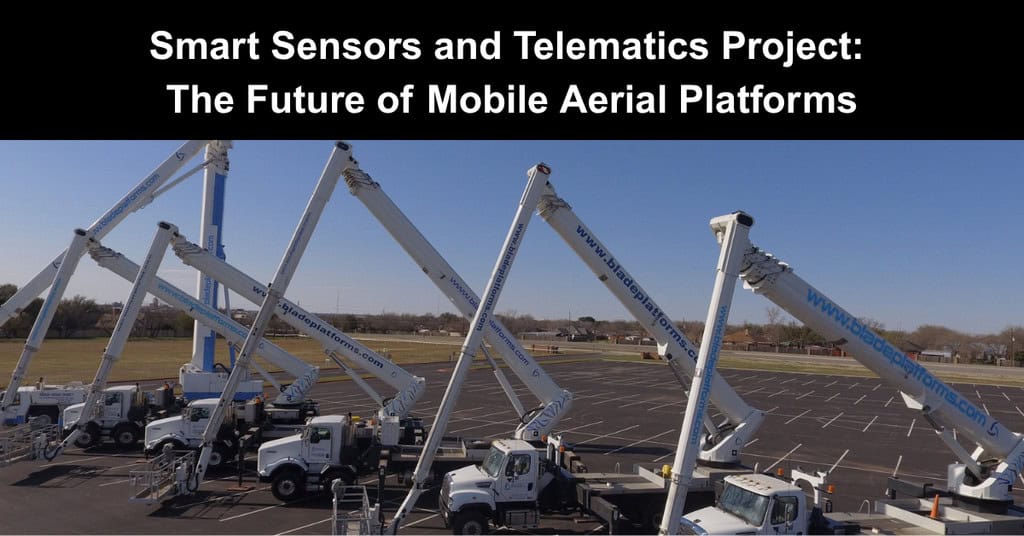
Ask a project manager what slows down work at height, and the answer rarely involves the machine itself. It involves waiting: for the wind to drop, for a technician to show up, for someone to confirm the lift actually arrived on site. Most of that waiting comes down to missing information. Onboard sensors and telematics are closing that gap, because a modern mobile aerial platform can now report where it is, how it is set up, how hard it is working, and when it needs attention, often before anyone on the ground thinks to ask.
What Smart Sensors Measure on Aerial Equipment
Think of the smart sensors as the machine’s nervous system. Each one watches a single condition and reacts the moment it moves outside safe limits. The most common include:
- Load Cells: Under the platform that weigh people, tools, and materials
- Inclination Sensors: On the chassis that detect when the base is out of level
- Outrigger Sensors: that confirm each leg is deployed and carrying load
- Boom Angle and Extension Encoders: that track exactly where the basket sits
- Wind Speed Sensors: on high-reach units, where gusts at the top differ sharply from conditions at ground level
- Engine and Hydraulic Sensors: that monitor temperature, pressure, and fault conditions
Some of these are now required rather than optional. Under the ANSI A92.20 design standard used in the United States, every mobile elevating work platform must carry a load sensing system that interrupts normal operation when the basket is overloaded. The same standard tightened tilt detection, so a chassis outside its safe slope now stops the machine instead of only sounding a warning. For planners, that has a practical side effect: tool and material weights have to be counted before the job, because an overloaded basket simply will not lift.
How Telematics Turns Sensor Readings Into Project Data
A sensor protects the operator in the moment. Telematics makes that information useful to everyone else. A telematics unit combines GPS with a cellular connection and sends machine data to a cloud dashboard. Depending on the system, that feed can include location and geofence alerts, engine and boom hours, idle time, fuel or battery level, fault codes, overload events, and outrigger setup records.
Each entry is timestamped, so the result is a running log of what the machine did, where and when. That log is what makes the technology relevant to project management. It replaces estimates and phone calls with records that can be checked, shared, and fed into the tools a project team already uses.
Five Ways Project Managers Benefit From Connected Platforms
Tighter Rental Budgets
High-reach equipment is billed whether it works or sits. Utilization data shows the gap between hours on site and hours actually spent lifting. If a platform logs more idle time than work over a week, that is a signal to shorten the rental, resequence the tasks, or switch to a smaller machine. Teams already feeding equipment hours into job costing can bring telematics exports into the same process and see equipment cost per task rather than per invoice.
Schedules Built on Real Availability
Geofencing sends an alert when a machine enters or leaves the site boundary. That confirms delivery without a site visit, lets crews start on time, and flags a machine that left early. On projects spread across several locations, such as utility corridors or wind farms, live location data also makes it easier to plan moves between work faces.
Maintenance That Protects the Critical Path
Fault codes reach the service team as soon as they appear. A technician can often diagnose the problem remotely and arrive with the right parts on the first visit. That matters most at the top of the height range. When a mobile aerial platform is holding a crew 200 feet up a turbine tower or transmission structure, a single hydraulic fault can idle the whole team, and the delay lands directly on the schedule. Condition-based servicing driven by real engine and hydraulic hours also reduces the chance of a breakdown in the first place.
Safety Records That Hold Up to Audits
Connected machines create evidence around the risks that matter most at height. Every overload event, tilt alarm, and outrigger check is stored with a timestamp, and some systems link operator access to a keypad or card, which helps confirm that only trained and authorized people ran the machine.
That record carries real weight, because overturns, entrapment, and falls from the platform remain the leading causes of serious incidents. The most recent global safety report from the powered access industry, covering data through 2024, ranked overturns as the top cause of fatal and major injury incidents that year, even as overall fatalities fell.
Clearer Reporting for Stakeholders
Clients and senior managers want facts, not impressions. Telematics supplies the numbers behind weekly reports: hours worked, idle time, fault response, and safety events recorded and resolved. That data also supports cost forecasts and earned value tracking, since equipment spend can be tied to actual progress.
Traditional and Connected Platforms Compared
The table below shows how the same project questions get answered with and without connected equipment.
| Project Need | Traditional Platform | Sensor- and Telematics-Equipped Platform |
|---|---|---|
| Machine location | Phone calls and site checks | GPS position with geofence alerts |
| Utilization | Timesheets and estimates | Engine and boom hours logged automatically |
| Maintenance | Fixed intervals or after a breakdown | Fault codes and condition-based servicing |
| Overload protection | Operator judgment and capacity decals | Load cell stops lift functions and logs the event |
| Safety records | Paper inspection sheets | Timestamped digital records |
| Cost control | Invoice review after the fact | Live idle time and usage data |
Connected platforms do not remove the need for trained operators, daily inspections, or a written safe use plan. They make each of those easier to verify.
Where the Technology Is Heading
Several developments are already moving from manufacturer test programs into working fleets. Variable outrigger systems use sensor input to calculate the safe working envelope for the exact setup on site, which lets crews work in tight spaces without guessing at reduced outreach. Remote diagnostics are getting more detailed, with some faults resolved through a software update instead of a site visit. Fleet data is also starting to support prediction, flagging components likely to fail based on usage patterns across many machines.
Final Thoughts
Sensors make work at height safer in the moment, while telematics turns every lift into a record a project team can plan, budget, and report against. Together they shift a mobile aerial platform from a line on the rental invoice to an active part of project control. When you scope your next elevated job, ask providers such as Blade Platforms how their machines report location, usage, and safety events, and how your team can access that data. Building those answers into the plan from day one gives you fewer surprises on site and stronger numbers at every project review.
Frequently Asked Questions
Are load sensors required on aerial work platforms?
In the United States, the ANSI A92.20 design standard requires load sensing on mobile elevating work platforms. If the basket is overloaded, the system sounds an alarm and stops normal lifting functions until the load is reduced.
Can telematics data reduce equipment rental costs?
Yes, in many cases. Utilization records show how much of the rental period a machine actually spends working. That makes it easier to end rentals sooner, combine tasks, or choose a smaller unit for the next phase.
Does telematics work on rented aerial platforms?
Many rental fleets now include telematics as standard. The key is to ask for dashboard access or regular data exports at the quote stage, so the project team can use the information during the job.
Suggested articles:
- How to Choose the Right GNSS System for Construction Projects
- Best IoT Development Companies to Work With in 2026
- Common Operational Risks and How to Address Them Effectively

Daniel Raymond, a project manager with over 20 years of experience, is the former CEO of a successful software company called Websystems. With a strong background in managing complex projects, he applied his expertise to develop AceProject.com and Bridge24.com, innovative project management tools designed to streamline processes and improve productivity. Throughout his career, Daniel has consistently demonstrated a commitment to excellence and a passion for empowering teams to achieve their goals.